
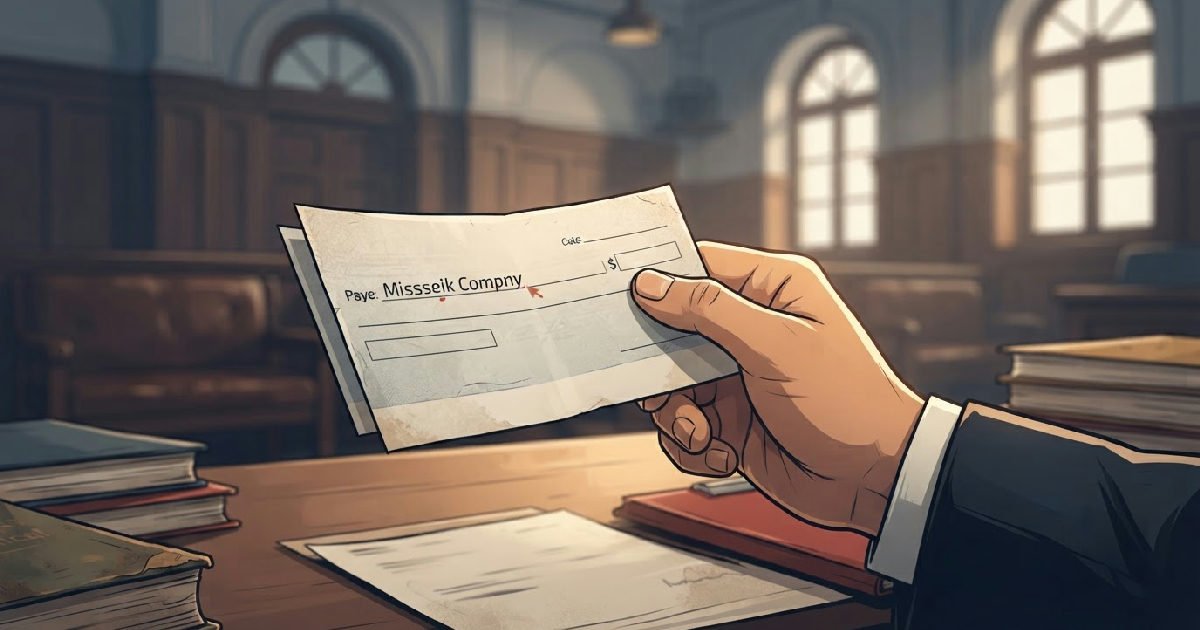
Minor discrepancies in payee name on the cheque generally won’t automatically invalidate cheque bounce cases in Delhi under Section 138 of the Negotiable Instruments Act, 1881 (NI Act). Indian courts consistently prioritize the substance and intent of the transaction over pedantic errors. They focus on whether the identity of the payee is clear and reasonably ascertainable.
This pragmatic judicial approach means that small name variations, such as an order swap or a missing prefix like “M/s” or “Pvt Ltd,” typically do not derail prosecution. This holds true especially if the payee’s identity is clear and the accused admits to issuing the cheque.
Understanding Cheque Bounce Cases in Delhi
A significant ruling by the Delhi High Court on May 1, 2024, reinforced this stance, stating that a spelling mistake in the legal notice itself “cannot render the legal notice as null and void or as being without any effect.”
Cheque bounce cases in Delhi fall under the purview of Section 138 of the Negotiable Instruments Act, 1881. This crucial legislation aims to foster financial discipline and ensure that cheques, as instruments of payment, are honored. The law provides a mechanism for creditors to recover funds when a cheque issued to them is dishonored by the bank.
However, the strict technicalities sometimes associated with legal documents can lead to disputes. Debtors often attempt to exploit minor errors in names or procedures to evade liability. The courts, particularly in Delhi, have shown a consistent inclination to look beyond these technicalities, focusing instead on the core facts of the transaction.
Judicial Scrutiny of Payee Identity
When a cheque is dishonored, the primary question for the court is whether the intended recipient of the funds is clearly identifiable. Minor spelling mistakes, for example, “Rahul Kumar” instead of “Rahul Kumaar,” are usually deemed inconsequential. Similarly, variations like omitting “Pvt Ltd” from a company’s name are often overlooked.
The judiciary prioritizes the intention behind the cheque and the clarity of the payee’s identity, rather than strict grammatical precision. If surrounding documents like invoices, ledgers, and bank statements corroborate the payee’s identity, such minor errors are unlikely to jeopardize a case. The focus remains on whether the correct party is seeking redress.
Delhi High Court’s Stance on Clerical Errors
The Delhi High Court delivered a significant ruling on May 1, 2024, cementing its position on clerical errors in legal proceedings. The court unequivocally stated that a spelling mistake within the legal notice, a mandatory step before filing a Section 138 case, would not automatically nullify the notice or render it without effect. This decision provides critical clarity for complainants and legal practitioners.
This ruling is a clear signal against overly technical interpretations of procedural requirements. It underscores the court’s commitment to ensuring that justice is not obstructed by minor drafting inaccuracies. This approach prevents accused parties from using trivial errors as a shield against legitimate claims, reinforcing the efficacy of the NI Act.
Implications for Legal Notices
The May 1, 2024, ruling by the Delhi High Court has significant implications for how legal notices in cheque bounce cases are assessed. It clarifies that minor typographical errors in the notice itself, which is a prerequisite for initiating legal action, will not automatically lead to the dismissal of a case. This protects complainants from their cases being thrown out on technical grounds.
For those preparing a reply to cheque bounce legal notice, this means a defence based solely on a minor spelling error in the notice is unlikely to succeed. The courts will continue to examine whether the notice conveyed its essential message effectively and whether the recipient was clearly identifiable, despite any small imperfections.
Correcting Clerical Errors in Complaints
Similarly, clerical errors in the complaint document itself, such as an incomplete or slightly incorrect description of the accused’s name, do not automatically invalidate Section 138 cases. Courts are primarily concerned with prosecuting the correct individual who issued the dishonored cheque. If it is a mere mistake and does not involve wrong identity or fraud, such errors can often be corrected.
The emphasis is always on identifying the correct person or entity responsible for issuing the cheque. This ensures that genuine complaints are not dismissed due to minor administrative oversights. It also prevents accused individuals from leveraging such small errors to escape their legal obligations.
Differentiating Minor from Fatal Name Errors
While courts generally overlook minor name discrepancies, there are instances where errors can prove fatal to a cheque bounce case. The key distinction lies in whether the error fundamentally undermines the payee’s identity, their legal standing, or the clear intent of the transaction. Not all errors are treated equally; the context and impact on clarity are paramount.
Fatal errors usually arise when the mismatch is so substantial that it creates genuine ambiguity about who the cheque was intended for, or whether the complainant has the legal authority to pursue the case. This requires a careful assessment of all accompanying documentation and the nature of the discrepancy itself. The court will determine if the error genuinely prejudices the rights of any party involved.
When Authorization is Key
One critical scenario where a name error can become fatal is when the complainant cannot prove their legal authorization to represent the business entity named on the cheque.
For instance, if a cheque is issued to “XYZ Solutions Pvt Ltd” but the case is filed by an individual or a different entity “XYZ Solutions,” and the complainant lacks the necessary legal authorization or corporate resolution, the case may fail.
The court needs to be certain that the party filing the complaint is legally entitled to do so on behalf of the named payee. Without this clear linkage, even a seemingly minor variation in a company name can lead to dismissal. This prevents individuals from misrepresenting their authority or pursuing claims without proper legal standing.
Material Alterations and Their Consequences
Material alterations to the payee’s name directly on the cheque itself are considered extremely significant and can severely impact its enforceability. If someone physically alters the payee’s name on a cheque after it has been issued, without the drawer’s consent, the cheque could be rendered void. Such alterations are viewed as a serious breach of trust.
These types of changes go beyond mere clerical mistakes; they can prejudice the rights and liabilities of the parties involved. Any unauthorized material alteration fundamentally changes the nature of the financial instrument, making it difficult for the courts to enforce it under Section 138. The integrity of the cheque as a valid financial instruction is paramount.
| Type of Payee Name Error | Description & Example | Impact on Case Maintainability | Judicial Rationale |
|---|---|---|---|
| Minor Spelling Discrepancy | “Priya Sharma” vs. “Priya Sharrma” | Generally minor, unlikely to invalidate. | Identity remains clear and ascertainable; no prejudice to parties. |
| Missing Suffix (Company) | “ABC Enterprises” vs. “ABC Enterprises Pvt Ltd” | Often overlooked if core identity is same. | Substance over form; common clerical oversight, intent clear. |
| Order Swap (Individual) | “Singh, Amar” vs. “Amar Singh” | Minimal impact, usually permissible. | True identity of individual is readily apparent. |
| Lack of Legal Authorization | Case filed by “X” for “Y Company” without authority. | Potentially fatal, can lead to dismissal. | Complainant lacks standing to represent the actual payee. |
| Material Alteration on Cheque | Payee name physically changed without consent. | Likely fatal, cheque may be void. | Undermines integrity of instrument; prejudices rights of parties. |
Role of Cheque Bounce Lawyers in Delhi
The complexities surrounding name errors highlight the crucial role of cheque bounce lawyers in Delhi. These legal professionals are instrumental in navigating the intricate procedural requirements of Section 138 cases. Their expertise ensures that potential pitfalls, including those related to payee names, are identified and addressed proactively, strengthening the complainant’s position.
A lawyer’s involvement begins with a meticulous review of all documents. They compare the cheque details, the bank memo, and the complainant’s legal name to identify any discrepancies. This pre-emptive verification is vital to prevent minor errors from escalating into significant legal hurdles that could jeopardize the entire case. Their careful approach minimizes the chances of a case being dismissed on technical grounds.
Ensuring Procedural Compliance and Timelines
Cheque bounce cases are governed by strict timelines for sending legal notices and filing complaints. Missing these critical deadlines can lead to outright case dismissal, regardless of the merits of the claim. Cheque bounce lawyers ensure strict adherence to these statutory periods, meticulously tracking dates to prevent such fatal errors. They manage the entire legal process efficiently.
Furthermore, lawyers also advise on the correct format and content of the legal notice, a critical document that must formally demand payment within a stipulated timeframe. They ensure the notice accurately reflects the debt and the parties involved, thereby avoiding issues that could arise from poorly drafted or incorrectly served notices.
Verification of Evidence and Documentation
Before initiating any legal action, lawyers undertake a thorough verification of all supporting evidence. This includes the original dishonored cheque, the bank’s return memo, and any underlying contracts or invoices that establish the debt. They also cross-reference the payee’s name across all these documents to ensure consistency.
This comprehensive document review is crucial for building a robust case. By ensuring all details align, lawyers can confidently present the case to the court, mitigating potential challenges based on name discrepancies or other procedural issues. This meticulous preparation is often the difference between success and failure in these complex cases.
Strategic Defences and Judicial Pragmatism
In many cheque bounce cases, the accused party attempts to raise technical defences, including arguing that a minor error in the payee’s name or the legal notice renders the entire proceeding invalid. This is a common tactic to delay proceedings or secure an acquittal. However, courts generally approach these arguments with a high degree of pragmatism, especially in Delhi.
The judiciary’s focus remains on the substance of the dispute: whether a valid debt exists and if the cheque was issued against that liability. Unless a name error genuinely creates doubt about the identity of the parties or their legal standing, technical pleas are often dismissed. The courts strive to uphold justice rather than allowing procedural niceties to defeat legitimate claims.
Balancing Justice and Technicalities
The legal landscape surrounding cheque bounce cases represents a delicate balance between procedural exactitude and the pursuit of justice. While rules are in place to ensure fairness and proper legal process, courts are increasingly reluctant to allow minor technical flaws to overshadow the substantive merits of a case. This judicial pragmatism prevents an easy escape for defaulters.
This approach emphasizes that the spirit of the law, which is to enforce financial commitments, should prevail over overly rigid interpretations of form. It encourages parties to focus on the core issues of debt and payment, rather than engaging in prolonged litigation over trivial discrepancies. This ensures that the legal system remains an effective tool for redressal.
Do minor spelling mistakes in a payee’s name invalidate cheque bounce cases in Delhi?
Generally, no. Indian courts, including the Delhi High Court, prioritize the substance and intent of the transaction over minor spelling mistakes. If the payee’s identity is clear and reasonably ascertainable, and the accused admits issuing the cheque, such errors typically won’t invalidate the case.
What was the Delhi High Court’s ruling on legal notice spelling errors on May 1, 2024?
On May 1, 2024, the Delhi High Court ruled that a spelling mistake in the legal notice itself “cannot render the legal notice as null and void or as being without any effect.” This decision reinforced that minor errors in statutory notices should not derail cheque bounce proceedings.
When can a payee name error prove fatal to a cheque bounce case?
A payee name error can be fatal if it creates significant ambiguity about the payee’s identity, or if the complainant lacks the legal authorization to represent the entity named on the cheque. Material alterations made to the cheque itself, without consent, can also void the instrument and lead to case dismissal.
Call or Whatsapp for free consultation.
Related Service: https://arpitmarwah.com/cheque-bounce-lawyers-in-delhi/