
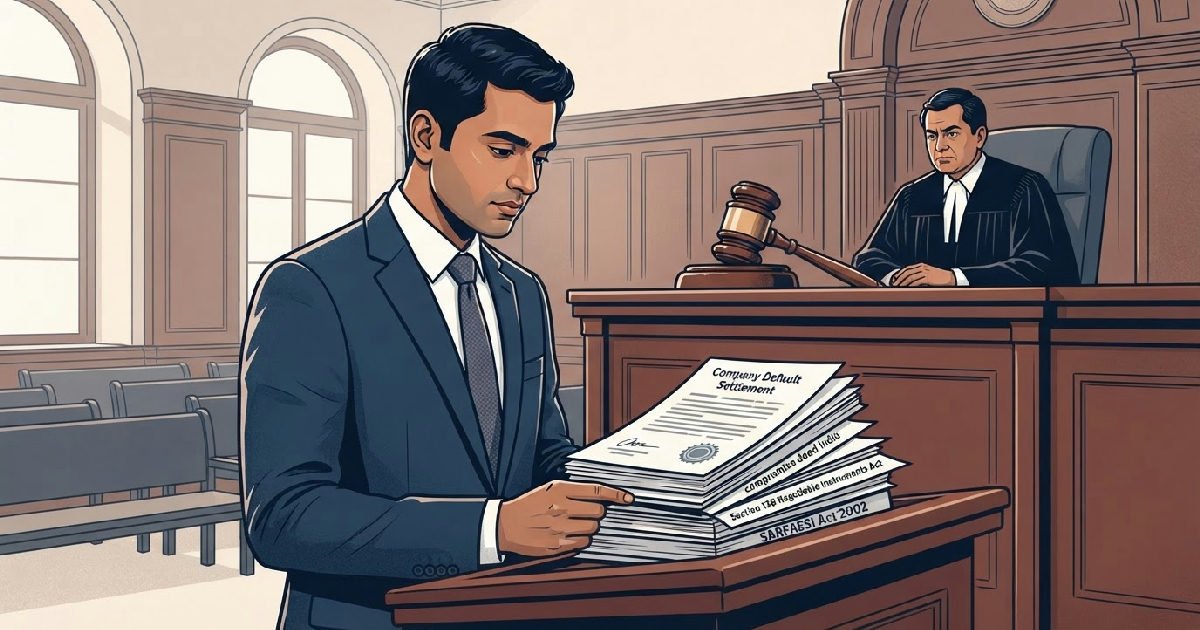
When a company defaulted on a settlement agreement for a second time, particularly after a previous compromise, commercial lawyers in Delhi face an intricate legal quandary. This scenario demands careful consideration of whether to execute the existing settlement, revive the original lawsuit, or initiate fresh legal action. Navigating a repeated company default settlement requires a nuanced understanding of Indian commercial law.
The core issue often revolves around the completeness of the initial settlement documentation. Ambiguities in terms, especially regarding default clauses and the ongoing status of the original dispute, can significantly complicate recovery efforts. A prematurely issued “full and final” receipt can also weaken a creditor’s position in a company default settlement.
Company defaulted- Settlement crafting
A legally sound compromise deed acts as the bedrock of any out-of-court settlement. It’s more than just a letterhead agreement; it must meticulously detail the agreed-upon amount, precise payment dates, and clear provisions for what constitutes a default.
Crucially, the deed needs to explicitly state whether the original lawsuit, or specific sections like Section 138 of the Negotiable Instruments Act, remains active or is deemed withdrawn upon successful completion. This clarity prevents protracted disputes over legal standing should a second default occur.
Under Indian law, a compromise of a civil suit must be in writing and signed by parties or their representatives, as stipulated by Order XXIII Rule 3 of the Code of Civil Procedure (CPC).
The Supreme Court of India has consistently emphasised that courts must apply judicial mind before accepting any compromise. This ensures the terms are lawful and were voluntarily accepted by all parties involved. An advocate, for instance, requires express authorisation to sign a compromise affecting a client’s substantial legal rights.
Key Elements of a Robust Settlement
For a settlement to be truly effective and enforceable, it must contain several critical components. Beyond the payment schedule, a well-drafted agreement includes specific timelines for each installment and clear consequences for non-payment.
Detailed default clauses should specify remedies available to the aggrieved party, such as imposing penalties or allowing for immediate legal recourse. Identifying dispute details and recording mutually agreed terms are vital preparatory steps. Proper execution on stamp paper and notarisation or registration are also mandatory requirements for enforceability under Indian law.
The Pitfalls of a Premature “Full and Final” Receipt
Issuing a “full and final” receipt too early can severely undermine a creditor’s ability to pursue a second default. While the term “full and final settlement” often appears in employment contexts, its application in commercial debt recovery carries significant weight.
In a commercial dispute, if a creditor acknowledges receipt of all dues before the complete settlement amount has been received, they may inadvertently relinquish their right to recover subsequent unpaid installments. This premature declaration can make a second default a considerably weaker file, complicating efforts for commercial lawyers in Delhi.
Impact on Subsequent Recovery Efforts
A “full and final” receipt given without the full consideration having been paid can be interpreted by courts as a complete discharge of liability. This leaves limited recourse for the creditor even if the company defaults on future payments. It shifts the burden of proof, often requiring the creditor to demonstrate the receipt was issued under duress or mistake.
Prudent legal strategy dictates that such receipts only be issued once all terms of the compromise deed are satisfied. This includes all payments being cleared and any other conditions met. Proper timing is paramount to safeguarding legal standing.
Navigating a Second Default: Legal Avenues
When a company defaults on an installment after a signed settlement, commercial lawyers in Delhi must decide on the most effective legal path forward. The primary options include executing the existing settlement, reviving the original case, or initiating fresh proceedings.
The choice hinges on the specifics of the compromise deed and the enforceability of its default clauses. Each avenue has distinct advantages and procedural requirements that must be carefully evaluated for a successful company default settlement.
Executing the Settlement Agreement
If the compromise deed has been made a Rule of the Court or recorded as an undertaking before the court, it essentially transforms into a decree. In such a scenario, the aggrieved party can seek its direct execution, bypassing the need for a new suit.
Execution proceedings are generally faster than fresh litigation, but their viability depends entirely on how the original settlement was formalised. This option is often preferred when the settlement agreement is clear, unambiguous, and has judicial sanction.
Reviving the Original Lawsuit or Section 138 Case
Many settlement agreements include a clause allowing the original suit, particularly those under Section 138 of the Negotiable Instruments Act for cheque bounces, to be revived upon default. This clause ensures that if the company fails to honour the settlement, the creditor doesn’t lose the leverage of the initial case.
Revival typically requires filing an application before the court that recorded the compromise. This route can be potent, as it brings the full weight of the original legal action back into play, often with the added pressure of potential criminal proceedings in Section 138 matters. However, some agreements may stipulate that the original suit is withdrawn unconditionally, making revival impossible.
Initiating a Fresh Notice and Suit for Breach
Should the compromise deed not allow for execution or revival, or if its terms are vague, a creditor may need to issue a fresh legal notice for breach of the settlement agreement. This notice serves as a formal demand for payment and a precursor to filing a new recovery suit.
A fresh suit for breach of contract would then be filed before the appropriate Commercial Court in Delhi. This option can be time-consuming, as it essentially starts a new litigation process. However, it provides an opportunity to claim damages for the breach of the settlement itself, alongside the original outstanding amounts.
The Role of Commercial Courts in Delhi
Commercial Courts in Delhi are specifically designed to expedite resolution of complex business disputes. These courts handle a wide range of cases, including recovery suits, contract disputes, and matters concerning business fraud. Proper jurisdiction and adherence to procedural requirements are critical when filing.
Failure to file in the correct court can significantly delay the proceedings. Understanding the nuances of these courts is essential for commercial lawyers in Delhi aiming for efficient debt recovery.
Procedural Nuances and Requirements
Before filing a recovery suit, businesses must ensure that all preliminary steps, such as sending a legal notice, are duly completed. Ignoring a demand notice from a bank, for example, is often interpreted by the court as an admission of debt.
The jurisdiction of Commercial Courts depends on the pecuniary value of the dispute and the nature of the transaction. For instance, suits based on invoices, purchase orders, or services rendered fall squarely within their purview. Ensuring that all documentary evidence, including the original contract and settlement agreement, is in order is also paramount. A properly stamped agreement can delay proceedings significantly.
Key Laws and Considerations for Debt Recovery
Debt recovery in India is governed by a mosaic of laws, each applicable depending on the nature of the debt and the parties involved. Beyond the Civil Procedure Code, other statutes play a crucial role when a company defaults on a settlement.
Commercial lawyers in Delhi often leverage these different acts to ensure the most effective and timely recovery. Understanding which law applies can dictate the entire strategy.
Applicable Legal Frameworks
The Negotiable Instruments Act is vital for cases involving bounced cheques, while the Arbitration and Conciliation Act, 1996, provides a framework for enforcing arbitral awards resulting from settlement agreements. The Insolvency and Bankruptcy Code, 2016, offers a robust mechanism for corporate debt resolution, especially when a company is facing severe financial distress.
For secured loans, the Securitisation and Reconstruction of Financial Assets and Enforcement of Security Interest (SARFAESI) Act, 2002, empowers banks and financial institutions to take possession of collateral without court intervention under specific conditions. This means for a company default settlement involving secured assets, the recovery process can be significantly streamlined if the lender adheres to SARFAESI protocols.
Various legal provisions in India stipulate specific monetary thresholds or timelines that impact commercial transactions and recovery processes. These can be crucial details for businesses to consider.
| Legal Provision / Act | Key Requirement / Implication | Value / Period |
|---|---|---|
| Inadequately Stamped Document | Maximum fine for regularization | Up to 10x stamp duty |
| SARFAESI Act, 2002 | Default period before property possession (secured loans) | 90 days |
| Income-tax Act, Section 269ST | Maximum cash receipt (single person, single day) | Rs. 2 lakh or more (not allowed) |
| Income-tax Act, Section 269T | Maximum cash repayment of loans/deposits | Rs. 20,000 or more (not allowed) |
| Code on Wages 2019 (eff. Nov 21, 2025) | FnF wage component payment timeline (employment context) | 2 working days |
Strategic Drafting: Preventing Recurrence
The best defence against a repeated company default settlement is a meticulously drafted agreement from the outset. Proactive legal measures can save significant time and resources in the long run.
Including robust default clauses, clear payment schedules, and specific remedies for non-compliance are fundamental. These elements should leave no room for ambiguity.
Enhancing Agreement Enforceability
Consider incorporating provisions for interest on delayed payments, as this incentivizes timely adherence. Stipulating that any default would automatically revive the original suit, or allow for immediate execution of the settlement as a decree, significantly strengthens the creditor’s position. Businesses should also explore obtaining collateral or personal guarantees from company directors to secure the debt further.
Finally, ensuring filing in the correct court for any disputes can prevent procedural delays. A comprehensive approach to drafting not only protects the creditor but also encourages the defaulting company to honour its commitments, streamlining the entire company default settlement process.
What makes a compromise deed legally binding in India?
A compromise deed becomes legally binding in India when it is in writing, signed by all parties or their authorised representatives, details mutually agreed terms including payment specifics and default clauses, and is executed on proper stamp paper. Court approval under Order XXIII Rule 3 of the CPC also strengthens its enforceability.
How does a “full and final” receipt impact a second default scenario?
Issuing a “full and final” receipt prematurely, before all settlement terms are met, can significantly weaken the creditor’s legal standing. Courts may interpret it as a complete discharge of the debtor’s liability, making it difficult to recover subsequent unpaid installments from a company default settlement.
What are the immediate steps a creditor should take after a second default?
Upon a second default, the creditor, advised by commercial lawyers in Delhi, should immediately review the original compromise deed to determine the available remedies. Options typically include filing an application to execute the settlement as a decree, reviving the original lawsuit, or sending a fresh legal notice and initiating a new suit for breach of the settlement agreement.
Call or Whatsapp for Free Consultation.
Related Service: https://arpitmarwah.com/commercial-lawyers-in-delhi/