
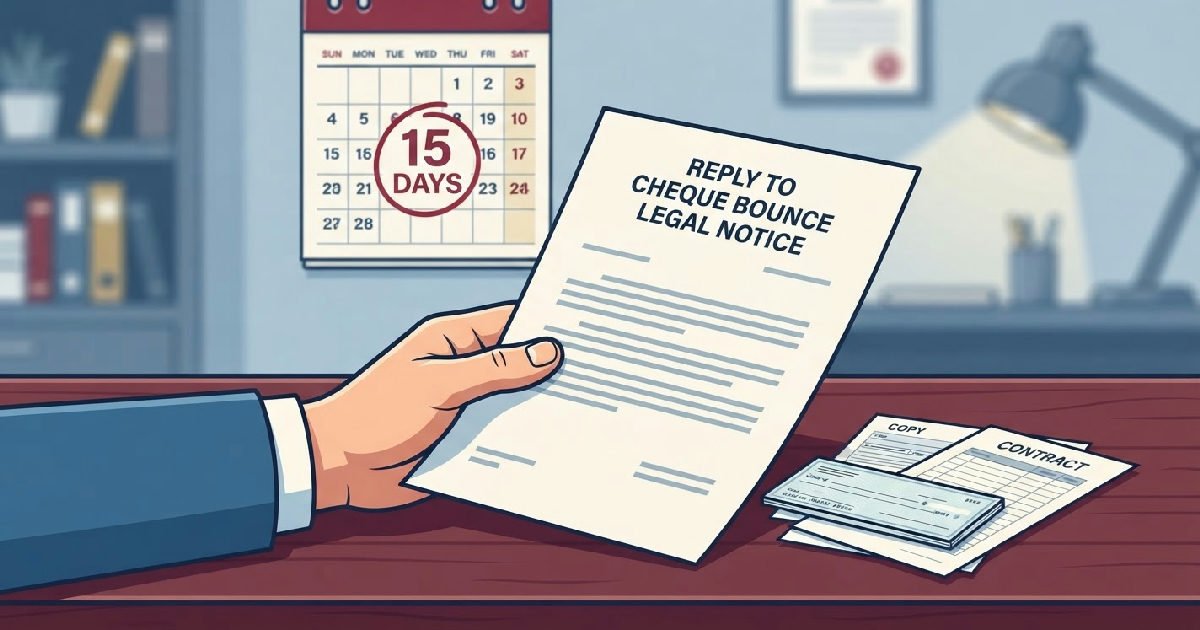
Receiving a legal notice for a bounced cheque demands an immediate and strategic response. Crafting a precise reply to a cheque bounce legal notice within the stipulated 15-day timeframe is paramount to establishing your defense and potentially averting criminal proceedings.
Ignoring such a notice or drafting a careless reply can have severe repercussions, including criminal charges under Section 138 of the Negotiable Instruments Act (NI Act). Your response isn’t just administrative; it’s your first formal opportunity to challenge allegations and protect your legal standing.
Don’t reply to cheque bounce legal notice
Ignoring a cheque bounce legal notice is a critical misstep that can rapidly escalate the situation. Failing to respond within the mandated 15 days can empower the payee to file a criminal complaint in court, moving the dispute from a civil matter to a serious criminal offense.
Courts often interpret silence negatively, drawing an adverse inference against the party who remains unresponsive. This non-response can significantly weaken your position during any subsequent legal battle, making it harder to present a credible defense for a cheque bounce notice.
The legal framework treats cheque bounce as a criminal offense in India. Penalties under Section 138 of the NI Act can include imprisonment for up to two years, a fine up to twice the cheque amount, or both. These are substantial consequences that a timely and well-prepared reply aims to prevent.
Beyond criminal charges, non-response can also lead to monetary penalties. Courts may order compensation to the payee for financial losses, court fees, and other expenses incurred due to the cheque’s dishonour. This financial burden can be significant for individuals and businesses alike.
Negative Inference in Court Proceedings
A court may very well infer guilt or an admission of liability if you fail to acknowledge the legal notice. This negative inference can prejudice your case before it even properly begins, making it an uphill battle to convince the court of your innocence.
Such inferences can arise because the law presumes the cheque was issued for a legally enforceable debt unless proven otherwise. Your silence doesn’t just fail to rebut this presumption; it can actively reinforce it in the eyes of the judiciary.
Crafting Your Defense: What to Include in a Formal Reply
A properly drafted reply serves as your official record and foundational defense. It must be concise, dated, and factually accurate, leaving no room for misinterpretation. Every word counts, as this document can become a key exhibit in court.
Start by addressing the reply to the payee’s lawyer and clearly state your name, description, and address as the sender. This establishes the formal nature of your communication and ensures it’s directed to the appropriate legal representative.
Your reply should directly rebut the allegations made in the original notice. A para-wise response, addressing each point raised in the notice in sequential order, is highly recommended. This structured approach demonstrates thoroughness and clarity.
Providing a summary of your defense is crucial. Clearly state your position on liability and explain the cheque’s background and purpose, detailing why the claim is being disputed. This upfront explanation helps frame your narrative.
If the cheque was given as security, or if goods were rejected, explicitly state these facts and provide supporting documentation. Mention any payments already made, including dates and transaction copies, to demonstrate good faith and partial fulfillment of obligations.
Attach copies of all relevant documents to substantiate your claims. This can include contracts, ledgers, bank statements, and any communication related to the transaction. These attachments lend credibility to your statements.
Key Elements of a Robust Reply
Ensure your reply includes essential identifying information: your full name, address, and contact details. Reference the original notice by its date and subject, confirming you are responding to the correct communication.
Conclude with a clear statement indicating whether you accept, deny, or offer to settle the matter. This final declaration solidifies your stance. The reply should be signed by you or your advocate, along with the date and place of drafting.
Sending the reply on a lawyer’s letterhead is always preferable. This adds a layer of professionalism and seriousness to your communication, signaling that you are taking the matter seriously and are prepared for legal recourse.
Essential Documentation for Your Response
Collecting and referencing the right documents is fundamental to a strong reply. Your defense gains significant weight when backed by tangible evidence. Begin by gathering the original cheque and the cheque return memo, which formally states the reason for dishonour.
You’ll also need the copy of the legal notice received, which forms the basis of your response. Beyond these, a comprehensive ledger of transactions, relevant contracts, and bank statements are indispensable for illustrating the financial history between parties.
If any payments have already been made towards the disputed amount, ensure you have proof of these transactions. Emails and WhatsApp messages related to the transaction can also serve as crucial evidence, shedding light on the communication history and intent.
Loan agreements, if applicable, provide context for the cheque’s issuance. Lastly, retain postal receipts and tracking reports for the notice received, as proof of its delivery date is critical for calculating your 15-day response window.
Navigating Liability: When to Dispute the Debt
It’s crucial not to admit the full debt if you dispute the amount or the underlying liability. An admission can bind you legally, even if you have valid grounds for challenging the claim. Consult with an advocate to carefully examine your reasons for dispute.
Several specific defenses can be raised in your reply. For instance, you can argue that the cheque was merely given as security, not as payment for a presently-due debt. This distinction is vital in cheque bounce cases.
Another common defense is the absence of a legally enforceable debt. This could arise if the consideration for which the cheque was issued failed, such as defective goods or services, or if a loan was already repaid. Detailing these circumstances can dismantle the payee’s claim.
The reply can also highlight if the cheque was misused, materially altered, or filled in without proper authority. Such actions invalidate the cheque as a legitimate instrument for debt recovery under the NI Act.
Furthermore, if the notice itself is defective – for example, if it was sent late, to the wrong address, or demands an amount exceeding the cheque’s value – these procedural flaws can be used in your defense. These technicalities can sometimes lead to the case being dismissed.
Challenging the Presumption of Debt
Under Section 139 of the NI Act, there’s a statutory presumption that a cheque was issued for the discharge of a debt or other liability. Your reply is the first formal step to actively counter this presumption by presenting facts that indicate otherwise.
Articulating a defense based on the lack of a legally recoverable debt, or the cheque being for security, directly challenges this fundamental presumption. It shifts the burden to the complainant to prove the existence of a valid, presently enforceable debt.
Avoiding Pitfalls: Common Mistakes in Responding
Beyond simply replying, it’s equally important to know what to avoid. Casual or informal communication, such as late-night WhatsApp messages or phone calls, can be detrimental. These can easily be used as evidence against you in court, even if they were intended casually.
Refrain from using abusive language or making threats in your response. The purpose of the reply is to explain why a claim is wrong using facts and legal arguments, not to engage in emotional or confrontational exchanges. Professionalism is key.
Never apologize or concede fault unnecessarily. An unwarranted apology can be construed as an admission of guilt, strengthening the complainant’s case. Stick to the facts and your legal position.
Also, avoid promising a payment date you cannot realistically keep. Making unfulfilled promises can further damage your credibility and provide additional ammunition to the opposing party in court. Be realistic and accurate in all statements.
The “Exhibit A” Problem
A poorly drafted reply, while not immediately deciding the trial’s outcome, can become “Exhibit A” for the prosecution. Any inconsistencies, admissions, or ill-advised statements can be used to strengthen the complainant’s case and weaken yours. It sets the tone for your entire legal defense.
Corporate Responsibility: Directors’ Role in Cheque Bounce Replies
For corporate entities, the distinction between the company and its signatories is crucial. Directors should not reply as if the company no longer exists or as if their personal liability is inextricably linked without qualification. The company and the individual signatory are separate legal entities.
When a cheque from a company account bounces, the legal notice typically targets both the company and the director responsible for its day-to-day operations. The reply needs to reflect this dual aspect, clearly stating the company’s position while also articulating the director’s specific role.
The reply should meticulously outline the company’s defense, if any, and clarify the director’s involvement, especially if the director believes they are not personally liable. This precise delineation can be vital in protecting individual directors from criminal prosecution, clarifying corporate cheque bounce liability.
Distinguishing Company from Individual
The reply must articulate the company’s stance on the bounced cheque, detailing any corporate defenses such as insufficient funds or a dispute over the underlying transaction. Simultaneously, if the director is replying on their own behalf, they must clarify their capacity and deny any personal culpability not directly arising from their statutory duties.
This means avoiding broad admissions that might inadvertently implicate the director. Instead, focus on the company’s legal position and the facts pertaining to the director’s specific involvement, or lack thereof, in the cheque’s issuance or dishonour.
The Legal Ramifications of an Inadequate Response
The consequences of providing an inadequate or factually incorrect reply can be far-reaching. While a poor reply doesn’t guarantee a conviction, it significantly strengthens the complainant’s case. Any factual inaccuracies or admissions can be used against you as evidence.
Failing to pay or reply within the 15-day period legally opens the door for criminal proceedings under Section 138 of the Negotiable Instruments Act, 1881. This specific statute makes cheque dishonour a serious offense, punishable by stringent penalties.
The penalties can include imprisonment for a term that may extend to two years, or a fine that can reach up to twice the amount of the bounced cheque, or both. These are not minor sanctions and underscore the importance of taking legal notices seriously.
Beyond criminal liability, an insufficient response can lead to substantial financial penalties. Courts may order you to pay compensation to the payee for their financial losses, cover court fees, and reimburse other expenses incurred during litigation. These costs can quickly accumulate.
Moreover, facing a cheque bounce case, especially with a weak initial defense, can severely impact your reputation, both personally and professionally. Such legal troubles can undermine trust and affect future business dealings or creditworthiness, highlighting the importance of early legal intervention and the role of cheque bounce lawyers.
Reputational and Financial Impact
An adverse judgment in a cheque bounce case can severely tarnish your reputation. This is particularly true for businesses and professionals, where financial integrity is paramount. Word of such legal issues can spread quickly, impacting client relationships and future opportunities.
Financially, the cumulative effect of fines, compensation, and legal fees can be devastating. It’s not just the cheque amount but the associated costs that can drain resources. Preventing this starts with a robust, well-informed reply to the initial legal notice.
| Action | Key Timelines | Potential Consequences of Inaction |
|---|---|---|
| Reply to Notice | Within 15 days of receipt | Criminal proceedings under Section 138 NI Act |
| Initiate Complaint by Payee | After 15-day reply period expires | Imprisonment up to 2 years, fine up to twice cheque amount |
| Legal Action by Payee | After unsuccessful settlement attempts | Monetary penalties, reputational damage, negative court inference |
What is the deadline for replying to a cheque bounce legal notice?
You must send your reply within 15 days from the date you receive the cheque bounce legal notice. Missing this deadline allows the payee to proceed with filing a criminal complaint against you.
What are the legal consequences of ignoring a cheque bounce notice?
Ignoring the notice can lead to criminal proceedings under Section 138 of the Negotiable Instruments Act. Penalties can include imprisonment up to two years, a fine up to twice the cheque amount, or both, along with a negative inference drawn by the court.
Should I admit the debt in my reply if I dispute the amount?
No, you should refrain from admitting the full debt if you dispute it. Instead, your reply should clearly state your position, explain why the claim is contested, and outline any specific defenses you may have, such as the cheque being for security.
Received a cheque bounce notice in Delhi? Call or Whatsapp for free consultation.
Related Service: https://arpitmarwah.com/cheque-dishonor-lawyer/