
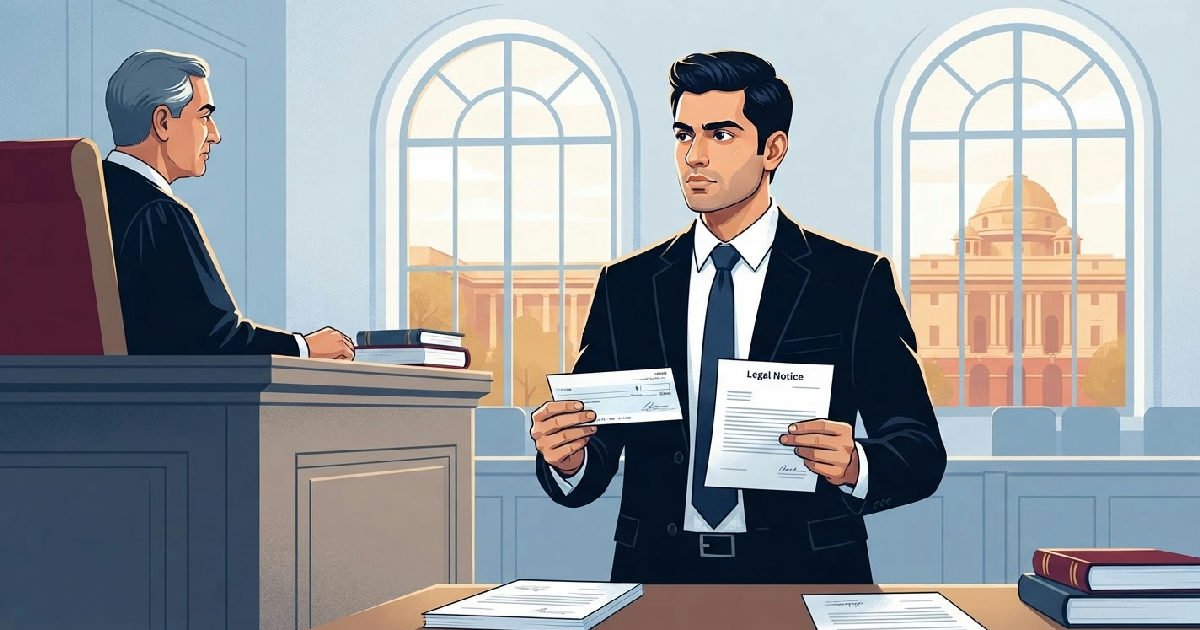
Navigating the complexities of cheque dishonour cases in Delhi demands precise legal understanding, whether you are the payee seeking recovery or the drawer facing potential criminal charges. Seasoned cheque bounce lawyers in Delhi are seeing an increasing volume of these quasi-criminal disputes, which are governed by Section 138 of the Negotiable Instruments Act, 1881.
The stakes are high, with convictions potentially leading to imprisonment for up to two years, significant fines, or both.
The Dual Challenge for Cheque Bounce Lawyers: Payee Pursuit vs. Drawer Defence
For payees, the immediate task involves strict adherence to critical timelines for sending legal notices and subsequently filing complaints in Delhi’s Metropolitan Magistrate courts. Drawers, conversely, must meticulously review the validity of the underlying debt and the procedural correctness of the notice received.
Both parties require strategic counsel to either effectively pursue a claim or mount a robust defence, a process often shaped by the specific nuances of Delhi’s legal landscape and court jurisdictions.
Cheque bounce cases present a bifurcated legal challenge, requiring distinct approaches for the claimant and the accused. For the payee, the immediate goal is to formalise the default and initiate legal action within stringent deadlines, converting a dishonoured cheque into a recoverable debt through court intervention.
Conversely, drawers often find themselves reacting to legal notices, needing to swiftly assess the legitimacy of the claim and any potential defences available. Experienced legal professionals in Delhi understand these contrasting positions. They craft strategies that either expedite recovery for payees or protect drawers from unjust penalties and criminal liability under Section 138 of the Negotiable Instruments Act.
Understanding Section 138 of the Negotiable Instruments Act
Section 138 of the Negotiable Instruments Act, 1881, forms the bedrock of cheque dishonour law in India. It criminalises the act of issuing a cheque that is subsequently returned unpaid by the bank due to insufficient funds or if it exceeds the amount arranged to be paid from that account.
While originating from a civil transaction, this offence carries significant criminal consequences. The law aims to enhance the credibility of negotiable instruments as a mode of payment. It provides a stringent legal recourse for beneficiaries of dishonoured cheques.
Defining the Offence and Penalties
The dishonour of a cheque under Section 138 is specifically classified as a criminal offence, albeit with its roots in a civil wrong. This quasi-criminal nature means that while the core dispute is often about money owed, the legal process can lead to severe penalties beyond mere financial recompense.
Individuals found guilty face potential imprisonment for a term that can extend up to two years. They may also incur a fine that can be as high as twice the amount of the bounced cheque, or both imprisonment and fine. These penalties underscore the seriousness with which Indian law treats the act of issuing a cheque without sufficient backing.
The Underlying Principle of Liability
The primary intent behind Section 138 is to instill confidence in the use of cheques for commercial and personal transactions. It creates a legal mechanism to deter the issuance of cheques without a genuine intention or capacity to honour them.
The law presumes that a cheque is issued for the discharge of a legally enforceable debt or liability, placing the initial burden on the drawer to prove otherwise if they contest the claim.
This legal presumption, enshrined in Section 139 of the Act, is crucial. It simplifies the initial stages of a complaint for the payee. However, it also demands that the drawer actively rebut this presumption with credible evidence if they wish to defend themselves successfully against the charges.
The Payee’s Precise Path: Notice and Case Filing Timelines
For a payee whose cheque has bounced, adherence to strict procedural timelines is paramount. Any deviation can jeopardise the entire legal action under Section 138. The process begins immediately upon receiving the bank’s intimation of dishonour.
Understanding these critical windows is the first step toward a successful prosecution. This ensures the case remains legally sound and actionable within the prescribed statutory limits.
Immediate Steps After Cheque Dishonour
Upon receiving the bank’s return memo, which details the reason for the cheque’s dishonour, the payee must act swiftly. The cheque itself must have initially been presented to the bank within three months from its date or within its period of validity, whichever came first. This initial presentation is a foundational requirement.
Following dishonour, the payee has a tight 30-day window from the date of receiving the bank’s return memo to dispatch a formal written legal demand notice to the cheque’s drawer. This notice is a prerequisite for any further legal action. It must clearly state the details of the cheque, the reason for its return, and demand immediate alternative payment from the drawer.
For a deeper dive into these deadlines, understanding the cheque bounce notice time limit is crucial for payees.
The 15-Day Payment Window and Complaint Filing
Once the legal demand notice is properly served, the drawer is granted a 15-day period to make the payment. This period begins from the date they receive the notice. If the drawer settles the amount within these 15 days, the matter is typically resolved without needing court intervention, avoiding criminal proceedings.
However, if payment is not made within this stipulated 15-day window, the payee then has a subsequent 30 days from the expiry of that payment period to file a criminal complaint. This complaint, under Section 138, must be lodged before a Judicial Magistrate or Metropolitan Magistrate. Proper documentation, including the memo of parties, the complaint affidavit, and supporting evidence, is essential at this stage.
Key Timelines for Payees in Cheque Bounce Cases
| Action | Timeline | Starting Point |
|---|---|---|
| Cheque Presentation to Bank | Within 3 months of cheque date | Cheque Date |
| Send Legal Demand Notice | Within 30 days | Receipt of Bank’s Cheque Return Memo |
| Drawer’s Payment Window | 15 days | Receipt of Legal Notice by Drawer |
| File Criminal Complaint (if unpaid) | Within 30 days | Expiry of 15-day Payment Window |
Jurisdictional Complexities in Delhi’s Courts
Filing a cheque bounce case in Delhi requires a precise understanding of territorial jurisdiction. This is a critical factor that can determine the validity and progress of a complaint. Cases under Section 138 are exclusively handled by Judicial Magistrates or Metropolitan Magistrates, irrespective of the cheque amount.
Unlike civil cases, these criminal proceedings do not adhere to pecuniary limits. This means a Magistrate in Delhi can hear a cheque bounce case involving an amount exceeding ₹1 crore, a significant detail for high-value transactions.
Determining the Correct Court in Delhi
The primary rule for territorial jurisdiction dictates that the complaint must be filed in the court within whose local jurisdiction the branch of the bank where the payee maintains their account is situated. This remains true even if the cheque was presented for clearance in a bank located in a different city or area.
This specific provision aims to streamline the filing process and prevent forum shopping. It ensures that cases are heard in a location closely tied to the complainant
What is Section 138 of the Negotiable Instruments Act?
Section 138 of the Negotiable Instruments Act, 1881, is a legal provision in India that criminalises the act of issuing a cheque that gets dishonoured (bounced) by the bank due to insufficient funds or if the amount exceeds the arrangement with the bank. Its purpose is to ensure the credibility of cheques as a mode of payment.
What are the penalties for a bounced cheque under Section 138?
If found guilty under Section 138, an individual may face imprisonment for a term that can extend up to two years, a fine which can be as much as double the cheque amount, or both. These penalties highlight the serious legal consequences of issuing a cheque without sufficient backing.
What are the critical timelines for a payee after a cheque bounces?
After a cheque bounces, the payee must send a legal demand notice to the drawer within 30 days of receiving the bank’s return memo. The drawer then has 15 days to make the payment. If payment is not received within this period, the payee has another 30 days to file a criminal complaint in the appropriate court.
Need cheque bounce lawyers in Delhi to file or defend? WhatsApp or call.
Related Service: https://arpitmarwah.com/cheque-dishonor-lawyer/