
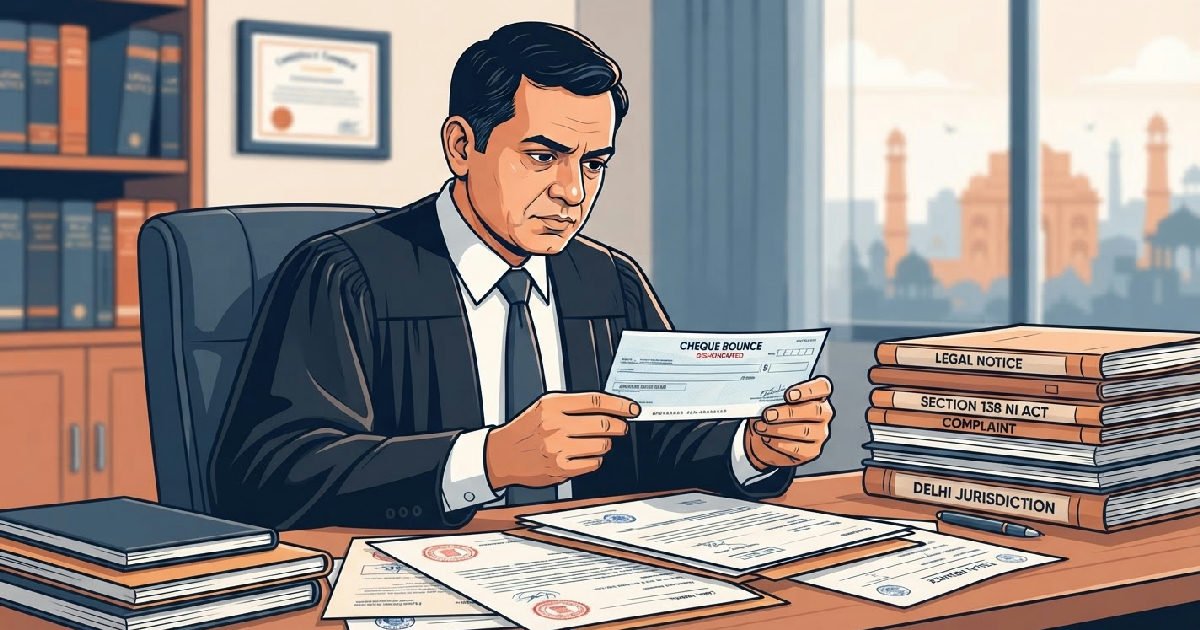
The landscape of financial transactions in Delhi often sees disputes arise from dishonoured cheques, placing individuals and businesses in challenging legal positions. When a cheque is returned unpaid, the immediate reaction is often confusion, but navigating the subsequent legal steps with the help of cheque bounce lawyers in delhi is critical to securing justice. Engaging experienced cheque bounce lawyers in delhi can make a significant difference in the outcome of these disputes.
Effectively addressing such issues demands a deep understanding of Section 138 of the Negotiable Instruments Act, 1881 (NI Act), which governs these cases across India. This crucial piece of legislation transforms cheque dishonour into a criminal offence, aiming to bolster confidence in banking channels. Many seeking legal recourse for bad cheque prosecution often underestimate the intricate procedural requirements that cheque bounce lawyers in delhi can help navigate.
Cheque bounce lawyers Delhi guide
Whether you are an individual or a business, hiring cheque bounce lawyers in delhi can provide you with the expertise needed to handle these situations effectively.
Finding qualified cheque bounce lawyers in delhi is essential for navigating the complexities of the NI Act.
Choosing the Right Cheque Bounce Lawyers in Delhi
Expert cheque bounce lawyers in delhi can assist clients in understanding their rights and obligations under the law.
Representation by cheque bounce lawyers in delhi is crucial for ensuring that all legal procedures are followed correctly.
In Delhi, as elsewhere in India, the legal framework for cheque bounce cases is robust, primarily rooted in the NI Act. This statute provides a clear pathway for recourse when a cheque, issued for a legally enforceable debt, fails to clear. It underscores the serious nature of financial commitments made via banking instruments, highlighting the necessity of consulting cheque bounce lawyers in delhi when disputes arise.
Consulting cheque bounce lawyers in delhi is vital to ensure compliance with all required procedures.
Legal advice from cheque bounce lawyers in delhi can help prevent costly mistakes in these cases.
Those facing cheque bounce issues often seek the guidance of cheque bounce lawyers in delhi to navigate the complexities of the legal landscape.
Having cheque bounce lawyers in delhi on your side can significantly enhance your prospects of success in court.
Understanding the role of cheque bounce lawyers in delhi is essential for anyone involved in a cheque bounce case.
The law ensures that the drawer of a cheque is held accountable, fostering greater reliability in commercial dealings. However, the intricacies of the process require precise adherence to timelines and conditions. A misstep at any stage can significantly compromise the viability of a claim, necessitating expert legal guidance.
Remember, involving cheque bounce lawyers in delhi not only aids in navigating these requirements but also boosts your chances of a favorable outcome.
Ultimately, having the right cheque bounce lawyers in delhi can lead to successful resolutions in complicated financial disputes.
Consulting with experienced cheque bounce lawyers in delhi is essential for a strong legal strategy.
Engaging cheque bounce lawyers in delhi helps ensure all aspects of your case are handled proficiently.
The Negotiable Instruments Act: A Foundation for Trust
Introduced in 1988, Section 138 of the NI Act was a landmark move to strengthen the banking system and deter irresponsible cheque issuance. It criminalises the act of dishonouring a cheque due to insufficient funds or similar reasons, provided specific conditions are met. This provision offers a more expedient remedy than traditional civil recovery suits, which is why many choose to consult cheque bounce lawyers in delhi.
Beyond Section 138, relevant provisions of the Code of Criminal Procedure (CrPC) and Section 142 of the NI Act also apply. These supplementary statutes outline the procedural aspects, including jurisdiction and complaint filing. Lawyers specialising in Section 138 cheque bounce cases must master this interwoven legal tapestry.
Penalties and Interim Reliefs
The consequences for a convicted drawer of a bounced cheque can be severe. These include imprisonment for up to two years, a fine that may extend to twice the cheque amount, or both. These stringent penalties serve as a powerful deterrent against financial irresponsibility.
Additionally, the courts possess powers to mandate interim compensation under Section 143A of the NI Act, which can be up to 20% of the cheque amount. Appellate courts can also require an accused to deposit 20% of the fine or compensation as a precondition for appeal, as per Section 148 of the NI Act. These measures aim to provide immediate relief to the payee.
The intricate nature of cheque bounce cases can be better understood by examining the various conditions and their implications:
| Aspect | Requirement/Condition | Implication/Consequence |
|---|---|---|
| Cheque Validity | Presented within 3 months of issue date. | Failure renders the cheque invalid for Section 138 proceedings, which is why you need cheque bounce lawyers in delhi for guidance. |
| Legally Enforceable Debt | Cheque must be issued for a valid, recoverable debt or liability. | Without it, a Section 138 case cannot be established, making it vital to consult cheque bounce lawyers in delhi. |
| Demand Notice | Sent within 30 days of receiving bank’s return memo. | Mandatory step; failure to send or incorrect drafting invalidates the case, underscoring the need for cheque bounce lawyers in delhi. |
| Payment Window | Drawer must fail to pay within 15 days of receiving demand notice. | Action can only be initiated after this period lapses without payment; thus, consultation with cheque bounce lawyers in delhi is imperative. |
For anyone facing issues with a bounced cheque, consulting cheque bounce lawyers in delhi is a crucial step towards resolution.
In summary, the expertise of cheque bounce lawyers in delhi is indispensable in navigating the complexities of cheque dishonour cases.
Without the assistance of cheque bounce lawyers in delhi, individuals may find themselves at a significant disadvantage in legal proceedings.
Understanding these critical components is vital for both complainants and defence.
Crucial Checks for a Strong Cheque Dishonour Case
For any cheque bounce lawyer in Delhi, the initial assessment of a case involves a meticulous review of several critical factors. Overlooking any of these foundational elements can significantly weaken the complainant’s position. It’s not just about proving a cheque bounced, but proving it within the strict confines of the law.
Legal professionals must ensure that every procedural requirement has been met precisely. This due diligence is paramount for establishing a robust case, ensuring that it can withstand legal challenges from the defence. It typically involves examining the nature of the debt, the timing of presentation, and the specifics of the demand notice.
Establishing Legally Enforceable Debt
A primary prerequisite for a Section 138 case is that the cheque must have been issued against a legally enforceable debt or liability. This means the financial obligation must be recoverable through a court of law, stemming from a lawful transaction. The debt must also exist when the cheque was issued and not be barred by limitation, which is generally three years.
Cheques given as gifts, donations, or for illegal or time-barred transactions do not qualify under this provision. While the law presumes a legally enforceable debt once the cheque and bank return memo are produced, the drawer retains the right to rebut this presumption in court. This often forms a key part of the defence strategy.
Adherence to Strict Timelines
Timelines are absolutely critical in cheque bounce cases. The cheque must be presented to the bank within its validity period, which is now three months from the date of issue. This was previously six months, so staying updated on such changes is vital.
The bank must then return the cheque unpaid, accompanied by a return memo specifying the reason for dishonour. Common reasons include insufficient funds, an account being closed, or a signature mismatch. However, only certain reasons, primarily insufficiency of funds or dishonest stop payment instructions, trigger criminal liability under Section 138.
The Demand Notice: A Critical Step
Upon receiving the bank’s cheque return memo, a written legal demand notice must be dispatched to the drawer within 30 days. This notice is not a mere formality; it must be precisely drafted, detailing the cheque number, date, amount, and the exact reason for dishonour. It must also demand the full cheque amount.
Sending this notice via registered post or Speed Post with acknowledgement due is crucial for formal record-keeping. Errors in the notice, such as incorrect dates or amounts, or a failure to allow the mandatory 15-day payment period, can invalidate it. Any such invalidation effectively kills the cause of action, making careful preparation indispensable for a cheque bounce lawyer in Delhi.
Corporate Liability in Cheque Bounce Cases
When a bounced cheque originates from a company, the legal complexities increase significantly. It
What is Section 138 of the Negotiable Instruments Act?
Section 138 of the Negotiable Instruments Act, 1881, is a provision that criminalizes the dishonour of a cheque due to insufficient funds or other specified reasons. Its primary aim is to enhance the credibility of cheque as a financial instrument and ensure accountability in financial transactions. It provides a legal recourse for the payee against the drawer of a bounced cheque.
What are the typical penalties for a cheque bounce case in Delhi?
If convicted, the drawer of a bounced cheque can face imprisonment for a term that may extend to two years, or a fine which may extend to twice the amount of the cheque, or both. Additionally, courts may order interim compensation to be paid to the complainant, and appellate courts can require a deposit for appeals.
How important is the demand notice in a cheque bounce case?
The demand notice is an absolutely critical step in a cheque bounce case. After a cheque is dishonoured, the payee must send a written legal demand notice to the drawer within 30 days. This notice demands payment of the cheque amount.
Failure to send this notice, or errors in its drafting (such as incorrect details or not allowing the mandatory 15-day payment period), can invalidate the entire legal action under Section 138.
Need cheque bounce lawyers in Delhi to file or defend? WhatsApp or call.
Related Service: https://arpitmarwah.com/cheque-dishonor-lawyer/