
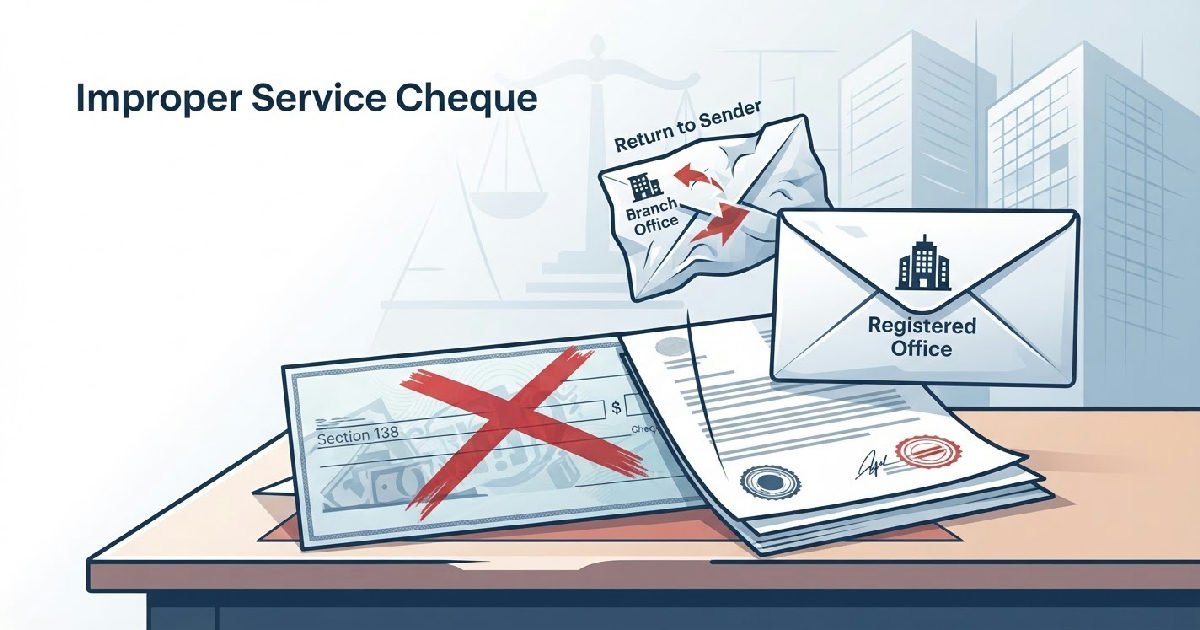
When a bounced cheque occurs, the legal pathway for redress begins with a critical step: the dispatch of a demand notice. This initial communication can make or break a criminal complaint under Section 138 of the Negotiable Instruments Act, 1881 (NI Act).
Improper cheque bounce notice service, especially regarding the intended recipient’s location, presents a significant vulnerability in legal proceedings. Even if a cheque originates from a specific branch office, legal precedent often mandates a broader approach to ensure the notice is deemed properly served.
The Imperative of Proper Bounced Cheque Notice Service (What Happens When a Cheque Bounce Notice Sent to Branch Office, Not Registered Office)
A dishonoured cheque, whether due to insufficient funds or exceeding an agreed banking arrangement, isn’t just a financial setback; it constitutes a criminal offense. The integrity of the payment system relies heavily on the strict adherence to the procedures outlined in the NI Act.
The law requires the payee to issue a formal demand notice to the drawer within 30 days of receiving the bank’s intimation of dishonour. This notice must clearly demand payment of the specific cheque amount, initiating a precise timeline for resolution.
Statutory Mandates Under Section 138
Once the demand notice is served, the drawer is granted a 15-day period to settle the outstanding amount. This window is crucial; it offers a final opportunity for the drawer to avoid facing criminal charges under Section 138.
Should the drawer fail to make payment within these 15 days, the offense is considered complete. The payee then has a one-month window, starting from the expiry of the payment period, to file a criminal complaint. It’s a critical deadline that can affect the entire case, as understanding the cheque bounce notice time limit is paramount.
Conviction under Section 138 carries serious penalties. These can include imprisonment for up to two years, a fine that could be twice the cheque amount, or a combination of both. Such stringent measures underscore the gravity of the offense.
Why Service Location Matters Critically
The location where a legal notice is served is far more than a mere administrative detail. In many cheque bounce cases, the validity of service itself becomes a primary point of contention.
Drawers frequently challenge the legitimacy of the notice by claiming it was never received or improperly delivered. This strategy can significantly weaken the complainant’s case, potentially leading to dismissal if not handled meticulously.
Navigating Service to Companies: Branch vs. Registered Office
Serving a legal notice to a company adds layers of complexity, particularly when distinguishing between a branch office and its registered office. The initial instinct might be to send the notice to the location where the business transaction occurred or where the cheque was issued.
However, relying solely on a branch office address can expose the complaint to procedural challenges. The law prioritises ensuring the principal entity is unequivocally informed of the legal demand.
The Legal Argument for Branch Office Service
There are instances where serving a notice to a branch office holds a legitimate basis, particularly if the dishonoured cheque itself was issued from that specific branch. This direct connection offers justification for directing the initial notice there.
This visible connection provides some justification for directing the initial notice to that specific branch. The argument is that the branch acted as the operational point of contact for the debt.
The Prudence of Registered Office Notification
Despite the potential validity of branch office service, legal experts widely advise an additional safeguard. It’s always prudent to dispatch a copy of the demand notice to the company’s registered office.
This ensures the primary legal entity receives formal notification of the demand. Sending a notice here drastically reduces the likelihood of the drawer successfully claiming non-receipt or improper service.
Indeed, attorneys often find that service of notice is attacked more vigorously than the authenticity of the signature or the debt itself. A dual-address approach makes the complainant’s position far more robust against such procedural attacks.
Proving Delivery: The Cornerstone of a Valid Notice
Mere dispatch of a legal notice isn’t enough; proving its delivery is paramount for a successful cheque bounce case. The legal system places the onus on the complainant to demonstrate that the drawer received or deliberately avoided receiving the demand.
This requirement translates into meticulous record-keeping and careful selection of dispatch methods. Without concrete proof of delivery, the entire legal process can stall or fail.
Acceptable Methods of Dispatch
To ensure proper service, legal notices should be sent via reliable and traceable methods. These include registered AD post, reputable courier services, fax messages, or even electronic mail.
Each of these methods offers a mechanism for tracking the notice’s journey. The key is to select a method that generates tangible evidence of dispatch and, ideally, receipt.
The Criticality of Acknowledgment
Proof of dispatch is important, but proof of receipt is often considered the gold standard. Documents such as postal or courier receipts, detailed tracking information, and signed delivery acknowledgments are invaluable.
These pieces of evidence serve as undeniable proof that the notice reached its intended destination. They counteract any claims by the drawer that they were unaware of the legal demand.
It’s crucial to note that a cheque bounce notice returned unserved from one old branch address does not necessarily invalidate the entire case. If other addresses were also properly served, the legal process can still proceed, demonstrating the benefit of comprehensive service attempts.
Common Pitfalls in Cheque Bounce Notice Service
Despite clear guidelines, errors in service of notice remain a frequent impediment to justice in cheque bounce cases. These pitfalls often provide a strategic opening for drawers to delay or dismiss proceedings, highlighting the need for vigilance from payees.
Understanding these common mistakes can help payees proactively strengthen their legal position. It prevents easily avoidable procedural weaknesses.
Incorrect or Outdated Addresses
One prevalent issue arises from sending notices to incorrect or outdated addresses. Companies, especially, can change their operational or registered premises over time, leading to notices being undelivered.
If the legal notice is not properly served or is sent to an address no longer associated with the drawer, it becomes a strong point for contesting the case. Such disputes consume valuable court time and resources.
The “Unserved” Notice Dilemma
A notice that comes back marked “unserved” or “addressee not found” creates an immediate hurdle. If the legal notice isn’t properly served or is sent to an incorrect address, the drawer can contest the case, significantly weakening the complaint.
Such an outcome suggests the drawer was never properly informed, irrespective of whether they intentionally avoided service. This is why attempting service at multiple, verified addresses, including the registered office, is a robust strategy.
Implications for Payees and Drawers
The nuances of cheque bounce notice service hold significant implications for both parties involved. For payees, a meticulous approach can prevent frustrating delays and ensure their legal rights are upheld.
For drawers, understanding these requirements can inform their defense strategies. Both sides must be aware of the precise legal framework to navigate these disputes effectively.
Safeguarding the Payee’s Case
Payees must adopt a proactive and thorough strategy to safeguard their case against dishonoured cheques. This includes verifying the most current address of the drawer, especially for companies.
Engaging legal counsel early can be invaluable, as proper advice on effective service methods significantly strengthens the overall complaint. This proactive approach can often be the difference between success and failure in legal proceedings.
Drawer’s Defense Strategies
Drawers facing a cheque bounce complaint frequently examine the legitimacy of the notice service as a primary defense. This tactic can effectively stall proceedings if any procedural lapses are identified.
Claims of non-receipt or improper address are common arguments used to challenge the validity of the legal process. They often aim to demonstrate that the statutory preconditions for filing a complaint were not fully met. This is particularly relevant when considering if a company director can go to jail due to such an offense.
This emphasis on service disputes underscores why payees must be diligent. It is often easier for a drawer to dispute notice than the underlying debt.
| Action Required | Timeline/Description | Legal Significance |
|---|---|---|
| Cheque Dishonour Intimation | Received from bank | Triggers the 30-day period for legal notice. |
| Issue Demand Notice | Within 30 days of bank intimation | Mandatory precondition for Section 138 complaint. Must demand payment. |
| Drawer’s Payment Window | 15 days from receipt of notice | Opportunity for drawer to avoid criminal charges. Offense not yet complete. |
| Offense Completion | After 15-day payment window expires without payment | Legal basis for filing a criminal complaint under NI Act. |
| File Criminal Complaint | Within 1 month after 15-day window expiry | Initiation of formal legal proceedings in court. |
| Penalties (if convicted) | Imprisonment up to 2 years, fine up to twice cheque amount, or both | Consequences of violating Section 138 of the NI Act. |
What are the core requirements for a cheque bounce notice?
A cheque bounce notice must be a written demand issued within 30 days of the bank intimating the cheque’s dishonour. It must explicitly demand the payment of the cheque amount, and it must be properly served to the drawer, allowing 15 days for payment before legal action can be initiated.
Why should a cheque bounce notice be sent to both a branch and registered office?
Sending a cheque bounce notice to both a branch office (if relevant to the transaction) and the company’s registered office provides a stronger legal standing. This dual approach helps counter potential claims by the drawer of non-receipt or improper service, reinforcing the payee’s compliance with legal requirements.
What are the consequences of improper notice service in a cheque bounce case?
Improper notice service can severely weaken a cheque bounce case under Section 138 of the NI Act. The drawer can successfully challenge the complaint’s validity, arguing that a mandatory precondition for legal action was not met. This can lead to delays, dismissal of the case, or a need to re-initiate proceedings.
Notice came back from one address? Call or Whatsapp for free consultation.
Related: https://arpitmarwah.com/cheque-bounce-lawyers-in-delhi/