
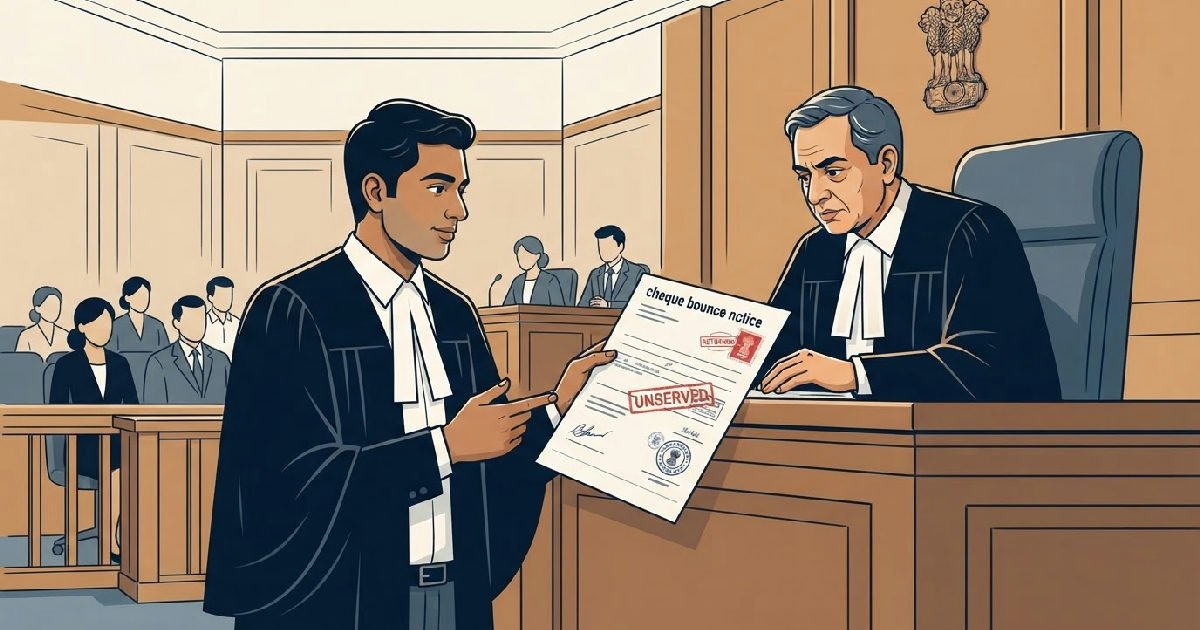
An unserved demand notice in a cheque bounce case, filed under Section 138 of India’s Negotiable Instruments Act, 1881, doesn’t automatically invalidate the legal action, courts have consistently affirmed. This clarification counters a common misconception among both complainants and the accused, stressing that judicial scrutiny focuses on the intent and efforts behind the service attempt, not just the physical delivery.
Legal experts in India, particularly those dealing with cases in Delhi, emphasize that the legal process demands meticulous adherence to procedure. Simply having a cheque bounce notice came back unserved does not mean the complainant’s case is dead. Instead, the legal system provides mechanisms to ensure justice, provided the proper steps were taken to effect service.
The Presumption of Proper Service Under Section 138
Indian courts operate under a significant legal presumption when a demand notice is dispatched correctly. If the notice is sent by registered post to the appropriate address, service is presumed to have been completed, even if it eventually comes back undelivered.
This critical principle is often invoked when notices are returned with endorsements such as “refused,” “not available in the house,” “house locked,” “shop closed,” or “addressee not in station.” These circumstances are generally interpreted as the addressee deliberately avoiding service or being unavailable, rather than a failure on the sender’s part.
The foundation for this presumption lies in Section 27 of the General Clauses Act, 1897. This statutory provision allows courts to infer that a document sent by post, properly addressed and stamped, was indeed served on the intended recipient in the ordinary course of postal business.
It shifts the burden to the recipient to prove they did not receive it, a challenging task under these circumstances.
Invalidating Service: When the Address is Wrong
While the presumption of service is robust, it isn’t absolute. Its validity hinges entirely on the notice being sent to the correct address of the drawer. If the notice was dispatched to an incorrect address, this crucial presumption falls apart, potentially jeopardizing the entire case.
The Delhi High Court, in several rulings including a notable one in *RL V*, has reinforced this distinction. Courts will meticulously examine whether the address used for service was genuinely that of the accused at the time of dispatch. Providing evidence that the address was incorrect can serve as a strong defense against the claim of deemed service.
This judicial stance highlights the importance of due diligence from the outset of any cheque bounce case. Complainants must ensure they possess the most accurate and up-to-date address for the drawer to avoid procedural pitfalls later on.
Strategic Legal Steps for Complainants
Legal professionals often advise a multi-pronged approach to ensure effective service and strengthen the case against a recalcitrant drawer. Sending the demand notice to several relevant addresses significantly reduces the risk of it being deemed improperly served.
This includes the drawer’s registered office, their residential address, or any other address mentioned on invoices, agreements, or other official documents. Maintaining meticulous proof of dispatch, such as postal receipts, and documentation of the notice’s return, is paramount for evidentiary purposes.
Cheque bounce lawyers in Delhi frequently employ these tactics. They understand that such proactive measures can help circumvent potential defenses based on improper service and keep the Section 138 case on track. This attention to detail is critical, especially when dealing with complex corporate entities or individuals who might attempt to evade receipt.
The Critical Role of Evidence in Court
When a demand notice is returned unserved, the court’s focus shifts heavily to the evidence presented by the complainant regarding their service attempts. Judges scrutinize the dispatch records, the envelope’s endorsements, and any accompanying affidavits detailing the efforts made.
Evidence proving dispatch via registered post to a demonstrably correct address forms the bedrock of the complainant’s argument. This allows the court to apply the presumption of service, even without physical confirmation of delivery to the drawer.
Conversely, the accused must present compelling evidence that the address was indeed incorrect or that they had no means of receiving the notice, rebutting the legal presumption. Mere denial of receipt is rarely sufficient without substantiating proof.
Maintaining Legal Action: The Importance of Diligent Service
While courts don’t automatically dismiss cases due to an unserved notice, a complainant’s diligence in service attempts is paramount. Prompt, strategic action is vital to ensure the legal process continues effectively. The law allows for subsequent actions even if an initial notice goes unserved, but this demands proactive measures from the payee.
Delaying further legal steps, perhaps hoping to locate a “better address,” can complicate efforts to maintain the case. Legal professionals advise against procrastination, stressing the need to act swiftly. This ensures that the payee continues to fulfil procedural requirements for the ongoing legal action.
Therefore, strategic decision-making regarding service is not just a best practice; it’s a fundamental requirement for sustaining a cheque bounce claim.
Implications for Both Payee and Drawer
For the payee, understanding these nuances means recognizing that a returned notice is a hurdle, not a dead end. It necessitates a thorough review of service strategy and immediate consultation with legal counsel. Proactive measures, like sending notices to multiple addresses, can save time and prevent future complications.
For the drawer, simply ignoring a demand notice, or claiming non-receipt without genuine grounds, is a risky strategy. The legal presumption of service means that such tactics are unlikely to succeed if the payee has followed proper procedure. An accused individual or entity should seek legal advice promptly upon becoming aware of a dishonored cheque to understand their obligations and potential liabilities.
This legal clarity ensures that the system isn’t easily manipulated by those attempting to evade responsibility. The focus remains on the underlying financial obligation and the legal mandate of Section 138.
Bolstering a Cheque Bounce Claim
To further strengthen a cheque bounce claim, especially when facing service challenges, complainants should compile comprehensive documentation. This includes copies of the dishonored cheque, the bank memo confirming its return, the demand notice itself, and all postal records.
Sworn affidavits detailing the attempts made for service and any communications with the drawer can also be highly beneficial. These documents collectively demonstrate the complainant’s diligence and their genuine effort to comply with the legal requirements.
Engaging experienced cheque bounce lawyers in Delhi is often advisable. They possess the expertise to navigate the procedural intricacies, ensuring that all necessary steps are taken and documented properly to bolster the case.
Here’s a breakdown of notice return scenarios and their typical legal interpretation:
| Notice Return Status | Service Presumption | Legal Impact on Case |
|---|---|---|
| Returned “Refused” | Presumed served | Case can proceed |
| Returned “Not Available” / “House Locked” | Presumed served | Case can proceed |
| Returned “Addressee Not in Station” | Presumed served | Case can proceed |
| Returned “Incorrect Address” | Presumption rebutted | Service invalid; case jeopardized unless rectified |
Does an unserved cheque bounce notice automatically mean the case is dead?
No, an unserved cheque bounce notice under Section 138 of the Negotiable Instruments Act, 1881, does not automatically kill a case. Courts examine the efforts made by the complainant to serve the notice and whether it was sent to the correct address.
What happens if the notice is returned marked “refused” or “not available”?
If a demand notice is sent by registered post to the correct address and is returned with endorsements like “refused,” “not available,” or “house locked,” it is generally presumed by the courts that service has been effected. The case can usually proceed.
What should a complainant do if the demand notice is returned unserved?
Complainants should immediately consult with their legal counsel. It’s advisable to resend the notice to multiple known addresses of the drawer and meticulously document all dispatch and return proofs. Prompt and diligent action is essential to effectively maintain the legal proceedings.
Call or Whatsapp for free consultation.
Related Service: https://arpitmarwah.com/cheque-bounce-lawyers-in-delhi/