
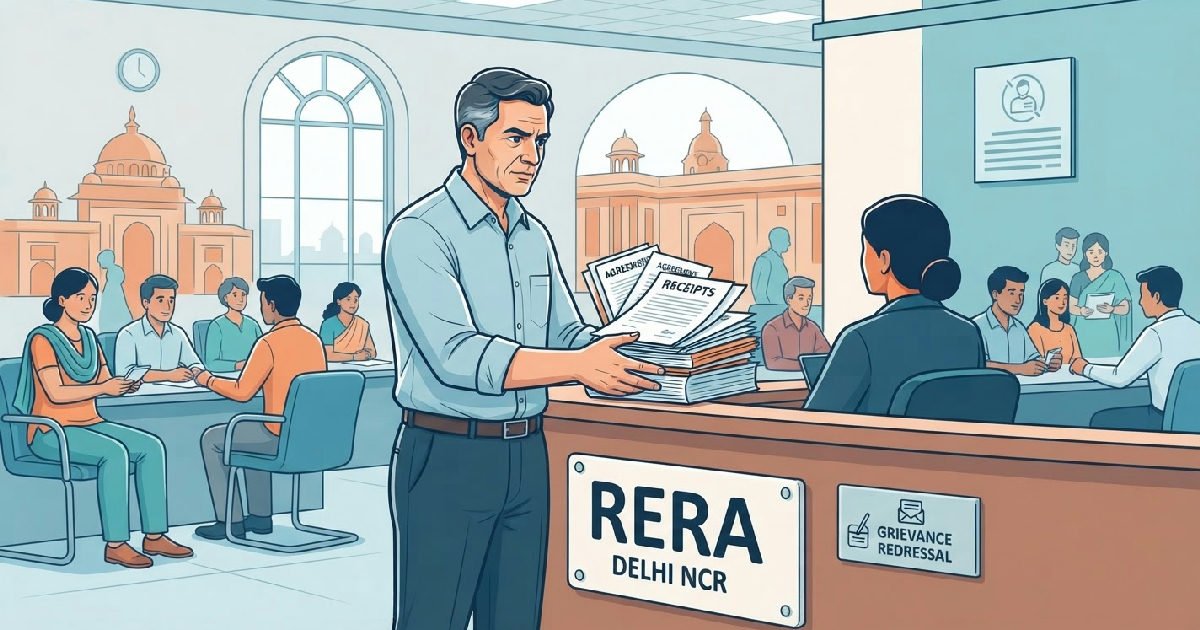
Homebuyers and Non-Resident Indians (NRIs) in the Delhi National Capital Region (NCR) possess clear avenues to seek redress against errant developers. The Real Estate (Regulation and Development) Act (RERA), which came into full effect on May 1, 2017, provides a structured mechanism for filing complaints. This framework is crucial for those facing issues like delayed possession, unauthorised plan alterations, or substandard construction quality.
Understanding who is eligible to file a RERA complaint in Delhi NCR, the necessary documentation, and the proper procedure can significantly empower affected allottees. The jurisdiction depends directly on where the project is registered, ensuring complaints are directed to the correct state authority.
Navigating RERA Complaints in Delhi NCR
The Real Estate (Regulation and Development) Act (RERA) fundamentally reshaped India’s real estate sector, aiming to protect consumer interests and promote transparency. Its implementation on May 1, 2016, with 61 of 92 sections initially notified, marked a significant shift. The remaining provisions became effective a year later, establishing a comprehensive regulatory body.
For buyers in Delhi NCR, this means grievances against promoters, allottees, or real estate agents for violations of the RERA Act, its rules, or regulations are now formally addressed. The appropriate RERA authority—be it Delhi RERA, Uttar Pradesh RERA, or Haryana RERA—asserts jurisdiction based on the specific location where the project is registered. This geographical demarcation is critical for initiating a valid complaint.
Defining an aggrieved person
An aggrieved person, under RERA, is broadly defined to include any stakeholder adversely affected by a builder’s actions. This extends beyond individual homebuyers to investors and other parties directly impacted. The law is designed to offer a wide net of protection against malpractices.
Crucially, eligibility often hinges on having proper documentation. While the term “aggrieved” is inclusive, the ability to substantiate a claim with legal instruments remains paramount. This legal backing ensures that only legitimate complaints proceed.
Jurisdictional clarity: where to file
The primary determinant for where to file a RERA complaint is the project’s registration location. A project in Noida falls under UP RERA, while one in Gurugram comes under Haryana RERA. Projects within Delhi’s specific boundaries are handled by Delhi RERA.
This jurisdictional specificity ensures that complaints are heard by the authority most familiar with local regulations and project details. Misfiling a complaint can lead to delays and complications for the complainant. It underscores the need for precise identification of the project’s official registration.
Who Qualifies to File a RERA Complaint?
RERA outlines specific categories of individuals and entities eligible to file complaints, ensuring that legitimate stakeholders can seek recourse. The primary complainants are usually those directly involved in the property transaction. These provisions aim to streamline the complaint process by clearly defining who has standing.
This clarity prevents frivolous claims and ensures the authorities focus on genuine disputes. The framework is designed to empower buyers while maintaining a structured legal approach. It emphasizes documentary evidence to establish rightful claims.
Homebuyers and allottees
The most common complainants are homebuyers who have purchased a flat or apartment, and allottees who have acquired a plot or commercial property. Their status as registered owners or prospective owners gives them direct standing. They hold the builder-buyer agreement or allotment letter, which forms the basis of their legal relationship with the promoter.
These documents are central to proving their claim and detailing the terms of the agreement. Without these crucial papers, establishing a legitimate complaint becomes significantly more challenging. It highlights the importance of keeping all transaction records.
Joint ownership complexities
In cases of joint allottees, the general principle dictates that all individuals named on the allotment letter and builder-buyer agreement should typically file the complaint together. This unified approach strengthens the complaint. It also ensures all affected parties are officially represented.
If one co-allottee is unavailable, this fact must be explicitly stated in the complaint to maintain transparency. Such disclosures prevent procedural hurdles later in the resolution process. This ensures due diligence in representing all legal owners.
Non-Resident Indian (NRI) filing options
Non-Resident Indians (NRIs) are fully entitled to file RERA complaints, even from abroad. They can utilise the respective state RERA portals for online submissions regarding issues like delayed possession or requests for refunds and compensation. NRIs have several flexible options for participation.
They can attend hearings via video link, ensuring their presence despite geographical distance. Alternatively, they can appoint a Power of Attorney (PoA) holder or a lawyer to represent them, facilitating legal action back in India. This provision significantly aids NRIs facing NRI property delays.
Relatives and cash payments
A relative who has only paid cash for a property, but is not named on the allotment letter or agreement, generally cannot file a complaint in their own name. RERA prioritises documented legal relationships. Without proper papers, their claim lacks direct standing.
The legal framework requires the complainant to be a party to the contract with the builder. This rule prevents proxy complaints without a direct contractual link. It reinforces the need for all formal documentation to be in the name of the actual aggrieved party.
Common Grounds for RERA Grievances
RERA empowers homebuyers by clearly defining actionable grounds for complaints against developers. These provisions cover a wide spectrum of potential missteps and outright violations by promoters. Knowing these specific grounds is essential for any aggrieved party considering legal action.
The Act aims to hold developers accountable for their promises and contractual obligations. This specificity helps complainants frame their cases effectively and provides clear benchmarks for regulatory authorities. It acts as a vital protection against common industry abuses.
Delays, defects, and deviations
Late possession is one of the most frequent reasons for filing a RERA complaint. Developers often fail to meet promised timelines, causing significant financial and emotional distress to buyers. The Act provides clear avenues for compensation or refunds in such scenarios.
Other major grounds include changes from approved plans without the allottee’s consent, which can alter the property’s value or utility. Poor construction quality or structural defects, particularly within five years of possession, also constitute valid complaints. This ensures buyers receive the quality promised.
Unfair practices and charges
Homebuyers can file complaints if developers do not adhere to agreed-upon specifications or promised amenities, which can materially affect the property’s value. This includes a discrepancy between advertised features and the final delivered product.
Charging unfair or illegal fees outside the agreed terms in the builder-buyer agreement is another significant ground for complaint. Any violation of RERA Act provisions, in general, provides sufficient basis for initiating action. This broad clause covers many potential grievances.
Essential Documentation for a Strong Case
Filing a successful RERA complaint heavily relies on comprehensive and accurate documentation. Without the right evidence, even a legitimate grievance can falter. Complainants must meticulously gather all relevant papers to support their claims effectively.
These documents serve as crucial proof of transactions, communications, and contractual obligations. They provide the RERA authority with a clear picture of the dispute. Proper preparation of this evidence can significantly expedite the resolution process.
Personal and project specifics
Complainants need to provide their full identity and address details, including name, complete residential address, email ID, and phone number. These details establish the complainant’s identity and facilitate communication. Accurate contact information is crucial for all official correspondence.
Furthermore, detailed information about the project itself is required. This includes the name of the builder/promoter, specifics of the project, and its official RERA registration number. This ensures the complaint is correctly linked to the specific development and developer.
Transactional records and communication
A suite of transactional documents forms the backbone of any RERA complaint. These include the allotment letter, the builder-buyer agreement or sale deed, and all proofs of payment or payment receipts. For NRIs, Foreign Inward Remittance Certificates (FIRC) are essential to document foreign remittances.
Crucially, all correspondence with the builder—such as emails, letters, and even WhatsApp messages—should be preserved and submitted. Project brochures, advertisements, and any visual evidence like footage or images of the project location or construction status also provide valuable support. These demonstrate what was promised versus what was delivered.
Delhi RERA Filing Process and Costs
The process for filing a RERA complaint in Delhi is designed to be accessible, primarily through online channels. Understanding the specific forms and associated fees is critical for a smooth submission. The regulatory body aims for efficient resolution, though timelines can vary.
This structured approach helps manage expectations and guides complainants through the necessary steps. It ensures that complaints are categorised correctly from the outset. Adhering to these procedural requirements is vital for a valid filing.
Online filing and designated forms
Complaints can be conveniently filed online via the official RERA Delhi website. This digital approach streamlines the submission process. It makes it easier for complainants to submit their grievances without extensive physical visits.
Specific forms are mandated for different types of complaints. Form M is used for violations of RERA clauses or terms, submitted to the Delhi Real Estate Regulatory Authority. For claims of loss or damage due to false information, structural defects, or project delays, Form N is filed with the Adjudicating Officer.
Appeals against RERA Authority or Adjudicating Officer orders are made using Form L, directed to the RERA Appellate Tribunal. Knowing the correct form avoids unnecessary delays and ensures the complaint reaches the appropriate body.
Fee structure and resolution timelines
Filing a complaint with RERA Delhi typically incurs a fee of ₹1,000. If the complaint is lodged with an Adjudicating Officer for claims of loss or damage, the fee increases to ₹5,000. These fees are statutory and must be paid at the time of submission.
RERA aims to resolve complaints efficiently, ideally within 60 days of filing. However, the complexity of a case can significantly extend this period. More intricate disputes might take 90-180 days, with the entire process potentially spanning 4 to 12 months. Homebuyers seeking to claim RERA delay interest often fall into these longer timelines.
| Complaint Type | Form | Authority | Filing Fee (₹) | Target Resolution Time |
|---|---|---|---|---|
| RERA Clause Violations | Form M | Delhi Real Estate Regulatory Authority | 1,000 | 60 Days (may extend) |
| Loss/Damage (False Info, Defects, Delays) | Form N | Adjudicating Officer | 5,000 | 60 Days (may extend) |
| Appeals against RERA/AO Order | Form L | RERA Appellate Tribunal | Varies | Case Dependent |
The Impact of RERA on Residential Real Estate
The implementation of RERA has brought about a significant transformation in India’s residential real estate landscape, particularly in regions like Delhi NCR. It established a regulatory framework that was largely absent before, aiming to standardise practices and protect the interests of millions of homebuyers. This shift has been crucial in fostering a more organised and accountable sector, moving away from previous unregulated environments.
Developers are now subject to stricter oversight regarding project registration, financial transparency, and adherence to timelines. This regulatory muscle has fundamentally altered the power dynamic between buyers and builders. It has instilled a sense of confidence among purchasers, which was often lacking in the past.
Strengthening buyer confidence
One of RERA’s most profound impacts is the boost in buyer confidence. With a dedicated regulatory authority, homebuyers in Delhi NCR now have a clear legal recourse against unscrupulous developers. This assurance encourages greater participation in the housing market, as buyers feel more secure in their investments.
The Act mandates disclosures from developers, including project plans, progress, and financial details, which were previously opaque. This transparency allows buyers to make more informed decisions. It reduces the risks associated with property purchases, a critical factor in a high-value transaction.
Promoting developer accountability
RERA has fundamentally shifted the onus of responsibility onto developers. They are now legally bound to deliver projects as promised, both in terms of specifications and timelines. Non-compliance can lead to severe penalties, including monetary fines and even imprisonment for repeated violations.
This increased accountability has pushed developers towards greater professionalism and ethical conduct. It fosters a competitive environment where reputation and adherence to regulations become key differentiators. Ultimately, this benefits the entire real estate ecosystem by promoting fair practices and ensuring project quality.
Who can generally file a RERA complaint in Delhi NCR?
Any aggrieved person, including homebuyers, investors, or allottees with proper documentation like an allotment letter or builder-buyer agreement, can file a complaint. NRIs can also file, even from abroad, using online portals or through a Power of Attorney.
What documents are essential for filing a RERA complaint?
You’ll need identity proof, project details including its RERA number, transactional documents like the builder-buyer agreement and payment receipts, and all correspondence with the builder. Photos or footage of the project can also be valuable evidence.
What are the typical fees and resolution timelines for Delhi RERA complaints?
Filing a complaint with Delhi RERA typically costs ₹1,000, or ₹5,000 if filed with an Adjudicating Officer. RERA aims to resolve complaints within 60 days, though complex cases can extend the process to 4-12 months.
Need RERA lawyers in Delhi NCR for delay or refund? Call or Whatsapp for free consultation.
Related Service: https://arpitmarwah.com/rera-lawyers-in-delhi/