
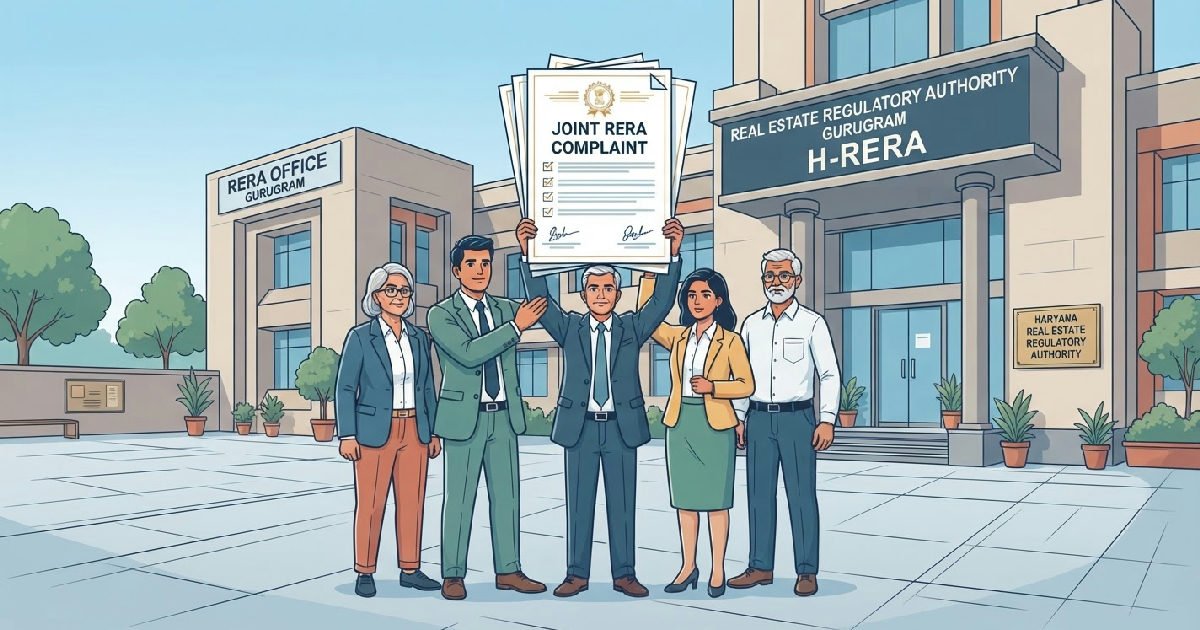
Homebuyers facing protracted project delays and other grievances across Noida and Gurugram are finding a more potent avenue for redressal through the strategic use of a joint RERA complaint. This unified approach, permitted under the Real Estate (Regulation and Development) Act, 2016 (RERA), has emerged as a crucial tool.
It’s particularly effective in large housing societies where numerous allottees share similar plights against a common promoter. While individual complaints remain an option, the collective strength of many buyers presenting a cohesive case often proves more effective in securing justice.
Leveraging collective power with a joint RERA complaint
However, expert legal counsel consistently advises against combining demands for refunds with requests for possession within a single complaint. Such a mix can complicate proceedings and dilute the clarity of the desired relief.
The RERA Act fundamentally changed the landscape for Indian homebuyers, providing a robust legal framework to address builder defaults and ensure accountability. Under Section 31 of this pivotal legislation, any aggrieved person, including an allottee or an association of allottees, can formally lodge a complaint.
This provision is particularly significant for large-scale residential projects where issues like delayed possession affect hundreds of buyers simultaneously. Opting for a joint RERA complaint allows multiple victims of the same developer to consolidate their grievances.
This not only presents a stronger, more unified front against a builder but also streamlines the legal process. Instead of countless individual hearings, the RERA Authority can address a broader pattern of non-compliance, leading to more impactful and consistent rulings.
The RERA Framework for Aggrieved Allottees
RERA ensures that homebuyers have a clear pathway to recourse, offering protections that were largely absent in the pre-RERA era. The Act specifically grants associations of allottees the standing to file complaints, acknowledging the inherent power imbalance between individual buyers and large real estate developers.
This collective filing mechanism is especially pertinent when issues stem from systemic problems within a project, such as construction quality deficiencies, unapproved plan changes, or widespread delays. A joint RERA complaint underlines the scale of the problem. It makes it harder for developers to dismiss as isolated incidents.
Strategic Benefits of Unified Action
When multiple allottees join forces, they often benefit from shared legal costs and resources, which can be substantial in property disputes. A single, well-articulated joint complaint, prepared with professional legal assistance, typically carries more weight than dozens of poorly drafted individual submissions.
It presents a clear, undeniable picture of widespread non-compliance by the promoter. This strategic approach also demonstrates solidarity among buyers, which can exert additional pressure on developers to negotiate and resolve issues promptly.
For the RERA Authority, dealing with a consolidated complaint simplifies case management. It also allows for more comprehensive and equitable resolutions across an entire project.
The Critical Divide: Refund Versus Possession Claims
One of the most crucial strategic decisions for homebuyers under RERA involves choosing the appropriate remedy for project delays. Section 18 of the Act offers two distinct paths: demanding a full refund with interest or seeking possession with compensation for the delay period.
Mixing these objectives within a single complaint can significantly impede its effectiveness. RERA lawyers frequently advise groups of aggrieved buyers to segment themselves based on their primary desired outcome. This ensures that the legal arguments and requested relief are clear and coherent.
Absolute Right to Refund Under RERA
For homebuyers who no longer wish to remain invested in a delayed project, RERA provides an absolute right to a refund. The developer is legally obligated to return all money paid by the buyer, along with interest for the entire period the funds were held.
This right does not require the buyer to provide a specific reason for exiting the project. A landmark ruling by the Supreme Court in the 2020 case of Imperia Structures Ltd versus Anil Patni solidified this position.
The Court unequivocally clarified that a refund under Section 18 is an absolute right. Builders cannot deny it, even if construction is complete or an occupancy certificate has been issued. This precedent empowers buyers to withdraw from problematic projects without fear of protracted legal battles over their initial investment.
Securing Possession with Delay Interest
Conversely, many homebuyers still want to secure possession of their units despite delays. This is particularly true if they have a long-term commitment to the property or believe the project will eventually be completed.
In such cases, RERA mandates that the builder must pay monthly interest for the entire duration of the delay. This is calculated until the actual handover of possession. This interest rate is typically prescribed by RERA, often set at about two percentage points above the Reserve Bank of India (RBI) lending rate.
This provision acts as a deterrent for builders and provides financial compensation to buyers for the inconvenience and financial burden caused by delayed delivery. It acknowledges that delayed possession impacts buyers, who might be paying EMIs and rent simultaneously, or missing out on potential rental income from their investment.
Why Separating Claims Matters
The core issue with combining refund and possession claims in one complaint stems from their conflicting nature. A claim for refund indicates a desire to exit the project entirely, while a claim for possession signals a continued commitment to the property.
Courts and RERA authorities prefer clear, unambiguous petitions. Attempting to pursue both remedies simultaneously can confuse the tribunal, prolong the resolution process, and potentially weaken both arguments.
Legal professionals, therefore, strongly recommend that groups of buyers organize themselves based on their ultimate objective. This clarity allows for a more targeted and effective legal strategy, enhancing the chances of a favourable outcome for all involved parties.
Navigating the RERA Complaint Process in Delhi NCR
Filing a RERA complaint in the Delhi National Capital Region (NCR) involves specific procedures and jurisdictional considerations. Buyers must understand these aspects. The process is largely digitized, facilitating easier access for aggrieved allottees, but strict adherence to guidelines is essential for a successful submission.
Understanding where and how to file a RERA complaint correctly can save considerable time and effort. Missteps in jurisdiction or documentation can lead to delays or even dismissal of the complaint. This underscores the importance of careful preparation.
Online Filing and Jurisdictional Nuances
For projects physically located in Delhi, complaints are filed online via the rera.delhi.gov.in portal. However, a critical jurisdictional rule dictates that the complaint must be lodged with the RERA authority of the state where the project is situated, not where the buyer resides.
This distinction is vital for residents of Delhi who own properties in neighbouring states. For example, a buyer based in Delhi with an apartment in Noida must file their complaint with the Uttar Pradesh RERA (UP RERA).
Similarly, issues pertaining to projects in Gurugram fall under the purview of the Haryana RERA (H-RERA). This state-specific jurisdiction ensures that local authorities, who are most familiar with the project and regional regulations, handle the case.
Essential Documentation and Fees
Successful RERA complaints hinge on comprehensive documentation. Buyers must furnish several key documents to support their claims. These include the registered agreement for sale or the original allotment letter, all payment receipts, and demand letters issued by the builder.
Any builder-buyer correspondence, such as emails or letters, and the project’s RERA registration number are also required. Filing fees also vary by state. In Delhi, the fee for a RERA complaint ranges from Rs. 500 to Rs. 2,000.
Haryana RERA charges a fixed complaint fee of Rs. 1,000, along with an additional Rs. 10 annexure fee. These fees are designed to be accessible, reflecting RERA’s objective to make legal recourse available to a broad spectrum of homebuyers.
| RERA Authority | Complaint Filing Fee | Annexure Fee |
|---|---|---|
| Delhi RERA | Rs. 500 – Rs. 2,000 | N/A |
| Haryana RERA (H-RERA) | Rs. 1,000 | Rs. 10 |
| Uttar Pradesh RERA (UP RERA) | Not specified in research | Not specified in research |
The Indispensable Role of RERA Lawyers
Given the complexities of real estate law and the specific procedures mandated by RERA, engaging specialized RERA lawyers in Delhi NCR is often a critical step for homebuyers. These legal professionals possess expertise in navigating the intricate provisions of the RERA Act, offering crucial support in various disputes.
Their involvement can significantly enhance the prospects of a favourable outcome. This is especially true when pitted against well-resourced builders who invariably employ their own experienced legal teams. Effective legal representation ensures that complaints are framed correctly, supported by robust evidence, and presented compellingly before the RERA authorities.
Expert Guidance Through Complex Disputes
RERA lawyers specialize in a broad spectrum of real estate disputes, from project delays and quality issues to refund claims and compensation cases. They provide invaluable legal support, guiding clients through the entire process.
This includes document gathering and drafting complaints, to preparing arguments and representing clients during RERA hearings and negotiations. Their expertise is particularly beneficial in interpreting the nuances of RERA regulations.
They also identify the most effective legal strategies for each unique situation. They help buyers understand their rights and obligations, ensuring compliance with procedural requirements. These are often overlooked by individuals attempting to represent themselves.
Adjudicating Officer’s Specific Jurisdiction
Beyond the RERA Authority itself, certain claims fall under the exclusive jurisdiction of an Adjudicating Officer. This role is typically filled by a retired District Judge, specifically tasked with handling claims for compensation where monetary damages are sought for losses.
Such losses might arise from a promoter’s or agent’s misconduct, false information, structural defects, or project delays. For these specific claims, buyers must file Form N with the Adjudicating Officer, rather than the RERA Authority.
A skilled RERA lawyer can accurately determine the correct forum for each aspect of a buyer’s complaint. This ensures that the case is heard by the appropriate legal body. This distinction is vital for maximizing the chances of receiving full and fair compensation.
Enhancing Outcomes Through Strategic Legal Counsel
While RERA is designed to be buyer-friendly, the reality of property disputes often involves builders mounting vigorous defenses. These developers frequently employ experienced legal counsel, making the framing and substantiation of a homebuyer’s complaint paramount.
A well-prepared case, backed by meticulous evidence and clear legal arguments, is far more likely to secure the desired relief. RERA lawyers play a pivotal role not just in filing, but in the ongoing management of a case.
This includes responding to counter-arguments and engaging in settlement discussions. Their strategic input can differentiate between a prolonged, frustrating legal battle and a swift, satisfactory resolution for aggrieved allottees.
The Value of Precedent and Interpretation
The evolving body of RERA case law, including significant rulings like the Supreme Court’s decision in Imperia Structures Ltd versus Anil Patni, provides important precedents. Specialized lawyers are adept at leveraging these rulings to strengthen a homebuyer’s position.
They understand how previous judgments interpret various sections of the RERA Act. This enables them to construct robust arguments tailored to specific circumstances. This deep understanding of legal precedent is particularly critical when addressing complex scenarios or novel challenges in the real estate sector.
By citing relevant cases, lawyers can guide the RERA Authority towards consistent and legally sound decisions. This reinforces the buyer’s claims for either possession or a refund with interest.
Beyond the Complaint: Enforcement and Compliance
A favorable RERA order is only the first step; its enforcement is equally crucial. Lawyers assist not only in obtaining orders but also in pursuing their execution, should developers fail to comply voluntarily.
The RERA Authority holds significant powers, including the ability to impose penalties and order specific performance. However, successful enforcement often requires persistent legal follow-through. Moreover, RERA lawyers often advise both buyers and developers on compliance issues.
This helps to prevent disputes before they escalate. By understanding the Act’s stringent requirements for project registration, disclosures, and timely delivery, all parties can avoid common pitfalls that lead to litigation. This preventative approach contributes to a healthier, more transparent real estate market in Delhi NCR.
Future Outlook for Real Estate Regulation
The RERA Act has significantly reshaped the regulatory landscape of the Indian real estate sector. This is particularly true in high-growth regions like Delhi NCR. The increasing trend of joint complaints signifies a growing awareness among homebuyers of their rights and the collective power they wield.
This heightened vigilance continues to push for greater transparency and accountability from developers. As the RERA authorities gain more experience and legal precedents accumulate, the resolution process for real estate disputes is expected to become even more efficient and predictable.
This evolving environment benefits both homebuyers, who can seek redress with greater confidence, and reputable developers, who thrive in a more regulated and fair market.
The emphasis on clear and distinct legal strategies, such as separating possession or refund claims, underscores the maturity of the RERA framework. This nuanced approach helps ensure that the specific relief sought by consumers is accurately assessed and effectively granted by the tribunals.
Can multiple buyers file a single RERA complaint?
Yes, multiple allottees aggrieved by the same project or promoter can file a joint complaint under Section 31 of the RERA Act. This approach is highly effective in large housing societies where many buyers face similar issues, such as delayed possession.
What is the main difference between seeking a refund and seeking possession under RERA?
Under Section 18 of RERA, a homebuyer can either choose an absolute right to a refund with interest if they wish to exit a delayed project, or they can opt to wait for possession and receive monthly interest for the entire period of delay until the property is handed over.
Where should I file a RERA complaint if I live in Delhi but my project is in Noida?
You must file your RERA complaint with the authority of the state where the project is physically located. Therefore, a project in Noida requires filing with the Uttar Pradesh RERA (UP RERA), not the Delhi RERA.
Call or Whatsapp for free consultation.
Related Service: https://arpitmarwah.com/rera-lawyers-in-delhi/