
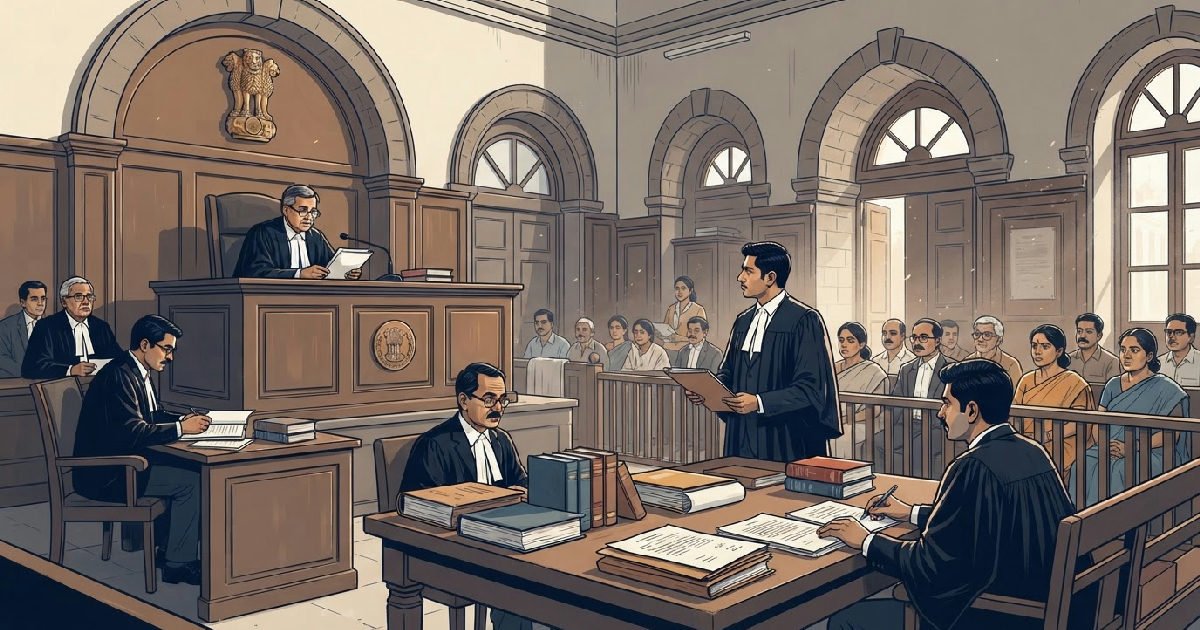
Navigating the complex landscape of cheque bounce cases in Delhi demands a precise understanding of jurisdictional rules. For businesses and individuals pursuing complaints under Section 138 of the Negotiable Instruments Act, 1881, selecting the correct Delhi cheque bounce court is paramount.
The pivotal Negotiable Instruments (Amendment) Act, 2015, which came into force retrospectively on June 15, 2015, reshaped where these critical cases must be filed. This amendment significantly impacts filings across the capital’s major judicial districts, including Tis Hazari, Saket, Rohini, Dwarka, Karkardooma, and Patiala House.
Delhi’s cheque bounce court jurisdiction shifts in 2015
Before the 2015 amendments, the jurisdictional framework for cheque bounce cases was often ambiguous, leading to considerable confusion and procedural delays. Litigants frequently grappled with uncertainty over the appropriate court. This often resulted in protracted disputes over venue rather than the substantive issues of the case.
The Negotiable Instruments (Amendment) Act, 2015, sought to bring much-needed clarity and streamline the process. Enacted with retrospective effect from June 15, 2015, this legislation fundamentally redefined the territorial jurisdiction for Section 138 complaints. Its core objective was to simplify filing and reduce the judicial burden.
The pivotal role of the payee’s bank branch
The amended law clearly establishes the payee’s bank branch as the primary determinant for jurisdiction. Specifically, the case must be filed in the court that has local jurisdiction over the bank branch where the payee presented the cheque for payment. This provision aims to provide a logical and convenient forum for the aggrieved party.
This clarification was reinforced by the Supreme Court’s ruling in Jai Balaji Industries Ltd. v. M/s HEG Limited. The court affirmed that if a cheque is deposited for collection into the payee’s account, jurisdiction lies with the court governing the payee’s home branch.
This holds true regardless of the physical location where the cheque was initially deposited. Businesses seeking clarification on what a cheque bounce lawyer in Delhi examines often find this point crucial.
Exceptions: when the drawer’s bank determines jurisdiction
While the payee’s bank branch is generally the key factor, specific circumstances can alter this rule. If the payee presents a cheque to a bank through means other than their own account, the jurisdictional focus shifts. In such instances, the appropriate court will be one with territorial authority over the bank branch where the drawer maintains their account.
This nuance ensures that all scenarios involving cheque presentation are covered by a clear jurisdictional rule. It prevents potential loopholes and provides a fallback mechanism when the primary rule doesn’t apply. Litigants must carefully assess the presentation method before filing.
Navigating Delhi’s district courts for Section 138 cases
Cheque dishonour cases in Delhi, filed under Section 138 of the Negotiable Instruments Act, are heard by various Metropolitan Magistrate courts. These courts are situated within the capital’s district court complexes. Understanding which specific complex and court corresponds to your bank’s location is crucial for a properly filed complaint.
The main judicial hubs in Delhi where these matters are adjudicated include Tis Hazari, Saket, Rohini, Dwarka, Karkardooma, and Patiala House. Each complex houses multiple Metropolitan Magistrate courts, which collectively manage a substantial volume of these complaints daily.
Key judicial hubs across the capital
These district courts form the backbone of Delhi’s judicial system, handling a broad spectrum of legal issues. Cheque bounce cases represent a significant portion of their workload. The specific Metropolitan Magistrate court assigned to a case depends directly on the precise pin code and locality served by the payee’s bank branch.
The caseload can vary considerably among these complexes. While legal procedures are standardized, the practical timeline for resolution can differ based on individual court dockets. This is a critical factor for parties to consider.
Delhi’s major district court complexes for Section 138 cases
Understanding which district court complexes in Delhi handle cheque bounce cases is essential. While the specific geographical jurisdiction for each court is not uniformly defined in the legislation, all these courts are equipped to hear Section 138 matters. The final determination of the correct court always rests on the location of the payee’s bank branch as per the 2015 amendment.
The table below provides a list of the key district court complexes in Delhi where Metropolitan Magistrates preside over Section 138 complaints. This list helps parties identify the relevant judicial hubs for such proceedings.
| District Court Complex |
|---|
| Tis Hazari Courts |
| Saket Courts |
| Rohini Courts |
| Dwarka Courts |
| Karkardooma Courts |
| Patiala House Courts |
The cheque bounce legal process: a detailed timeline
Filing a cheque bounce case involves strict adherence to a series of legal steps and timelines. Any deviation or missed deadline can prove detrimental to the complaint’s viability. The process formally commences immediately after a cheque is dishonoured by the drawee bank.
Understanding each stage is crucial for complainants to navigate the system effectively. This structured approach helps in building a robust case and meeting all statutory requirements. Diligence at each step can significantly impact the outcome.
Initial steps: notice and waiting period
Upon receiving a cheque dishonour memo from the bank, the payee must issue a legal demand notice to the drawer within 30 days. This notice must clearly detail the cheque particulars, the reason for its dishonour, and demand payment of the cheque amount within 15 days of its receipt.
Following the dispatch of this notice, a mandatory waiting period ensues. The drawer has 15 days from the date of receiving the notice to make the payment. Only if payment is not received within this stipulated period can the payee proceed with filing a criminal complaint. For details on cheque bounce notice time limits, strict adherence is advised.
Filing the complaint and required documents
If the drawer fails to make the payment within the 15-day notice period, the payee gains the right to file a criminal complaint under Section 138. This complaint must be lodged before the appropriate Metropolitan Magistrate court within the subsequent 30 days. Timeliness here is critical to avoid the complaint becoming time-barred.
Essential documents required for filing include the original dishonoured cheque, the bank’s return memo, a copy of the legal demand notice, proof of service of the notice, and any supporting documents proving the existence of the debt. Proper documentation strengthens the case considerably.
Interim compensation and trial procedures
A significant provision, Section 143A, introduced by the 2018 Amendment, allows courts to order interim compensation. At the very first hearing, the court can direct the drawer to pay up to 20% of the cheque amount to the complainant. This provides immediate relief to the payee.
Cheque bounce cases are generally tried as summary trials for amounts up to Rs 5 lakhs. These typically conclude faster, often within 8 to 18 months in Delhi’s busy courts. Cases exceeding Rs 5 lakhs proceed as regular trials, which can take between 2 to 4 years to reach a conclusion.
For insights into how long a cheque bounce case takes, understanding these distinctions is key.
Impact of the 2015 amendment on pending cases
The Negotiable Instruments (Amendment) Act, 2015, didn’t just set new rules for future filings; it also addressed the substantial backlog of existing cases. This retrospective application was a crucial element of the legislative reform, aiming for a uniform application of the law.
The amendment sought to prevent a dual system where older cases operated under different jurisdictional rules. This ensured a consistent legal framework for all cheque dishonour disputes, regardless of their filing date.
Transferring pre-amendment complaints
A key provision of the 2015 amendment mandated the transfer of all pending cases as of June 15, 2015, to courts with jurisdiction under the new scheme. This was a significant administrative undertaking designed to consolidate and streamline the numerous ongoing proceedings. The aim was to align every case with the revised legal standards.
This transfer mechanism prevented forum shopping and ensured that all cases were heard by the court deemed most appropriate under the updated law. It reflected a commitment to judicial efficiency and fairness, providing clarity for both litigants and the judiciary.
Consolidating multiple complaints from the same payee
Another vital aspect of the 2015 amendment addresses situations where a payee might have multiple complaints against the same drawer. To prevent fragmented litigation and ensure judicial economy, the law stipulates a clear rule. All subsequent complaints must be filed before the same court where the initial case was lodged.
This rule applies irrespective of where the other cheques were presented. It centralizes proceedings between the same parties, making it more efficient for the courts to manage linked cases and for parties to litigate their disputes. This provision significantly reduces the potential for conflicting judgments.
Penalties and trial durations in Delhi courts
The consequences of a cheque bounce conviction under Section 138 of the Negotiable Instruments Act are severe. They serve as a strong deterrent against financial irresponsibility. The law provides for both custodial sentences and substantial monetary penalties, reflecting the seriousness of the offence.
Beyond the immediate penalties, the duration of such cases in Delhi’s overburdened courts can be considerable. This prolongs uncertainty for all parties involved. Understanding these potential outcomes is crucial for anyone involved in a cheque bounce dispute.
Potential imprisonment and financial penalties
A conviction under Section 138 carries a potential sentence of imprisonment for a term that can extend up to two years. In addition to, or as an alternative to, imprisonment, the court can impose a hefty fine. This fine can be as much as twice the amount of the dishonoured cheque.
These penalties underscore the criminal nature of the offence, despite its origins in a civil transaction. The legal system views the dishonour of a cheque as a breach of trust, impacting commercial confidence. Courts have the discretion to impose either or both forms of punishment based on case specifics.
Summary versus regular trials and expected timelines
The speed at which a cheque bounce case progresses in Delhi often depends on the cheque amount. Cases involving amounts up to Rs 5 lakhs are typically tried under summary procedures. These are designed for quicker disposal and generally conclude within 8 to 18 months.
However, cases exceeding Rs 5 lakhs are handled as regular trials, which involve more extensive proceedings. These can stretch significantly longer, often taking 2 to 4 years to reach a judgment in Delhi’s high-volume courts. The sheer volume of Section 138 cheque bounce cases contributes to these extended timelines.
Understanding the jurisdictional evolution
The 2015 amendment didn’t emerge in a vacuum; it was a response to years of judicial interpretation and practical challenges. The legal landscape regarding cheque bounce jurisdiction had seen significant shifts. These shifts often led to uncertainty and procedural complexities for litigants.
Examining this evolution provides critical context for understanding the current rules. It highlights the judiciary’s efforts to balance convenience for complainants with the need for clear, consistent legal standards. The journey to the current framework involved several landmark rulings.
The K. Bhaskaran ruling and broad interpretations
A key moment in the jurisdictional evolution was the Supreme Court’s 1999 decision in K. Bhaskaran v. Sankaran Vaidhyan Balan. This ruling allowed for jurisdiction at any place where one of five components of the offence occurred. This broad interpretation gave complainants significant flexibility in choosing a court.
While offering convenience, this broadness also led to issues of forum shopping. It sometimes resulted in cases being filed in locations that had minimal actual connection to the dispute. This created inefficiencies and practical difficulties for defendants.
Dashrath Rupsingh Rathod and subsequent challenges
The situation changed dramatically with the 2014 Supreme Court judgment in Dashrath Rupsingh Rathod v. State of Maharashtra. This ruling drastically restricted jurisdiction, limiting it solely to the location of the drawee bank. This decision, while aiming for clarity, created significant practical challenges for payees.
Many payees found themselves having to travel to distant locations to file complaints. This burden prompted widespread calls for legislative intervention. The 2015 amendment was a direct legislative response, aiming to restore a degree of flexibility while retaining jurisdictional certainty.
What is the primary factor determining jurisdiction in cheque bounce cases after the 2015 amendment?
The primary factor is the location of the payee’s bank branch where the cheque was presented for collection. The complaint under Section 138 of the Negotiable Instruments Act should generally be filed in the court having territorial jurisdiction over this branch.
What happens if the cheque is not presented through the payee’s bank account?
If the cheque is presented in any other manner (not directly through the payee’s account), the jurisdiction shifts. In such instances, the case must be filed in the area of the bank branch where the drawer (the person who issued the cheque) maintains their account.
Will existing cheque bounce cases filed before June 15, 2015, be affected by the amendment?
Yes, the 2015 amendment mandated that all pending cases as of June 15, 2015, would be transferred. They are moved to the court possessing jurisdiction under the new legal framework, ensuring consistency with the revised standards.
CTA: Cheque bounce lawyers in Delhi can map the court before you file.
Related Service: https://arpitmarwah.com/cheque-bounce-lawyers-in-delhi/