
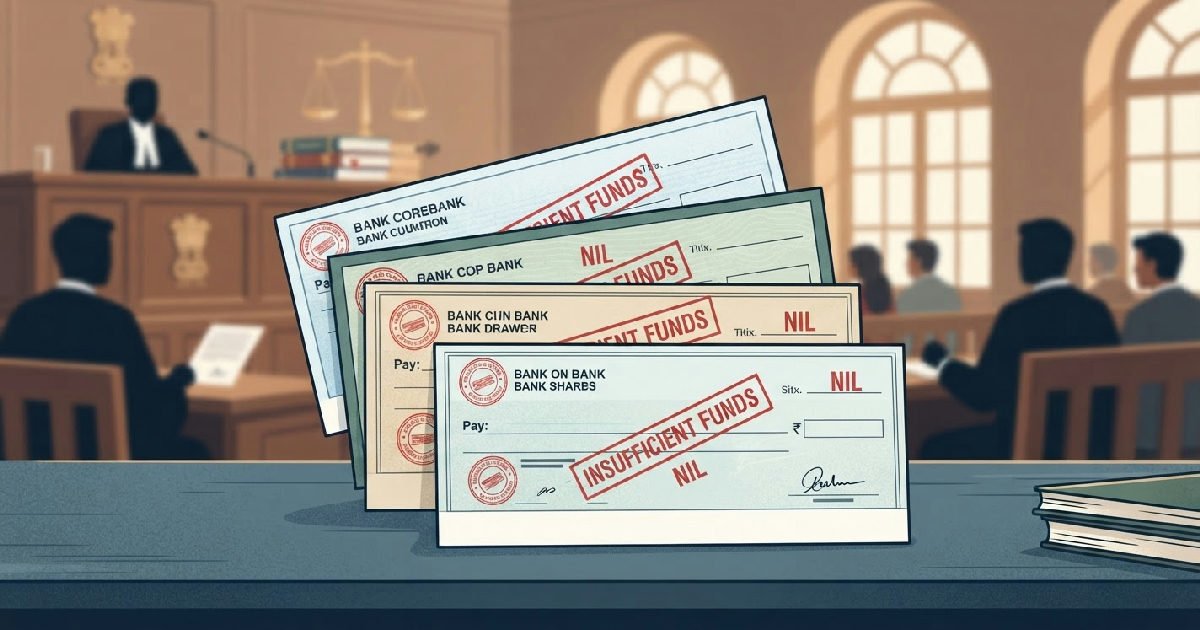
In a definitive series of rulings throughout January 2026, the Supreme Court of India established that each of multiple dishonored cheques gives rise to a distinct cause of action. This principle holds true even if multiple instruments stem from the same underlying commercial transaction, directly impacting how cheque bounce cases are pursued across the country, particularly in Delhi.
These crucial clarifications overturn previous interpretations, including those from the Delhi High Court, which had sometimes quashed complaints under Section 138 of the Negotiable Instruments Act, 1881 (NI Act), if they were perceived as “parallel prosecutions” for the same liability. The Supreme Court’s stance significantly strengthens the framework designed to deter cheque dishonor.
Individual liability when multiple cheques bounced
The Supreme Court’s recent pronouncements have reshaped the landscape for dealing with multiple dishonored cheques. It’s now unequivocally clear that the offense is tied to each specific cheque, not the overarching transaction from which they originated.
This judicial clarity aims to prevent debtors from evading accountability by consolidating their liabilities. The rulings emphasize strict adherence to the procedural requirements for each instrument, bolstering the payee’s position in seeking redress.
Key Judgments in Early 2026
A cascade of decisions in January 2026 solidified this position. On January 9, the Supreme Court ruled that multiple cheques from a single transaction do not merge into a single cause of action, setting a crucial precedent.
Just two days later, on January 11, the Court reinforced this, stating that dishonor of multiple cheques, even from the same transaction, creates separate causes of action under Section 138 of the NI Act. This judgment specifically set aside a Delhi High Court decision that had previously held otherwise.
The Court reiterated its position on January 13, emphasizing that a separate cause of action arises for each dishonor, provided all statutory conditions are met. This consistent messaging left little room for ambiguity.
A landmark decision on January 14, in Sumit Bansal v. MGI Developers and Promoters, further affirmed that the offense under Section 138 is cheque-specific. This case involved a failed commercial property deal where the complainant received multiple security cheques, which subsequently bounced, leading to the dispute.
Finally, on January 17, the Supreme Court definitively held that multiple cheques arising from one transaction will lead to separate prosecutions. This comprehensive series of judgments provides a robust legal foundation for creditors.
Understanding Section 138 of the NI Act
Section 138 of the Negotiable Instruments Act, 1881, criminalizes the act of a cheque being dishonored due to insufficient funds. It’s a potent legal tool designed to maintain trust in financial transactions and ensure the sanctity of cheques as payment instruments.
The offense carries significant penalties, including imprisonment for up to two years, a fine that can be double the cheque amount, or both. This punitive measure underscores the seriousness with which the legal system views cheque dishonor.
Conditions for a Valid Offence
For an offense under Section 138 to be established, several precise conditions must be satisfied. Firstly, the cheque must have been issued for a legally enforceable debt or liability, excluding gifts or charitable donations.
Secondly, it must be presented to the bank within its validity period, which is typically three months from its date of issue. Presenting a stale cheque will invalidate the complaint.
Thirdly, the bank must return the cheque unpaid, with reasons such as “funds insufficient” or “exceeds arrangement.” Mere technical discrepancies are generally not sufficient.
Crucially, the payee must issue a legal demand notice to the drawer within 30 days of receiving the bank’s dishonor information. This notice formally informs the drawer of the default and demands payment.
The final condition is the drawer’s failure to make payment within 15 days of receiving the demand notice. Only after these 15 days have passed without payment does the cause of action for a complaint arise.
Navigating the Cause of Action for Each Cheque
The Supreme Court has made it clear that each dishonor of a cheque generates its own separate cause of action. This means that if you have five bounced cheques, you potentially have five distinct legal claims, each requiring separate statutory compliance.
This clarification directly addresses complexities that arose from the cheque bounce lawyers in Delhi often faced when dealing with multiple instruments. It ensures that the legal process properly accounts for each individual instance of default.
Strategic Implications for Filing Cases
Given the Supreme Court’s strict interpretation, the strategy for filing cheque bounce cases has become more precise. Lawyers must now carefully consider the sequence of events for each individual cheque to ensure no procedural misstep invalidates a claim.
While a single notice *can* cover multiple cheques if drafted meticulously and limitation periods align, separate notices and complaints are often the safer course. This approach minimizes the risk of a claim being jeopardized by a combined notice with varying dishonor dates.
The Role of the Demand Notice
The legal demand notice is a critical element in a Section 138 case. Its accurate and timely dispatch is paramount, as the Supreme Court has emphasized strict compliance, ruling that even minor typographical errors in the amount can invalidate the notice.
For multiple cheques, each instrument’s number, date, amount, dishonor date, and specific return reason should be clearly detailed in the notice. Any omission or inaccuracy can create grounds for defense, highlighting the need for legal precision.
Re-presentation and Statutory Presumptions
A payee retains the right to re-present a dishonored cheque within its validity period, even if they didn’t pursue prosecution after an initial bounce. This provides a fresh opportunity to initiate legal action, restarting the statutory clock for notice and complaint.
Furthermore, Section 139 of the NI Act establishes a presumption that the cheque was issued to discharge a debt or liability. This shifts the burden of proof onto the accused, who must then demonstrate that the cheque was not for a legally enforceable obligation.
Impact on High Courts and Quashing Petitions
The Supreme Court’s rulings significantly restrict the ability of High Courts to quash Section 138 complaints at preliminary stages. Previously, High Courts exercising powers under Section 482 of the Criminal Procedure Code (CrPC) sometimes intervened, particularly in cases involving multiple cheques.
The apex court has now clarified that High Courts should avoid conducting a “mini trial” or usurping the function of the Trial Court when disputed factual questions exist. This means that cases related to filing a cheque bounce case will more likely proceed to a full trial unless there’s a clear lack of statutory compliance.
| Aspect of Cheque Bounce Case | Pre-January 2026 Interpretations | Post-January 2026 Supreme Court Stance |
|---|---|---|
| Cause of Action (Multiple Cheques) | Often viewed as consolidated if from the same transaction; risk of “parallel prosecution” argument. | Each dishonored cheque creates a separate and distinct cause of action. |
| Filing Multiple Complaints | Could be quashed by High Courts if seen as duplicating claims for same liability. | Multiple complaints are permissible and valid for each distinct dishonored instrument. |
| High Court Intervention (Section 482 CrPC) | More frequent quashing based on preliminary assessment of facts. | Limited intervention; High Courts should avoid “mini trials” and let trial courts assess facts. |
| Purpose of Section 138 | To ensure recovery and deter dishonor, but sometimes complicated by consolidation arguments. | Strengthened to ensure individual accountability for each instrument and streamline process. |
| Debtor’s Defense Strategy | Potential to argue for single liability or challenge based on combined complaints. | Focus shifts to disproving individual cheque-specific conditions or the underlying debt for each instrument. |
Outlook: Bolstering the Cheque Bounce Framework
These recent Supreme Court decisions mark a significant step towards bolstering the efficacy of the cheque bounce framework in India. By clarifying that each dishonored cheque constitutes a separate offense, the judiciary has provided a clearer path for creditors to pursue justice.
The rulings underscore a judicial commitment to ensuring that the Negotiable Instruments Act remains a robust mechanism for enforcing financial obligations. This helps maintain confidence in cheque-based transactions, which are integral to India’s commercial ecosystem.
For individuals and businesses alike, these clarifications mean increased vigilance is required when issuing cheques, and a more streamlined, albeit still complex, process for recovering dues when cheques bounce. The emphasis on strict procedural compliance remains paramount for both parties.
What does Section 138 of the Negotiable Instruments Act, 1881, cover?
Section 138 of the NI Act addresses the criminal offense of dishonor of cheques due to insufficient funds. It aims to deter individuals from issuing cheques without sufficient balance in their accounts, thereby ensuring the credibility of cheques as a mode of payment.
The section outlines the conditions under which a cheque bounce can lead to legal prosecution, including the requirement for a demand notice and a specific timeframe for payment.
How do the Supreme Court’s January 2026 rulings impact cheque bounce cases?
The Supreme Court’s rulings clarify that each dishonored cheque gives rise to a separate and independent cause of action, even if multiple cheques are issued as part of a single transaction. This prevents the consolidation of multiple complaints into one and strengthens the legal recourse available to payees.
It ensures that drawers face distinct legal consequences for each bounced instrument, overturning previous interpretations that sometimes allowed for complaints to be quashed on grounds of “parallel prosecution.”
What is the procedure to initiate legal action after a cheque bounces?
After a cheque is dishonored, the payee must issue a legal demand notice to the drawer within 30 days of receiving the ‘cheque return memo’ from the bank. The drawer then has 15 days from the receipt of this notice to make the payment.
If the drawer fails to make the payment within this 15-day period, the payee can then file a criminal complaint under Section 138 of the NI Act in the appropriate court within one month of the expiry of the 15-day notice period.
Several company cheques bounced? Whatsapp or call for free consultation.
Related Service: https://arpitmarwah.com/cheque-bounce-lawyers-in-delhi/