
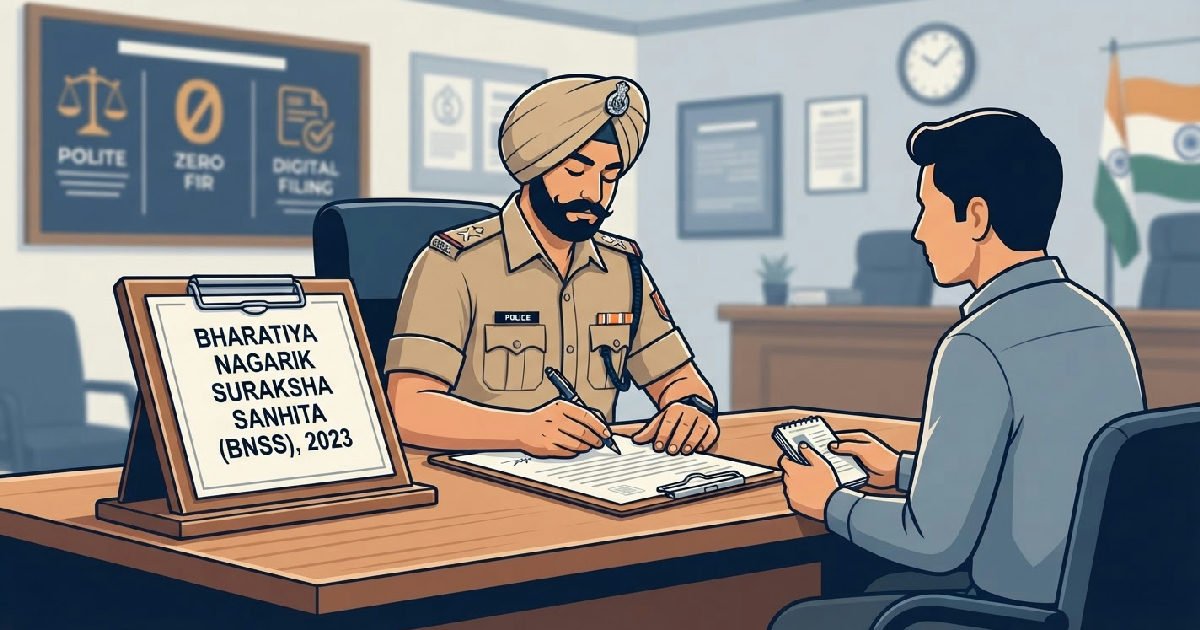
Registering a First Information Report (FIR) at a police station in India is the critical first step in any criminal investigation. It formally records a cognizable offense, initiating the legal process. Understanding the official procedure to register an FIR is essential for any citizen seeking justice or reporting a crime.
This process empowers police to investigate and gather evidence, forming the foundation of a criminal case. The system is designed to ensure that serious crimes are promptly documented and acted upon by law enforcement authorities.
The Official Procedure to Register an FIR in India
The **Bharatiya Nagarik Suraksha Sanhita (BNSS), 2023**, currently governs the procedure for filing a First Information Report in India. This comprehensive legislation outlines the duties of the police and the rights of complainants when reporting crimes.
The BNSS came into effect on July 1, 2024, replacing the long-standing Code of Criminal Procedure (CrPC), 1973. This transition was part of a broader effort to modernize India’s criminal justice system and improve its efficiency.
Specifically, Chapter 13, Section 173 onwards, of the BNSS mandates the registration of an FIR when information about a cognizable offense is disclosed. It also explicitly permits the use of electronic communication for conveying such information to the police.
While the term “First Information Report” isn’t formally defined within the BNSS, it is widely understood. It refers to the initial information recorded under Section 173, serving as the official trigger for any subsequent police investigation into a reported crime.
Understanding Cognizable and Non-Cognizable Offenses
A fundamental distinction within Indian criminal law separates cognizable from non-cognizable offenses. This difference dictates the police’s immediate powers and actions upon receiving a complaint, directly impacting the official procedure to register an FIR.
Recognizing this divergence is crucial for citizens to understand their rights and the procedural limitations or authorities law enforcement holds depending on the nature of the alleged crime. It ensures that the police response is proportionate to the severity of the offense, balancing swift action with judicial oversight.
This categorization is not arbitrary; it is deeply rooted in the potential impact and gravity of the criminal act. Cognizable offenses, by their very nature, pose a significant threat to public order and individual safety, demanding immediate police intervention to prevent further harm or ensure justice.
Conversely, non-cognizable offenses, while still unlawful, are typically less severe, allowing for a more measured legal approach that involves judicial scrutiny before police can fully embark on an investigation or effect an arrest.
Cognizable Offenses: Immediate Police Powers
Cognizable offenses represent serious crimes where a police officer holds significant authority. They can register an FIR, initiate an investigation, and even arrest an accused person without needing a warrant or prior approval from a magistrate.
These crimes typically carry a punishment of three years imprisonment or more, reflecting their severe nature. Examples include murder, rape, kidnapping, and theft, all of which necessitate swift police intervention and action.
Non-Cognizable Offenses: Requiring Magistrate Approval
In contrast, non-cognizable offenses are less severe incidents where police powers are restricted. An officer cannot arrest an accused or commence an investigation without explicit permission from a magistrate.
For these complaints, the police record the details in a Non-Cognizable Register (NC Register). The complainant is then typically directed to approach a magistrate to seek further legal action. Defamation, public nuisance, simple hurt, cheating, and forgery fall into this category, highlighting the key differences in legal handling.
The table below summarizes the key operational differences between these two types of offenses:
| Feature | Cognizable Offense | Non-Cognizable Offense |
|---|---|---|
| Police Power to Arrest without Warrant | Yes | No |
| Police Power to Investigate without Court Order | Yes | No |
| FIR Registration Mandatory | Yes (under BNSS Section 173) | No (NCR recorded) |
| Typical Severity | Serious (3+ years imprisonment) | Less Serious |
Navigating the FIR Registration Process
The process for lodging an FIR is designed to be accessible to the public, though it requires adherence to specific steps. Any individual can initiate the process, regardless of whether they are the direct victim or simply a witness to the crime.
Understanding these procedural nuances is vital for anyone seeking to formally report a crime and trigger a police investigation. It encompasses knowing who is authorized to file a report, where to submit it, and the precise information required to ensure the FIR is valid and effective.
These guidelines are in place to streamline the initial stages of a criminal case, providing a clear pathway for citizens while also ensuring law enforcement receives accurate and actionable intelligence.
Furthermore, the advent of provisions like the “Zero FIR” and online reporting mechanisms has significantly enhanced the accessibility and responsiveness of the system. These innovations are critical in cases demanding immediate attention or for offenses where physical presence at a police station might be challenging, demonstrating a continuous evolution towards a more citizen-centric approach to criminal justice in India.
Who Can File and Where to Report
An FIR can be filed by the victim, a witness, or any person possessing knowledge of the crime. Ideally, the complaint should be lodged at the police station holding territorial jurisdiction over the area where the offense occurred.
However, the concept of a “Zero FIR” allows a complaint to be registered at any police station, irrespective of its jurisdiction. This vital provision ensures immediate recording, especially for urgent cases like sexual assault, murder, or accidents. Many states also offer streamlining online police reporting for certain offenses, enhancing convenience.
Online FIR registration facilities are increasingly available through official police websites across various Indian states. These digital platforms are typically used for less serious offenses, such as theft, lost documents, or cybercrime, providing a practical alternative for citizens.
Providing and Recording Information
The complainant must provide comprehensive details of the incident to the police. This information can be delivered either orally or in writing, depending on the complainant’s preference and circumstances.
If the information is given orally, the police officer on duty is legally obligated to reduce it to writing. The officer must then read it back to the informant to confirm its accuracy and ensure all details are correctly captured.
The FIR should contain factual details, including the date, time, and place of the incident, a brief account of the offense, names of any known accused persons, and witness details if available. It’s crucial to avoid speculation or emotional statements, focusing solely on verifiable facts.
After the information is recorded, it must be signed by the person who provided it. These details are then formally entered into a specific register maintained at the police station, as prescribed by the State Government, ensuring a meticulous and legally sound record.
Complainant Rights and Subsequent Investigation
Crucially, every complainant has the right to receive a free copy of the FIR immediately after its registration. This copy serves as official proof that the complaint has been successfully lodged and recorded by the police authorities.
Once the official procedure to register an FIR for a cognizable offense is complete, the police acquire statutory investigative powers. They are then legally obligated to commence an investigation into the reported incident without delay. In the case of a Zero FIR, it is promptly transferred to the police station with the correct jurisdiction for further inquiry.
Adhering to essential information within the correct FIR format is vital for a comprehensive complaint. This accuracy aids the subsequent investigation, helping to prevent potential legal complications or delays down the line.
Recourse for Refusal to Register an FIR
Despite clear legal mandates, instances where police officers refuse to register an FIR can occur. However, the Indian legal framework provides clear avenues for recourse, empowering citizens to ensure their complaints are properly addressed.
When a police station fails to register a legitimate complaint, it not only delays justice but can also erode public trust in law enforcement. Therefore, knowing the available channels for escalation is paramount for complainants.
These provisions act as a critical safety net, designed to overcome bureaucratic hurdles and ensure that serious allegations of criminal conduct receive the attention and investigation they are legally entitled to under the Bharatiya Nagarik Suraksha Sanhita.
The availability of these two distinct avenues – approaching the Superintendent of Police or directly petitioning a Magistrate – highlights the multi-layered system of checks and balances within India’s criminal justice architecture.
They underscore the principle that no citizen should be denied the right to report a crime, and that the legal system provides mechanisms to enforce this right, ultimately promoting greater accountability within the police force.
Escalating to the Superintendent of Police
If an officer at the local police station declines to register an FIR, the informant has the option to escalate the matter. They can send the information in writing, typically by post, directly to the Superintendent of Police (SP).
Should the SP be satisfied that the information indeed discloses a cognizable offense, they possess the authority to investigate the case themselves. Alternatively, the SP can direct a subordinate officer to undertake the investigation, ensuring the complaint is officially addressed.
Magistrate Intervention for FIR Registration
A further avenue for complainants is to approach a Magistrate. Under Section 175(4) of the BNSS (formerly Section 156(3) of the CrPC), a Magistrate holds the power to direct the police to register an FIR.
This judicial oversight provides a vital check and balance, safeguarding citizens’ rights when initial police action is lacking. It underscores the multi-layered system designed to uphold justice and accountability in India’s legal framework.
What is a Zero FIR and why is it important?
A Zero FIR allows you to register a complaint at any police station, regardless of where the crime occurred. It’s crucial because it ensures immediate recording of serious offenses like sexual assault or murder, preventing delays due to jurisdictional issues.
Who can file an FIR in India?
Any person can file an FIR, including the victim, a witness, or anyone who has knowledge of a cognizable offense. You do not need to be directly involved or an eyewitness to initiate the process.
What details should be included in an FIR?
An FIR should include factual details such as the date, time, and place of the incident, a brief account of the offense, names of any known accused, and witness details. It should be clear, factual, and avoid emotional statements or guesses.