
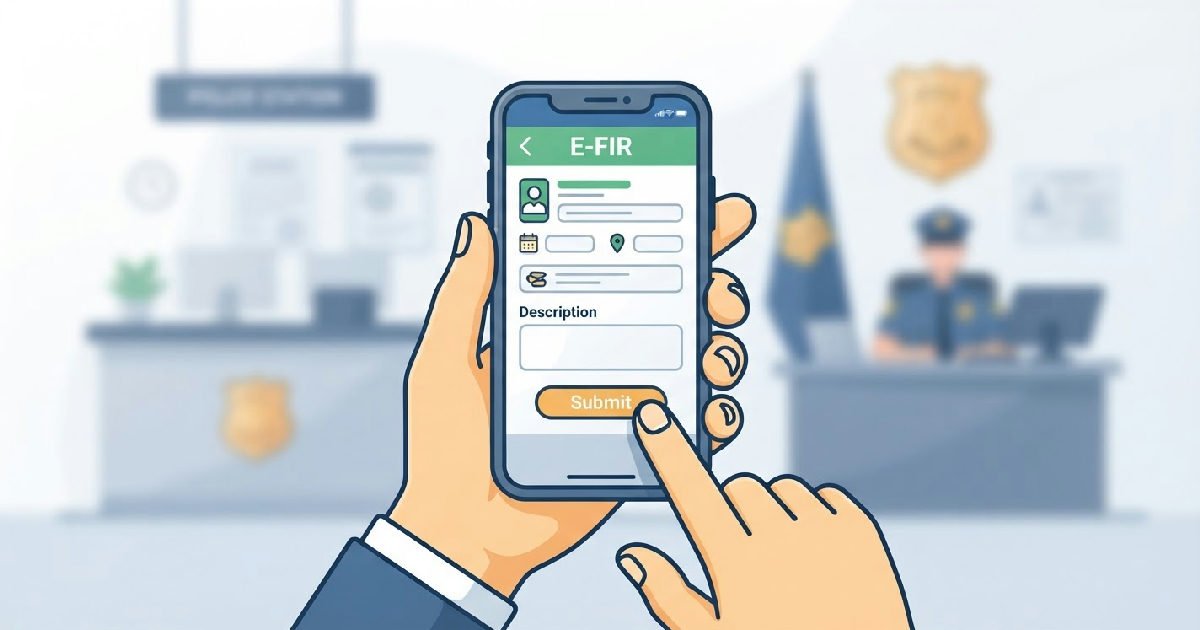
An E-FIR, or Electronic First Information Report, offers citizens a modern pathway to file police complaints and reports without needing to visit a police station in person. This digital system aims to significantly improve accessibility and streamline the reporting process for various non-emergency incidents. Its implementation, however, varies across different jurisdictions, each with specific criteria for online submissions.
This online method stands as a crucial advancement in law enforcement, bringing a more efficient approach to initial crime reporting. It leverages technology to bridge geographical gaps and reduce the time commitment often associated with traditional complaint procedures.
Understanding the Electronic First Information Report
An E-FIR is essentially a digital version of the traditional First Information Report, which forms the foundation for police investigations into cognizable offenses. A cognizable offense allows a police officer to arrest an individual without a warrant, as defined under relevant legal frameworks like India’s Criminal Procedure Code or the more recent Bharatiya Nagarik Suraksha Sanhita (BNSS), 2023.
Conversely, non-cognizable offenses require a warrant for arrest and are generally not eligible for E-FIR. The introduction of E-FIR and the formalization of concepts like Zero FIR concept under the BNSS mark a significant shift towards more citizen-centric policing. Zero FIR allows a report to be filed at any police station, regardless of where the crime occurred.
How the E-FIR Filing Process Works
Citizens typically initiate an E-FIR by visiting the official website or mobile application of their local police department or state police. The process begins with user registration and identity verification, often requiring a mobile number and a One-Time Password (OTP), or through the upload of identification documents such as India’s Aadhaar.
After successful verification, the system guides the complainant to select the specific incident type from a predefined list of eligible offenses. They then provide essential details including the date, time, and location of the incident, along with a narrative description. Some advanced systems also permit the upload of digital evidence like photos or videos.
Upon submission, the complainant usually receives a temporary transaction or tracking number, signaling that the report is awaiting review by the police department. If the submission meets all criteria and is approved, an official police report number is issued via email. Law enforcement may subsequently contact the complainant for further investigation.
For Indian citizens, understanding the nuances of filing an FIR, whether online or offline, is crucial. Detailed step-by-step guidance can be found in resources dedicated to filing an FIR in the country.
Specific Rules and Limitations for Online Reporting
While E-FIR systems enhance convenience, they operate under strict rules and limitations. In India, Section 173(1) of the Bharatiya Nagarik Suraksha Sanhita mandates that while information for a cognizable offense can be given electronically, the informant must physically sign the recorded information within three days of submission. Without this physical signature, the online submission might not be officially recognized as a formal FIR.
Jurisdictional limits often apply, requiring the incident to have occurred within the specific geographical boundaries of the police department offering the online service. E-FIRs are also generally reserved for non-emergency situations where there is no immediate danger, no injuries, and the crime is not actively unfolding. Emergencies always necessitate calling the local emergency number.
Most online systems are designed for incidents without known suspects or immediate physical evidence that requires on-site collection by an officer. Furthermore, the types of crimes reportable online are typically restricted to less severe offenses. These include lost property, minor theft (such as mobile phone or vehicle theft), vandalism, harassing phone calls, identity theft, and certain types of fraud.
Violent crimes, sex crimes, cases involving firearms, or the theft of an entire vehicle (in some regions) are usually excluded from online reporting. Some departments also impose value thresholds for reported stolen items to qualify for an E-FIR.
Knowing the distinction between an FIR and a general police complaint can also be beneficial when deciding how to proceed with reporting an incident. More information on distinguishing police complaints is available.
E-FIR Eligibility and Exclusions
The scope of what can be reported via E-FIR is carefully defined to ensure that critical incidents requiring immediate police presence or in-depth investigation are handled through traditional channels. This tiered approach ensures that digital convenience doesn’t compromise the integrity or effectiveness of law enforcement response.
Understanding these categories helps citizens quickly determine the most appropriate reporting method for their situation. It also prevents delays that might arise from attempting to file an ineligible incident through the online system, redirecting resources more effectively.
| Characteristic | Eligible for E-FIR | Generally Ineligible for E-FIR |
|---|---|---|
| Incident Type | Lost property, minor theft, vandalism, identity theft, harassment | Violent crimes, sex crimes, incidents with known suspects, ongoing emergencies |
| Suspects/Evidence | No known suspects, no immediate physical evidence collection required | Known suspects, physical evidence requiring immediate officer intervention |
| Urgency | Non-emergency situations, no immediate danger or injury | Emergencies, crimes in progress, incidents causing injury |
| Geographical Scope | Incident occurred within specific departmental jurisdiction | Incident outside specific departmental jurisdiction (unless Zero FIR applies) |
| Indian Legal Context | Requires physical signature within 3 days (BNSS Sec. 173(1)) | Any cognizable offense without subsequent physical signature |
What is the primary benefit of filing an E-FIR?
The main advantage of an E-FIR is its accessibility and efficiency, allowing individuals to report incidents online from anywhere without needing to visit a physical police station. This significantly reduces the time and effort involved in filing a complaint, especially for minor, non-emergency cases.
Can all types of crimes be reported using an E-FIR?
No, not all crimes are eligible for E-FIR. It’s generally reserved for non-emergency situations and less severe offenses like lost property, minor theft, or vandalism. Serious crimes such as violent offenses, sex crimes, or those with known suspects typically require traditional, in-person reporting or emergency calls.
Is a physical signature always required for an E-FIR in India?
Yes, under India’s Bharatiya Nagarik Suraksha Sanhita (BNSS), Section 173(1), an electronic submission for a cognizable offense must be physically signed by the informant within three days. Without this signature, the online report may not be formally registered as an FIR.