
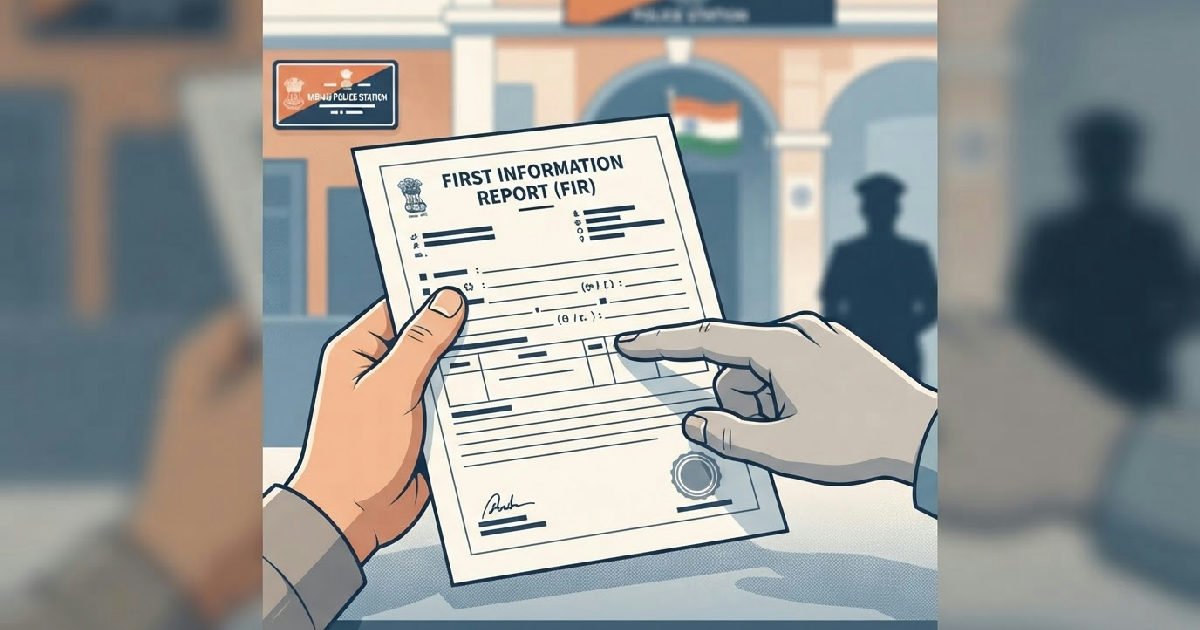
Navigating the initial stages of a criminal investigation in India often begins with understanding How to File an FIR. A First Information Report (FIR) acts as the foundational document that formally registers a crime, initiating the legal process.
This comprehensive guide details the step-by-step procedures for both traditional offline filing at a police station and the increasingly common online methods available to citizens across the country.
Understanding the First Information Report (FIR)
A First Information Report (FIR) is a critical written document prepared by the police upon receiving information about a cognizable offense. It formally records the alleged crime and empowers law enforcement to commence an official investigation.
This document doesn’t determine guilt; instead, it provides the police with the necessary legal authority to gather evidence, question individuals, and make arrests as required by law.
The Evolving Legal Framework: BNSS 2023
The legal basis for FIRs significantly evolved with the implementation of the Bharatiya Nagarik Suraksha Sanhita (BNSS), 2023. This new law, effective from July 1, 2024, replaced the long-standing Code of Criminal Procedure (CrPC).
Under Section 173 of the BNSS, citizens can convey information about a cognizable offense orally, in writing, or via electronic communication. Police officers are mandated to record oral complaints and read them back to the informant for verification.
Key Elements in an FIR Document
Each FIR serves as a crucial record, meticulously detailing the reported incident. It captures essential information required for the subsequent investigation and legal proceedings.
Typically, this includes the complainant’s full name and contact details, the precise date, time, and location of the incident, and a concise summary of the offense. Details of any known accused persons or witnesses, alongside supporting evidence like photos or medical records, are also vital inclusions.
Distinguishing Cognizable from Non-Cognizable Offenses
The nature of an alleged crime dictates the police’s immediate response and the procedure for filing an FIR. Indian law categorizes offenses primarily into two types, each carrying distinct implications for police action.
Understanding this distinction is paramount for anyone seeking to initiate a criminal complaint, as it determines whether an immediate arrest and investigation can proceed without judicial consent.
Understanding Offense Categories
Cognizable offenses are serious crimes where police can register an FIR, investigate, and arrest suspects without a warrant or a magistrate’s prior approval. Examples include grave acts such as murder, rape, kidnapping, and substantial theft.
Conversely, non-cognizable offenses are generally less severe. For these, police cannot initiate an investigation or make an arrest without explicit permission from a magistrate. Instances like cheating, forgery, or public nuisance fall into this category.
Police record non-cognizable complaints in a Station Diary under Section 174 BNSS, a role previously defined by Section 155 CrPC. They then direct the informant to a magistrate for further legal action.
| Offense Type | Police Action | Examples |
|---|---|---|
| Cognizable | Can arrest without warrant; investigation starts immediately; FIR registration mandatory. | Murder, Rape, Kidnapping, Dowry Death, Rioting |
| Non-Cognizable | Cannot arrest without warrant; requires magistrate’s permission to investigate; complaint recorded in Station Diary. | Cheating, Forgery, Defamation, Assault, Public Nuisance |
How to File an FIR Offline at a Police Station
The traditional method of lodging a criminal complaint involves a direct visit to a police station. This process remains a primary avenue for reporting crimes, particularly for serious cognizable offenses.
It ensures direct interaction with law enforcement and the immediate recording of crucial incident details, which is often essential for urgent investigative actions.
Steps for Reporting an Incident
To begin, visit the police station nearest to where the crime occurred. Clearly and factually explain the entire incident to the police officer on duty, providing all relevant details such as the date, time, and specific location.
It’s crucial to include descriptions of the event and any known information about accused individuals or witnesses. If you have a pre-written statement, you can submit it to assist the officer in drafting the official report.
The officer will record your statement; review it carefully to confirm accuracy and completeness before signing. Crucially, always obtain a free copy of the registered FIR immediately. This copy serves as vital proof of your complaint and is essential for future reference, allowing you to follow up on the investigation with the assigned FIR number.
The Zero FIR Provision
Indian law includes a significant provision known as a Zero FIR, which allows a complaint to be filed at any police station. This is regardless of its geographical jurisdiction where the incident actually occurred.
This vital mechanism ensures that victims of crimes, especially those who may be displaced or in immediate danger, are not delayed in reporting offenses. Once registered, the Zero FIR is transferred to the appropriate police station for further investigation, as outlined in detailed guides explaining how India’s key provision works.
Navigating Online FIR Filing
For certain types of offenses, the process of how to file an FIR has become more accessible through online platforms. Many Indian states now offer digital facilities for lodging complaints, reflecting a modernization of the justice system.
These online portals streamline the initial reporting stage, making it more convenient for citizens to alert authorities about specific incidents without requiring an immediate physical visit.
State-Specific Portals and Cybercrime
Citizens can report cybercrimes using the national portal, cybercrime.gov.in, which centralizes such complaints. For other state-specific crimes or lost articles, you’ll need to visit the respective state police’s citizen portal.
These include platforms such as those managed by Delhi Police, Maharashtra Police, Tamil Nadu Police, Karnataka Police, or Uttar Pradesh Police. Most portals require account registration using a mobile number verified via OTP or an email ID, though some, like the cybercrime portal, permit guest logins.
Steps for Online Submission
Once logged in, fill out the complaint form with your personal details, including name, address, phone number, email, and ID proof. Crucially, detail the incident with specific dates, times, locations, and a thorough description of the events.
Upload any supporting documents you have, such as photographs, videos, screenshots, or receipts, to strengthen your complaint. After carefully reviewing all the entered information for accuracy, submit the form.
Always download or note the generated FIR/complaint reference number for future tracking purposes. Under BNSS 2023 Section 173(1)(ii), the informant must sign the e-FIR within three days of its submission. An acknowledgment is usually immediate, with the FIR number generated within 24-72 hours after initial verification.
Limitations of Digital FIRs
While convenient, online FIR filing generally has specific limitations. It’s typically reserved for non-cognizable offenses, reports of lost documents, minor theft, or instances of cyber harassment.
Online channels are not usually applicable for severe crimes like murder, rape, or kidnapping, which still necessitate in-person reporting. Furthermore, even for online complaints, physical verification or an in-person visit to the police station may still be required for follow-up investigations.
Recourse When Police Refuse to Register an FIR
Under Indian law, police officers cannot refuse to register an FIR if the information presented clearly indicates a cognizable offense. This legal mandate ensures that serious crimes are formally recorded and investigated without undue obstruction.
However, if a police officer does refuse, citizens have several legal avenues to pursue, ensuring their complaint is heard and acted upon.
Legal Avenues for Unregistered Complaints
If you encounter a refusal to register a cognizable offense, politely request a written refusal from the police officer, or ask them to record the reasons for their refusal. This creates an official record of your attempt to file the complaint.
Another critical step is to send a written complaint, preferably via registered post, to the Superintendent of Police (SP) of the district. This procedure is outlined under Section 173(4) of the BNSS, which superseded the previous Section 154(3) CrPC. These actions help to distinguish an FIR from a general police complaint, decoding key differences in Indian law.
What is the primary purpose of an FIR?
An FIR’s primary purpose is to officially document the commission of a cognizable offense, thereby initiating a formal criminal investigation by the police in India. It serves as the first recorded statement of the incident.
Can I file an FIR for any type of crime?
You can report any crime to the police, but an FIR is specifically registered only for cognizable offenses, which are more serious. For non-cognizable offenses, the police record the information in a Station Diary and you may be referred to a magistrate.
How long does it take for an online FIR to be officially registered?
While an acknowledgment for an online complaint is typically immediate, the official FIR number is usually generated within 24 to 72 hours after preliminary verification by the police authorities. Informants must sign the e-FIR within three days of submission under the BNSS 2023.