
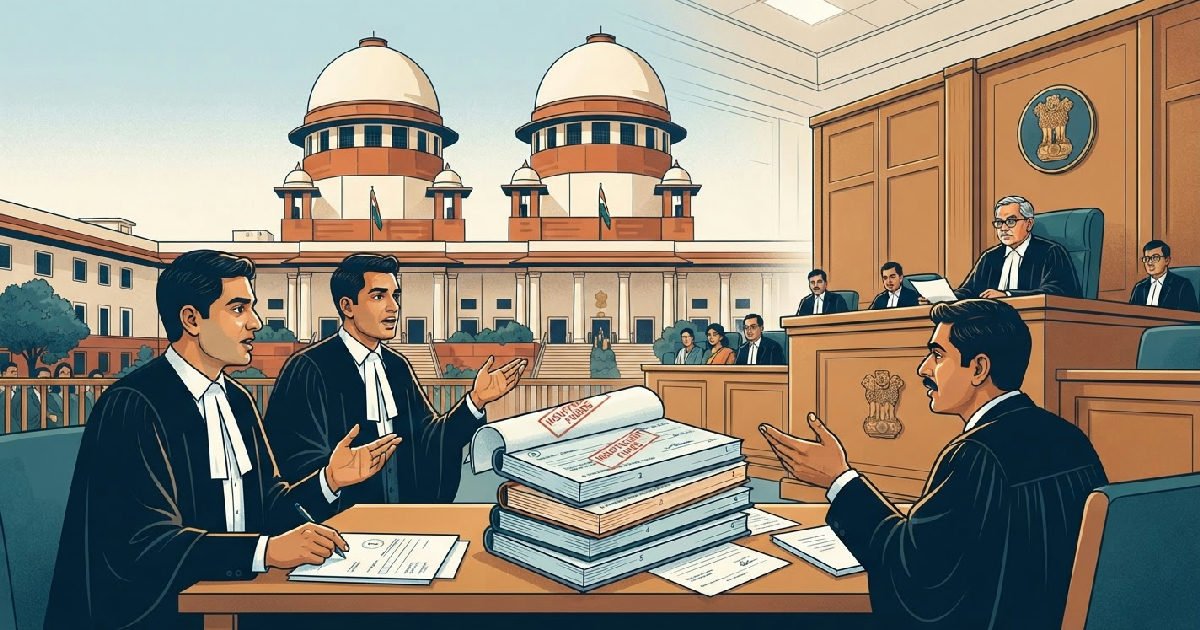
In a pivotal ruling on 2026-01-08, the Supreme Court of India clarified the legal standing for multiple dishonored cheques under Section 138 of the Negotiable Instruments Act, 1881 (NI Act).
The Court, in the case of Sumit Bansal v. M/s MGI Developers and Promoters & Anr., unequivocally stated that each bounced cheque gives rise to a distinct cause of action, even if multiple instruments originate from a single underlying transaction.
Supreme Court affirms separate causes of action, several cheques bounced
This decision significantly impacts how creditors navigate legal recourse and strengthens individual accountability for each financial instrument.
This pronouncement aims to streamline legal proceedings while balancing the need to prevent harassment of the accused. It overturned a previous judgment by the Delhi High Court that had suggested parallel prosecution for the same liability was impermissible, introducing much-needed clarity into a complex area of criminal law practice.
The Supreme Court of India’s judgment in Sumit Bansal v. M/s MGI Developers and Promoters & Anr. marked a definitive stance on the legal treatment of multiple dishonored cheques. Delivered on 2026-01-08, the ruling asserted that a separate cause of action arises each time a cheque is dishonored, provided all statutory conditions—presentation, dishonor, notice issuance, and failure to pay—are met independently for that specific instrument.
This decision is critical because it explicitly rejects the notion that multiple cheques, even those linked to a single financial agreement, somehow merge into one prosecutable event. The Court emphasized that the mere fact of a common transaction does not consolidate the individual legal consequences of each cheque’s dishonor. This interpretation upholds the distinct legal significance of every cheque issued.
The Sumit Bansal precedent
The Sumit Bansal ruling specifically overturned an earlier Delhi High Court judgment. That prior decision had quashed complaints on the grounds that prosecuting multiple dishonored cheques related to the same liability amounted to impermissible parallel litigation. The Supreme Court’s intervention ensures that the independent nature of each cheque’s journey, from presentation to dishonor, is fully recognized in law.
This means that legal practitioners can pursue distinct prosecutions for each bounced instrument, providing a clearer path for recovery and deterrence. The precedent reinforces the principle that individuals issuing cheques bear a distinct legal responsibility for every single instrument, rather than a merged liability for a transaction’s entirety.
Implications for creditors
For creditors, the Sumit Bansal judgment simplifies the strategic planning of legal actions under Section 138 NI Act. They can now confidently initiate separate legal proceedings for each dishonored cheque, reducing the risk that a court might consolidate or dismiss complaints based on a perceived single cause of action. This clarity can accelerate the recovery process and provide greater certainty in outcomes.
However, it also places a greater onus on maintaining meticulous records for each cheque, including presentation dates, bank memos, and notice issuance. Proper documentation for each instrument will be paramount to successfully pursue individual cases, ensuring adherence to the strict timelines prescribed by the NI Act. This approach maintains the integrity of the prosecution for each specific default.
Single notice for multiple cheques confirmed
While each dishonored cheque generates a separate cause of action, the legal framework is flexible enough to permit a single consolidated notice for multiple bounced instruments. This pragmatic approach acknowledges the administrative burden of sending individual notices for every single cheque, especially when they stem from the same financial relationship or series of events. This efficiency can benefit both parties by consolidating communication.
The key condition for such a consolidated notice remains clarity and specificity. Every cheque included in the notice must be detailed accurately, encompassing its amount, unique cheque number, and the specific memo date of its dishonor. Vague or incomplete notices risk technical objections, which could delay or even invalidate the legal process for all included cheques.
Conditions for valid consolidated notices
A single notice can effectively cover multiple dishonored cheques, particularly if they relate to the same transaction or similar offenses occurring within a relatively short timeframe, often within a 12-month period. Courts generally accept these consolidated notices, provided they meet the core statutory requirements for demand. This helps avoid a flood of individual notices, particularly in cases involving numerous smaller bounced amounts.
The Delhi High Court, in the case of Pawan Dhanpatrai Malhotra v. Mahender Khari, decided on May 22, 2024, explicitly considered a single complaint maintainable for multiple dishonored cheques stemming from the same transaction, especially when a common statutory notice covered them. This illustrates the judiciary’s willingness to embrace practical solutions that do not compromise justice.
Strategic advantages and risks
Using a single notice offers administrative efficiency, reducing paperwork and postage costs for the payee. It can also present a more formidable demand to the drawer, highlighting the cumulative extent of their default.
However, this strategy isn’t without its risks; a fundamental defect in the notice regarding one cheque could potentially undermine the entire consolidated notice. For example, the cheque bounce notice time limit must be adhered to for every included instrument.
Some legal experts advocate for separate notices for each cheque as a safer practice, ensuring that a flaw in one demand does not compromise others. This approach provides a safeguard, isolating any potential legal challenges to individual instruments rather than jeopardizing the entire claim. Ultimately, the choice depends on the specific facts and the litigant’s risk tolerance.
Single complaint for interconnected dishonors
Beyond the notice stage, the question of whether to file a single complaint or multiple complaints under Section 138 NI Act for several bounced cheques is equally critical. While the Supreme Court affirms separate causes of action, a single complaint may still be maintainable under specific conditions.
This typically applies when the cheques arise from the same transaction or a closely related series of acts, especially if a common statutory notice was issued.
The rationale here is to avoid unnecessary multiplicity of litigation, which can overburden the courts and potentially harass the accused. Consolidating such cases into one complaint can promote judicial efficiency, ensuring that all related defaults are addressed holistically within a single legal proceeding. This pragmatic approach acknowledges the practical realities of commercial dealings where multiple cheques often secure a single debt.
When one complaint suffices
Courts have indicated that a single complaint can be maintained when multiple cheques satisfy several key criteria. These include being issued for the same transaction, by the same drawer, deposited within a few days of each other, dishonored on interconnected dates, and crucially, covered by one common statutory notice.
These conditions ensure a clear and coherent narrative for the prosecution, linking all instruments to a single course of conduct.
This nuanced approach recognizes that while legal liability accrues individually for each dishonor, the underlying factual matrix can sometimes warrant a consolidated judicial response. It’s a balancing act designed to uphold the law effectively without creating an undue burden on either the legal system or the parties involved. Practitioners often consider the strategic implications of one case or separate cases very carefully.
Judicial efficiency and avoiding prejudice
The principle behind allowing a single complaint for multiple dishonored cheques, under specific circumstances, is rooted in judicial efficiency. It prevents courts from being clogged with numerous identical or near-identical cases that could otherwise be heard together. This also serves to prevent prejudice against the accused, who might otherwise face a barrage of separate prosecutions for what is, in essence, a single financial default event.
However, the Supreme Court has clarified that the issuance of multiple cheques under one transaction does not automatically lead to a single cause of action. This distinction is vital: while consolidation for practical reasons is permissible, the fundamental legal liability for each cheque remains separate. It offers flexibility to the judicial process, rather than a redefinition of liability itself.
Statutory requirements for Section 138 NI Act
Successfully navigating a cheque dishonor case under Section 138 of the Negotiable Instruments Act, 1881, hinges on strict adherence to a series of statutory requirements and timelines. Any deviation can lead to the dismissal of the complaint, regardless of the underlying merits of the claim. These steps ensure fairness and provide the drawer with an opportunity to rectify the default before criminal proceedings commence.
The process begins with the dishonor of the cheque by the bank, followed by a formal demand notice and a mandatory payment window. Failure to comply with these sequential steps within their prescribed periods effectively extinguishes the complainant’s right to proceed with a Section 138 case. Understanding these precise timings is fundamental for both claimants and defendants.
Critical timelines and procedures
The statutory framework for Section 138 cases is highly time-sensitive. Each stage of the process must be completed within a specific window, acting as critical gateways for legal action. These precise timelines are designed to ensure prompt resolution of disputes and prevent undue delays in justice. Below is a breakdown of the key stages and their associated deadlines:
| Statutory Requirement | Timeline/Condition | Details |
|---|---|---|
| Cheque Dishonor | N/A | The bank must return the cheque unpaid, typically with a return memo stating the reason. |
| Notice Issuance | Within 30 days | From the date the payee receives the bank’s return memo for the dishonored cheque. |
| Payment Opportunity | 15 days | The drawer must be given 15 days from the date of receiving the notice to make the payment. |
| Cause of Action | 16th day | Arises if the drawer fails to make payment within the stipulated 15-day notice period. |
| Complaint Filing | Within 30 days | After the expiry of the 15-day payment window for the drawer. |
Content of a valid notice
Beyond the strict timelines, the content of the demand notice itself is paramount. A valid notice must clearly and unambiguously demand the payment of the cheque amount, unequivocally stating the payee’s intention to pursue legal action if payment is not made within the statutory 15-day period. Ambiguity can be fatal to a complaint.
Crucially, the notice must meticulously detail each dishonored cheque, including its specific number, the date it was drawn, the exact amount, and the bank on which it was drawn. It should also specify the reason for dishonor, as indicated in the bank’s return memo.
Any omissions or inaccuracies in these details can provide grounds for the accused to challenge the validity of the notice and, consequently, the entire complaint.
Delhi High Court’s evolving stance and practicalities
The Delhi High Court has played a significant role in interpreting and applying Section 138 of the NI Act, often grappling with the practical implications of prosecuting cheque dishonor cases. Its evolving stance reflects the judiciary’s continuous effort to balance strict legal adherence with the realities of commercial disputes and the volume of litigation.
Notably, the Delhi High Court has considered the maintainability of single complaints for multiple dishonored cheques, particularly when they arise from the same transaction and are covered by a common statutory notice. This aligns with the broader goal of preventing an overwhelming number of individual cases for what might be a single, albeit multi-faceted, default.
The court system endeavors to be both efficient and fair in its adjudications.
Interplay with criminal procedure
An interesting dimension to this legal discourse involves the applicability of Section 219 of the Code of Criminal Procedure (Cr.P.C.) to Section 138 NI Act complaints.
On March 16, 2023, the Delhi High Court issued notice to the National Capital Territory of Delhi (NCTD) regarding arguments that Section 219 Cr.P.C., which limits the number of offenses that can be tried together to not more than three, should apply to cheque bounce cases.
This could potentially restrict the number of cheques included in a single complaint.
However, definitive legal clarity on a strict bar for filing more than three cheques in a single complaint based on Section 219 Cr.P.C. remains somewhat fluid. Courts often rely on principles of joint trial under Section 220 Cr.P.C. when multiple offences are committed in the course of the same transaction.
This allows for discretion in combining charges to avoid separate trials for intertwined events, offering a pragmatic path forward.
Balancing enforcement and harassment
The judiciary consistently aims to strike a delicate balance between enforcing the law against dishonest drawers and preventing the misuse of legal provisions to harass individuals.
Filing multiple complaints for cheques issued on the same date and stemming from a single transaction, if perceived as an attempt to multiply litigation unfairly, might be viewed unfavorably by the courts. Such actions could lead to the dismissal of complaints, particularly if they appear to be vexatious.
This judicial observation underscores the importance of a thoughtful and strategic approach to filing complaints. While the right to prosecute each dishonored cheque individually is affirmed, the manner in which these rights are exercised must align with principles of fairness and judicial economy.
A well-reasoned decision on whether to pursue a single, consolidated complaint or multiple individual ones is crucial for a successful outcome. Litigants should consider this carefully before seeking to quash a cheque bounce complaint.
Navigating the complexities of multiple bounced instruments
The legal landscape surrounding multiple dishonored cheques in India has grown increasingly intricate, requiring careful navigation from both complainants and legal professionals. The Supreme Court’s definitive stance on separate causes of action provides a strong foundation for prosecuting each default. Yet, the flexibility afforded for consolidated notices and complaints under specific transactional conditions ensures that the system can adapt to practical realities.
This dual approach aims to maximize efficiency without compromising the distinct legal weight of each financial instrument. It highlights a judiciary committed to upholding accountability for financial defaults while simultaneously seeking to streamline the legal process. Understanding these nuances is paramount for anyone involved in commercial transactions in India.
Key considerations for litigants
For individuals and businesses dealing with multiple bounced cheques, meticulous record-keeping is non-negotiable. Every cheque’s details, presentation history, and specific dishonor memo must be accurately documented. This foundational step ensures that any subsequent legal action, whether through a single notice or complaint, is robust and impervious to technical challenges. Precision in documentation underpins successful litigation.
Moreover, careful consideration must be given to the relationship between the cheques. Are they truly from the same transaction, or are they disparate liabilities? This distinction will often guide the decision on whether to consolidate notices and complaints, or to treat each cheque as an entirely separate matter.
Seeking expert legal counsel early in the process is crucial for formulating an effective strategy that aligns with current judicial interpretations and enhances the likelihood of a favorable outcome, particularly in the dynamic realm of criminal law.
Can a single notice be issued for multiple dishonored cheques?
Yes, a single consolidated notice can be issued for multiple dishonored cheques, especially if they are related to the same transaction or similar offenses. However, the notice must clearly specify the details of each individual cheque, including its amount, number, and memo date, to be legally valid and avoid technical objections.
Does each dishonored cheque create a separate legal cause of action?
Yes, the Supreme Court of India, in the Sumit Bansal v. M/s MGI Developers and Promoters & Anr. case (2026-01-08), clarified that a separate and distinct cause of action arises upon the dishonor of each individual cheque. This holds true even if multiple cheques stem from a single underlying transaction or liability.
Can one complaint be filed for several dishonored cheques?
A single complaint under Section 138 of the NI Act may be maintainable for multiple dishonored cheques, provided they arise out of the same transaction or a series of acts forming the same transaction, and are covered by a common statutory notice. Courts balance judicial efficiency with preventing harassment of the accused in such situations.
More than one cheque returned in the same week? Call or Whatsapp for free consultation.
Related: https://arpitmarwah.com/cheque-bounce-lawyers-in-delhi/