
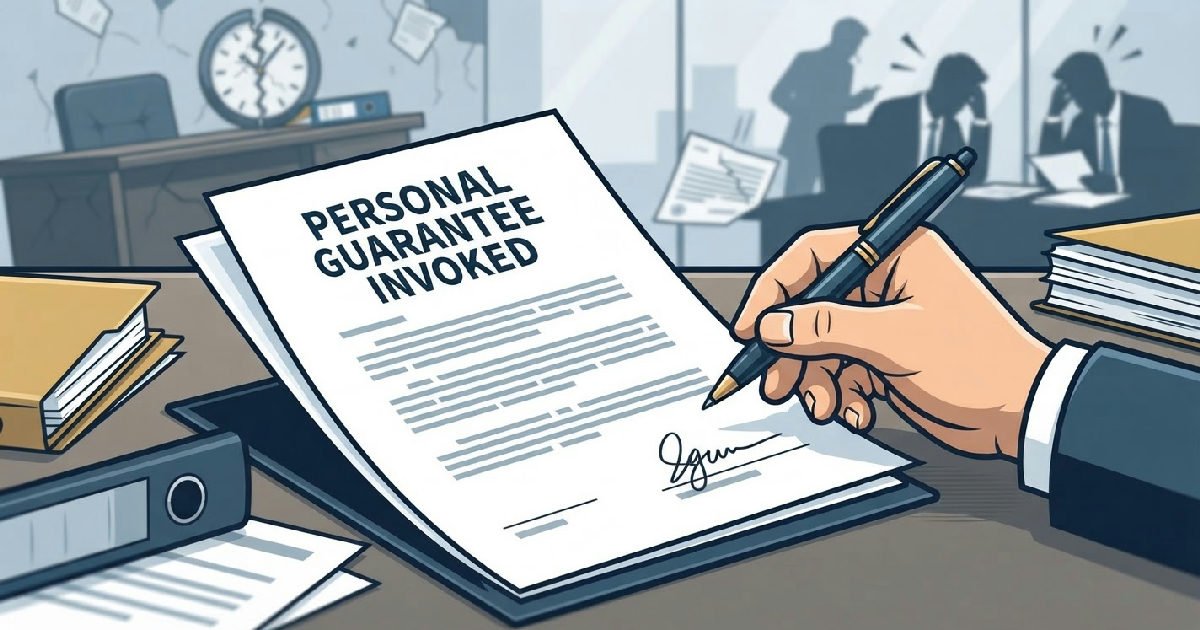
When a business falters and defaults on its financial obligations, the consequences can quickly extend beyond the company itself, directly impacting its directors. An invoked personal guarantee transforms a corporate debt into a personal liability, potentially exposing a director’s private assets to creditors seeking recovery. This legally binding commitment means the individual director is responsible for repaying the business’s debt if the company cannot. In this context, understanding the personal guarantee invoked is essential.
The moment a notice arrives from a creditor, demanding payment based on a personal guarantee, it signals a critical shift. This isn’t a routine company correspondence; it’s a direct claim against the director as an individual. Understanding the immediate implications and legal steps is crucial to navigating this challenging situation.
When a Personal Guarantee is Invoked: The Immediate Impact
The invocation of a personal guarantee is a stark signal that a company has defaulted on its obligations, triggering a direct enforcement action against the guarantor. This process means the full amount of the guarantee is technically payable immediately, with payment now demanded directly from the director who provided the pledge. This situation highlights the importance of being aware of how a personal guarantee invoked can affect one’s financial standing.
Ignoring such a demand can have severe repercussions, often leading to swift legal action if a settlement isn’t reached. Creditors typically initiate this process only after the company has failed to meet its commitments, making the guarantee the next line of defense for their investment.
In cases where a personal guarantee invoked is actionable, it is vital for directors to seek legal advice promptly to mitigate potential losses.
Understanding the Invocation Process
An invoked personal guarantee means the creditor has formally declared the company in default. This action shifts the debt burden from the limited liability entity to the individual director who personally backed the loan or facility.
Crucially, this is a distinct legal process from any actions taken against the company itself. The creditor now views the director as the primary obligor for the guaranteed amount, bypassing the corporate structure.
First 48 Hours: Critical Steps for Directors
Upon receiving notification that a personal guarantee is invoked, immediate and measured action is paramount. Directors must quickly gather all relevant documentation, including the personal guarantee agreement, the original sanction letter, and any board resolutions related to the facility.
It’s also vital to scrutinize the exact amount being claimed, as discrepancies can sometimes arise from excessive interest or penalties. Directors should also verify if the guarantee stipulated that the company had to be called upon first, and if this condition was met before the personal guarantee was activated. Seeking specialist legal advice early can prevent missteps.
Creditor Actions Following Invocation
Once a personal guarantee is invoked, creditors have several legal avenues to pursue recovery, depending on the nature of the original facility and the director’s responsiveness. These actions can escalate quickly, moving from formal demands to court judgments and aggressive enforcement.
The specific trajectory often depends on the creditor’s internal policies, the size of the debt, and the perceived accessibility of the director’s personal assets. Swift and informed engagement with legal counsel is crucial at this stage.
From Demand to Legal Proceedings
The initial phase typically involves a formal written demand for payment sent directly to the guarantor. Should this demand go unanswered, or if negotiations fail, the creditor is likely to initiate legal proceedings to secure a judgment against the director.
These proceedings can result in a County Court Judgment (CCJ) or a High Court Judgment, formalizing the debt and paving the way for more severe enforcement measures. Such judgments create a significant legal burden for the director involved.
Asset Enforcement and Bankruptcy Risks
With a court judgment in hand, creditors gain the power to pursue a range of enforcement actions against the director’s personal assets. These can include seizing movable goods via a Sheriff, initiating garnishee proceedings against bank accounts, or imposing charging orders against real estate, including the director’s home.
In the most severe cases, creditors can petition for the director’s personal bankruptcy. A bankruptcy declaration carries profound implications, including potential disqualification from holding future directorships for up to 15 years, significantly impacting professional life.
Challenging a Personal Guarantee: Potential Defenses
Not every personal guarantee is ironclad, and directors often have avenues to challenge their enforceability or the claimed amount. Thoroughly reviewing the guarantee document and the circumstances under which it was signed is a critical first step.
Legal challenges can focus on various aspects, from the initial terms of the agreement to subsequent actions by the creditor or even the director’s state of mind at the time of signing. Early legal intervention can uncover potential weaknesses in the creditor’s claim.
Scrutinizing Guarantee Terms and Conditions
One of the first lines of defense involves a detailed examination of the guarantee’s specific terms. Directors should ascertain if the guarantee was limited in amount or time, as some agreements cap liability at a fixed sum or for a defined period. Checking the statute of limitations is also vital, as claims typically have a legal expiry period.
Understanding whether it was a “continuing guarantee,” covering all future debts, or one restricted to a specific transaction, can also significantly alter the scope of liability. Any conditions precedent to invocation, such as a requirement for the company to be called upon first, also warrant careful review.
Material Alterations and Procedural Irregularities
A significant defense can arise if the underlying contract between the company and the creditor was materially altered without the guarantor’s consent. Such changes can, in some cases, invalidate the guarantee. Directors should also verify if the claimed amount is inflated by excessive interest, charges, or penalties beyond the original agreement.
Improper execution of the guarantee document, such as a lack of proper signatures or witnesses, or the presence of ambiguous language, can also provide grounds for challenge. These procedural flaws can undermine the creditor’s ability to enforce the agreement.
Limitations and Misrepresentation Claims
The legal limitation period for enforcing guarantees is a critical aspect; typically, this is six years for simple contracts and twelve years for guarantees considered a deed. If the creditor files the claim outside this window, the guarantee may be unenforceable. Directors should seek professional advice on these deadlines.
Furthermore, if a director was misled or subject to misrepresentation or fraud when signing the guarantee, this could constitute a valid defense. Similarly, signing under duress or undue influence, or a lack of independent legal advice prior to execution, can also challenge enforceability.
The Myth of Company Insolvency as Protection
A common and dangerous misconception among directors is that a personal guarantee automatically expires or becomes unenforceable if their company enters insolvency. This is rarely the case. A personal guarantee is a distinct, separate contract between the director and the lender, independent of the company’s debt obligations.
Consequently, this separate agreement remains fully enforceable even if the company proceeds through liquidation or other insolvency processes. The appointed liquidator or administrator for the company holds no authority over the personal guarantee, allowing the lender to pursue the director directly.
This critical distinction means directors cannot simply assume their personal liability vanishes with the company’s financial distress. The guarantee is designed specifically to provide the lender with an additional route to recovery precisely when the company’s assets are insufficient.
Joint and Several Liability Implications
Where multiple directors have signed a personal guarantee, they are typically “jointly and severally liable.” This legal construct allows the lender to pursue any single director for the entire amount owed, rather than being required to split the claim equally among all guarantors.
Lenders frequently target the director with the most accessible personal assets, making it imperative for co-guarantors to understand their individual exposure. This can create complex inter-director disputes and financial pressure.
Continuing Liability After Leaving a Company
Another crucial point directors often overlook is that a personal guarantee does not automatically terminate upon their resignation or sale of shares in the company. Unless formally and explicitly released by the creditor, the liability usually continues.
Directors who have left a business years ago can still find themselves facing demands for debts incurred by the company post-departure. It underscores the importance of securing a formal release from the guarantee when exiting a directorship.
Strategic Responses and Negotiation Avenues
Faced with an invoked personal guarantee, a director’s initial response can significantly influence the outcome. Rash decisions or prolonged silence often exacerbate the situation, while a strategic, informed approach can lead to more favorable resolutions.
Negotiation remains a powerful tool, particularly when backed by a solid understanding of one’s legal position and potential defenses. Creditors often prefer a structured settlement over lengthy and costly litigation.
Weighing Immediate Payment vs. Disputed Claims
If the debt is unequivocally due and the guarantee terms are unambiguous, a structured settlement can be a more beneficial path than simply ignoring the demand. Prolonging the issue without grounds for dispute can incur additional legal costs and interest.
However, if the claimed amount appears inflated, or if there are clear grounds to dispute the guarantee’s enforceability, paying immediately without investigation would be a poor strategy. Directors should never feel compelled to pay first and investigate later if questions exist.
Importance of Early Legal Counsel
Obtaining early specialist legal advice is perhaps the most critical step a director can take. Legal professionals can assess the enforceability of the guarantee, identify potential defenses, and strengthen a director’s negotiating leverage. Guessing based on forwarded PDFs or general online information can inadvertently worsen the situation.
Legal guidance helps directors understand their exposure, explore all available options, and formulate a coherent strategy for dealing with creditors. This expert support can be invaluable in mitigating financial risk and protecting personal assets.
Broader Implications for Directors and Business Finance
The invocation of a personal guarantee serves as a stark reminder of the responsibilities and risks directors undertake in business. It highlights the blurred lines between corporate and personal finance that can emerge when such pledges are made.
Understanding these broader implications is essential not just for those currently facing an invoked guarantee, but for any director considering such a commitment in the future. It shapes how businesses secure funding and how directors manage their legal exposure.
Conflicts of Interest and Director’s Duties
Providing a personal guarantee can inadvertently create a conflict of interest for a director. Such a financial stake might influence business decisions, potentially leading to situations where personal interests diverge from the company’s best interests.
Directors are typically required to declare such interests and may even be prohibited from voting on certain matters to avoid undue influence. During periods of financial distress, directors must be especially careful to avoid giving preferential treatment to certain creditors based on their personal guarantees.
The Role of Guarantees in Business Funding
Personal guarantees are a ubiquitous feature of business finance, particularly for newer businesses or those with limited assets. Lenders require them to secure an additional recovery route beyond the company’s balance sheet, effectively reducing their risk and providing access to capital.
This mechanism removes the protection of limited liability for that specific debt, making directors personally invested in the company’s repayment ability. While necessary for many businesses to obtain financing, it places a significant burden on the individuals involved.
| Aspect | Director’s Initial Actions | Creditor’s Potential Actions | Potential Defenses |
|---|---|---|---|
| Immediate Step | Gather all guarantee documents | Formal demand for payment | Check guarantee limits |
| Key Verification | Confirm claimed amount accuracy | Initiate legal proceedings | Material alteration of contract |
| Legal Move | Seek specialist legal advice | Seek court judgment (CCJ/High Court) | Statute of limitations |
| Enforcement Risk | Review invocation conditions | Enforcement actions (seizure, charging orders) | Misrepresentation or fraud |
| Worst Case | Consider negotiation | Petition for personal bankruptcy | Improper execution |
What does “invoked” mean in the context of a personal guarantee?
When a personal guarantee is “invoked,” it means the creditor has formally declared that the company has defaulted on its financial obligations. As a result, the creditor is now enforcing the guarantee, demanding payment directly from the director who signed it, and may pursue legal action if the debt isn’t settled.
Should I pay immediately if my personal guarantee is invoked?
Not necessarily. If the debt is clearly due and the guarantee is unambiguous, a structured settlement might be beneficial. However, if you suspect the amount is inflated, or if there are grounds to dispute the guarantee’s enforceability, paying first and investigating later is often a poor strategy. Always seek legal advice before making payments.
Does company insolvency protect a director from a personal guarantee?
No, company insolvency typically does not protect a director from a personal guarantee. The guarantee is a separate contract between the director and the lender, distinct from the company’s debt. It remains enforceable even if the company enters liquidation, as the lender can pursue the director directly.
Has a personal guarantee been invoked against you or another director?
Do not reply in haste. WhatsApp or call for a free consultation. We assist directors and companies in Delhi with guarantee notices, recovery claims and related commercial disputes.
Related Service: Civil Law