
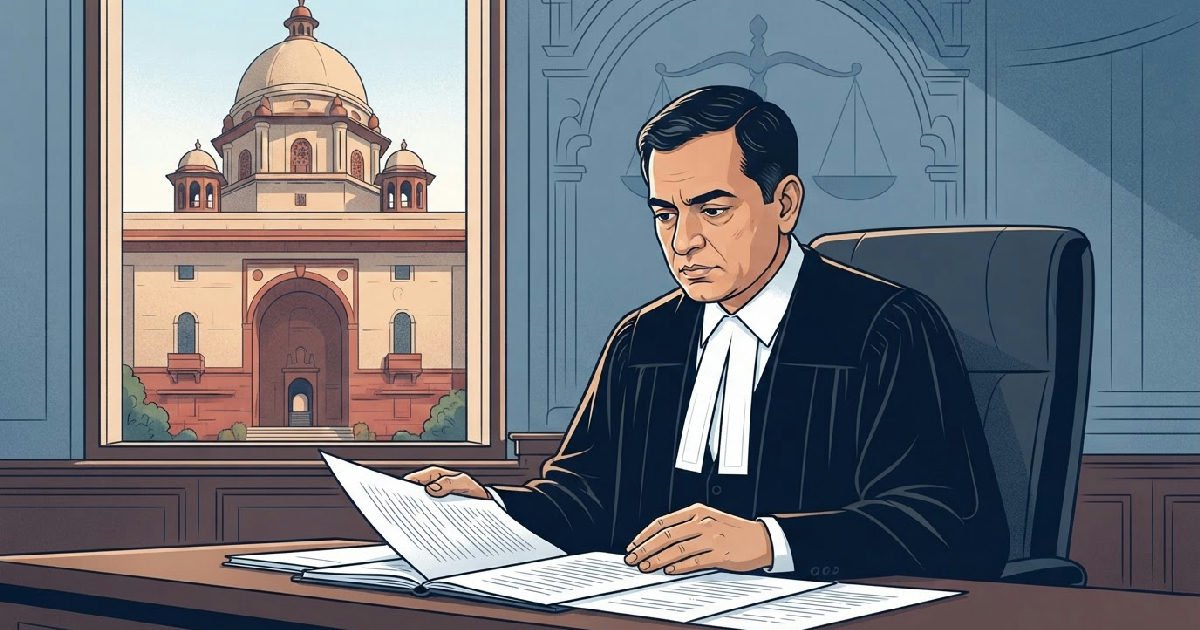
Delhi HC curbs belated challenges in filed recovery case
The High Court ruled that objections to territorial jurisdiction in recovery cases, including a recovery case in delhi, cannot be raised late if not included in the written statement or before issues were framed.
This decision, handed down by Justice Manoj Kumar Ohri on March 25, 2026, in the case of Hanuman Prasad Sharma @ H.P. Sharma v. J. Mithyleshwar, emphasizes that such objections are deemed waived under Section 21 of the Code of Civil Procedure (CPC).
This judgment provides crucial clarity for both plaintiffs and defendants engaged in civil recovery suits, including those related to a recovery case in delhi, reinforcing the principle that procedural dilatoriness will not be entertained. It effectively prevents parties from ambushing opponents with jurisdictional challenges deep into litigation, ensuring more efficient dispute resolution within the Delhi legal system.
High Court Overturns Trial Court’s Decision in Sharma v. Mithyleshwar
The case stemmed from a civil suit filed by appellant Hanuman Prasad Sharma @ H.P. Sharma seeking to recover ₹10 lakhs, an alleged friendly loan, from respondent J. Mithyleshwar.
Sharma asserted that the Delhi courts had jurisdiction because Mithyleshwar had contacted him in Delhi regarding the recovery case in delhi, relevant documents and the loan cheque were delivered there, and the loan was transmitted from Sharma’s Delhi bank account at Karnataka Bank Ltd., Savita Vihar Branch.
Further substantiating the Delhi connection, the repayment cheque, drawn on HDFC Bank, Bellari Branch, Karnataka, was presented and subsequently dishonoured in Delhi. Despite these assertions and the suit proceeding, the defendant, J. Mithyleshwar, who is based in Karnataka, did not raise any objection regarding territorial jurisdiction in the initial written statement filed before the Trial Court.
Trial Court’s Initial Ruling on Jurisdiction
The matter progressed until the Trial Court eventually allowed an application from the defendant under Order VII Rule 10 CPC. This procedural rule permits a court to return a plaint if it finds it lacks jurisdiction. On July 23, 2022, the Trial Court ordered the return of the plaint, concluding that it lacked the necessary territorial jurisdiction to hear the ₹10 lakh recovery claim.
This decision meant the plaintiff would have had to refile the entire suit in Karnataka, incurring significant delays and additional legal costs. Such rulings can often derail a case that has already consumed considerable time and resources, making the subsequent appeal to the Delhi High Court critical for the plaintiff.
Delhi High Court’s Reversal and Reasoning
The Delhi High Court, presided over by Justice Manoj Kumar Ohri, subsequently heard the appeal (FAO 290/2022) against the Trial Court’s order. After reserving its decision on February 13, 2026, the High Court pronounced its judgment on March 25, 2026, allowing the appeal.
Justice Ohri set aside the Trial Court’s order, effectively restoring the suit to its original number and allowing it to proceed in Delhi. The High Court’s core reasoning centred on the defendant’s failure to object to territorial jurisdiction at the earliest possible opportunity, specifically in the written statement or before the framing of issues.
The Principle of Waiver Under Section 21 of CPC
At the heart of the Delhi High Court’s decision lies Section 21 of the Code of Civil Procedure, 1908. This crucial provision governs objections related to the place of suing, or territorial jurisdiction.
It stipulates that no objection to the territorial jurisdiction of a court shall be allowed by any appellate or revisional court unless it was raised in the court of first instance at the earliest possible opportunity.
This opportunity is typically defined as either within the written statement or before issues are settled by the court. Crucially, for such an objection to be sustained at a later stage, it must also be demonstrated that the late raising of the objection resulted in a consequent failure of justice.
This legal framework aims to prevent parties from holding back jurisdictional challenges as a tactical manoeuvre to delay proceedings or gain an unfair advantage.
The High Court underlined that by not raising the objection promptly, J. Mithyleshwar had effectively waived his right to dispute Delhi’s territorial jurisdiction. This aligns with the legislative intent behind Section 21, which prioritizes the expeditious disposal of cases and discourages procedural gaming.
The ruling reinforces that a defendant cannot silently participate in proceedings and then, at a later, more convenient time, claim the court lacks jurisdiction.
Differentiating Territorial and Subject-Matter Jurisdiction
It is vital to understand that territorial jurisdiction, which was the focus of the Hanuman Prasad Sharma case, differs fundamentally from subject-matter jurisdiction. While objections to territorial jurisdiction can be waived by conduct or consent, an objection to subject-matter jurisdiction cannot.
A court’s lack of subject-matter jurisdiction renders its proceedings null and void from the outset, regardless of whether any party raises an objection. Such an objection can be brought forth at any stage of the proceedings, even for the first time in an appeal. This distinction is critical for legal practitioners and litigants, as it determines the firmness of jurisdictional challenges.
| Jurisdiction Type | Waiver Possible | When Objection Can Be Raised | Consequences of Lack |
|---|---|---|---|
| Territorial Jurisdiction | Yes (under Section 21 CPC) | Earliest opportunity (written statement/before issues) | Proceedings valid unless timely objection results in failure of justice |
| Subject-Matter Jurisdiction | No (cannot be conferred by consent) | Any stage of proceedings | Proceedings are void ab initio (from the beginning) |
Key Events in Hanuman Prasad Sharma v. J. Mithyleshwar
The timeline of the Hanuman Prasad Sharma case illustrates the procedural journey that led to the Delhi High Court’s definitive ruling. From the initial financial transaction to the final pronouncement, each stage played a role in shaping the legal precedent.
The sequence of events, particularly the significant gap between the loan cheque dishonour in 2016 and the Trial Court’s decision in 2022, highlights the protracted nature of civil litigation. This delay underscores why procedural efficiency, as championed by the High Court’s ruling, is crucial.
The defendant’s belated jurisdictional challenge, occurring years into the process, exemplifies the very dilatory tactics Section 21 of the CPC aims to prevent, thereby preserving judicial resources and litigant time.
The High Court’s swift reservation and pronouncement of judgment in early 2026, setting aside the Trial Court’s decision from 2022, also demonstrates a clear intent to rectify procedural missteps promptly.
This action not only restored the plaintiff’s original suit but also sent a strong message about the importance of adhering to procedural timelines, ensuring that justice is not merely delayed but also delivered in the proper forum when jurisdiction is not timely contested.
| Event | Date | Outcome/Significance |
|---|---|---|
| Loan Cheque Dishonour | March 3, 2016 | Basis for recovery suit of ₹10 lakhs |
| Trial Court Order | July 23, 2022 | Plaint returned for perceived lack of territorial jurisdiction |
| High Court Appeal Reserved | February 13, 2026 | Arguments concluded, judgment awaited |
| High Court Judgment | March 25, 2026 | Trial Court order set aside; suit restored to its original number in Delhi |
Strategic Implications for Plaintiffs in Recovery Suits
This Delhi High Court ruling carries significant implications for plaintiffs pursuing recovery suits, particularly those facing belated jurisdictional challenges. The judgment provides a strong basis to oppose applications aimed at returning a plaint for lack of territorial jurisdiction, especially when the defendant has previously remained silent on the issue.
Plaintiffs should not automatically concede or withdraw their suit simply because such an application has been filed. Instead, it’s imperative to review the case specifics. First, confirm whether the defendant’s written statement explicitly pleaded that “Delhi has no territorial jurisdiction.” Second, ascertain if an issue regarding territorial jurisdiction was framed by the court during the initial stages of the litigation.
Finally, and critically, assess if there is a genuine connection to Delhi, such as payment originating from Delhi, the cheque being presented there, or the contract being performed within the city. If the first two questions yield a “no” and the third a “yes,” the plaintiff stands on solid ground to vehemently oppose the application.
Allowing a plaint to be returned after significant time has passed often serves the defendant’s agenda, creating delays and potentially opening fresh limitation disputes elsewhere. For companies operating in the capital, understanding the appropriate court can be crucial, as explored in commercial court considerations.
Defence Strategy: The Imperative of Early Objections
For defendants, the Delhi High Court’s ruling serves as a clear directive: if you intend to challenge territorial jurisdiction, do so at the very first opportunity. Holding back this objection until after the written statement is filed or issues are framed significantly weakens your position, as demonstrated in the Hanuman Prasad Sharma case.
Legal professionals often advise clients to raise jurisdictional concerns in their initial pleading, such as the written statement. This proactive approach ensures the objection is on record early, making it a legitimate point for the court to consider.
Delaying such a fundamental challenge risks the court interpreting silence as acceptance of its jurisdiction, leading to a waiver of the right to object later. Experienced commercial lawyers in Delhi consistently counsel defendants to address forum-related issues at the outset of litigation, rather than reserving them as a late-stage tactic.
Distinction from Cheque Dishonour Cases Under NI Act
It is important to note that the principles governing territorial jurisdiction in general civil recovery suits under the CPC, as clarified by this Delhi High Court judgment, are distinct from those applicable to cheque dishonour cases filed under Section 138 of the Negotiable Instruments Act, 1881 (NI Act).
The NI Act has its own specific rules concerning jurisdiction, which were clarified by the Negotiable Instruments (Amendment) Act, 2015.
This amendment stipulated that jurisdiction in cheque dishonour cases primarily lies where the payee’s bank branch is located (if the cheque is delivered for collection through an account) or where the drawee bank’s branch is situated (if the cheque is presented directly).
This clarification followed earlier conflicting Supreme Court pronouncements, such as Dashrath Rupsingh Rathod v. State of Maharashtra (2014), aiming to streamline the process for these specific financial disputes. Therefore, while this ruling is pivotal for civil recovery, it does not alter the established jurisdictional framework for cheque bounce complaints.
Looking Ahead: Ensuring Procedural Fairness
The Delhi High Court’s judgment in Hanuman Prasad Sharma @ H.P. Sharma v. J. Mithyleshwar underscores the judiciary’s commitment to preventing procedural abuses and ensuring the timely resolution of disputes.
By disallowing belated objections to territorial jurisdiction, the court reinforces the principle that parties must engage with litigation in good faith and raise all pertinent issues promptly. This approach contributes to a more predictable and efficient legal environment for commercial dealings and civil recovery actions.
For businesses and individuals navigating the complexities of money recovery, this ruling offers greater certainty regarding the stability of chosen forums. It also serves as a strong reminder for legal teams to be meticulous in their initial pleadings, ensuring all potential jurisdictional challenges are addressed upfront. Such clarity helps in avoiding protracted legal battles and focuses the court
What does the Delhi High Court’s ruling on territorial jurisdiction mean for recovery cases?
The ruling clarifies that objections to a court’s territorial jurisdiction in recovery cases must be raised at the earliest possible stage—either in the initial written statement or before the issues of the case are formally framed.
If not raised then, the right to object is considered waived, preventing parties from bringing up such challenges later in the litigation to cause delays or gain an unfair advantage.
How does this judgment relate to Section 21 of the Code of Civil Procedure (CPC)?
The Delhi High Court’s decision is firmly rooted in Section 21 of the CPC, which stipulates that objections to territorial jurisdiction must be raised at the first opportunity. The judgment reinforces the principle that failing to do so constitutes a waiver of that right, thereby promoting efficient dispute resolution and discouraging tactical procedural delays.
It emphasizes that unless a failure of justice is demonstrated, belated objections will not be entertained.
What is the difference between territorial jurisdiction and subject-matter jurisdiction?
Territorial jurisdiction refers to a court’s authority to hear cases within a specific geographical area, and objections to it can be waived if not raised promptly. Subject-matter jurisdiction, however, relates to a court’s authority to hear a particular *type* of case.
A lack of subject-matter jurisdiction renders proceedings void from the outset and cannot be waived by parties; objections to it can be raised at any stage of the proceedings.
Need commercial lawyers in Delhi to oppose a late jurisdiction plea or to file recovery in the correct court?
WhatsApp or call for a free consultation.
Related Service: https://arpitmarwah.com/commercial-lawyers-in-delhi/