
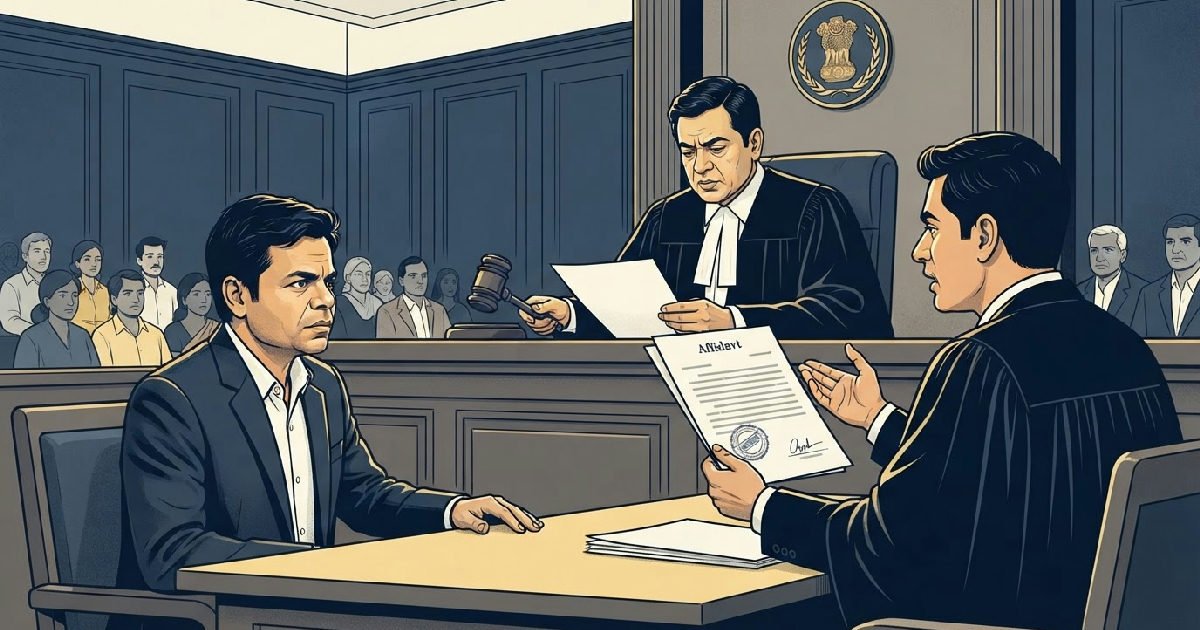
The procedural shift where evidence by affidavit in a cheque bounce case aimed directly at the protracted nature of cheque bounce litigation, a common complaint within the Indian judicial system. By allowing a sworn written statement to serve as evidence during inquiry and trial, Section 145(1) bypasses the often time-consuming initial oral examination.
It effectively prioritizes judicial efficiency over traditional evidentiary protocols, signaling a clear intent to accelerate the resolution of these financial disputes.
Evidence by affidavit in a cheque bounce case
Before Section 145 came into force, the process of proving a cheque dishonor claim often involved extensive oral testimony, leading to significant delays. Complainants had to physically attend court for prolonged examinations, a situation that clogged dockets and frustrated parties seeking justice.
The introduction of Section 145, facilitated by the Negotiable Instruments (Amendment and Miscellaneous Provisions) Act, 2002, was a direct response to these systemic inefficiencies. It acknowledged the pressing need for a mechanism that could streamline the initial evidentiary phase without compromising the integrity of the judicial process, particularly for the high volume of cases originating in Delhi.
The Affidavit as Primary Evidence
Under Section 145(1), a complainant can now submit their testimony as an affidavit, a sworn written statement. This document, accompanied by relevant supporting papers, forms the bedrock of their case at the preliminary stages. It’s considered sufficient evidence for both pre-summoning and post-summoning proceedings, simplifying the initial hurdles in court.
This provision acts as a significant legal bypass, allowing courts to quickly assess the prima facie merits of a case. It reduces the immediate demand for court time, which was previously consumed by the often repetitive and time-intensive process of recording oral evidence from the complainant.
The Procedural Advantage of Affidavit Evidence
The core innovation of Section 145 lies in its ability to circumvent the ordinary rules of evidence outlined in the Code of Criminal Procedure, 1973. This overriding effect means that the special procedure for cheque dishonor cases takes precedence, highlighting the legislature’s intent to provide a faster track for these matters.
This special dispensation doesn’t just benefit the complainant; it also contributes to overall judicial economy. Judges can dedicate more time to contested matters and complex legal arguments, rather than the initial, often uncontested, presentation of facts by the complaining party.
Simplifying the Complainant’s Burden
For individuals and businesses pursuing justice in cheque bounce cases, Section 145 alleviates a considerable administrative burden. They no longer face the immediate necessity of lengthy court appearances to establish their basic claim, freeing up resources and reducing stress associated with litigation.
The ability to present a comprehensive cheque bounce lawyer affidavit upfront allows them to consolidate their evidence efficiently. This early compilation ensures that all pertinent facts and supporting documents are systematically presented to the court, setting a clear foundation for their legal pursuit.
Overriding Traditional Legal Barriers
The provision’s overriding nature is crucial. It means that specific procedural requirements of the Code of Criminal Procedure that might otherwise mandate oral examination are set aside for Section 138 cases. This legislative override ensures the streamlined process envisioned by the amendment can be fully implemented without conflicting legal interpretations.
This legal clarity provides certainty to both complainants and the judiciary regarding the admissibility and weight of affidavit evidence. It solidifies the position of the sworn statement as a legitimate and powerful tool in the initial phases of these particular criminal proceedings.
Crafting a Robust Affidavit: Key Considerations
While the affidavit simplifies the process, its preparation isn’t merely a formality; it requires meticulous attention to detail. A well-drafted affidavit must accurately track the journey of the dishonored cheque, leaving no room for ambiguity or factual gaps.
It acts as the complainant’s voice in court, detailing the sequence of events and substantiating the claim with verifiable evidence. Therefore, its accuracy and completeness are paramount to the success of the case.
Essential Elements for a Valid Affidavit
A crucial component of an effective affidavit under Section 145 is its narrative precision. It must clearly articulate key details such as the issuance of the cheque, the reason for its dishonor as stated in the bank memo, the dispatch and receipt of the legal notice, proof of its service, and the underlying debt or liability.
Each of these points represents a critical legal requirement for establishing a case under Section 138 of the Negotiable Instruments Act. Omitting or inaccurately stating any of them can significantly weaken the complainant’s position, potentially leading to delays or even dismissal.
Avoiding Common Drafting Errors
Lawyers often caution against the pitfalls of using generic, copied templates for these affidavits. A template that mistakenly includes an incorrect memo date or fails to adapt to specific case facts can be more detrimental than beneficial. Such inaccuracies can undermine the affidavit’s credibility.
Precision is vital; the affidavit must precisely reflect the unique circumstances of each cheque bounce incident. Generic statements or factual discrepancies, however minor, can expose the complainant to rigorous scrutiny and challenge from the defense, lengthening the legal battle instead of shortening it.
Accused’s Rights: The Power of Cross-Examination
Despite the streamlined process introduced by Section 145, the rights of the accused remain protected. The accused party retains the crucial right to seek leave from the court to cross-examine the complainant. This ensures a fair trial and the opportunity to challenge the evidence presented through the affidavit.
This provision acts as a vital check and balance, preventing the affidavit from becoming an unchallenged and absolute form of evidence. It upholds the fundamental principle of natural justice, ensuring that the defense has a chance to test the veracity of the prosecution’s claims.
Accused not appearing in court is a separate challenge that still remains. But when they do, the court typically grants permission for cross-examination upon a reasonable request from the accused. This is not an automatic right; the defense must articulate valid grounds to warrant a detailed questioning of the complainant.
Securing Leave for Cross-Examination
For the accused to cross-examine the complainant, a formal application must be made to the court, demonstrating why such examination is necessary. The court will consider whether the affidavit sufficiently presents the facts or if further questioning is essential to uncover truth or clarify ambiguities.
Successful applications usually highlight specific points in the affidavit that require clarification, inconsistencies with other evidence, or potential defenses that can only be established through direct questioning. It shifts the burden to the defense to prove the necessity of moving beyond the affidavit.
The Importance of Original Documents
Crucially, complainants must ensure they retain all original documents pertaining to the dishonored cheque, including the cheque itself, the bank memo, the legal notice, and proof of service. While copies suffice for filing, the originals become indispensable during the cross-examination phase.
The defense will often demand to inspect these original documents during cross-examination to verify their authenticity and challenge any perceived discrepancies. Failure to produce originals when requested can severely prejudice the complainant’s case and cast doubt on the validity of their claims.
Broader Impact on Judicial Efficiency
The introduction of Section 145 has had a measurable positive effect on the pace of cheque bounce cases, particularly in overburdened jurisdictions like Delhi. By reducing the initial evidentiary workload, courts can process a higher volume of complaints more quickly, moving them through the system with greater agility.
This acceleration is critical in a country where judicial backlogs are a persistent challenge. Swift resolution of financial disputes not only serves justice but also enhances economic confidence, assuring parties that contractual obligations, even those involving cheques, can be enforced efficiently.
Streamlining Case Resolution Timelines
Prior to Section 145, the average time to resolve a cheque bounce case could stretch for years, primarily due to the slow pace of evidence recording. The affidavit system has significantly truncated this initial phase, allowing cases to proceed to the crucial stages of defense and judgment much faster.
While definitive statistics can vary, legal practitioners in Delhi widely acknowledge that the provision has cut down the pre-trial and initial trial phase duration. This efficiency gain translates into quicker relief for complainants and a more decisive legal environment.
Addressing the Backlog Challenge
Cheque dishonor cases constitute a substantial portion of the criminal caseload in many Indian courts. Section 145 was specifically designed to tackle this immense volume. By simplifying a critical procedural step, it has provided judges with a tool to manage their dockets more effectively.
The cumulative effect across numerous courts is a reduction in the overall backlog, albeit incremental. It underscores a legislative commitment to adapting legal procedures to meet the demands of a high-litigation environment, ensuring that justice is not unduly delayed.
The Future of Cheque Dishonor Cases
Section 145 stands as a testament to ongoing efforts to modernize and expedite the Indian judicial system, particularly in areas of commercial law. Its continued application ensures that cheque bounce cases, which are fundamentally about financial trust and accountability, can be resolved with appropriate speed.
While the provision offers considerable advantages, its effectiveness ultimately relies on careful drafting by complainants and diligent oversight by the courts. Balancing efficiency with the rights of the accused remains a delicate but achievable goal within this framework.
The move towards affidavit evidence represents a pragmatic approach to a persistent legal challenge. It reflects a broader judicial trend towards leveraging procedural innovations to enhance access to justice and maintain public confidence in the legal system’s capacity to deliver timely resolutions.
| Aspect | Pre-Section 145 Regime | Post-Section 145 Regime (since Feb 6, 2003) |
|---|---|---|
| Evidence Presentation | Primarily oral examination, often time-consuming. | Complainant’s evidence by affidavit allowed, streamlining initial stages. |
| Procedural Authority | Governed by general Code of Criminal Procedure, 1973. | Special procedure takes precedence, overriding CrPC for Section 138 cases. |
| Case Expediency | Frequent delays due to lengthy oral testimony and court appearances. | Aimed at significantly reducing delays and accelerating trial process. |
| Evidentiary Requirement | Oral testimony essential at initial stages. | Affidavit + documents sufficient at pre-summoning and post-summoning. |
What is the primary purpose of Section 145 of the Negotiable Instruments Act?
The primary purpose of Section 145 is to streamline and expedite trials in cheque dishonor cases under Section 138 of the Negotiable Instruments Act. It achieves this by allowing complainants to present their initial evidence through an affidavit, reducing the need for immediate oral examination.
Can the accused still cross-examine the complainant after an affidavit is filed?
Yes, absolutely. While the complainant can submit evidence by affidavit, the accused still retains the crucial right to seek leave from the court to cross-examine the complainant. This ensures fairness and allows the defense to challenge the presented evidence.
What key information should an affidavit under Section 145 include?
An affidavit under Section 145 should meticulously track all critical details of the cheque dishonor. This includes specifics about the cheque, the bank memo indicating dishonor, the legal notice sent, proof of its service to the accused, and clear substantiation of the underlying debt or liability.
Affidavit or cross listed in a Delhi 138 case? Call or Whatsapp for free consultation.
Related: https://arpitmarwah.com/cheque-bounce-lawyers-in-delhi/