
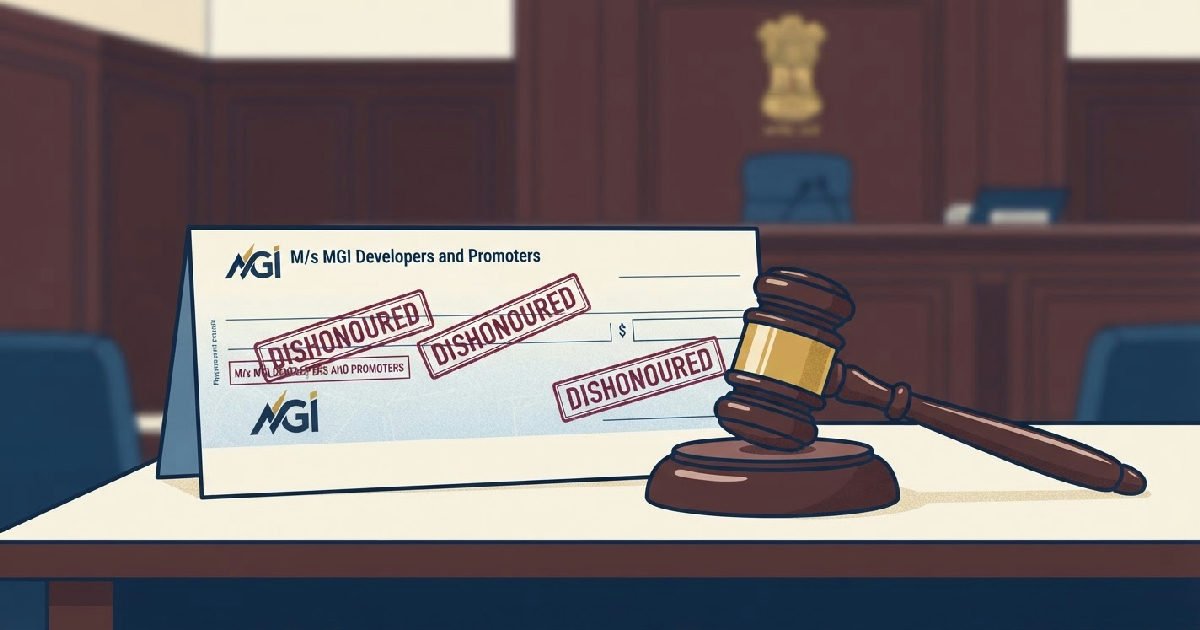
India’s Supreme Court has decisively clarified that each subsequent dishonour of a cheque, even if re-presented, creates a fresh cause of action under Section 138 of the Negotiable Instruments Act, 1881 (NI Act). This pivotal stance overturns the long-held “one-shot” approach, significantly altering the legal landscape for creditors and debtors across the country, including Delhi.
The ruling underscores the judiciary’s commitment to upholding the sanctity of cheque-based transactions, allowing payees to initiate fresh legal proceedings following repeated bounces.
Overturning the “One-Shot” Doctrine as Second Memo Start a New 138 Clock
For years, legal interpretation around cheque dishonour cases grappled with the principle established in Sadanandan Bhadran vs Madhavan Sunil Kumar (1998). That earlier Supreme Court judgment restricted payees to issuing a statutory notice only once, regardless of how many times a cheque was subsequently dishonoured.
This “one-shot” approach often created complexities, potentially limiting a payee’s recourse if they initially opted against prosecution. However, the Supreme Court, in a landmark move, has now definitively moved past this restrictive interpretation. This ensures greater protection for those relying on cheques for financial transactions.
The pivotal shift came with the judgment in MSR Leathers v S. Palaniappan & Anr on October 16, 2012. A bench comprising Justices RM Lodha, TS Thakur, and Anil Dave explicitly stated that prosecution based on a second or successive dishonour of the cheque is permissible.
This is contingent on satisfying all other requirements of Section 138 of the NI Act. This ruling laid the groundwork for the current, more creditor-friendly legal environment concerning dishonoured cheques. Understanding how a second statutory notice functions is key for many.
New Cause of Action for Each Dishonour
The core of the updated legal position is straightforward: a payee can re-present a dishonoured cheque within its validity period. If it bounces again, a fresh cause of action arises, restarting the 138 clock. This means a second statutory notice can be issued after the second dishonour.
This flexibility is crucial for businesses and individuals who rely on cheques as a primary payment method. It allows them to pursue legal avenues effectively, even if they initially hesitated or faced procedural hurdles. Each successive dishonour, when followed by the correct statutory notice, now creates an independent basis for legal action.
The Supreme Court has consistently emphasised that Section 138 of the NI Act was enacted to ensure the sanctity of cheque-based transactions. This legal evolution reinforces that original legislative intent. The ability to pursue multiple causes of action strengthens the deterrent against issuing cheques without sufficient funds.
Multiple Cheques from a Single Transaction
A further significant clarification arrived on January 8, 2026, with the Supreme Court’s ruling in Sumit Bansal v. M/s MGI Developers and Promoters (2026 INSC 40). This judgment specifically addressed situations where multiple cheques originate from a single underlying transaction but are dishonoured individually.
Justices Sanjay Karol and Prashant Kumar Mishra, on the bench, held that each dishonoured cheque generates a separate cause of action under Section 138 of the NI Act. This ruling effectively overturned a Delhi High Court decision that had quashed cheque bounce cases, citing parallel proceedings for the same liability.
The Supreme Court clarified that the cause of action is intrinsically linked to the dishonour of each individual cheque, rather than the overarching transaction. This distinction is vital for understanding the scope of liability. It confirms that multiple liabilities can arise from a single agreement if several cheques are involved.
The court explicitly stated that “a separate cause of action arises upon each dishonour of a cheque provided the statutory sequence of presentation, dishonour, notice, and failure to pay is complete. The fact that multiple cheques arise from one transaction will not merge them into a single cause of action.”
This prevents debtors from escaping liability for multiple instruments. The court further noted that whether cheques were issued as alternatives or security cheques is a disputed question of fact, to be determined during trial, not at the quashing stage. Security cheque validity remains a complex issue for courts to decide.
Strict Conditions for a Valid Second Complaint
While the court allows for multiple presentations and fresh causes of action, it maintains strict conditions for validity. Firstly, the cheque must remain valid at the time of its final presentation. If a cheque expires, no cause of action can accrue under Section 138, regardless of prior dishonours.
Secondly, each time a cheque is dishonoured, the payee must send a distinct demand notice. This notice must specifically detail the particulars of that precise dishonour. The practice of “recycling of notices” is not permitted; each bounce requires its own formal communication.
Finally, statutory timelines are critical. The payee must dispatch the demand notice within 30 days of receiving the return memo from the bank. The drawer then has 15 days from receipt of this notice to make the payment. Failing to pay within this 15-day window triggers the cause of action, allowing a complaint to be filed within one month (30 days) from that date.
Courts generally disapprove of repeated presentations purely for harassment. While the law permits multiple attempts, the intent behind them can be scrutinized. A legitimate attempt to recover funds is distinct from an abusive use of the legal process. The courts aim to strike a balance between facilitating recovery and preventing misuse.
Key Procedural Requirements in Cheque Dishonour Cases
Navigating cheque dishonour cases under the NI Act involves a series of mandatory procedural steps. Adherence to these steps is crucial for a successful prosecution under Section 138. Any deviation can lead to the dismissal of the complaint.
| Procedural Step | Requirement | Timeline/Details |
|---|---|---|
| Cheque Presentation | Within validity period | Typically three months from issue date |
| Receive Return Memo | Bank provides intimation of dishonour | Promptly after dishonour |
| Issue Demand Notice | In writing, to the drawer | Within 30 days of receiving return memo |
| Drawer Payment Period | Drawer must pay cheque amount | Within 15 days of receiving notice |
| File Complaint | If drawer fails to pay | Within one month (30 days) after 15-day payment period expires |
The demand notice itself must clearly state the exact amount of the dishonoured cheque. Recent amendments to the NI Act in 2024 have also validated digital notices, streamlining the communication process. This modernization acknowledges the evolving nature of financial communication.
Ensuring the cheque itself is valid is paramount. For instance, if a cheque is returned due to an account being closed, or insufficient funds, it falls under the purview of Section 138.
What does the “138 clock” refer to?
The “138 clock” refers to the statutory timelines under Section 138 of the Negotiable Instruments Act, 1881, which govern the process for handling dishonoured cheques. This includes the 30-day period to issue a demand notice after a cheque bounces and the subsequent 15-day period for the drawer to make payment before a complaint can be filed.
Can a cheque be re-presented multiple times after dishonour?
Yes, India’s Supreme Court has clarified that a cheque can be re-presented within its validity period. Each subsequent dishonour creates a fresh cause of action under Section 138 of the NI Act, allowing the payee to issue a fresh demand notice and potentially initiate new legal proceedings, provided all conditions are met.
What are the key conditions for filing a valid complaint after a cheque dishonour?
To file a valid complaint, the cheque must be presented within its validity period and subsequently dishonoured. A written demand notice must be sent to the drawer within 30 days of receiving the return memo.
If the drawer fails to make payment within 15 days of receiving the notice, a complaint can be filed within one month (30 days) from the expiry of this 15-day period.
Two return memos for one cheque? Call or Whatsapp for consultation.
Related: https://arpitmarwah.com/cheque-bounce-lawyers-in-delhi/