
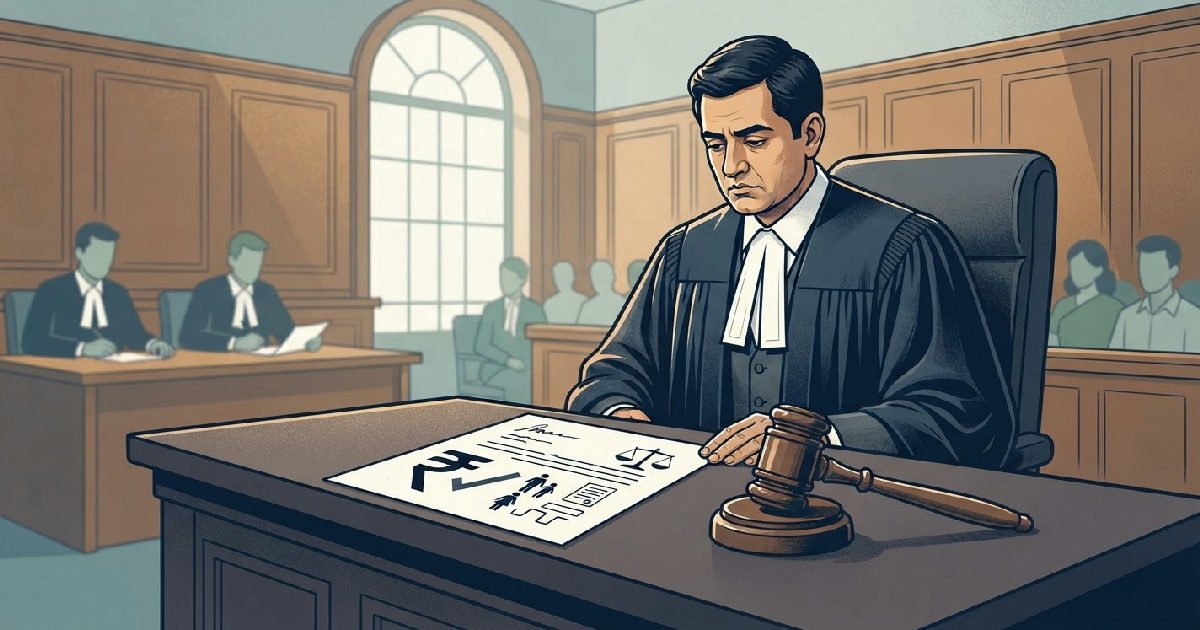
Recent rulings from both the Calcutta and Delhi High Courts have underscored a critical distinction: criminal liability for a bounced cheque typically abates upon the drawer’s death, but the underlying civil obligation to repay the debt can persist against their estate.
Drawer dies after the Cheque Bounces
This nuanced legal landscape means that while the deceased cannot face personal criminal prosecution, their assets may still be pursued for financial recovery. Creditors, therefore, must understand these differences to navigate their options effectively.
In India, criminal liability under Section 138 of the NI Act is considered strictly personal. This fundamental principle means that a criminal case cannot simply transfer to a deceased individual’s legal heirs or business associates.
The Calcutta High Court, in a significant ruling on May 11, 2026, unequivocally affirmed this stance. Justice Uday Kumar presided over a case that quashed criminal proceedings against a man whose deceased brother had allegedly issued a cheque for a ₹27 lakh loan. The court highlighted that only the signatory to the cheque could be prosecuted under Section 138.
Calcutta High Court Affirms Personal Liability
The Calcutta High Court’s judgment emphasised that a “crime” isn’t an inheritance or legacy passed down to surviving family members. This principle ensures that legal heirs are not punished for an offense committed by the deceased drawer.
The court’s decision provides crucial clarity, reinforcing the personal nature of criminal culpability in cheque bounce cases. This prevents the burden of criminal prosecution from unfairly falling upon innocent successors.
The ‘Concatenation of Acts’ and Notice Requirements
A key aspect of a Section 138 offense involves a specific sequence of actions, often termed the “concatenation of acts.” This includes the cheque’s presentation, dishonour, and the issuance of a statutory demand notice.
If the drawer dies before this chain of events is complete, particularly before notice issuance, the process cannot proceed. A deceased person cannot receive a legal notice or rectify the default of non-payment, rendering the criminal proceedings unviable.
Delhi High Court on Mandate Revocation
The Delhi High Court, on April 30, 2025, further elaborated on this point in a case involving M/s Raman International. It noted that the bank’s mandate to pay from an account is automatically revoked upon the drawer’s demise.
This revocation effectively renders the instrument a “legal nullity” for criminal prosecution if presented after death. Such a cheque loses its legal standing for criminal enforcement, reinforcing the abatement of the case. For more details on what happens if a complainant died during a cheque bounce case, the situation is different.
Civil Obligations Can Continue Against the Estate
While criminal charges dissipate, the monetary obligation doesn’t simply vanish. The civil liability for the bounced cheque amount can still be pursued. This means the complainant retains the right to recover the debt from the deceased drawer’s estate.
Legal heirs are not personally responsible for this debt beyond the value of the assets they inherit. Their liability is limited to the property or funds left by the deceased, protecting their personal assets.
Recovering Debt from Deceased’s Assets
A complainant can initiate a civil suit against the legal heirs to recover the outstanding cheque amount. This action is distinct from the criminal proceedings and focuses purely on financial restitution.
Such a suit, particularly if based on a cheque dishonoured during the drawer’s lifetime, remains maintainable under Order 37 of the Civil Procedure Code (CPC). It allows for a summary procedure against legal heirs who inherit the estate.
Limits on Heir Liability
Crucially, legal heirs cannot be issued a fresh Section 138 notice as if they were the original signatory of the cheque. Their role is as custodians of the deceased’s estate, not as personal debtors.
The recovery from heirs is strictly tied to the inherited estate, meaning they are not obliged to pay out of their own personal wealth. This distinction safeguards heirs from unbounded financial responsibility for their predecessors’ debts.
Implications for Company and Partnership Cases
The death of a key individual within a business entity presents a more complex scenario. The nature of the entity—whether a company or a partnership firm—determines the continuity of legal action.
While a deceased director’s personal criminal liability abates, the company itself remains a distinct legal entity. This allows criminal cases against the company to proceed unimpeded.
Directors and Corporate Accountability
If a director of a company dies, any criminal case against that individual under Section 138 NI Act ceases. However, the legal proceedings against the company itself will typically continue.
Companies are separate legal persons, and their liability isn’t solely dependent on the life of one director. This ensures corporate accountability persists even with personnel changes. A deeper look into can a company director go to jail provides further context.
Partnership Firm Dissolution
For partnership firms, the situation can differ significantly. If a firm has only two partners, the death of one partner can lead to the firm’s dissolution.
In such instances, new partners are generally not liable for previous offenses committed by the original partners. This particularity underscores the unique legal structure of partnerships compared to companies. Understanding partnership firm liability is vital here.
Complainant’s Death: A Different Outcome
Contrastingly, if the complainant in a Section 138 case dies, the proceedings do not automatically abate. This scenario highlights a different legal principle aimed at ensuring justice and recovery for victims.
Legal heirs of the deceased complainant can apply to the court to be substituted, allowing them to continue the prosecution. This mechanism ensures that the legal process doesn’t simply collapse due to the complainant’s passing.
Substitution of Legal Heirs
Section 256(1) and Section 302 of the Criminal Procedure Code (Cr.P.C.) provide the framework for such substitutions. These provisions allow legal heirs to step into the shoes of the deceased complainant.
The courts generally permit this substitution to prevent the dismissal of legitimate cases solely because of a death. This upholds the intent of the law to provide remedies for dishonoured cheques.
Upholding Justice in Appellate Proceedings
The Delhi High Court, on July 28, 2022, reinforced this position in a case concerning appellate proceedings. The court allowed the legal heirs of a deceased complainant to be brought on record.
This decision underscored the legislature’s intention that legal heirs should not be barred from recovering compensation. It ensures that the pursuit of justice continues, even after the original complainant is gone.
Core Principles of Section 138 NI Act
Section 138 of the Negotiable Instruments Act is a critical piece of legislation designed to promote the credibility of cheques as financial instruments. It criminalizes the act of issuing a cheque that subsequently bounces.
This includes reasons such as insufficient funds or other technical issues, aiming to deter unscrupulous practices. The law provides a robust mechanism for addressing such financial misconduct.
Understanding the Offense and Penalties
A conviction under Section 138 can carry significant penalties. These include imprisonment for up to two years, a fine that can be double the cheque amount, or even compensation awarded under Section 357(3) CrPC.
These stringent measures are intended to compel drawers to honor their commitments and to safeguard the financial system. The consequences are severe, reflecting the seriousness of the offense.
Statutory Requirements for Prosecution
For a successful prosecution under Section 138, several conditions must be met. The cheque must have been issued for a legally enforceable debt or liability, establishing a legitimate financial basis.
A written demand notice must be served to the drawer within 30 days of receiving the dishonour memo. If the drawer then fails to pay within 15 days of receiving this notice, a cause of action arises, enabling a formal complaint.
Navigating the Legalities After Death
The intricacies surrounding the death of a party in a cheque bounce case necessitate a clear understanding of legal boundaries. While the state’s power to prosecute diminishes with the drawer’s passing, the creditor’s right to claim their money persists.
This dual track for criminal and civil remedies ensures that justice is served in different forms. It also means that victims of bounced cheques are not left without recourse, even in the most unfortunate circumstances.
Here’s a breakdown of the distinct implications:
| Scenario | Criminal Liability (Section 138 NI Act) | Civil Liability (Money Recovery) |
|---|---|---|
| Drawer Dies (before conviction) | Abates (personal liability) | Continues against deceased’s estate |
| Complainant Dies | Continues (legal heirs can substitute) | Continues (legal heirs can substitute) |
| Director Dies (Company Cheque) | Abates for director, company case continues | Company remains liable |
| Partner Dies (2-partner firm) | Abates for partner, firm may dissolve | Firm assets liable; new partners generally not liable for previous offenses |
Creditors must act diligently to distinguish between these pathways. The priority shifts from seeking punitive action to securing financial recompense through appropriate civil channels. This strategic approach is crucial for navigating the aftermath of a drawer’s death.
The legal system aims to strike a balance, acknowledging the personal nature of criminal responsibility while upholding the financial obligations of a deceased individual. It’s a framework designed to ensure that debts are not simply erased by unforeseen circumstances.
What happens to a Section 138 criminal case if the cheque drawer dies?
If the drawer of a bounced cheque dies before conviction, the criminal proceedings under Section 138 of the Negotiable Instruments Act generally abate. This is because criminal liability is personal and cannot be inherited by legal heirs or business associates.
Can legal heirs be held responsible for a deceased person’s bounced cheque?
Legal heirs cannot be held criminally responsible for the deceased drawer’s offense under Section 138 NI Act. However, their civil liability extends to the estate (property or assets) they inherit from the deceased, but not beyond that amount or from their personal assets.
Does the death of the complainant stop a cheque bounce case?
No, the death of the complainant does not automatically abate the Section 138 proceedings. Legal heirs of the deceased complainant can apply to the court to be substituted as the complainant and continue the prosecution, ensuring the case proceeds.
Accused died mid-138 or just after the bounce? Call or Whatsapp for free consultation.
Related: https://arpitmarwah.com/cheque-bounce-lawyers-in-delhi/