
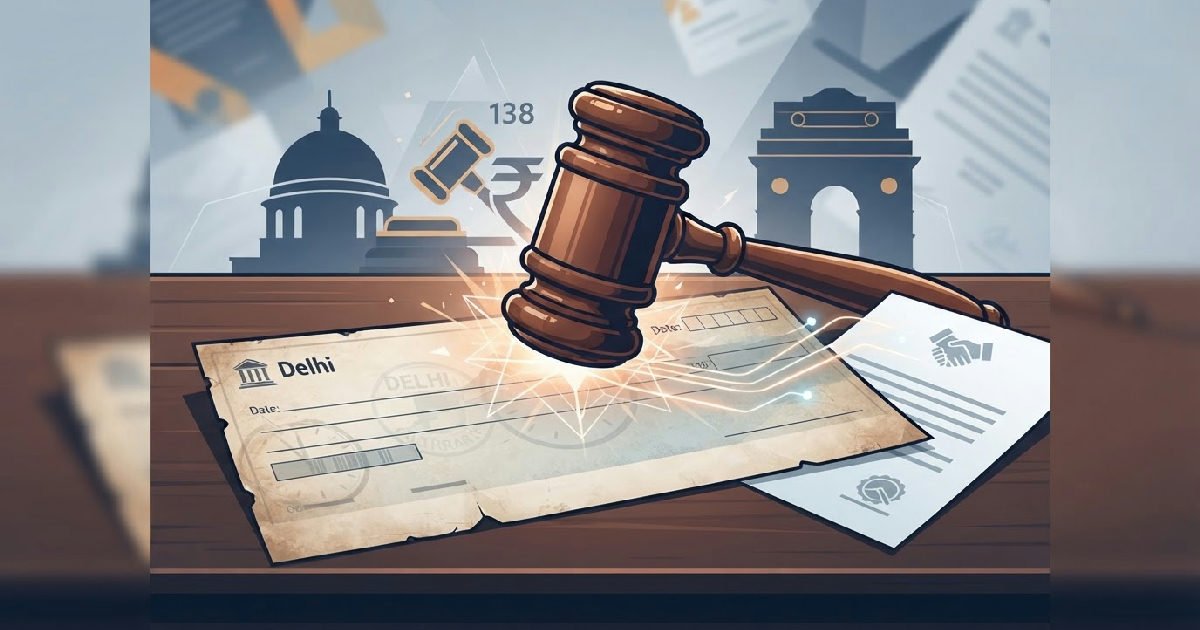
The applicability of Section 138 of the Negotiable Instruments Act, 1881 (NI Act) to debts that have become time-barred has long been a complex legal question in India. Specifically, for a Delhi time-barred debt cheque, the High Court has provided clarity: issuing a fresh cheque for an old, time-barred obligation can indeed revive the debt, making it legally enforceable again.
This ruling brings significant implications for both creditors seeking to recover old dues and debtors who might issue new cheques to settle outstanding, older liabilities. It underscores the critical distinction between a debt being extinguished and merely becoming unenforceable due to the passage of time under the Limitation Act, 1963.
Navigating Time-Barred Debt and Cheque Dishonour in Delhi
For years, a central debate has surrounded the enforceability of a cheque issued for a debt that has passed its limitation period. Debtors often argue that such an obligation is no longer “legally enforceable,” thus precluding prosecution under Section 138 NI Act if the cheque bounces.
Creditors, conversely, contend that a fresh cheque acts as a renewed promise to pay, irrespective of the debt’s original age. The Delhi High Court has largely sided with the latter view, establishing a precedent that acknowledges the debtor’s intent through the act of cheque issuance.
The Nuances of Legal Enforceability
Section 138 of the NI Act specifically criminalizes the dishonour of a cheque issued for the discharge of a “legally enforceable debt or other liability.” The core of the dispute hinges on whether a time-barred debt fits this definition. Without an explicit revival, a civil suit for recovery typically cannot be filed after three years from the date the debt becomes due.
However, the Delhi High Court has observed that the mere presentation of a fresh cheque for such a debt serves to revive the obligation. This perspective draws heavily on specific provisions within Indian contract law, giving new life to otherwise dormant financial responsibilities.
Delhi High Court’s Clear Stance on Revival of Debt
In a significant affirmation of its position, the Delhi High Court has repeatedly held that the act of issuing a fresh cheque for a time-barred debt itself revives the debt. This revival occurs under Section 25(3) of the Indian Contract Act, 1872, transforming an unenforceable debt into a legally binding one for the purpose of cheque dishonour proceedings.
The Court has reasoned that providing a cheque unequivocally signifies an acknowledgment of a debt or liability. Consequently, if that cheque is dishonoured, the creditor can pursue legal liability, and the drawer cannot use the time-barred status of the original debt as a defence.
Section 25(3) of the Indian Contract Act: A Critical Exception
Section 25(3) of the Indian Contract Act, 1872, carves out a crucial exception to the general principle that agreements made without consideration are void. It stipulates that a promise made in writing and signed by the person to be charged, or by their agent, to pay a debt that has been time-barred, is considered a valid and enforceable agreement.
The Delhi High Court views the issuance of a cheque as fulfilling the criteria for this fresh written promise. This means that a cheque written on file for an old debt, if dishonoured, can lead to proceedings under Section 138 NI Act.
Consolidated View of the Delhi High Court
While judicial interpretations have evolved, the Delhi High Court has consistently affirmed its position on this matter. Its stance is unambiguously clear: a fresh cheque revitalises the obligation, making it subject to the stringent provisions of the Negotiable Instruments Act.
This reiteration ensures that debtors cannot escape liability by claiming the original debt was time-barred after voluntarily issuing a new instrument of payment. The underlying debt, previously unenforceable, gains new legal standing through this deliberate act.
Legal Framework: Section 138 NI Act and Contract Law
Understanding the interplay between various Indian statutes is crucial in comprehending this legal landscape. The Negotiable Instruments Act, 1881, particularly Section 138, provides the criminal recourse for cheque dishonour. However, its application is contingent on the existence of a “legally enforceable debt.”
This is where the Limitation Act, 1963, and the Indian Contract Act, 1872, come into play. The Limitation Act defines the period within which legal action can be taken for debt recovery. Once this period expires, the debt becomes time-barred, impacting civil enforceability.
Acknowledging Debt Under the Limitation Act
Section 18 of the Limitation Act, 1963, offers a mechanism to extend the limitation period. An acknowledgment of debt, made in writing and signed by the debtor before the original limitation period expires, can reset the clock, allowing a fresh period to run from the date of acknowledgment.
This differs significantly from the scenario under Section 25(3) of the Indian Contract Act. Section 18 deals with extending an existing enforceable period, whereas Section 25(3) allows for the creation of a new enforceable promise even after the debt has become time-barred.
The Presumption under Section 139 NI Act
Section 139 of the NI Act establishes a presumption that a cheque was issued for the discharge, in whole or in part, of any debt or other liability. The Delhi High Court has held that this presumption also applies when a cheque is issued for a time-barred debt that has been revived under Section 25(3) of the Contract Act.
This means the onus shifts to the accused to prove that the cheque was not issued for a legally enforceable debt, which becomes a much harder defence once the debt is considered revived by the cheque itself. Such legal intricacies often require the expertise of cheque bounce lawyers in Delhi.
Diverging Judicial Views Across India’s Courts
While the Delhi High Court has adopted a clear position, other courts, including the Supreme Court, have presented varying interpretations over time regarding time-barred debts and Section 138 NI Act. This divergence highlights the complexity of the issue and the different legal lenses through which it can be viewed.
Some rulings suggest that a time-barred debt, by its very nature, is not legally enforceable, and therefore, a cheque issued against it might not automatically trigger Section 138 liability unless there’s explicit acknowledgment or novation (replacement of the original contract).
Supreme Court Observations
The Supreme Court has, in some instances, clarified that Section 138 applies only when the cheque is issued for a “legally enforceable debt.” Since a time-barred debt lacks this enforceability, its dishonour might not always lead to conviction under Section 138, depending on the specific facts and context.
For example, in A.V. Murthy v. B.S. Nagabasavanna (2002), the Supreme Court observed that if a cheque is issued towards a time-barred debt can still constitute a valid and enforceable liability under Section 138, depending on the circumstances. This suggests a nuanced approach rather than a blanket rule.
Madras High Court vs. Delhi High Court
A notable contrasting view emerged from the Madras High Court in Sama Dharman Proprietor M/S. Sri Sai Tex v. Sama Dharman (July 25, 2012). This judgment concluded that a cheque issued by the accused did not amount to a distinct promise to pay time-barred debts, thereby deeming the debts not legally enforceable.
This led to the quashing of Section 138 proceedings in that specific case. Such differences highlight the regional variations and the critical importance of understanding the jurisdiction-specific interpretations, especially concerning bouncing cheques.
The Supreme Court on Section 482 CrPC
The Supreme Court has also cautioned High Courts against using Section 482 of the Criminal Procedure Code to prematurely decide whether an underlying debt is time-barred in Section 138 proceedings. It has stated that this is a mixed question of law and fact, requiring proper evidence and adjudication during trial.
This guidance reinforces that the issue of a time-barred debt isn’t a simple procedural defence that can dismiss a case outright. Instead, it must be thoroughly examined within the trial process itself, adding another layer of complexity for litigants.
Key Legal Distinctions: Acknowledgment vs. Promise
The entire debate hinges on understanding the subtle yet crucial differences between an “acknowledgment” under the Limitation Act and a “fresh promise” under the Indian Contract Act. These legal concepts, while both potentially reviving obligations, operate under different conditions and have distinct implications.
An acknowledgment of debt under Section 18 of the Limitation Act must occur before the expiry of the limitation period. Its purpose is to extend the time within which a lawsuit can be filed, essentially preserving the enforceability of an existing debt.
The Promise Under Section 25(3)
Conversely, a promise under Section 25(3) of the Indian Contract Act comes into play after a debt has already become time-barred. It creates a new, legally enforceable obligation out of what was previously an unenforceable one, even without fresh consideration.
This distinction is paramount for a Delhi time-barred debt cheque. The High Court views the issuance of the cheque as precisely this fresh promise, making the debt enforceable anew under the Contract Act, and thus subjecting it to Section 138 NI Act if dishonoured.
Impact on Civil vs. Criminal Liability
It’s vital to remember that the Limitation Act only bars the remedy (the ability to sue) but does not extinguish the debt itself. A time-barred debt still exists, even if a civil court cannot compel its recovery.
However, when a fresh promise (like a cheque) is made, it can create a new basis for legal action. The Delhi High Court’s stance bridges this gap, establishing that this new promise makes the debt “legally enforceable” for the purposes of initiating criminal proceedings under Section 138.
Practical Implications for Creditors and Debtors in Delhi
For creditors in Delhi, the High Court’s clear position offers a renewed avenue for recovering older debts. If a debtor issues a fresh cheque, even for a debt that was previously time-barred, and that cheque bounces, initiating Section 138 proceedings becomes a viable and potentially successful strategy.
This reduces the risk of debtors escaping liability by raising the defence of limitation after having seemingly acknowledged the debt through the issuance of a new negotiable instrument. Creditors must still ensure all procedural requirements for Section 138 are met, including proper notice.
Risks for Debtors Issuing Fresh Cheques
Conversely, debtors must exercise extreme caution when issuing cheques for old, seemingly time-barred debts. What might seem like a goodwill gesture to “close the chapter” could inadvertently revive a legal liability that they previously believed was dormant.
Once a fresh cheque is issued and subsequently dishonoured, the debtor in Delhi faces the full force of Section 138 NI Act. This means potential criminal charges, fines, and even imprisonment, underscoring the serious legal ramifications of such actions.
Summary of Key Legal Positions in India
| Aspect | Delhi High Court’s View | Supreme Court/Other High Courts (Varying Views) | Applicable Statutes |
|---|---|---|---|
| Cheque for Time-Barred Debt | Revives liability under Section 25(3) Indian Contract Act, making it legally enforceable for Section 138 NI Act. | Varies; generally requires specific acknowledgment/novation for enforceability under Section 138 NI Act. Some rulings allow if specific facts support. | Section 138 NI Act, Section 25(3) Indian Contract Act, Limitation Act, 1963 |
| Legal Enforceability | Cheque itself is a fresh promise, making the debt legally enforceable. | Time-barred debt lacks legal enforceability unless revived by specific acts. | Section 138 NI Act |
| Role of Section 25(3) Contract Act | Key mechanism for revival; cheque is considered the written promise. | May be considered, but less uniformly applied to automatically revive Section 138 liability without further proof. | Indian Contract Act, 1872 |
This table highlights the clear distinctions in how different judicial bodies approach this contentious area of law. For those operating within Delhi, the High Court’s firm stance is the guiding principle.
What constitutes a time-barred debt in India?
A time-barred debt in India is an obligation for which the legal period to file a civil suit for recovery has expired, typically three years from the date it became due, as specified by the Limitation Act, 1963. While the debt itself isn’t extinguished, the ability to legally enforce it through courts is.
How does a fresh cheque affect time-barred debt under Section 138 NI Act?
In Delhi, the issuance of a fresh cheque for a time-barred debt is considered a fresh written promise to pay under Section 25(3) of the Indian Contract Act, 1872. This act revives the debt, making it “legally enforceable.” Consequently, if this cheque is dishonoured, proceedings can be initiated under Section 138 of the Negotiable Instruments Act.
What role does Section 25(3) of the Indian Contract Act play?
Section 25(3) of the Indian Contract Act, 1872, is crucial as it validates a written and signed promise to pay a time-barred debt, even without new consideration. The Delhi High Court interprets a fresh cheque as precisely this kind of promise, thereby giving legal teeth to an otherwise unenforceable time-barred obligation for Section 138 NI Act purposes.
Old account, new bounced cheque? What to do now? Call or Whatsapp for free consultation.
Related Services: https://arpitmarwah.com/cheque-bounce-lawyers-in-delhi/