
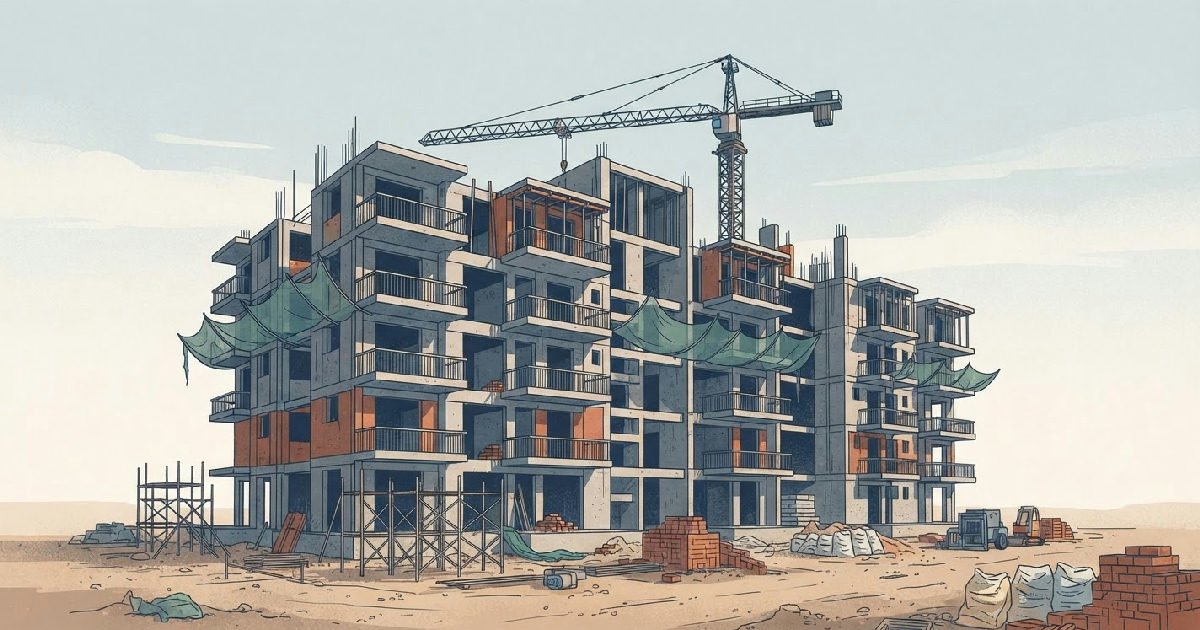
Across the Delhi-National Capital Region (NCR), countless homebuyers face a distressing reality: builder stopped construction after taking money on residential projects. This widespread issue has left approximately 86 million sq ft of real estate inventory stuck in incomplete developments, with cranes and labour disappearing from sites in areas like Greater Noida and Gurugram, while financial demands from developers continue unabated.
The predicament forces thousands of buyers into a waiting game that often transforms into a prolonged legal battle under the Real Estate (Regulation and Development) Act, 2016 (RERA). These stalled developments represent nearly 40% of the total 218 million sq ft of unsold inventory across the region, underscoring a significant crisis in the residential sector.
The impact of Delhi NCR Builder Stopped Construction After Taking Money
The scale of the problem in Delhi-NCR is staggering. Homebuyers who invested their savings have been left without the homes they were promised, facing indefinite delays and mounting financial strain. The initial excitement of property ownership has often devolved into endless frustration and uncertainty.
This widespread abandonment isn’t a new phenomenon, but its current magnitude is particularly concerning. Developers frequently cite various reasons, from financial distress to regulatory hurdles, impacting the entire residential landscape. For many, a project that started with fanfare has become nothing more than a concrete shell.
Regional Impact and Key Affected Areas
While the issue plagues the entire Delhi-NCR, some regions bear a heavier brunt. Greater Noida and Gurugram are particularly affected by stalled construction, witnessing a significant concentration of incomplete residential projects. These areas, once booming with development, now stand as stark reminders of unfulfilled promises.
Other vital real estate hubs, including Noida and Ghaziabad, also grapple with a substantial number of unfinished sites. The problem isn’t confined to a single developer; it’s a systemic issue impacting numerous projects and thousands of buyers across the region.
Why Construction Halts: Root Causes Unpacked
The reasons behind these stalled projects are multifaceted, ranging from poor financial planning to complex legal and regulatory obstacles. Many developers face severe liquidity issues, making it impossible to fund ongoing construction. This financial instability often stems from over-leveraging and aggressive expansion.
Prolonged litigation is another major impediment, frequently involving land acquisition disputes or challenges to environmental clearances. These legal battles can drag on for years, effectively freezing construction and escalating costs, ultimately passed on to the homebuyers or leading to project abandonment.
Financial Viability and Regulatory Hurdles
A primary driver of project stagnation is often a fundamental lack of financial viability. Developers sometimes launch projects without securing adequate funding or mismanage the funds collected from initial bookings. This can quickly lead to a cash crunch, bringing construction to a halt.
Beyond financial woes, delays in obtaining necessary approvals from various bodies, including the NCR Planning Board and local municipal corporations, create significant bottlenecks. These bureaucratic hurdles can stall progress for months, or even years, further exacerbating financial pressures on developers and delaying project completion.
RERA’s Role and Revocation Risks
Non-compliance with the Real Estate (Regulation and Development) Act, 2016 (RERA) also plays a critical role in project delays and abandonments. The Act aims to protect homebuyers and ensure timely project completion, but some builders fail to adhere to its stringent regulations, such as maintaining project-specific escrow accounts for funds.
In certain instances, RERA registrations are revoked due to repeated non-compliance or outright abandonment, leaving projects in legal limbo. Buyers should know if a project is registered under RERA, as this directly impacts their legal recourse options.
Homebuyers’ Plight: Financial Demands Persist
For homebuyers, the experience is often a nightmare of dashed hopes and financial drain. They’ve invested significant life savings, taken out loans, and now face the grim reality of an incomplete home. To compound the distress, many builders continue to demand payment installments even when no construction work is taking place.
Builders often make false promises about revised completion dates or new funding arrangements, coercing homebuyers into making further payments. This leaves buyers in a precarious position, caught between losing their initial investment and pouring more money into a seemingly doomed project.
Navigating Unfinished Homes and Renewed Payments
It’s critical for homebuyers facing stalled projects to meticulously document every interaction. Keep dated photos of the construction site, payment proofs, and all correspondence, especially emails detailing “funds issues” or revised timelines. This evidence becomes invaluable should legal action become necessary.
Homebuyers should exercise extreme caution before paying any fresh “restart” instalments. Never disburse additional funds without clear, written terms and a legally binding agreement outlining new completion deadlines and penalties for further delays. Seek legal advice before committing to any such demands.
The Legal Recourse: RERA Complaints
The RERA framework provides a significant avenue for aggrieved homebuyers to seek redress. Filing a complaint with the respective state’s RERA authority can force builders to comply with their obligations, pay compensation for delays, or even issue refunds. Many buyers find solace in knowing they have this official channel.
Understanding how to file a RERA complaint effectively is crucial for those navigating this complex situation. The process can be lengthy, but with proper documentation and perseverance, it often yields positive results for buyers.
The Scale of the Problem: Inventory and Complaints
The sheer volume of stalled inventory underscores the profound crisis impacting the residential real estate market in Delhi-NCR. It represents not just raw numbers but thousands of families whose futures are on hold. The financial implications extend beyond individual buyers, affecting banks, ancillary industries, and overall market sentiment.
Official complaints lodged with RERA authorities continue to climb, reflecting the growing desperation among buyers. These complaints detail a pattern of abandonment, financial irregularities, and a blatant disregard for buyer rights, often forcing authorities to step in.
| Region | Approx. Stuck Inventory (sq ft) | Notes |
|---|---|---|
| Delhi-NCR (Total) | 86,000,000 | Represents 40% of unsold inventory |
| Greater Noida | Significant share | High concentration of stalled projects |
| Gurugram | Significant share | Major hub for RERA complaints |
| Noida | Substantial impact | Ongoing issues with project completion |
| Ghaziabad | Affected | Similar challenges to other NCR areas |
Seeking Justice: RERA and Legal Pathways
When confronted with a stalled project, understanding the available legal avenues is paramount for homebuyers. RERA was established precisely to address such grievances, providing a regulatory body with the power to penalise errant builders and ensure buyer protection.
Many homebuyers initially attempt direct communication with developers, but these efforts often prove fruitless when projects are genuinely abandoned. Moving to formal legal channels then becomes a necessary step to safeguard their investment and future.
Documenting Everything: Your Evidence Trail
The importance of maintaining an exhaustive record of all transactions and communications cannot be overstated. This includes booking forms, allotment letters, payment receipts, bank statements, loan documents, builder-buyer agreements, and any emails or letters exchanged.
Such documentation provides concrete proof of payments made and commitments broken, forming the backbone of any RERA complaint or legal challenge. Without this detailed evidence, a homebuyer’s case can significantly weaken, making it harder to prove damages or demand refunds.
Engaging Legal Experts
Navigating the intricacies of real estate law and RERA regulations can be daunting for an average homebuyer. This is where the expertise of a specialised legal professional becomes invaluable. A qualified RERA lawyer can assess the specifics of a case, advise on the best course of action, and represent the homebuyer effectively.
Lawyers specialising in this domain can help articulate claims, file petitions, and pursue justice through the appropriate legal forums, whether it’s before the RERA authority or consumer courts. RERA lawyers in Delhi are well-versed in the specific challenges faced by homebuyers in the region, offering critical guidance.
Outlook and Future Implications for Delhi NCR Real Estate
The prolonged crisis of stalled projects in Delhi-NCR casts a long shadow over the region’s residential real estate market. It erodes buyer confidence, deterring new investments and creating a perception of risk that impacts the entire sector. For developers, a damaged reputation can be hard to overcome.
Addressing this issue effectively requires a concerted effort from regulatory bodies, government agencies, and the real estate industry itself. Without robust measures, the backlog of unfinished homes will only continue to grow, deepening the crisis for both buyers and the market.
Regulatory Enforcement and Developer Accountability
Stronger enforcement of RERA provisions is crucial to restoring faith in the residential market. This means not just penalising non-compliant developers but also ensuring that funds collected for specific projects are used solely for those projects, as mandated by the Act. Greater transparency and stricter auditing could prevent future occurrences.
The accountability of builders must be unequivocally established, ensuring that abandoning projects after collecting funds has severe consequences. This could involve blacklisting developers, revoking licenses, or imposing substantial financial penalties that genuinely act as deterrents.
Impact on Buyer Confidence and Market Stability
Ultimately, the health of the Delhi-NCR real estate market depends on buyer confidence. When thousands of homebuyers are left stranded with incomplete projects, it inevitably dampens the desire to invest in new properties. This can lead to a prolonged slowdown in the residential sector, impacting economic growth.
Restoring stability means not only completing stalled projects but also implementing reforms that guarantee transparency and timely delivery. Clear communication and proactive measures from authorities are essential to rebuild trust and ensure the market thrives sustainably.
Potential for Joint Action and Collective Strength
While individual RERA complaints are valuable, homebuyers often find greater strength in numbers. Forming buyer associations or filing joint RERA complaints can amplify their voice and exert more pressure on developers and regulatory authorities. This collective action can sometimes expedite resolutions and ensure a more impactful outcome.
The shared experience of distress can foster a powerful alliance among affected individuals, allowing them to pool resources, share information, and present a united front. This collective strength is increasingly becoming a crucial strategy for homebuyers navigating the complex legal landscape.
What are the main reasons for stalled projects in Delhi-NCR?
Stalled projects in Delhi-NCR often stem from a combination of factors. These include a lack of financial viability from the developer’s side, prolonged legal disputes over land or approvals, delays in obtaining necessary clearances from government bodies like the NCR Planning Board, and non-compliance with RERA regulations, leading to potential revocation of project registrations.
What steps should homebuyers take if their project is stalled?
Homebuyers should first gather all relevant documentation, including payment receipts, builder-buyer agreements, and communication records. It’s crucial to avoid making further payments without clear written terms. Then, consider filing a formal complaint with the respective state RERA authority. Consulting with a qualified RERA lawyer is highly advisable for navigating the legal process effectively.
Can I refuse to pay new “restart” instalments from a builder?
Yes, you can and often should refuse to pay fresh “restart” instalments if construction remains stalled and there’s no clear, legally binding agreement outlining new completion timelines and compensation for past delays. Paying more without such terms puts you at further financial risk. Always seek legal counsel before making additional payments on a stalled project.
Construction frozen on your NCR booking? Call or Whatsapp for free consultation.
Related Service: https://arpitmarwah.com/rera-lawyers-in-delhi/