
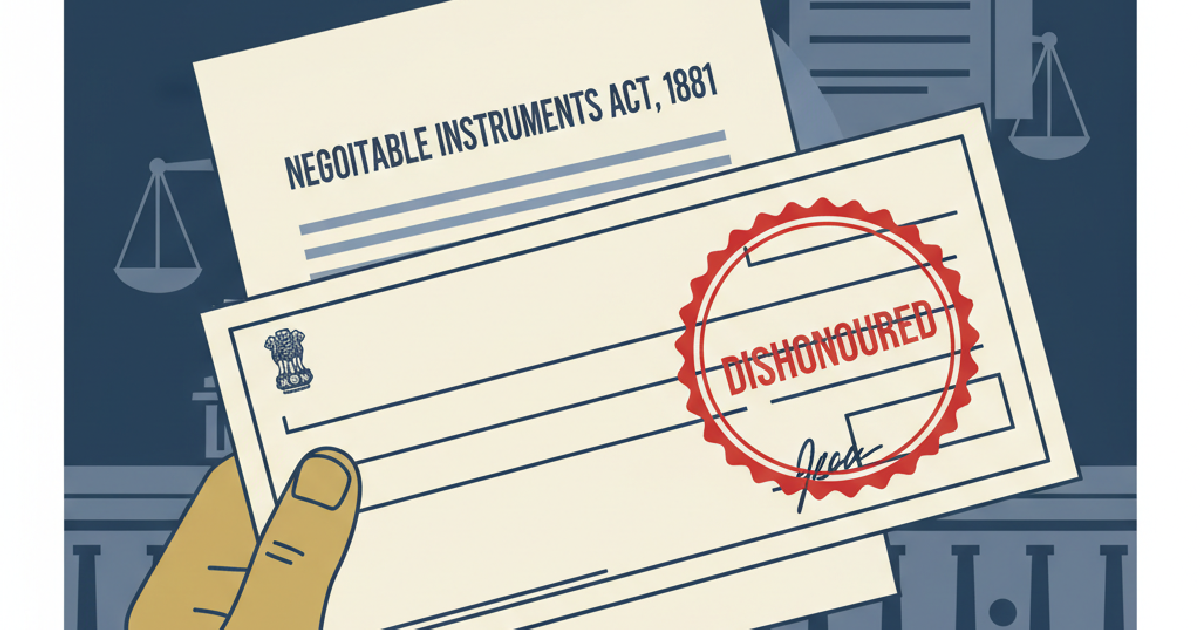
In a financial landscape increasingly reliant on digital transactions, the humble cheque still holds significant sway, particularly in commercial dealings across India. But when a cheque is returned unpaid by a bank, it triggers a complex web of legal consequences known as cheque dishonour case law. This critical area of commercial law, predominantly governed by India’s Negotiable Instruments Act, 1881 (NI Act), specifically Sections 138 to 148, aims to bolster confidence in cheques and ensure accountability.
The core objective of this legislation is clear: to enhance the credibility of cheques as a financial instrument and to hold those who issue them responsible. For both individuals and businesses, understanding these established legal precedents isn’t just good practice; it’s essential for navigating today’s economic realities.
Understanding cheque dishonour and its legal definitions
At its heart, cheque dishonour, often colloquially called a “cheque bounce,” occurs when a bank rejects a cheque presented for payment. This rejection can stem from a variety of issues, transforming a routine transaction into a potential legal dispute.
The most common reason for a cheque bounce is insufficient funds in the drawer’s account. However, other factors like a signature mismatch, overwriting on the cheque, presenting a stale cheque (one beyond its validity period), or a closed account can also lead to dishonour.
The roles of drawer and payee explained
In any cheque transaction, two key parties are involved. The ‘drawer’ is the individual or entity who writes and issues the cheque, essentially ordering their bank to pay a specified amount.
Conversely, the ‘payee’ is the person or entity designated to receive the payment. They are the intended beneficiary of the funds stated on the cheque.
The Negotiable Instruments Act, 1881: criminalising cheque bounces
India’s legal framework for cheque dishonour largely rests on the Negotiable Instruments Act, 1881 (NI Act). This century-old legislation has evolved to address modern financial practices, with Sections 138 to 148 specifically outlining the legal ramifications of bounced cheques.
These sections essentially criminalise the act of issuing a cheque that subsequently bounces due to certain reasons. The NI Act provides a robust legal recourse for payees, helping to ensure that drawers meet their financial commitments.
Common reasons why a cheque might bounce
While inadequate funds are frequently cited, several other reasons can lead to a cheque’s dishonour. Understanding these helps both drawers avoid legal trouble and payees identify valid grounds for action.
A mismatch between the signature on the cheque and the one recorded with the bank is a common technical error. Overwriting, or any material alteration on the cheque without proper authentication, will also cause a bank to refuse payment.
Cheques presented after their validity period, typically three months from the issue date, are considered ‘stale cheques’ and won’t be processed. Furthermore, if the drawer has instructed their bank to stop payment, or if the account itself has been closed, the cheque will be dishonoured.
Legal implications and penalties for cheque dishonour
Issuing a dishonoured cheque under the NI Act carries significant legal weight, often moving beyond a simple civil dispute to involve criminal proceedings. The law imposes strict liabilities on the drawer to ensure the sanctity of cheque transactions.
If a cheque bounces due to insufficient funds or certain other reasons, the drawer can face imprisonment for up to two years, a fine that can extend to twice the cheque amount, or both. These penalties underscore the seriousness with which Indian law treats cheque dishonour.
Recent amendments and judicial interpretations have further tightened these laws. For instance, India has tightened cheque dishonour laws for NRIs, reflecting a broader push for greater accountability across all segments of the population.
Navigating the legal recourse for payees
For a payee whose cheque has bounced, the NI Act provides a structured legal pathway to seek justice and recover their funds. It’s a multi-step process that begins immediately after the dishonour.
First, the payee must send a formal demand notice to the drawer within 30 days of receiving the bank’s ‘cheque return memo’. This notice demands payment of the cheque amount.
If the drawer fails to make the payment within 15 days of receiving the demand notice, the payee can then file a criminal complaint. This complaint must be lodged with a magistrate’s court within one month of the expiry of that 15-day notice period. Courts, such as the Delhi High Court, have clarified that cheque bounce complaints can be filed after 15 days, rejecting the notion of a 45-day waiting period.
Key judicial precedents and their impact on cheque dishonour cases
The interpretation of the NI Act by various courts, particularly the Supreme Court of India, has shaped the landscape of cheque dishonour case law. These precedents provide crucial guidance on how these cases are handled.
One important area concerns the validity of complaints. The Supreme Court of India has consistently ruled that courts cannot hear premature cheque bounce complaints. This means strict adherence to the timelines set out in the NI Act is paramount for payees seeking legal recourse.
Another significant precedent relates to blank cheques. The Supreme Court has confirmed that a signed blank cheque implies debt under the Negotiable Instruments Act. This ruling places a strong burden on the drawer of a signed blank cheque to prove it wasn’t issued for a legally enforceable debt.
These judicial pronouncements aim to strengthen the legal framework, ensuring that both parties understand their responsibilities and rights within the ambit of cheque transactions. They also provide clarity on procedural aspects, reducing ambiguity in legal proceedings.
Comparative table: common cheque dishonour reasons
The reasons behind a dishonoured cheque can vary widely, each carrying different implications for the involved parties. Here’s a breakdown of common scenarios:
| Reason for Dishonour | Description | Typical Impact on Drawer | Typical Impact on Payee |
|---|---|---|---|
| Insufficient Funds | Account balance is less than the cheque amount. | Criminal liability under NI Act, potential fines/imprisonment. | Right to initiate legal proceedings under NI Act. |
| Signature Mismatch | Signature on cheque doesn’t match bank’s records. | Often a technical error, but can raise fraud concerns. | Cheque returned, no payment, requires re-issuance or clarification. |
| Stop Payment Instruction | Drawer instructed bank to halt payment. | Could indicate dispute or intent to evade payment, potential NI Act liability if debt is valid. | Cheque returned, no payment, must seek clarification or legal action. |
| Account Closed | Drawer’s account is no longer active. | Clear indication of payment avoidance, strong grounds for NI Act action. | Cheque returned, no payment, clear path for legal action. |
| Stale Cheque | Cheque presented after its validity period (e.g., 3 months). | No direct liability, but obligation to issue a fresh cheque. | Cheque returned, no payment, must request fresh cheque. |
The bank’s role in cheque dishonour
Banks act as intermediaries in the cheque payment process, playing a critical role in verifying the authenticity and validity of each cheque. They are bound by strict regulations and internal policies when processing these instruments.
Upon receiving a cheque, the bank checks for sufficient funds, signature accuracy, and any stop payment instructions. If any discrepancy is found, the bank is obligated to return the cheque with a ‘cheque return memo’, clearly stating the reason for its dishonour.
This memo serves as the official document enabling the payee to initiate further legal steps against the drawer, as mandated by the NI Act. The bank’s accurate reporting is fundamental to the subsequent legal process.
Frequently Asked Questions
What is the minimum amount for a cheque bounce case?
The Negotiable Instruments Act, 1881, does not specify a minimum amount for a cheque dishonour case. Any cheque, regardless of its value, can lead to legal proceedings if dishonoured under the specified conditions.
How long does a cheque dishonour case typically take in India?
The duration of a cheque dishonour case can vary significantly based on factors like court workload, complexity of the evidence, and cooperation from parties involved. While some cases resolve quickly, others might extend for several months or even years.
Can a post-dated cheque lead to a dishonour case?
Yes, a post-dated cheque, once its date arrives and it is presented for payment, can lead to a dishonour case if it bounces. The legal provisions of the NI Act apply once the cheque becomes current and is subsequently dishonoured.