
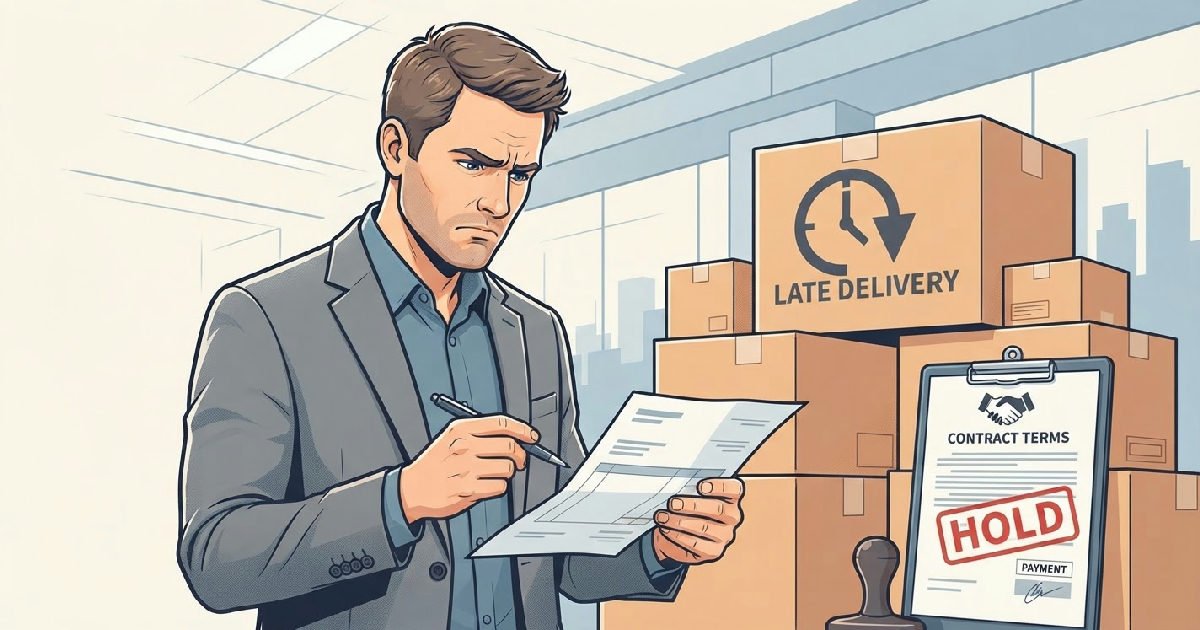
When a vendor misses a delivery date, the immediate inclination for many companies is to halt vendor payment. This instinctive reaction often stems from frustration over disrupted schedules or production lines. However, the right to withhold vendor payment for delayed goods or services isn’t always straightforward, potentially leading to unforeseen legal complications.
While a legitimate delay might create grounds for a claim, it rarely grants an automatic right to freeze the entire invoice. Particularly, if a portion of the work or goods has already been received and accepted, withholding full payment can quickly turn your company into a defendant in a commercial dispute, rather than the aggrieved party.
For many businesses, understanding when to withhold vendor payment is crucial. The implications can be significant, and acting rashly might jeopardize future vendor relationships.
Understanding your contractual rights to withhold vendor payment
The foundation of any payment dispute with a vendor lies squarely in the contract. Before taking any action to stop payment, a thorough review of the agreement is paramount. Many companies overlook specific clauses that dictate rights and obligations in the event of a delay.
Ignoring these contractual provisions can expose your business to significant legal risk. What feels like a fair response to a vendor’s lapse could, in fact, constitute a breach of your own obligations regarding vendor payment. This makes understanding your legal standing critical.
Key Contractual Clauses to Scrutinize
Businesses must meticulously examine their vendor contracts for several crucial provisions. These clauses determine the legitimacy and extent of any payment withholding action. A clear understanding helps prevent aggressive, yet legally weak, responses to delays.
Moreover, companies should recognize that vendor payment issues often require careful negotiation rather than immediate action.
Ensuring a clear understanding of vendor payment processes can significantly reduce the likelihood of disputes.
Your contract is the primary document guiding any decision to halt payments. Thoroughly examining its terms is essential to understand your company’s specific rights and obligations. This scrutiny ensures that any action taken is legally defensible and contractually sound.
Understanding the precise language of your agreement is paramount. It’s crucial to discern what your contract permits or prohibits regarding payment actions following delays. Properly communicating any concerns ensures due process.
It is essential to ascertain whether withholding vendor payment aligns with the terms outlined in your contractual agreement.
Remember, the right to withhold payment isn’t automatic, particularly if some goods or services have already been accepted. Taking such action without explicit contractual support risks turning a claim into a breach of contract. Companies must carefully assess their contractual position before any payment is paused.
Carefully considering vendor payment terms can mitigate risks associated with legal challenges.
When Withholding Vendor Payment is Legally Complex
Determining when withholding payment is legally defensible remains complex, contingent upon the specific terms of your contract and relevant legal frameworks. There isn’t an automatic right to cease payments, even following a delay. Each situation requires a careful legal assessment.
Understanding the implications of vendor payment actions is crucial for maintaining healthy business relationships.
Instead, the decision hinges on whether the vendor’s action constitutes a material breach under the governing contract and its provisions on vendor payment. Without explicit provisions, even significant delays might not automatically justify a full payment freeze. Understanding this distinction is vital.
Companies should consistently review vendor payment practices to avoid potential pitfalls.
The legal landscape surrounding vendor performance dictates a nuanced approach, not a blanket policy. Companies should prioritize contractual compliance and legal advice over assumptions. This helps navigate potential claims without inadvertently creating new legal liabilities.
Furthermore, withholding vendor payment without proper grounds can create adversarial relationships.
It is important to document any issues related to vendor payment to protect your company’s interests.
Companies must navigate vendor payment decisions with a comprehensive understanding to avoid legal disputes.
Contractual Reliance and Due Diligence
Ultimately, the enforceability of any payment withholding rests on the precise wording of the contract itself. Companies must thoroughly review all applicable terms. This ensures that any action aligns with agreed-upon conditions and statutory requirements.
Likewise, ensuring clear communication regarding vendor payment issues can aid in dispute resolution.
Any decision to delay or withhold payment must stem from a clear understanding of the ‘terms of the contract and applicable laws.’ Relying on internal assumptions or informal agreements can seriously weaken a company’s legal standing if a dispute arises. Formal documentation is key.
A comprehensive understanding of vendor payment terms can enhance your company’s negotiating position.
The legal implications are particularly sensitive when partial delivery or goods have been accepted. This acceptance can complicate a company’s ability to withhold the full invoice. Therefore, careful consideration of any partial acceptance is crucial.
The Risks of Improper Payment Freezes
Improperly withholding vendor payment can expose your company to significant legal and financial repercussions. What might seem like a punitive measure against a non-performing vendor can quickly backfire. Companies must understand these risks before issuing a blanket instruction to halt all vendor payments.
The research clearly indicates that improper withholding can lead to significant legal issues or breaches of contract. This risk is amplified when a substantial portion of the work or goods has already been accepted. Such actions can inadvertently trigger claims against your own company.
A company’s right to withhold payment is not automatic, even in cases of vendor delay. Acting without a solid contractual basis can quickly backfire, transforming the company from a claimant into a defendant. This highlights the importance of precise adherence to legal and contractual boundaries.
Internal Errors and Lack of Formal Documentation
Problems escalate if your own company contributed to part of the vendor payment delay. Blaming the vendor entirely when internal issues played a role undermines your legal position. This often leads to complex, difficult-to-prove arguments in potential disputes.
Continuing to use the vendor’s goods or services while simultaneously withholding 100% of the payment is another common pitfall. This action implies acceptance of the goods, even if they were delayed. It significantly weakens your argument for non-payment, suggesting bad faith.
Additionally, being transparent with vendors about payment issues can foster trust and cooperation.
Consequently, ensuring compliance with vendor payment guidelines is essential for sustainable business practices.
Reliance on informal agreements or internal discussions, rather than explicit contractual terms, poses considerable risk. The research emphasizes that the right to halt payments is not automatic and depends heavily on the contract. Informal communication can easily lead to a weak record in legal proceedings.
Ultimately, careful management of vendor payment relationships can lead to improved overall business efficiency.
Thus, companies must ensure that all vendor payment interactions adhere to established legal standards.
If your company improperly withholds vendor payment, the vendor is well within their rights to send a legal notice for recovery. This transforms your company from a claimant to a defendant, incurring legal costs and potential damages. Avoiding this adversarial shift requires careful adherence to contractual terms and legal protocols.
As such, understanding vendor payment stipulations is crucial for minimizing legal vulnerabilities.
Establishing a Safer Commercial Approach to Vendor Issues
In summary, clarity surrounding vendor payment obligations can greatly benefit business operations.
Navigating vendor performance issues, especially delays, demands a structured and legally informed approach. Companies cannot afford to confuse anger or frustration with sound commercial strategy. A proactive and documented process safeguards your interests and maintains vendor relationships where possible.
A prudent approach necessitates a meticulous review of the contractual framework before taking any action. Companies must understand that the right to withhold payment is not inherent. Every decision should align with explicit legal and contractual obligations.
Next, meticulously check your contract to determine what, if anything, you are legally allowed to deduct or hold. This step is non-negotiable. Your contract is the definitive guide to your rights and the vendor’s obligations.
Managing Disputed Payments and Formal Notices
When part of the work or goods has been accepted, withholding the full invoice can become problematic. This situation requires careful consideration, as the research indicates it doesn’t automatically grant the right to a complete payment freeze. An accurate legal assessment is crucial here.
Any actions taken must be justified by the terms of the contract and applicable laws. Companies should ensure all communication regarding delays or payment issues is clear and grounded in these legal realities. This approach helps to avoid escalating disputes unnecessarily.
Do not delay in addressing these issues. Waiting until “limitation and memory both fade” weakens your position significantly. Prompt action and clear communication can often resolve disputes amicably, or at least establish a stronger legal foundation if litigation becomes necessary. Early engagement in dispute resolution can save considerable time and money.
While applying pressure through communication is a valid commercial tactic, an illegal full payment freeze can be catastrophic. It risks turning your company into the defendant in a costly recovery case. This underscores the importance of separating emotional responses from financial decisions, ensuring every step is legally sound.
Seeking Expert Legal Guidance
Facing a vendor demanding payment after a delay, or having stopped a bill yourself, requires expert navigation. The complexities of commercial contracts and applicable laws mean that every situation has unique nuances. What seems like a simple contractual breach can quickly escalate into a full-blown legal battle.
Engaging legal professionals early can prevent common pitfalls. They can provide an objective assessment of your contract, advise on the strength of your position, and recommend the safest course of action. This proactive measure minimizes financial exposure and protects your business reputation.
What is the primary factor in determining if a company can withhold vendor payment for a missed delivery date?
The primary factor is the specific terms of the contract between the company and the vendor, alongside applicable laws. A company’s right to withhold payment is not automatic, and depends heavily on what the agreed-upon contract stipulates regarding delays and payment conditions.
Does accepting part of a delivery affect the right to withhold the full invoice?
Yes, if part of the work or goods has been accepted, it generally impacts a company’s right to withhold the full invoice. The research indicates that accepting partial delivery means the right to withhold the entire payment is not always granted, making full withholding riskier.
What are the potential consequences of improperly withholding payment from a vendor?
Improperly withholding payment can lead to legal issues or breaches of contract. This can result in the company facing legal action from the vendor, potentially incurring legal costs, damages, and harming its commercial relationships and reputation.
WhatsApp or call for a free consultation. We assist companies in Delhi with contract disputes, recovery and replies to legal notices.
Related Service: https://arpitmarwah.com/real-estate-lawyer/