
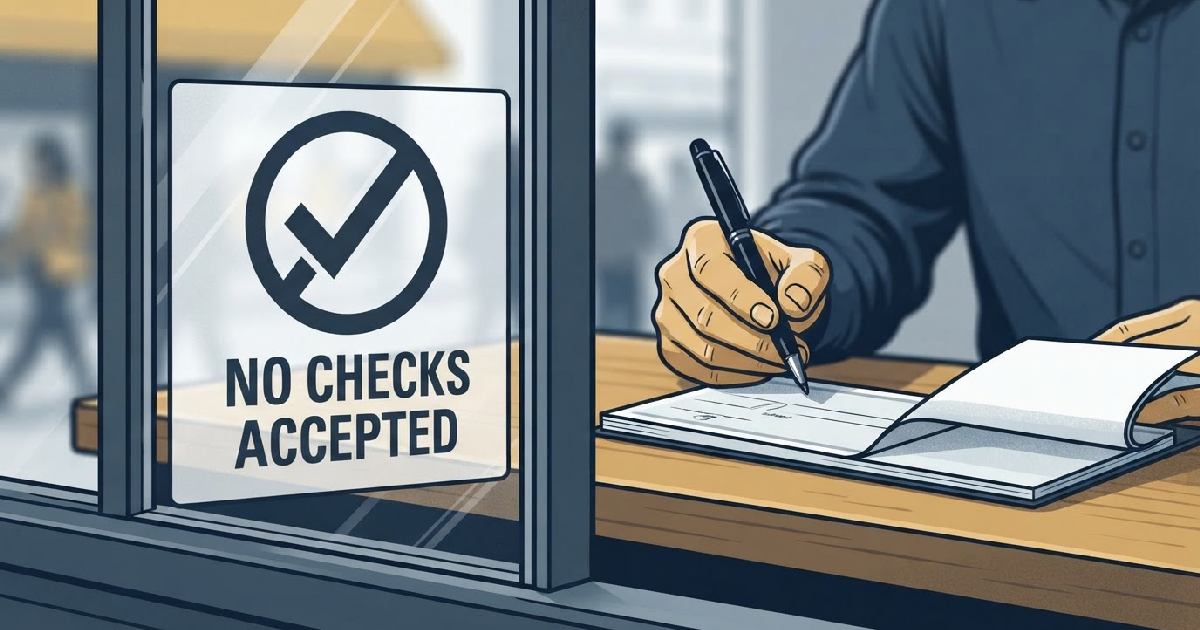
Yes, you can go to jail for bouncing a check, but it’s usually tied to the presence of an intent to defraud. While an accidental insufficient funds (NSF) check typically results in fees and civil penalties, intentionally writing a check without sufficient funds, with the purpose of deceiving the recipient, can lead to serious criminal charges.
These charges can include potential jail time or even prison sentences, depending on the specific state laws and the monetary value of the check involved.
Understanding what bounced cheque entails
A bounced check, also known as a dishonored check or a worthless check, occurs when a bank cannot process a payment due to various reasons. Most commonly, this happens because the account lacks sufficient funds to cover the check amount. Other issues, such as a closed account, a stop payment order, or a mismatched signature, can also cause a check to bounce.
When there are insufficient funds (NSF), it means the account from which the check is drawn doesn’t have enough money. Financial institutions, primarily banks, play a key role in this process. They notify account holders when checks bounce and often levy non-sufficient funds (NSF) or overdraft fees on both the check writer and the recipient.
From fees to legal action: what happens next
The immediate repercussions of a bounced check are typically financial. Banks will charge fees to both the individual who wrote the check and the person or entity trying to deposit it. The recipient will also be notified that the check didn’t clear, and the check writer receives similar notification.
In many cases, the situation remains a civil matter. The recipient can pursue civil action to recover the owed funds, often starting with a formal demand letter. If payment isn’t received, they might sue in small claims court or civil court to recover the original amount, plus additional fees or statutory damages.
The pivotal role of intent to defraud
The line between a civil dispute and a criminal offense hinges on “intent to defraud.” This crucial legal element means the check writer knowingly issued the check with the purpose of deceiving the recipient. They do this to obtain something of value, despite knowing there weren’t enough funds to cover the payment.
Without established intent, bouncing a check is generally considered a civil issue. However, if this intent is present, the situation can escalate significantly. Before criminal charges are filed, the check writer typically receives a formal notice, often sent via certified mail, demanding payment within a specified timeframe.
Failing to pay within this period—for example, 10 days in Texas or 15 days in Florida—can create a legal presumption of intent to defraud. This presumption then allows for potential criminal prosecution.
Can you go to jail for bouncing a cheque?
If a check writer fails to make restitution and law enforcement establishes intent to defraud, criminal charges become a real possibility. Governmental entities like the State Attorney General, District Attorney, or State Attorney’s Office are responsible for prosecuting these cases.
The penalties for writing a bad check vary significantly by state and are often tied to the check’s value. These can range from misdemeanors to felonies, including fines, jail time, or even prison sentences. It’s not just civil penalties you’ll face.
State-specific penalties and thresholds
The monetary threshold of a bounced check is a critical factor in determining the severity of the offense. Below is a comparison of how different states categorize and penalize worthless checks, demonstrating why it’s important to understand your local laws regarding when you can go to jail for this offense.
| State | Misdemeanor Threshold | Felony Threshold (or higher value) | Maximum Jail/Prison Time | Maximum Fine |
|---|---|---|---|---|
| Florida | Under $150 | $150 or more | 1 year (misdemeanor), 5 years (felony) | $1,000 (misdemeanor), $5,000 (felony) |
| Massachusetts | Under $250 | $250 or more | 1 year (misdemeanor), 5 years (felony) | $300 (misdemeanor), $25,000 (felony) |
| Missouri | Under $500 | Over $500 | 6 months to 1 year (felony) | $1,000 |
| California | Not exceeding $950 | Exceeding $950 | 1 year (misdemeanor), 3 years (felony) | $1,000 (misdemeanor), $10,000 (felony) |
| Utah | Under $500 | $500 to $1,500 (up to 364 days), $1,500 to $5,000 (up to 5 years), $5,000+ (1-15 years) | 6 months to 15 years (depending on value) | Not specified in research for all tiers |
The Uniform Commercial Code and your liabilities
The legal foundation for check fraud and bounced checks often rests on state statutes and the Uniform Commercial Code (UCC). The UCC broadly defines a check as “a draft drawn on a bank and payable on demand.” It also meticulously outlines the responsibilities of both banks and their customers concerning check processing and fraud detection.
For instance, under the UCC, banks and customers share responsibility for losses incurred from check fraud. Customers have a duty to promptly review their bank statements and report any unauthorized checks. This framework ensures a degree of accountability from all parties involved in financial transactions.
Understanding these legal frameworks is crucial for anyone dealing with checks. It underscores why a seemingly simple error like bouncing a check can quickly become a complex legal issue, potentially leading to criminal charges. To avoid legal repercussions and financial penalties, always ensure sufficient funds.
What is the main difference between a civil and criminal bounced check case?
The primary difference lies in “intent to defraud.” A civil case typically involves recovering the money owed and associated fees due to an accidental oversight. A criminal case, however, requires proof that the check writer knowingly issued a check without funds, intending to deceive the recipient.
Can I avoid criminal charges if I pay back the bounced check?
Often, yes. Before criminal charges are formally filed, check writers typically receive a demand for payment within a specific timeframe. If you make restitution within this period, it can often prevent criminal prosecution, as it negates the presumption of intent to defraud.
How do monetary thresholds affect penalties for bounced checks?
Monetary thresholds are crucial because they determine whether the offense is treated as a misdemeanor or a felony, and thus the potential severity of penalties. Higher check amounts typically lead to more severe charges, including longer jail or prison sentences and larger fines, as seen in various state laws.
Call or Whatsapp for free consultation.
Related Service: https://arpitmarwah.com/cheque-bounce-lawyers-in-delhi/