
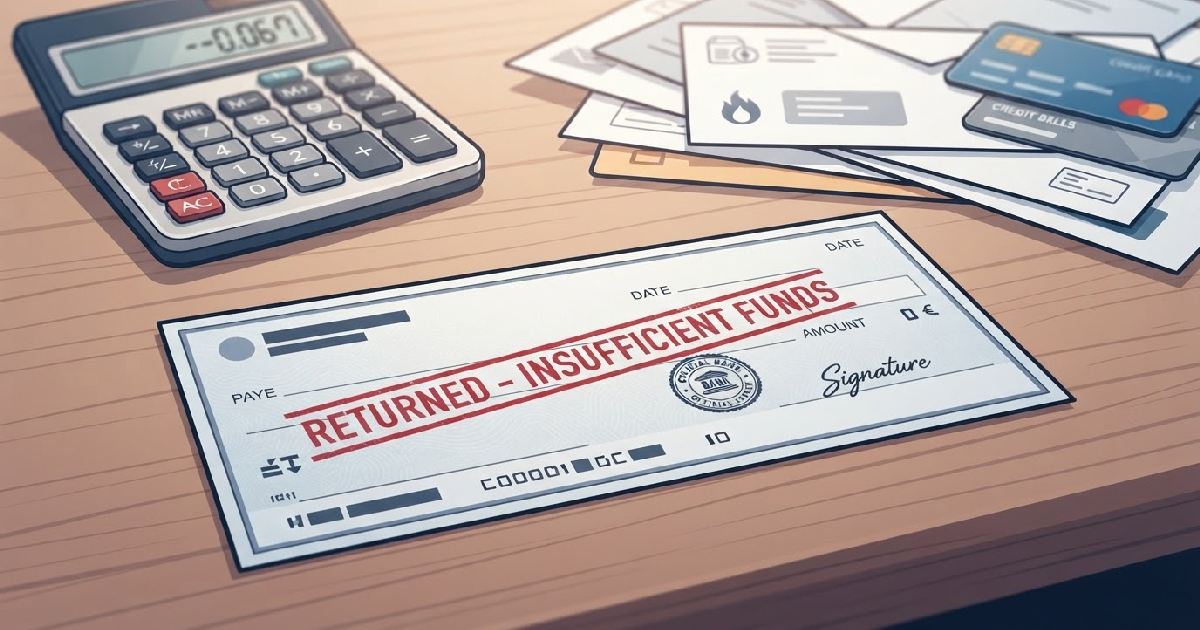
A bounced check, also known as a returned check or Non-Sufficient Funds (NSF) check, triggers immediate financial penalties and repercussions for both the check writer and the recipient. When a bank cannot process a check for payment, it typically stems from insufficient funds in the payer’s account. This common banking mishap can also arise from other issues, such as a closed account, a stop payment order, or even an outdated check.
Understanding these mechanisms is crucial for anyone who handles checks. Both the person writing the check and the person attempting to deposit it face specific charges and potential complications. This situation highlights the importance of careful financial management for both individuals and businesses.
Understanding why checks return unpaid
A bounced check is returned unpaid by a bank when it cannot process the transaction for various reasons. The most frequent cause is insufficient funds, meaning the check writer’s account lacks the money to cover the amount. This scenario is formally known as Non-Sufficient Funds (NSF).
However, an unpaid check isn’t always about a lack of money. A check can also bounce if the account is closed, a stop payment order has been placed, or there are errors on the check itself. Checks older than six months, known as stale-dated checks, are another common reason for non-payment.
Consequences for the check writer
The individual who writes a check that subsequently bounces, often referred to as the payer, faces direct financial penalties. Their bank typically assesses an NSF fee because the transaction could not be completed due to inadequate funds.
These fees can quickly accumulate if a person writes multiple checks without sufficient funds. Beyond bank charges, the payee might pursue recovery of the original funds. This can lead to further financial strain and potential disputes.
Fees from your bank
An NSF fee is a specific charge levied by a bank against the check writer. This fee applies when a check or other transaction is declined because the account doesn’t hold enough money. It’s a direct consequence of the failed payment.
This is different from overdraft protection, which is a service that may cover a transaction even if it exceeds the account balance. While overdraft protection can prevent a bounced check, it usually incurs its own overdraft fee. That fee structure is distinct from an NSF charge.
Impact on banking history
A history of bounced checks can negatively affect your relationship with banking institutions. Agencies like ChexSystems, a consumer reporting agency, track consumers’ banking activity. A poor record can make it harder to access traditional banking services in the future.
If your banking history shows a pattern of issues, financial institutions might deny applications for new checking or savings accounts. This underscores the serious, long-term implications of managing one’s banking behavior carelessly.
Repercussions for the check recipient
The person who deposits a check that bounces, known as the payee, also faces immediate disruption. They won’t receive the funds they were expecting, which can cause significant delays in their personal or business finances. This can upset budgets and cash flow projections.
In addition to not receiving payment, the payee’s bank can charge them a fee. This is called a Returned Deposited Item Fee, or sometimes a Returned Check Fee or Return Item Chargeback. It covers the bank’s costs for handling the rejected item.
Steps to recover funds
When a check bounces, the payee must attempt to recover the original money directly from the check writer. This often involves contacting the payer and requesting an alternative form of payment. Secure methods like a wire transfer are often preferred for re-payment.
The payee will also typically seek reimbursement for any fees they incurred as a result of the bounced check. If direct communication fails, legal avenues may be considered, particularly for substantial amounts. Cheque dishonour case law in some regions, such as India, outlines specific legal consequences for issuing bad checks.
Preventing bounced checks and associated issues
Avoiding bounced checks requires diligence and careful financial management. A primary strategy involves consistently monitoring your account balance to ensure sufficient funds are always available. Modern banking apps and online portals offer real-time balance updates, making this easier.
Setting up low-balance alerts with your bank is another effective preventative measure. These alerts notify you when your funds drop below a certain threshold. This provides an opportunity to deposit money or adjust spending plans before a check is presented for payment.
Leveraging available bank services
Overdraft protection can serve as a valuable safety net, though it comes with its own fee structure. This service links your checking account to a savings account or a line of credit. It automatically covers transactions that would otherwise exceed your balance.
Regularly reconciling your bank statements against your spending records also helps. This practice allows you to identify any discrepancies early. Maintaining an accurate understanding of your available funds is key to preventing unexpected shortfalls.
Comparing the impact of bounced checks
The consequences of a bounced check affect both the individual who wrote it and the person who tried to deposit it. Understanding these distinct impacts helps illustrate the broader financial implications. Both parties incur disruptions and potential costs.
| Consequence Type | Impact on Payer (Check Writer) | Impact on Payee (Check Recipient) |
|---|---|---|
| Direct Fees | NSF Fee | Returned Deposited Item Fee |
| Financial Disruption | Potential cascading issues, budget strain | Delayed receipt of funds, cash flow problems |
| Banking Relationship | Negative ChexSystems record, account closure risk | Inconvenience, effort required to re-seek payment |
| Legal Considerations | Penalties and financial repercussions | Potential legal action to recover funds |
These varied consequences underline the necessity for individuals and businesses to maintain accurate financial records. Ensuring sufficient funds are available before writing a check is paramount. The ripple effect of a single bounced check can extend widely.
What is a bounced check?
A bounced check, also known as a returned check or Non-Sufficient Funds (NSF) check, occurs when a bank cannot process it for payment. This happens most commonly because the account holder does not have enough money in their account to cover the check’s amount.
What is an NSF fee?
An NSF fee is a charge assessed by a bank to the check writer. It is applied when a transaction, such as a check, is declined because the account has insufficient funds to cover it. This is a direct charge for the failed payment attempt.
What is overdraft protection?
Overdraft protection is a service offered by banks that may cover a transaction even if it exceeds the account balance. This often involves linking to a savings account or a line of credit. It typically incurs an overdraft fee, but it differs from an NSF fee because the transaction is covered rather than declined.