
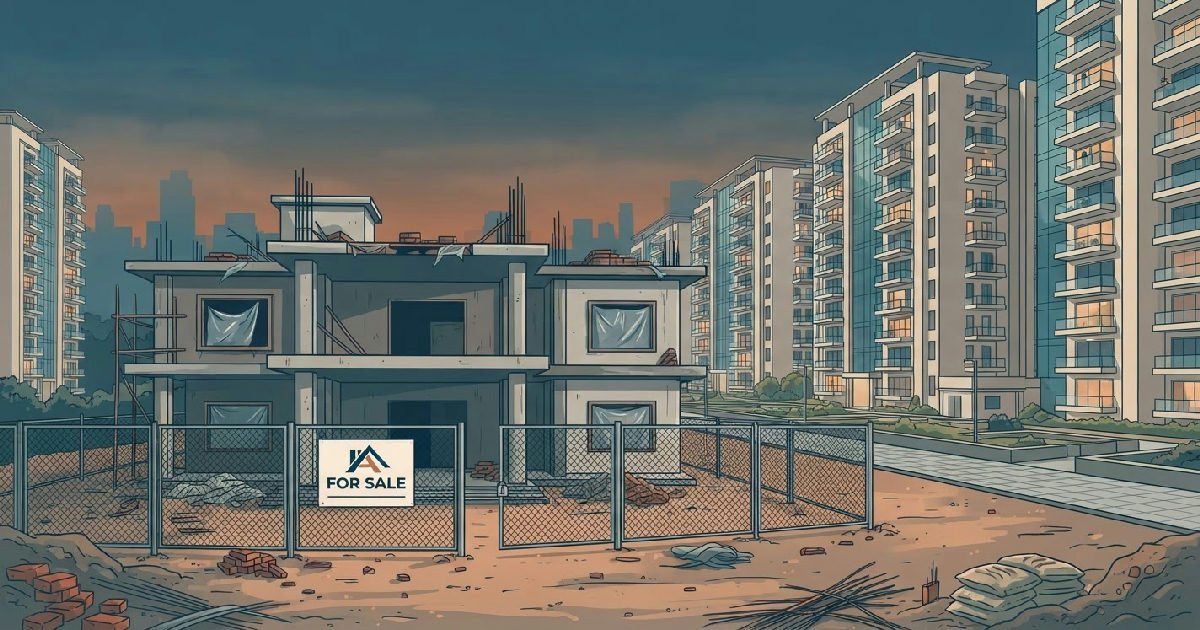
Many times builder provide flat but club and amenities like swimming pool are found closed. This pervasive issue creates significant distress for allottees, as developers often consider their obligations fulfilled once a unit is occupied, effectively treating the “file as closed.”
This widespread problem impacts areas like Noida, Greater Noida, Dwarka, Rohini, and West Delhi, where promises made in brochures and agreements are left unkept. The Real Estate (Regulation and Development) Act, 2016 (RERA), offers a crucial legal framework to address these builder malpractices, aiming to safeguard consumer interests against delayed delivery, misleading advertisements, and a general lack of transparency.
Delhi NCR builders deliver incomplete projects like flat handed over but club and amenities still closed
The discrepancy between promised facilities and delivered reality has become a hallmark of residential projects in the Delhi NCR. Homebuyers routinely report a litany of missing amenities, ranging from recreational spaces like gymnasiums and landscaped gardens to fundamental utilities such as adequate water supply, functional electricity meters, and reliable power backup systems.
Builders attribute these omissions to various factors, including the diversion of project funds to other ventures, delays in securing necessary governmental approvals, or a simple disregard for contractual specifications. This situation leaves homeowners in a precarious position, often managing simultaneous EMI payments and rental costs while waiting indefinitely for the promised infrastructure to materialize.
The RERA Act 2016: a legal shield for homebuyers
In response to growing consumer grievances within the real estate sector, the Indian government enacted the RERA Act in 2016. This comprehensive legislation was designed to inject greater accountability and transparency into property development, particularly targeting common issues such as project delays and the non-delivery of amenities.
The Act provides a clear legal pathway for homebuyers to seek redress when builders fail to honour their commitments. It operates across various states, including those falling under the Delhi NCR, ensuring a standardized approach to resolving disputes and enforcing contractual obligations.
Key RERA provisions protecting allottees
RERA outlines specific responsibilities for promoters. Section 14(1) explicitly mandates that projects be completed according to the sanctioned plans, layouts, and specifications, which inherently includes all advertised amenities. This provision makes promises made during the sales process legally binding.
Furthermore, Section 17(1) stipulates that at the time of possession, all rights, including those pertaining to common areas and facilities, must be transferred to the allottee as originally agreed. Should a builder fail to deliver these promised amenities or cause undue delay, Section 18(1) empowers allottees to claim a refund with interest or demand appropriate compensation.
Understanding builder obligations and common areas
The definition of “common areas” under RERA is notably broad, encompassing far more than just clubhouses and swimming pools. Section 2(n) of the Act includes the entire project land, stairways, lifts, lobbies, fire escapes, and common entrances and exits. It also covers community and commercial facilities, open parking spaces, and common terraces.
Crucially, this definition extends to underlying facilities critical for daily living, such as water supply systems, drainage, and other utilities. Builders are also obliged under Section 11(4)(e) to facilitate the formation of an association of allottees within three months of the majority of units being booked, transferring these common areas to their management.
Mandatory disclosures and financial safeguards
Transparency is a cornerstone of RERA. The Act requires builders to register their projects with the state RERA authority and disclose comprehensive details on the official portal. This includes information on land status, all necessary approvals, the ongoing construction progress, and projected possession timelines.
Developers must provide an exhaustive list of all promised facilities and amenities, detailing their precise location, size, and anticipated completion dates. To curb the notorious practice of fund diversion, RERA mandates that 70% of the money collected from buyers be deposited into a dedicated escrow account, solely for the construction and land costs of that specific project.
Recourse options for affected homebuyers
When faced with unfulfilled promises, homebuyers have several avenues for recourse. The initial step involves a meticulous review of the sale agreement to verify the promised amenities, their specifications, and the agreed-upon delivery timelines. Any accompanying brochures or advertisements should be retained as supporting evidence, though the contract itself remains paramount.
It is crucial to document all instances of non-compliance. This includes taking photographs of closed or unfinished facilities, saving screenshots of website promises, and archiving all communications such as emails, messages, and payment receipts. A formal, written request to the developer for an explanation and a clear timeline for amenity delivery should always be the first direct approach.
Leveraging RERA and consumer courts
Should direct communication prove unproductive, escalating the matter is essential. A formal legal notice, drafted by a lawyer, can be dispatched to the builder. This notice should explicitly detail the missing amenities, the extent of the delay, and the potential legal ramifications of continued non-fulfillment.
If a satisfactory resolution remains elusive, homebuyers can file a complaint with their respective state RERA authority, such as UP RERA or HRERA for the Delhi NCR. Most states facilitate online complaint filing, requiring project details, an explanation of the malpractice, and all supporting documents.
RERA possesses the authority to instruct builders to complete amenities, levy penalties, or order compensation. Beyond RERA, the Consumer Protection Act, 1986 (and its later versions), offers additional recourse. Failure to provide promised amenities constitutes a “deficiency in service,” entitling consumers to compensation, interest, and even directives for possession.
The Supreme Court has previously affirmed that deficiencies like the absence of approach roads, water supply, or parking, even with construction completed, fall under this purview.
Legal precedent and industry statistics
The scale of the amenity delivery issue is substantial, reflected in the volume of legal actions taken against developers. As of July 1, 2024, Real Estate Regulatory Authorities across India had successfully resolved nearly 1.25 lakh consumer cases, demonstrating RERA’s active role in dispute resolution.
The National Company Law Tribunal (NCLT) has also admitted approximately 450 insolvency cases against real estate firms nationwide, with a striking 80-85% of these pertaining to Delhi NCR builders who defaulted on property handovers.
Furthermore, legal data indicates that over 65% of all real estate litigation within the Delhi NCR specifically concerns delayed possession, a statistic that underscores the prevalence of builder non-compliance in the region. This pattern suggests systemic issues in project management and adherence to contractual agreements.
| Legal Body | Cases Handled (as of July 1, 2024) | Primary Focus |
|---|---|---|
| RERA Authorities | ~1.25 lakh consumer cases resolved | Builder violations, project completion, amenity delivery |
| NCLT | 80-85% of ~450 insolvency cases (NCR-focused) | Builder defaults on property handover |
| Delhi NCR Real Estate Litigation | >65% related to delayed possession | Contractual delays, non-delivery |
Expert insights on consumer protection
Legal professionals consistently highlight the binding nature of builder promises. Aarya Bhat, an advocate at the Delhi High Court, emphasizes that project brochures are not merely marketing tools under RERA; any promises made and funds collected based on these advertisements transform into binding obligations. She maintains that handing over flats while neglecting promised amenities is as severe a default as delaying overall possession.
Prashant Solomon, Treasurer of CREDAI-NCR, previously suggested in 2019 that RERA should be the initial point of contact for homebuyers’ grievances before resorting to the NCLT. This advice underscores the efficacy and intended purpose of RERA as a primary dispute resolution mechanism, designed to streamline and expedite justice for aggrieved allottees.
Navigating the process: essential advice for allottees
Homebuyers must exercise extreme caution during the final stages of property acquisition. A critical piece of advice is to never sign a “no-dues” certificate that waives your rights if any amenities remain pending. Such a signature can severely undermine future legal claims and effectively close your avenue for redress.
Beyond individual action, RERA places a responsibility on the promoter to hand over common areas and their associated documents and maintenance deposits to the association of allottees once it is formed. This collective body holds significant power in pursuing the completion and maintenance of shared facilities.
Moreover, under Section 14(3) of RERA, builders are obligated to rectify any defect or incomplete amenity within 30 days of a homebuyer’s written complaint; failure to do so entitles the homebuyer to claim compensation at SBI MCLR+2% per annum for the duration of the delay.
What specific amenities are often left incomplete by builders in Delhi NCR?
Builders in Delhi NCR frequently fail to deliver clubhouses, swimming pools, gymnasiums, landscaped gardens, parking areas, and essential utilities like proper water supply, electricity meters, and power backup. These are often promised in brochures and agreements but remain unfinished post-possession.
What is the Real Estate (Regulation and Development) Act (RERA) and how does it help homebuyers?
The RERA Act, 2016, is a legal framework designed to regulate the real estate sector and protect homebuyers. It mandates builders to complete projects, including all promised amenities, according to sanctioned plans. RERA allows allottees to seek refunds, compensation, or directives for completion if developers fail to meet their obligations.
What steps should a homebuyer take if their promised amenities are not delivered?
Homebuyers should first meticulously review their sale agreement and document all evidence of incomplete amenities, such as photographs and written communications. They should formally contact the developer in writing for a resolution. If unresolved, a legal notice can be sent, followed by filing a complaint with the state RERA authority or approaching consumer courts. It is crucial not to sign any “no-dues” certificates prematurely.
Living in the flat and the promised amenities are still shut? Call or Whatsapp for consultation.