
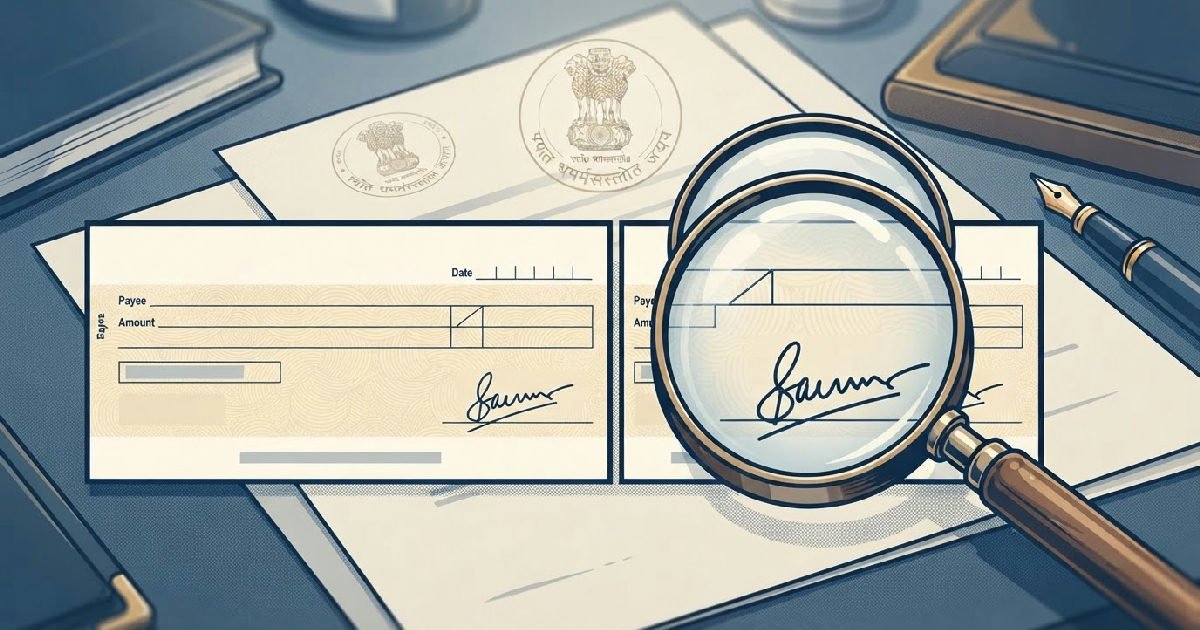
A signature mismatch on a cheque can lead to prosecution under Section 138 of the NI Act, the Supreme Court of India ruled on November 27, 2012.
This landmark judgment, in the case of M/s Laxmi Dyechem v. State of Gujarat & Ors., has significant ramifications for both drawers and payees across India, including in Delhi, by closing a potential loophole for defaulting parties.
Supreme Court Upholds Accountability for Cheque Returned for Signature Difference
The ruling clarified that such dishonors are not merely technical banking issues but carry the same legal weight as a cheque bounced due to insufficient funds. It underscored the judiciary’s commitment to ensuring the enforceability of commercial transactions and preventing individuals from evading their financial obligations through deliberate or negligent signature discrepancies.
The 2012 Supreme Court ruling in M/s Laxmi Dyechem v. State of Gujarat & Ors. marked a critical moment in Indian cheque bounce jurisprudence. Prior to this judgment, there was a narrower interpretation of Section 138, often limiting its application primarily to cases where a cheque was dishonored due to a lack of sufficient funds in the drawer’s account.
However, the apex court broadened this scope, recognizing that other reasons for dishonor, such as a signature mismatch, could also indicate a failure to honor a financial commitment. This legal interpretation aimed to curb exploitative practices where drawers might intentionally sign differently to avoid payment, thereby undermining the efficacy of cheques as negotiable instruments.
“Genus-Species Doctrine” Broadens Scope
Central to the Supreme Court’s reasoning was the application of the “genus-species doctrine.” The Court held that “insufficient funds” should be viewed as a broad category (genus) encompassing various specific reasons (species) for cheque dishonor. These species include “signature mismatch,” “account closed,” and “payment stopped,” among others.
By classifying a signature mismatch under this broader umbrella, the Court ensured that the protective framework of Section 138 extends to a wider array of dishonored cheque scenarios. This legal clarity has since provided a more robust mechanism for creditors to pursue justice when facing such discrepancies.
Equating Signature Discrepancies with Insufficient Funds
The Supreme Court’s judgment firmly established that a signature mismatch is legally equivalent to other common reasons for cheque dishonor, such as insufficient funds, “payment stopped,” or “closure of account.” This means that for the purposes of attracting Section 138 liability, these different reasons are treated on par.
This equivalence is crucial for payees, as it prevents drawers from using technicalities to escape criminal liability. The ruling effectively closed a potential avenue for debtors to exploit minor discrepancies in their signatures as a defence against legitimate claims, reinforcing the sanctity of financial instruments.
Rationale: Preventing Evasion Tactics
The Court’s rationale was clear: to prevent drawers from deliberately creating loopholes to avoid payment on genuine debts. If a drawer could simply sign a cheque differently and then claim immunity from prosecution, the entire system of cheque-based transactions would be vulnerable to abuse.
This progressive interpretation ensures that the spirit of the NI Act, which is to instil confidence in commercial transactions, remains intact. It holds individuals accountable for their financial commitments, regardless of the specific reason their cheque is returned dishonored.
Conditions for Prosecution Under Section 138 NI Act
While a signature mismatch can trigger Section 138, several conditions must still be met for successful prosecution. These statutory requirements ensure due process and protect against frivolous cases. Payees must meticulously follow these steps to build a strong legal challenge.
Understanding these prerequisites is vital for anyone considering how to file a cheque bounce case in Delhi. Failing to adhere to any of these conditions could lead to the dismissal of the complaint, regardless of the underlying validity of the debt.
| Condition | Description | Timeline (from dishonor) |
|---|---|---|
| Legally Enforceable Debt | Cheque issued for a valid, legally recoverable debt or liability. | N/A |
| Cheque Validity | Cheque must be presented to the bank within its period of validity. | N/A |
| Statutory Demand Notice | Payee must send a demand notice to the drawer for payment. | Within 30 days of receiving bank’s return memo. |
| Failure to Pay | Drawer must fail to make payment within 15 days of receiving the demand notice. | 15 days from notice receipt. |
| Complaint Filing | A complaint must be filed before a competent magistrate court. | Within 30 days after the 15-day payment period expires. |
Strict Timelines for Action
The timelines stipulated for prosecution are strict and unforgiving. Once a cheque is dishonored, the clock starts ticking for the payee to issue a demand notice. This notice must be dispatched within 30 days of receiving the bank’s return memo, informing the drawer of the dishonor and demanding payment.
Subsequently, the drawer has 15 days from the date of receiving this notice to make the payment. If they fail to do so, the payee then has another 30 days to file a formal complaint in court. Adherence to these deadlines is paramount, as even a slight delay can render the complaint invalid, as detailed in guides about cheque bounce notice time limit.
Drawer’s Defences and Liabilities
While the law now casts a wider net, it also provides avenues for drawers to defend themselves. The key lies in demonstrating whether the signature mismatch was truly inadvertent or a deliberate act of evasion. Criminal liability under Section 138 of the NI Act is strictly limited to the “drawer” of the cheque—the person who signed it and whose bank account it was drawn from.
Non-signatories cannot be prosecuted under this section, meaning that partners in a firm or directors of a company who did not personally sign the cheque may escape direct liability, even if the cheque was issued from the company’s account. This distinction is crucial for understanding the limits of the law.
Genuine Mismatch Versus Deliberate Evasion
A genuine signature mismatch, perhaps due to a changed signature over time or an accidental error, can serve as a valid defence. In such scenarios, the drawer might be able to demonstrate that there was no criminal intent to defraud the payee. Courts typically consider all evidence, including previous signatures and circumstances surrounding the cheque’s issuance.
However, a habitual pattern of “signature differs” instances, especially after promises of payment via emails or other correspondence, would likely be viewed with suspicion. Such behaviour suggests a deliberate attempt to avoid payment, weakening the drawer’s defence considerably and potentially exposing them to full prosecution under Section 138.
Implications for Payees in Delhi
For payees in Delhi, the Laxmi Dyechem ruling significantly strengthens their position when dealing with dishonored cheques due to signature discrepancies. It means they should not simply accept the bank’s return memo as the end of the matter. Instead, they have clear legal recourse.
Payees are advised to compare the signature on the returned cheque with other admitted signatures of the drawer. If there’s a discrepancy that appears deliberate or suspicious, timely issuance of a statutory demand notice is critical. This proactive approach ensures that the legal options under Section 138 remain open and viable.
Navigating the Evolving Legal Landscape
The legal landscape surrounding cheque dishonor cases is constantly evolving, with judicial pronouncements continually shaping its contours. The Supreme Court’s definitive stance on signature mismatches reflects a broader trend towards strengthening creditor rights and ensuring financial accountability.
This ruling serves as a stark reminder to both individuals and businesses to maintain accurate records and exercise due diligence in all financial transactions involving cheques. It also underscores the importance of seeking expert legal advice to navigate the complexities of the Negotiable Instruments Act effectively, particularly when facing a dishonored cheque.
Can a cheque returned for “signature differs” truly be a cheque bounce case?
Yes, absolutely. The Supreme Court of India, in its 2012 ruling in M/s Laxmi Dyechem v. State of Gujarat & Ors., clarified that a cheque dishonored due to a signature mismatch can indeed be prosecuted under Section 138 of the Negotiable Instruments Act, 1881. This reason is treated on par with insufficient funds.
What should a payee do if their cheque is returned due to a signature mismatch?
If a cheque is returned for a signature mismatch, the payee should first verify the signature against other known signatures of the drawer. If the debt is legitimate, they must then send a statutory demand notice to the drawer within 30 days of receiving the bank’s return memo, asking for payment.
What if the drawer claims the signature mismatch was accidental?
A drawer can use a genuine, accidental signature mismatch as a defence. However, courts will scrutinize the circumstances, including any history of similar issues or prior communications promising payment. A deliberate or habitual mismatch will likely not be accepted as a valid defence, leading to potential prosecution.
Memo says signature differs? Call or Whatsapp for free consultation.
Related: https://arpitmarwah.com/cheque-bounce-lawyers-in-delhi/