
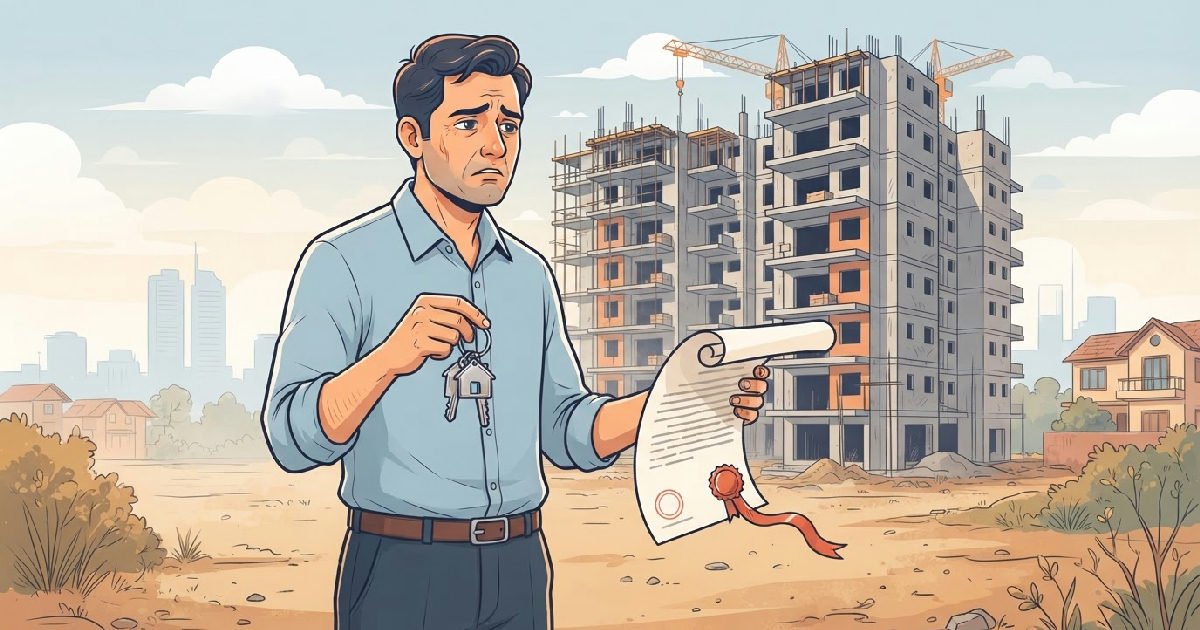
Homebuyers across the Delhi National Capital Region (NCR) frequently encounter significant challenges, often receiving possession of their flats but facing prolonged delays in obtaining a registered sale deed. This prevalent issue of sale deed delayed after possession in Delhi NCR is compounded by builders demanding unanticipated additional payments and failing to complete essential legal formalities.
Such complexities routinely necessitate intervention from the Real Estate Regulatory Authority (RERA), civil courts, or consumer forums.
This situation leaves many property owners with keys to their new homes but without the full legal title, creating substantial uncertainty. The lack of a completed sale deed hinders their ability to fully claim ownership rights, impacting future financial decisions and legal standing for residential property owners.
The growing crisis of delayed sale deeds in Delhi NCR
Many Delhi NCR residents, having invested substantial life savings, discover their properties remain legally unformalized long after they have moved in. This absence of a registered sale deed leaves buyers vulnerable, lacking full legal title to their most significant asset. It essentially means possession without complete legal ownership, a precarious situation for any homeowner.
The problem extends beyond mere paperwork; it impacts fundamental property rights. Homeowners cannot legally sell, mortgage, or transfer their property without this crucial document. This creates a significant legal and financial limbo for thousands.
Sale Deed Delayed After Possession Creates Ownership Issues
Across numerous residential projects in the Delhi NCR, a concerning pattern emerges: developers hand over physical possession without ensuring prompt registration of sale deeds. This practice traps buyers in endless administrative and legal loops. Their full enjoyment of property rights faces considerable delays.
This legal gap creates a grey area for ownership, potentially affecting future transactions or the ability to secure financing against the property. The responsibility for executing these vital legal documents squarely rests with the developer. Yet, many fail to meet this fundamental obligation.
The role of incomplete legal formalities
Developers are often found wanting in completing the requisite legal work necessary for property transfer. This includes securing various clearances and ensuring all documents are in order for registration. Their inaction directly contributes to the significant backlog of unregistered properties.
Homebuyers frequently find themselves chasing builders for basic legal steps that should have been proactively managed. This systemic failure to complete essential formalities undermines trust in the real estate sector. It forces buyers into lengthy and costly legal battles.
Unjustified charges burdening homebuyers
A major point of contention for homebuyers involves the sudden imposition of extra charges by builders. These often arrive as “demand letters” at the time of possession. Purchasers are caught off guard by these unanticipated financial demands.
Such supplementary fees are usually not part of the initial builder-buyer agreement, yet developers often present them as non-negotiable. Buyers feel pressured to comply to avoid further delays or even forfeiture of their investment. This tactic places them in a difficult position.
Common tactics for unexpected payments
Developers frequently levy additional charges such as Preferential Location Charges (PLC), club membership fees, and power backup costs. They also demand “inflation” adjustments or previously undisclosed Goods and Services Tax (GST) at possession. These demands often inflate the total cost significantly.
Buyers often discover these extra charges only when they are about to take possession. This last-minute revelation adds immense financial strain and frustration. It deviates sharply from the transparent transaction homebuyers expect. Understanding your rights can help determine if a builder’s demand for additional payments is legitimate or not. For more specific guidance, see builder demanding extra charges at possession.
Emerging demands for undisclosed payments
Among the additional financial burdens are sudden “inflation” adjustments, often presented as necessary due to rising costs during project development. Builders may also unexpectedly demand previously undisclosed Goods and Services Tax (GST) at the point of possession. Neither of these charges typically forms part of the original, agreed-upon sale agreement.
These last-minute financial surprises can significantly increase the property’s final price. Homebuyers, eager to complete their purchase and move in, frequently find themselves in a precarious position, forced to consider these extra payments under duress. This practice creates considerable stress and erodes buyer confidence.
| Charge Type | Common Justification | Buyer’s Viewpoint | Impact on Homebuyer |
|---|---|---|---|
| Preferential Location Charges (PLC) | Premium for specific unit location (e.g., park-facing, corner unit) | Often disclosed late or significantly increased without prior notice. | Adds thousands to lakhs to the property cost. |
| Inflation Adjustments | Rising construction material or labor costs during project tenure. | Should be absorbed by builder or clearly communicated in original agreement. | Unforeseen increase in total property cost, often substantial. |
| Club Membership/Amenities Fees | Access to communal facilities (gym, pool, clubhouse) | Mandatory charges for amenities that may not be fully functional or desired. | Increases ongoing maintenance costs and initial outlay. |
| Goods and Services Tax (GST) Adjustments | Changes in tax rates or new interpretations of tax liability. | Surprise demand at possession, not always clearly linked to agreement. | Can amount to a substantial additional percentage of property value. |
| Power Backup Charges | Cost for generators or alternative power supply systems. | Often a lump sum or high recurring fee, not clearly justified by usage. | Significant additional expense for a basic necessity in many areas. |
Navigating the legal landscape for recourse
When faced with these persistent issues, Delhi NCR homebuyers often turn to legal and regulatory bodies for assistance. The judicial system offers several avenues for redressal. These include RERA, consumer forums, and civil courts, each with distinct powers and procedures.
The choice of forum often depends on the specific nature of the grievance and the remedies sought. Understanding the strengths and limitations of each body is crucial for effective dispute resolution. Legal counsel typically advises on the most suitable path forward.
RERA as a primary intervention
The Real Estate (Regulation and Development) Act, 2016 (RERA), offers a specialized mechanism for resolving disputes between homebuyers and developers. This regulatory body aims to protect consumer interests and promote transparency. It has been instrumental in addressing numerous grievances across the region.
RERA authorities possess significant powers, including directing developers to register sale deeds, pay compensation for delays, and impose penalties for non-compliance. It provides a structured and often quicker route compared to traditional courts. Learn how to file a RERA complaint in Delhi NCR to initiate proceedings.
Civil courts and consumer forums
Beyond RERA, civil courts and consumer forums remain viable options for aggrieved homebuyers. Consumer forums address complaints regarding unfair trade practices and deficiencies in service. Civil courts handle broader contractual disputes and property-related litigation.
These forums can provide relief through compensation, specific performance, or cancellation of agreements. While often more time-consuming than RERA, they offer comprehensive legal remedies. They serve as critical safety nets when other avenues prove insufficient or unsuitable.
The financial and emotional toll on purchasers
The ongoing struggle to secure a registered sale deed and contest unexpected charges places immense stress on homebuyers. This situation often involves significant financial implications beyond the initial property cost. It also extracts a heavy emotional toll.
Families grapple with uncertainty about their most significant investment. They face prolonged periods of anxiety and frustration. This negatively impacts their overall quality of life and future planning.
Economic implications of legal uncertainty
Without a registered sale deed, homeowners cannot easily sell their property, even if market conditions are favorable. They also face difficulties in securing loans against the property or using it as collateral. This diminishes the asset’s liquidity and potential for capital appreciation.
Furthermore, engaging in legal battles incurs substantial costs, including legal fees, court charges, and time away from work. These unplanned expenses further erode the family’s financial stability. They transform a dream home into a financial burden.
Psychological impact of prolonged disputes
The protracted nature of these disputes often leads to considerable psychological distress for homebuyers. The constant worry over legal battles and financial insecurity takes a toll on mental health. It can strain family relationships and lead to feelings of helplessness.
Developers’ evasive tactics and the slow pace of justice amplify these feelings. Homebuyers often experience a profound sense of betrayal and distrust. This erodes their confidence in the housing market and regulatory systems.
Legislative intent versus practical challenges
RERA was enacted with the laudable goal of protecting homebuyers and injecting transparency into the real estate sector. However, the ground reality in Delhi NCR often presents a gap between legislative intent and effective implementation. Enforcement varies, creating inconsistent outcomes.
The regulatory framework aims to foster trust and accountability. But practical challenges, such as developer non-compliance and bureaucratic delays, persist. These obstacles hinder the full realization of RERA’s protective objectives for the everyday homebuyer.
RERA’s promise and its implementation gaps
RERA’s mandate includes ensuring timely project completion, adherence to agreements, and the registration of properties. While it has successfully resolved many cases, some developers still exploit loopholes or delay compliance. This diminishes the authority’s intended impact.
The efficacy of RERA largely depends on the active participation of aggrieved buyers and the swift action of the respective state authorities. Continuous vigilance and proactive enforcement are crucial. They ensure the law serves its intended purpose effectively.
Broader Judicial Interpretations
The legal landscape in Delhi NCR, involving RERA, civil courts, and consumer forums, presents a multi-faceted approach to property disputes. Each of these bodies operates under its own legal framework and procedural guidelines. This can lead to varying interpretations and outcomes, depending on the specific forum a homebuyer approaches.
Such judicial diversity means that the path to recourse for delayed sale deeds or extra charges can sometimes be complex and unpredictable. Homebuyers must carefully consider which avenue best suits their particular grievance to navigate the system effectively. This variability underscores the need for clear legal strategy.
Future outlook for Delhi NCR residential property
The recurring issues of delayed sale deeds and arbitrary charges highlight an urgent need for enhanced oversight in the Delhi NCR real estate market. Stronger enforcement mechanisms and greater transparency are essential for restoring buyer confidence. The industry must evolve to meet consumer expectations.
Policymakers and regulatory bodies are under pressure to streamline processes. They must also ensure developers adhere strictly to contractual obligations. This proactive approach will help mitigate future disputes and foster a healthier market environment.
Strengthening regulatory enforcement
Future efforts should focus on bolstering the enforcement powers of RERA and related bodies. This includes expediting complaint resolution and ensuring timely implementation of orders. Stricter penalties for non-compliant developers could also deter malpractices.
Increased regulatory scrutiny of project timelines and financial dealings will help prevent issues from arising. Such measures would enhance accountability across the residential property sector. They would also better protect consumer interests.
Empowering homebuyers through awareness
Educating homebuyers about their rights and the potential pitfalls of property acquisition is equally vital. Awareness campaigns can equip purchasers with the knowledge needed to conduct thorough due diligence. They can also help buyers identify red flags early on.
Collective action, such as filing joint RERA complaints, can also provide stronger recourse for buyers. Empowering individual and collective consumer voices creates a more balanced market dynamic. This helps safeguard investments in the long term.
Why is a registered sale deed important for a homebuyer?
A registered sale deed is the most crucial legal document that transfers the ownership of an immovable property from the seller to the buyer. Without it, even if you have physical possession, you do not have legal title to the property.
This means you cannot legally sell, mortgage, or transfer the property, and your ownership remains vulnerable to disputes. It provides irrefutable proof of your ownership in the eyes of the law.
What is RERA and how can it help homebuyers in Delhi NCR?
The Real Estate (Regulation and Development) Act, 2016 (RERA), is an act passed by the Indian Parliament to protect homebuyers and boost investments in the real estate industry.
In Delhi NCR, RERA provides a mechanism for homebuyers to file complaints against developers for various issues, including delayed possession, non-registration of sale deeds, deviations from approved plans, and unfair practices.
RERA authorities have the power to direct developers to comply with their obligations, pay compensation, and impose penalties, offering a vital recourse for aggrieved buyers.
What steps should I take if a builder demands extra charges not specified in the original agreement?
Firstly, review your original builder-buyer agreement thoroughly to confirm if the charges are indeed not mentioned. If they are not, formally object to the demands in writing, citing the relevant clauses of your agreement. Keep all communication records.
If the builder insists, you can consider filing a complaint with the respective state RERA authority or a consumer forum. Seeking legal counsel to understand your rights and the best course of action is also highly recommended before making any additional payments under duress.
Possession taken, deed not done? Call or Whatsapp for Free Consultation.
Related Service: https://arpitmarwah.com/rera-lawyers-in-delhi/