
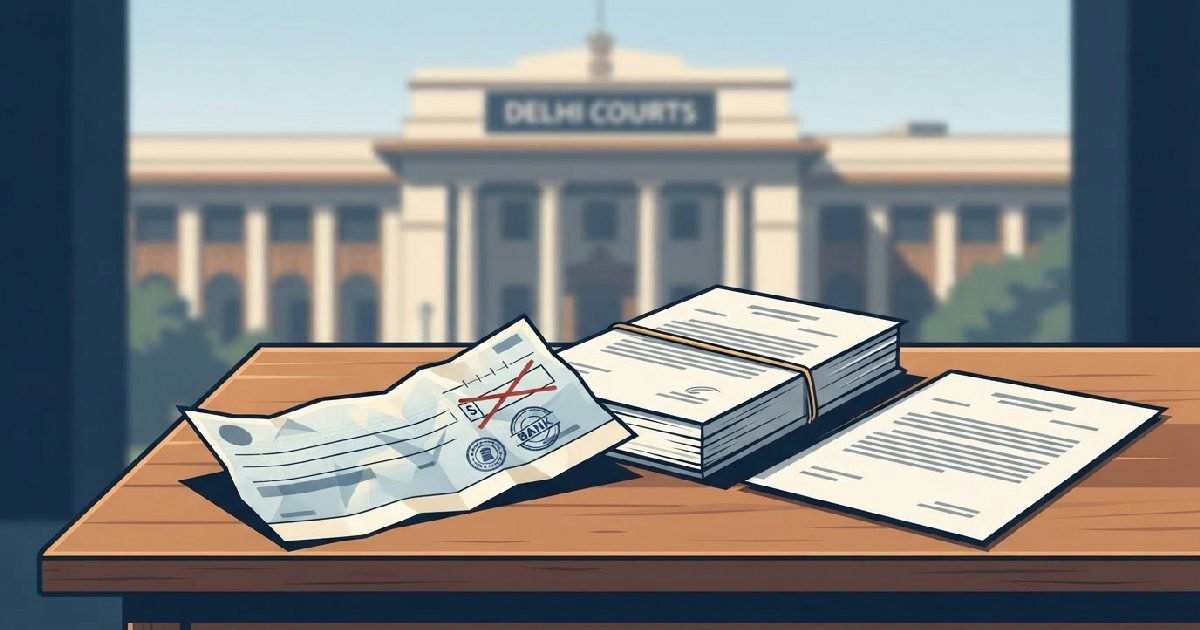
Navigating the legal landscape of bounced cheques in India, particularly in Delhi, requires meticulous adherence to procedural requirements, especially concerning legal notices.
Issues like incorrect amounts in the initial notice, sending multiple notices, or dealing with multiple cheque presentations can critically impact the validity of a criminal complaint.
Two legal notices for the same bounced cheque
Litigants and their legal counsel must specify which cheque return memo and corresponding legal notice their complaint relies upon. Failure to do so, or attempting to combine details from various notices or cheque presentations, opens the door for defence arguments challenging the limitation period, potentially derailing the entire case.
The framework for addressing dishonoured cheques is clearly laid out in Section 138 of the Negotiable Instruments Act, 1881. This crucial provision mandates that a payee must dispatch a legal notice to the drawer within 30 days of receiving the cheque return memo from their bank.
This notice serves as a formal demand for payment, typically requiring the drawer to settle the amount within a 15-day window.
Should the drawer fail to make good on the payment within this stipulated 15-day period, the payee then has a one-month timeframe to file a criminal complaint. These deadlines are not merely administrative guidelines; they are strict legal prerequisites that define the very eligibility of a case to proceed. Any deviation can render a subsequent complaint untenable.
The 30-Day Mandate for Legal Action
The initial 30-day period for issuing a legal notice is particularly sensitive. The Delhi High Court has provided specific guidance on its calculation, ruling that the day on which the complainant actually receives notification from the bank regarding the cheque’s return must be excluded. This small but significant detail can profoundly affect the calculation, ensuring that plaintiffs aren’t penalised for delays beyond their control.
This clarification offers a brief but important buffer, acknowledging the practical realities of bank communications. It reinforces that judicial interpretation often fine-tunes statutory provisions to ensure fairness while maintaining the core objectives of the law.
Pitfalls of Incorrect Amounts and Subsequent Notices
One of the most frequent procedural missteps in cheque bounce cases involves the amount specified in the legal notice. If the initial notice demands an incorrect sum, it may well be deemed invalid by the courts. This issue highlights the importance of scrupulous accuracy in all legal documentation, particularly when it forms the very foundation of a criminal complaint.
The implications of such an error are substantial. If the first notice is flawed due to an incorrect amount, any subsequent notice sent to rectify this error after the initial 30-day window following the dishonour may not be considered legally valid. This creates a critical trap for payees, as the window for a legitimate complaint might effectively close.
When a Second Notice Fails to Rectify Errors
A second notice, even if accurate, cannot retroactively validate a complaint if the first, incorrect notice was the only one sent within the prescribed 30-day period post-dishonour. The legal system generally expects adherence to timelines and correct procedure from the outset. This means meticulous preparation is essential, as there is little room for error correction outside the strict timelines.
Moreover, the complaint filed must unequivocally state which notice and which presentation of the cheque it is relying upon. Ambiguity or an attempt to blend details from different notices in a single complaint creates a clear vulnerability.
Defence lawyers frequently exploit such inconsistencies to argue against the complaint’s validity, often citing a lapse in the limitation period. This strategic vulnerability can ultimately lead to the quashing of proceedings.
Multiple Dishonours and the Cause of Action
The scenario of a single cheque being presented multiple times, leading to successive dishonours, presents its own set of complexities under Section 138. While it might seem intuitive to treat all dishonours of the same cheque identically, legal precedent suggests a more nuanced approach. Each successive dishonour often creates a new “cause of action,” effectively resetting certain timelines for legal recourse.
However, this doesn’t grant unlimited opportunities for legal action. If a cheque is presented twice and dishonoured on both occasions, a fresh legal notice is generally required for the second dishonour. This ensures that the drawer is duly notified of each instance of non-payment and given a fresh opportunity to rectify the situation before criminal proceedings commence.
Distinguishing Between Cheques and Presentations
It is crucial to differentiate between cases involving multiple distinct cheques and multiple presentations of the same cheque. While the Supreme Court has clarified that each dishonoured cheque constitutes a separate cause of action, even if they stem from the same underlying transaction, the rules for multiple presentations are subtly different.
For distinct cheques, a single legal notice can cover them if it meticulously details each cheque’s specifics.
But when one cheque bounces repeatedly, the focus shifts to the individual act of dishonour. The complaint must explicitly state which presentation of the cheque it relies upon. This specificity is vital to prevent legal challenges asserting that the complaint is time-barred or lacks a clear foundation in a single, defined event of dishonour.
The Supreme Court’s Stance on Separate Complaints
The Supreme Court has unequivocally stated that each dishonoured cheque, even if part of a broader transaction, creates its own distinct cause of action. This means that payees are not restricted to filing a single, omnibus complaint. Instead, separate legal notices and complaints can be initiated for every individual bounced cheque. This approach ensures that the legal system can address each instance of non-payment independently.
However, the convenience of a combined notice for multiple cheques still exists, provided it adheres to strict requirements. Such a notice must clearly enumerate each cheque number, date, amount, the specific date of dishonour, and the precise reason for its return. The overarching validity of such a combined notice remains contingent on adhering to the overall limitation period for each individual cheque included.
Strategic Considerations for Compliant Filing
The intricacies of the Negotiable Instruments Act, particularly Section 138, demand a highly strategic and detail-oriented approach to litigation. The way a complaint is drafted and the evidence presented can make or break a cheque bounce case. Lawyers often scrutinise the complaint for any inconsistencies that might allow for a challenge, especially regarding the adherence to statutory timelines.
For instance, attempts to mix details from different legal notices or various cheque presentations within a single complaint are a frequent target for the defence. Such commingling of information can lead to allegations that the plaintiff is trying to circumvent the limitation period or is unclear about the precise basis of their claim.
Precision in pleading is not merely good practice; it’s a shield against dismissal.
Avoiding Limitation Period Challenges
To successfully navigate these legal waters, complainants must be exceptionally clear about the foundation of their case. The complaint should unequivocally state which specific cheque return memo and which corresponding legal notice form the basis of the legal action. This clarity preempts arguments that the case is time-barred or that the statutory procedure has not been correctly followed.
The legal process does not look kindly upon ambiguous or poorly structured complaints, particularly in matters with strict timelines. The advice to “not staple two notices and hope one survives” succinctly captures this critical requirement for precision and singular focus in presenting the facts of the case.
Best Practices for Issuing Valid Notices
Given the strict requirements and potential pitfalls, adhering to best practices for issuing legal notices is paramount. Every element of the notice must be accurate, comprehensive, and compliant with Section 138 of the Negotiable Instruments Act, 1881. This proactive approach minimises the chances of a technical dismissal and strengthens the payee’s position.
Key details must include the explicit mention of Section 138, comprehensive cheque information (number, date, amount, bank), and the precise reason for dishonour as stated by the bank. Crucially, the notice must contain a clear, unambiguous demand for payment within 15 days, along with a statement outlining the legal consequences of non-payment.
Sending the notice via registered post provides irrefutable proof of dispatch, a vital piece of evidence.
| Key Aspect | Valid Legal Notice Requirement | Potential Issue Leading to Invalidity |
|---|---|---|
| **Statutory Reference** | Explicitly mentions Section 138 NI Act, 1881 | Omission of Section 138 reference |
| **Cheque Details** | Includes cheque number, date, amount, bank | Missing or incorrect cheque details |
| **Reason for Dishonour** | States specific reason from bank memo | Vague or incorrect reason provided |
| **Demand for Payment** | Clear 15-day demand post-receipt | Ambiguous demand or incorrect timeline |
| **Amount Accuracy** | Demands correct dishonoured amount | Incorrect or inflated amount specified |
| **Proof of Sending** | Sent via registered post (proof of delivery) | Sent via regular mail without proof |
Judicial Interpretations Shaping Cheque Bounce Law
The judiciary, particularly the Supreme Court and the Delhi High Court, plays a pivotal role in refining the application of Section 138. Their rulings provide essential clarity on procedural nuances that are not explicitly detailed in the statute itself. These interpretations ensure the law remains relevant and fair in diverse factual scenarios, preventing undue hardship or procedural exploitation.
For instance, the Delhi High Court’s ruling on excluding the day of bank notification from the 30-day calculation exemplifies this. Such rulings reflect a pragmatic approach to justice, acknowledging the real-world sequence of events that follow a cheque dishonour. These judicial pronouncements serve as crucial guidelines for legal practitioners and parties involved in cheque bounce cases across the country.
Furthermore, the Supreme Court’s clarification that each dishonoured cheque gives rise to a separate cause of action provides important strategic flexibility for payees.
It means that even if a series of cheques from a single transaction bounce, each instance can be pursued independently, subject to the proper issuance of a fresh legal notice for each dishonour. This prevents a single procedural flaw from invalidating claims on multiple instruments.
What is the primary timeframe for sending a legal notice after a cheque bounces?
The payee must send a legal notice to the drawer within 30 days of receiving the cheque return memo from the bank. The Delhi High Court has clarified that the day of receiving the bank notification should be excluded when calculating this 30-day period.
Can a single legal notice cover multiple dishonored cheques?
Yes, a single legal notice can cover multiple bounced cheques if it clearly and meticulously mentions the details of each cheque, including its number, date, amount, dishonour date, and the reason for its return. The Supreme Court maintains that each dishonoured cheque is a separate cause of action.
What happens if the initial legal notice contains an incorrect amount?
If the first legal notice states an incorrect amount, it may be deemed invalid. A subsequent notice sent after the initial 30-day period following the cheque’s dishonour might not be legally tenable if it relies on the same dishonour, potentially invalidating the foundation of a criminal complaint.
More than one notice already issued? Call of Whatsapp for free consultation.
Related: https://arpitmarwah.com/cheque-bounce-lawyers-in-delhi/