
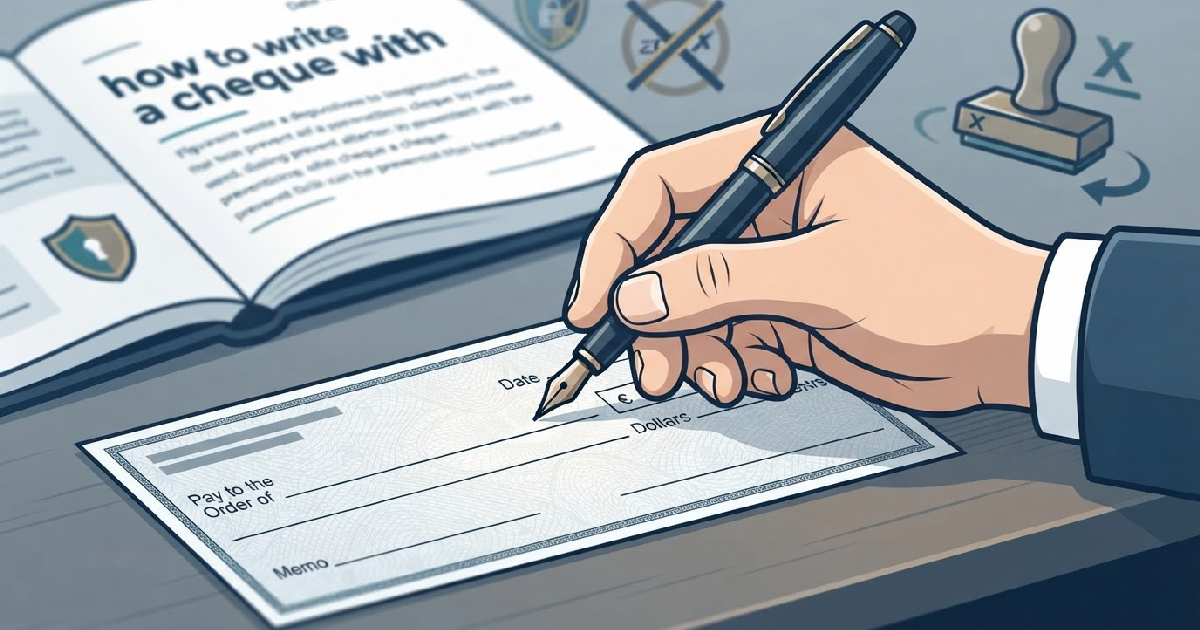
Understanding how to write a cheque with cents accurately remains a crucial skill for ensuring proper financial transactions and deterring fraud. Precision in filling out both numerical and written amounts helps prevent discrepancies that could lead to processing delays or complications.
Banks typically prioritize the written amount if a conflict arises between the figures, highlighting why careful execution of both fields is paramount for secure and correct payments. This practice helps safeguard against potential alterations.
Precision in Cheque Details and Components
Writing a cheque correctly requires careful attention to several key fields. Each element plays a vital role in authorizing payment and verifying the transaction’s legitimacy, protecting both the issuer and the recipient.
Accurate completion of these details not only facilitates smooth processing but also acts as a safeguard against potential alterations, a vital aspect of maintaining financial integrity.
Essential Elements of a Standard Cheque
A standard cheque contains specific sections that must be completed thoroughly. These include personal information, the cheque number for record-keeping, and the date line, all typically found in the upper sections of the document.
Below these, you’ll find the “Pay to the order of” line for the recipient’s name, followed by the numerical and written amount fields, which are critical for specifying the payment sum.
| Cheque Component | Purpose | Best Practice |
|---|---|---|
| Date Line | Indicates issuance date | MM/DD/YYYY or Month, Date, Year (e.g., 08/02/2026) |
| Payee Line | Identifies recipient | Full legal name, no abbreviations |
| Numerical Amount Box | Amount in figures | Start left, use $X.YY format (e.g., $123.45) |
| Written Amount Line | Amount in words | “Dollars and XX/100”, fill remaining space |
| Signature Line | Authorizes payment | Matches bank’s signature on file |
Step-by-Step Guide to Including Cents
When detailing the amount, particularly with cents, every step contributes to the cheque’s validity and security. Begin by dating the cheque with the current date in the top right-hand corner, using a clear format like “August 2, 2026.”
Next, accurately write the full legal name of the payee on the “Pay to the order of” line, ensuring no spelling errors or informal abbreviations are used to prevent processing delays.
For the numerical amount, locate the dollar-preceded box and write the exact figure, such as “$123.45”. Crucially, always include two decimal places, even for whole dollar amounts (e.g., $150.00), as this helps prevent alteration.
Start writing the first digit as far to the left as possible within the box to prevent someone from adding extra numbers before your intended amount. This simple act significantly boosts the accurate financial transactions.
The written amount is where cents are typically fractionalized. On the line below the payee, spell out the dollar amount in words, followed by “and” and the cents as a fraction over 100.
For example, “$130.45” becomes “One hundred thirty and 45/100”. If it’s a whole dollar amount, still include “and 00/100” for clarity and security, then draw a line through any leftover blank space to prevent unauthorized additions.
Finally, ensure your signature on the bottom right-hand line matches the one on file with your bank. This authorizes the payment and validates the entire instrument, making it legally binding and secure.
Best Practices for Cheque Security and Accuracy
Beyond simply filling in the blanks, employing best practices can significantly enhance the security and accuracy of your cheques. These measures are designed to prevent common errors and safeguard against fraudulent activities.
Adhering to these guidelines helps protect your financial accounts and ensures that your payments are processed precisely as intended, reducing potential risks.
Safeguarding Against Cheque Alteration
Always use a pen with blue or black permanent ink when writing a cheque. This prevents information from being erased or altered, which is essential for maintaining the integrity of the document.
Fill in all spaces completely, especially in the amount sections, to leave no room for unauthorized additions. Clear and legible handwriting is also essential; banks increasingly rely on Optical Character Recognition (OCR) scanners, and unclear writing can lead to processing errors.
It’s also smart to keep a detailed record of all cheques written in your cheque register, noting the cheque number, date, payee, and amount. This meticulous tracking helps monitor payments, reconcile accounts, and prevent overdrafts, providing a clear audit trail for any disputes.
Regularly reviewing your bank statements for accuracy is another critical step. Promptly report any discrepancies to your bank, as early detection can mitigate potential fraud or errors. Awareness of methods that lead to cheque alteration conviction is key.
Legal Nuances and Common Cheque Misconceptions
Understanding the legal nuances and common misunderstandings surrounding cheque writing is vital for every account holder. Misinterpretations can have significant consequences, ranging from processing delays to legal disputes.
For instance, an accurate comprehension of cheque dishonour liability can prevent cases of cheque dishonour, a frequent issue in financial legal proceedings.
Discrepancies and the Written Amount
A frequent point of confusion is how banks handle discrepancies between the numerical and written amounts. Banks typically honor the written amount if these two figures differ, as it’s considered the legally binding expression of the payment.
This policy underscores why extreme care is needed in crafting the written amount, as it carries more legal weight than the numerical figure in many jurisdictions.
Another common misconception involves the use of “and” in the written amount. The word “and” should primarily separate the dollar amount from the cents, for example, “one hundred and 50/100”.
Using “and” within the dollar amount itself, such as “two hundred and fifty dollars,” is generally considered incorrect in formal cheque writing practices, though it may not invalidate the cheque.
Risks Associated with Cheque Practices
While post-dating a cheque by writing a future date is possible, banks are not legally obligated to delay its processing. They may process it early, potentially leading to unexpected account overdrafts if funds are insufficient.
This means account holders should never rely solely on a post-dated cheque to control the timing of payment, as it introduces an element of financial uncertainty.
Writing a cheque to “Cash” also carries inherent risks. If such a cheque is lost or stolen, anyone who possesses it can cash or deposit it, making it equivalent to handing over physical currency.
This practice should be avoided due to the significant security implications, as it removes any trace of the intended recipient and complicates fraud recovery efforts.
Maintaining Financial Integrity Through Proper Cheque Use
The ability to accurately and securely issue cheques remains a fundamental aspect of personal and business finance. Adhering to established protocols for writing cheques, particularly with cents, reinforces financial integrity.
These practices not only facilitate smooth transactions but also serve as a critical defense against common errors and potential issues like cheque dishonour, a frequent occurrence in financial legal proceedings.
By understanding and applying these guidelines, individuals can ensure their financial dealings are clear, protected, and compliant with banking standards. Diligence in cheque writing is an investment in your financial security and peace of mind.
Why is it important to write cents accurately on a cheque?
Accurately writing cents, both numerically and in words, is crucial because it prevents ambiguity and potential fraud. If there’s a discrepancy between the numerical and written amounts, banks typically rely on the written amount, making precision in both essential for correct payment.
What should I do if I make a mistake while writing a cheque?
If you make an error on a cheque, the safest practice is to void it. Write “VOID” largely across the cheque, then tear it up, and start fresh with a new one. Never try to erase, white-out, or alter a mistake, as this can lead to processing issues.
Can I post-date a cheque to control when it is cashed?
While you can write a future date on a cheque, known as post-dating, banks are not legally required to wait until that date to process it. They may process the cheque immediately, so it’s important to ensure you have sufficient funds in your account regardless of the date you’ve written.