
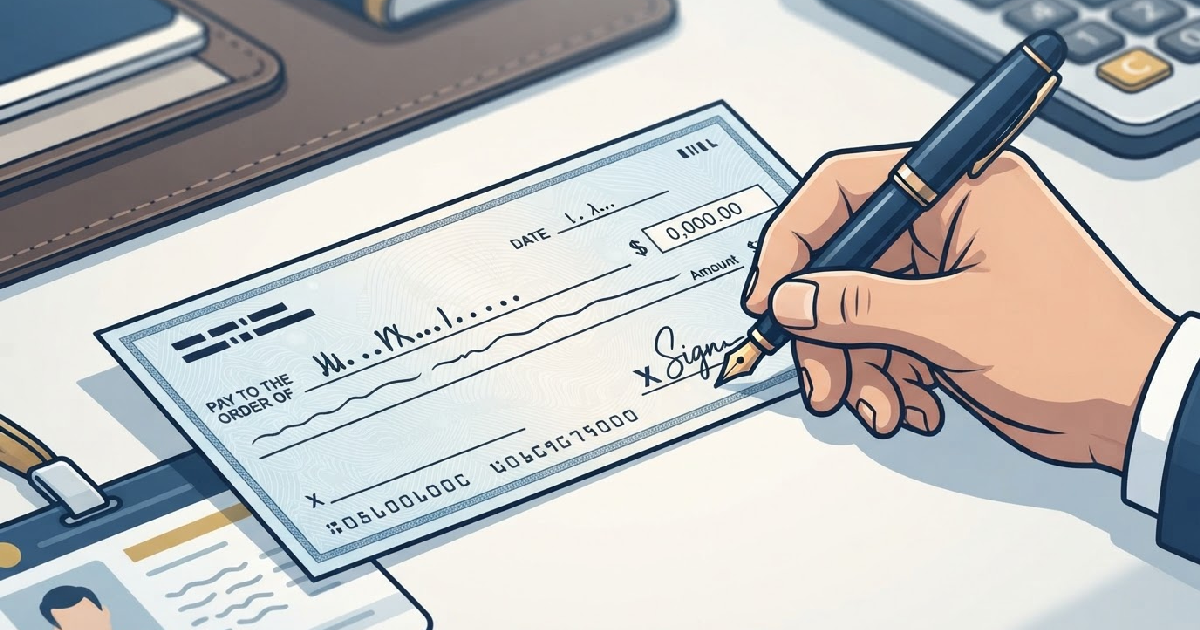
Writing a cheque for someone else involves specific procedures and careful legal considerations. Whether you’re paying a bill on behalf of a friend or issuing funds from your own account, understanding the mechanics of these financial instruments is crucial. This guide provides essential steps for correctly completing a cheque, grounded in established financial practices as of August 1, 2026.
Cheques are written orders that direct a bank or financial institution to disburse a specified sum from a drawer’s account to a named payee. Governed in the United States primarily by Article 3 of the Uniform Commercial Code (UCC), they function as negotiable instruments designed for secure transfer and enforcement. Adhering to proper protocols helps prevent common errors and potential complications.
Key roles in cheque transactions
Understanding the various parties involved is fundamental to any cheque transaction. Each participant has a distinct role that impacts the flow and legality of the payment process. Misunderstanding these roles can lead to confusion or procedural missteps.
The primary figures include the drawer, who initiates the payment, and the drawee, which is the bank holding the funds. The payee is the individual or entity designated to receive the money. Recognizing these relationships clarifies the responsibilities in each transaction.
| Party | Role in Cheque Transaction | Responsibility |
|---|---|---|
| Drawer | Originator of the payment | Writes and signs the cheque, authorizing payment from their account. |
| Drawee | Financial institution | The bank or institution on which the cheque is drawn; responsible for honouring payment. |
| Payee | Recipient of the funds | The individual or entity to whom the payment is intended and who receives the specified money. |
Correctly filling out a cheque from your own account
When you’re writing a cheque from your personal account to pay someone else or settle their bill, you assume the role of the drawer. The person or entity receiving the payment becomes the payee. This is the most frequent scenario involving writing a cheque for someone else.
Following precise steps ensures your cheque is processed efficiently and without issues. Accuracy in each field prevents delays and potential rejection by the bank. Here’s how to properly complete your cheque.
Essential mechanics for payment
Start by entering the current date in the top right-hand corner of the cheque. This dated entry serves as the official record of when the cheque was issued. It formally marks the transaction’s initiation.
Next, accurately identify the payee. On the line marked “Pay to the order of,” write the full, correct legal name of the individual or company you intend to pay. Spelling errors or illegibility can result in the cheque being rejected by the drawee institution.
If you’re paying someone’s bill, such as a utility charge, the utility company itself should be listed as the payee. Don’t make the cheque out to the person whose bill it is. This ensures the payment is correctly attributed to the service provider.
Indicate the numerical amount clearly in the small dollar box on the right side of the payee line. For instance, a payment of one hundred fifty dollars and seventy-five cents should appear as “$150.75.” This provides a concise representation of the sum.
Below the payee line, write out the exact amount in words. Crucially, any cents should be expressed as a fraction over 100. So, “$150.75” becomes “One hundred fifty and 75/100 Dollars.” This written amount legally governs the payment if there is any disagreement with the numerical figure.
The memo line, located in the bottom left corner, offers an optional space for personal record-keeping. You might note the purpose of the payment, like “Birthday gift for John” or “Sarah’s electricity bill.” This provides helpful context for your financial records.
Finally, sign your name on the signature line in the bottom right-hand corner. Your signature acts as the authorization for your bank to release the specified funds from your account. Always use the signature you have officially registered with your bank.
Best practices for cheque security
Always use blue or black ink when filling out a cheque to enhance clarity and deter any attempts at alteration. Ensure all fields are completed clearly and legibly. Inconsistent handwriting can lead to processing difficulties.
Verify that the numerical and written amounts precisely match before signing. Any discrepancy between these figures can cause the bank to reject the payment. Maintaining accurate records, including the cheque number, date, and payee, is also a critical practice. Mastering cheque mechanics is vital for financial security.
While technically possible, writing “Cash” on the payee line is strongly discouraged. A cheque made out to “Cash” can be deposited or cashed by anyone possessing it if lost or stolen. This poses a substantial security risk due to its inherent vulnerability.
Legal framework for cheque transactions
Cheques are formal financial instruments subject to specific legal governance. In the United States, their transferability and enforcement are primarily established under Article 3 of the Uniform Commercial Code (UCC). This code provides a standardized legal framework for negotiable instruments.
Understanding this legal foundation helps clarify the rights and responsibilities of all parties involved. Banks rely on these codified rules to process transactions and resolve disputes. It ensures a consistent approach to cheque management across financial institutions. Recent court rulings often clarify specific aspects of this legal framework.
Practical implications and potential pitfalls
Even with careful attention, practical scenarios can sometimes introduce complexities in cheque transactions. For example, ensuring the payee’s name is spelled exactly right is paramount. Minor errors can cause banks to reject the cheque outright, delaying critical payments.
The specific amount written on the cheque is another area requiring precision. Should there be any conflict between the numerical figures and the written-out words, the written amount is considered the legally binding one. This rule helps prevent ambiguity in payment instructions.
Consider situations where the exact amount is unclear; clarity prevents future disputes. Court decisions often emphasize the need for precise amounts in legal notices concerning payments. Always re-check every detail before signing your name.
What are the key parties involved in a cheque transaction?
A cheque transaction involves three main parties: the Drawer, who writes and signs the cheque; the Drawee, which is the bank responsible for honoring the cheque; and the Payee, the individual or entity designated to receive the funds. Each plays a distinct role in the payment process.
What security risk should I be aware of when writing a cheque?
A significant security risk arises when writing “Cash” on the payee line. While permitted, such a cheque can be cashed or deposited by anyone who possesses it if lost or stolen. It’s generally not recommended due to this inherent vulnerability.
What is the legal amount on a cheque if there’s a discrepancy?
Should a discrepancy occur between the numerical amount and the written-out amount on a cheque, the amount written in words is considered the legally binding one. This rule helps to clarify the intended payment value and prevent ambiguity.