
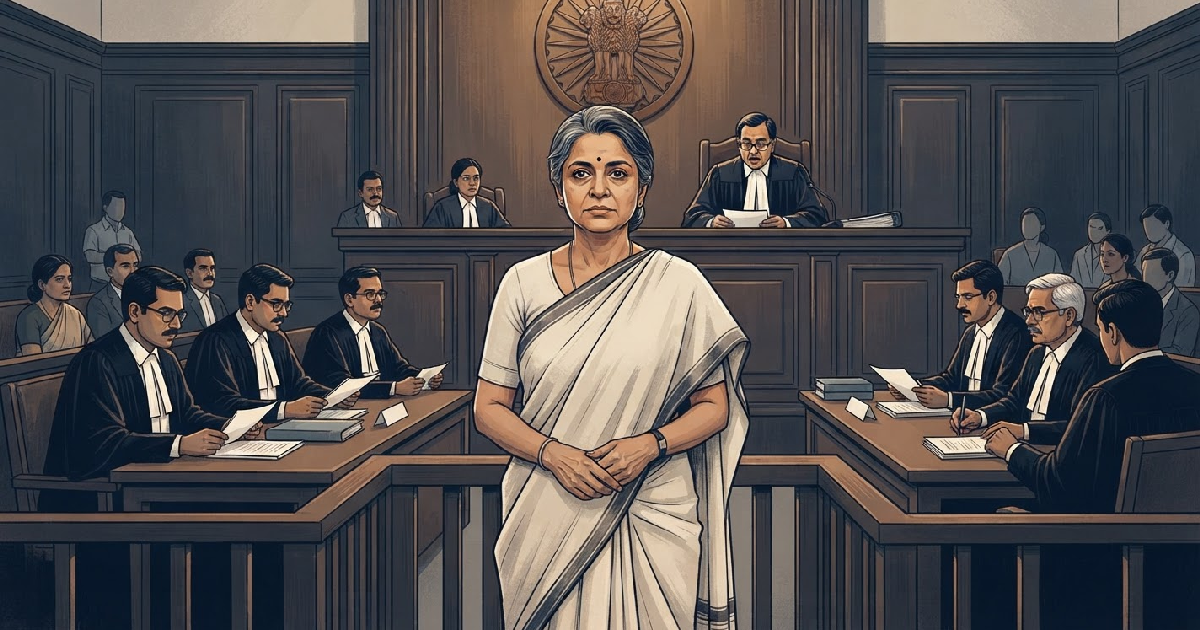
A Bhopal court on Saturday, July 25, 2026, denied the regular bail application of Giribala Singh, a retired District and Sessions Judge, in the high-profile dowry death case concerning her daughter-in-law, model-actress Twisha Sharma. The decision, delivered by First Additional Sessions Judge Ram Pratap Mishra, cited sufficient material indicating Singh’s involvement in the alleged offense and concerns she could influence witnesses.
Twisha Sharma, a 33-year-old model-actress and former Miss Pune, was found dead on May 12, 2026, at her matrimonial residence in Bhopal’s Katara Hills. Her family alleges she faced severe dowry-related harassment, mental abuse, and domestic violence from both Giribala Singh and her husband, advocate Samarth Singh.
Former judge accused in high-profile dowry death
The case has drawn considerable public and legal attention due to the involvement of Giribala Singh, who previously served as a District and Sessions Judge. At the time of the incident, she was also the Chairperson of the Bhopal District Consumer Disputes Redressal Commission.
This background as a prominent legal figure intensified scrutiny of the investigation and the court’s proceedings. The denial of bail underscores a firm stance against accused individuals, regardless of their prior social or professional standing.
Allegations of harassment and violence
Twisha Sharma married advocate Samarth Singh approximately five to six months before her untimely death. Her family, including cousins Major Harshit Sharma and Naina Sharma, sister-in-law Captain Dr. Rashi Abrol, and father Navnidhi Sharma, has been vocal about the alleged abuse.
They claim Twisha was subjected to relentless demands for dowry and faced ongoing mental and physical harassment. These allegations paint a grim picture of domestic strife preceding the tragic death.
Key reasons for bail denial
First Additional Sessions Judge Ram Pratap Mishra’s decision to deny bail was based on several critical factors presented in the case diary. The court highlighted the gravity of the alleged crime and the potential implications of granting bail at this stage.
The prosecution, represented by the Central Bureau of Investigation (CBI), mounted a strong argument against her release. They emphasized the serious nature of the offense and the specific role Giribala Singh allegedly played.
Evidence against Giribala Singh
The court reviewed a substantial body of evidence suggesting Giribala Singh’s involvement in the dowry death. This included Call Detail Records (CDRs) and WhatsApp chats, which reportedly provided insights into the interactions leading up to Twisha’s death.
Statements from various witnesses further implicated the former judge. The CBI also presented other documentary and electronic evidence to solidify their case against her, reinforcing the seriousness of the charges.
Concerns about witness influence and tampering
A primary concern for the court was Giribala Singh’s ability to potentially influence witnesses or tamper with evidence. Her former position as a District and Sessions Judge and her role as Chairperson of the District Consumer Disputes Redressal Commission were specifically noted.
The CBI argued that her extensive connections within the legal and administrative systems posed a significant risk. They also cited her refusal to provide a voice sample during the investigation as another point of concern.
The CBI also presented instances where Giribala Singh reportedly attempted to influence the investigation. This included contacting a CCTV technician and a salon operator connected to the case, and sending a private representative to obtain CCTV footage.
Investigative timeline and key developments
The investigation into Twisha Sharma’s death has progressed rapidly, transitioning between local police and a federal agency. Key dates mark the critical steps taken by authorities and the judiciary in this sensitive case.
The sequence of events underscores the urgency and public interest surrounding the allegations of dowry harassment and its tragic outcome. It highlights the coordinated effort to gather evidence and ensure legal accountability.
From local police to CBI involvement
Twisha Sharma’s death on May 12, 2026, immediately triggered an investigation by the Madhya Pradesh Police. However, due to the high-profile nature and the complexity of the allegations, the case was transferred.
The Central Bureau of Investigation (CBI) officially took over the case on May 25, 2026, from the Special Investigation Team (SIT) of Bhopal Police. This move followed a request from the state government, signaling a need for a more comprehensive inquiry.
Judicial proceedings and custody
Giribala Singh and Twisha’s husband, Samarth Singh, began their judicial custody on June 2, 2026. This initial period of custody has been extended, with both currently held until August 11, 2026.
Earlier in the proceedings, the Madhya Pradesh High Court quashed anticipatory bail that had been granted to Ms. Singh by a subordinate court on May 27, 2026. This decision reversed a previous grant of conditional release.
The Supreme Court of India has also taken suo moto cognizance of the case, urging family members on both sides to make statements directly to investigating authorities. This directive aims to prevent media trials and ensure a fair legal process.
| Event | Date | Status/Details |
|---|---|---|
| Twisha Sharma’s Death | May 12, 2026 | Found dead at matrimonial residence |
| CBI Takes Over Case | May 25, 2026 | From Bhopal Police SIT |
| Anticipatory Bail Quashed | May 27, 2026 | Madhya Pradesh High Court reversal for Giribala Singh |
| Judicial Custody Begins | June 2, 2026 | For Giribala Singh and Samarth Singh |
| Bail Application Denied | July 25, 2026 | For Giribala Singh by Bhopal Court |
| Judicial Custody Extended | August 11, 2026 | For both accused |
The wider context of dowry cases in India
The Twisha Sharma case brings into sharp focus the persistent issue of dowry deaths and harassment in India. Despite stringent laws, these crimes continue to plague many families, often with devastating consequences.
Dowry is a traditional practice involving a payment of property or money by the bride’s family to the groom’s family at the time of marriage. It is outlawed under the Dowry Prohibition Act, 1961, but remains prevalent.
Legal battles and challenges
Prosecuting dowry death cases often presents unique challenges, particularly in gathering conclusive evidence of harassment that directly led to the victim’s death. Families often face immense pressure and social stigma.
The legal system attempts to provide redress, but the complexities of domestic settings make evidence collection difficult. Often, the victim’s voice is silenced, making witness testimony and electronic evidence critical for justice.
The involvement of a former judge in such a case highlights that no one is above the law. It reinforces the principle that procedural safeguards must be adhered to, regardless of the accused’s background. This case serves as a stark reminder of the long struggle against deeply entrenched social evils.
Implications for judicial ethics and public trust
Giribala Singh’s previous judicial role adds another layer of complexity to this case. It raises questions about judicial ethics and the trust placed in public servants, particularly those entrusted with upholding justice.
The court’s decision to deny bail, despite her background, sends a clear message about impartiality. It affirms that the legal system intends to proceed without bias, focusing solely on the evidence presented.
Maintaining integrity in the legal system
Cases involving individuals from the legal fraternity often test the perceived integrity of the judicial system. This particular case is no exception, demanding rigorous adherence to due process and unbiased judgment.
The CBI’s arguments about potential witness tampering were especially pertinent, considering Singh’s past influence. This aspect of the case could have broader implications for how matrimonial disputes and other sensitive cases involving powerful figures are handled.
The road ahead for Twisha Sharma’s family
For Twisha Sharma’s family, the bail denial represents a small but significant step in their quest for justice. Their allegations of dowry harassment and mental abuse have driven the investigation forward.
They have consistently advocated for a thorough and unbiased investigation, seeking accountability for Twisha’s death. The family has emphasized the importance of ensuring that such incidents do not go unpunished, setting a precedent for others facing similar situations.
Continued legal proceedings
With the bail application denied, Giribala Singh and Samarth Singh will remain in judicial custody as the investigation and trial proceed. The CBI is expected to continue its meticulous evidence gathering.
The upcoming phases of the legal process will likely involve further examination of the collected evidence, witness testimonies, and potentially, a trial. These steps will be crucial in determining the ultimate outcome of this complex case.
The case continues to highlight the importance of careful burden of proof in criminal proceedings, especially when accusations involve such serious allegations. The court’s ongoing oversight ensures legal standards are met.
What was the main reason for denying Giribala Singh’s bail?
The Bhopal court denied Giribala Singh’s bail primarily due to the seriousness of the charges against her in the dowry death case of Twisha Sharma. The court found sufficient material in the case diary indicating her involvement.
What evidence did the CBI present against Giribala Singh?
The Central Bureau of Investigation presented several pieces of evidence, including Call Detail Records (CDRs), WhatsApp chats, and statements from witnesses. They also highlighted her refusal to provide a voice sample and attempts to influence the investigation.
What are the next steps in the Twisha Sharma dowry death case?
Giribala Singh and Samarth Singh will remain in judicial custody, which has been extended until August 11, 2026. The CBI will continue its investigation, leading to further evidence collection, witness testimonies, and eventually, a trial to determine their guilt or innocence.