
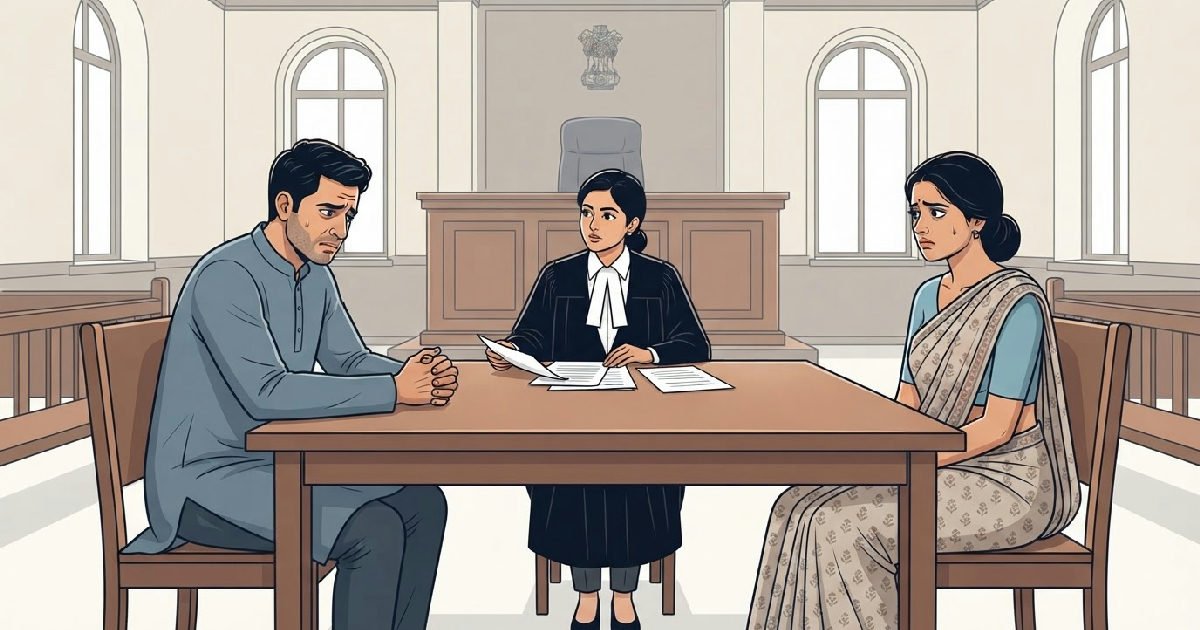
In Delhi, couples seeking to dissolve their marriage often begin with mutual consent divorce, aiming for an amicable separation. However, this path frequently falters, forcing parties into contested divorce proceedings. This shift typically occurs when one spouse withdraws their consent, introduces new financial demands, or simply stops participating in crucial stages like the second motion.
When the mutual agreement breaks down, matrimonial lawyers in Delhi transition to filing a contested divorce petition. This legal avenue requires establishing specific grounds for divorce under relevant laws, such as Section 13 of the Hindu Marriage Act, 1955. The change from an agreed-upon separation to a legal battle significantly alters the process, increasing complexity and duration.
When Mutual Consent Divorce Fails in Delhi
The journey toward mutual consent divorce demands continuous agreement from both spouses throughout the entire process. It’s a delicate balance that can easily be disrupted, leading to the collapse of the initial amicable approach.
Many factors can cause this breakdown, ranging from escalating emotional tensions to changing financial expectations. When this happens, the legal strategy pivots sharply towards litigation, requiring a different set of preparations and courtroom tactics.
The Breakdown of Agreement
A mutual consent divorce hinges on both parties maintaining their agreement until the final decree is issued by the court. If either spouse retracts their consent before this crucial stage, the mutual consent pathway effectively ends.
This withdrawal can manifest in various ways. A spouse might explicitly refuse to proceed, or they could introduce new, often substantial, financial conditions that were not part of the original understanding. Another common scenario involves one spouse simply failing to appear for the second motion, a mandatory step in the mutual consent process.
Shifting to Contested Proceedings
Once mutual consent is no longer viable, the legal imperative shifts to filing a contested divorce petition. This action is typically initiated under Section 13 of the Hindu Marriage Act, provided that legally recognized grounds for divorce exist.
The court then undertakes a detailed examination of the evidence presented by both sides. This process aims to determine if the stated grounds for divorce are sufficiently established to warrant a decree of dissolution. The entire procedure becomes far more adversarial and evidence-dependent.
Legal Grounds for Contested Divorce in India
A contested divorce in India is not merely about a desire to separate; it requires specific legal justifications. These grounds are meticulously outlined within Section 13 of the Hindu Marriage Act, 1955, forming the bedrock of any contested petition.
Understanding these specific legal bases is critical for any spouse considering or facing a contested divorce. The court will rigorously evaluate whether the presented facts align with one or more of these statutory grounds.
Common Basis for Dissolution
Several common grounds are frequently cited in contested divorce petitions in Delhi. Adultery, defined as voluntary sexual intercourse with someone other than one’s spouse, is a significant basis. Cruelty, encompassing both physical and mental suffering, also frequently appears.
The Kerala High Court has notably ruled that withholding mutual consent in a marriage that has irretrievably broken down can itself constitute cruelty. Other grounds include desertion for a continuous period of at least two years, conversion to another religion, or suffering from an incurable mental disorder.
Further grounds include suffering from a virulent and incurable form of leprosy or a venereal disease in a communicable form. Renunciation of the world by entering a religious order, or the presumption of death after not being heard from for seven years or more, also serve as valid reasons for seeking divorce.
Specific Provisions for Wives
Section 13(2) of the Hindu Marriage Act provides additional grounds specifically for wives to seek divorce. These include instances where the husband has been found guilty of rape, sodomy, or bestiality.
Another provision allows a wife to seek divorce if her marriage was solemnized before she reached 15 years of age and she repudiated the marriage between the ages of 15 and 18. These specific clauses offer further legal recourse in particular circumstances faced by women.
Navigating Jurisdiction and Court Process
Filing a contested divorce petition requires careful attention to jurisdictional rules to avoid procedural delays or even dismissal. The correct Family Court must be selected based on specific criteria to ensure the case proceeds smoothly.
Once jurisdiction is established, the procedural journey through the court system involves several distinct stages. These steps, from initial filing to potential trial, are designed to facilitate resolution, often beginning with attempts at mediation.
Choosing the Right Family Court
A divorce petition must be filed in the Family Court that holds proper jurisdiction over the matter. This can be the court within whose territorial limits the marriage was solemnized, or where the respondent currently resides.
Alternatively, the petition can be filed where the parties last resided together. If the respondent lives outside India or cannot be located, the petitioner may file the case in the court where they themselves reside. Incorrect filing can lead to significant delays or even dismissal, making early legal advice from matrimonial lawyers in Delhi essential.
From Petition to Trial
The process begins with the lawyer drafting a detailed petition, which outlines the marriage facts, grounds for divorce, matrimonial history, and the specific relief sought. This document is then filed in the appropriate Family Court, typically with a court fee ranging from ₹200 to ₹500 in Delhi.
Family Courts are mandated to attempt reconciliation, often referring parties to mediation services. If these efforts fail to produce a settlement, the case then moves to a full trial. This stage involves the exchange of pleadings, filing interim applications, leading evidence, and rigorous cross-examination of witnesses from both sides.
Impact of Parallel Legal Battles
Matrimonial disputes in India are rarely isolated to a single divorce petition. They often unfold amidst a complex web of parallel legal proceedings, adding layers of complication and strategic considerations.
These simultaneous cases can influence the divorce proceedings, though courts generally treat them as independent matters. Understanding how these cases interact is crucial for anyone navigating a contested divorce.
Interplay with Criminal and Civil Cases
It is common for divorce cases to run concurrently with other legal actions, such as those filed under Section 498A of the Indian Penal Code (IPC) concerning cruelty by a husband or his relatives. Domestic Violence (DV) cases and maintenance claims also frequently proceed in parallel.
A court can continue with a divorce case even if a Section 498A case is ongoing, as these are considered independent legal matters. However, evidence presented in one proceeding might indirectly support or undermine a party’s position in another.
For instance, an acquittal in a Section 498A IPC case does not automatically entitle a wife to maintenance. This is especially true if she resides separately without sufficient cause or has already been divorced. The Delhi High Court has affirmed that a wife cannot pursue criminal proceedings under Section 498A IPC in India after accepting a divorce decree and monetary settlement from a foreign court.
Allegations and Their Influence on Divorce
The nature of allegations made in parallel cases can significantly impact the divorce proceedings. False allegations or the misuse of Section 498A can weaken claims of cruelty and diminish entitlement to maintenance. Courts scrutinize such claims carefully.
Conversely, substantiated findings in a DV case could bolster claims of cruelty within the divorce petition. Each proceeding, while independent, can provide evidentiary weight that influences the overall outcome of the marital dispute, including issues of interim maintenance in Delhi.
Understanding Timelines and Documentation
The shift from mutual consent to contested divorce profoundly impacts the expected duration of the legal process. What might have been a relatively swift resolution can become a protracted legal battle, demanding significant time and resources from all parties involved.
Proper documentation is also paramount, as the contested nature of the proceedings means every claim must be substantiated with concrete evidence. Spouses must be prepared for a longer journey and meticulous record-keeping.
Contested Divorce Duration Compared
The timeline for a contested divorce is considerably longer than for a mutual consent divorce. While mutual consent proceedings typically conclude within 6 to 18 months, a contested divorce can extend from 2 to 5 years.
This extended duration is due to the detailed pleadings, extensive evidence presentation, cross-examination of witnesses, and numerous interim applications and adjournments. Interlocutory challenges further prolong the process, making it a more arduous journey for both spouses.
| Divorce Type | Typical Timeline | Court Fee (Delhi) | Agreement Level |
|---|---|---|---|
| Mutual Consent Divorce | 6 – 18 months | ₹200 – ₹500 (approx.) | High, continuous |
| Contested Divorce | 2 – 5 years | ₹200 – ₹500 (approx.) | None |
Essential Documents for Filing
Filing a contested divorce petition requires a comprehensive set of documents to support the claims and establish the necessary grounds. Key documents include address proof for both husband and wife, wedding photographs, and the official marriage certificate.
Crucially, evidence specifically supporting the grounds for divorce, such as records of cruelty or adultery, must be gathered. Professional and financial proofs, along with detailed information about assets held by both spouses, are also required. If the mutual consent process failed after the first motion, the order from that motion is also necessary.
Strategic Advice for Spouses Facing Contention
When a mutual consent divorce collapses and a contested path becomes inevitable, spouses need to adjust their approach significantly. Navigating this complex legal landscape requires strategic foresight and careful adherence to legal advice.
Avoiding common missteps and proactively preparing for litigation can significantly influence the outcome and efficiency of the proceedings. Sound legal counsel from the outset is invaluable.
Avoiding Common Pitfalls
Individuals should avoid certain actions that can undermine their case or prolong disputes. For instance, continuing to pay informal cash to a spouse without receipts, especially when they refuse to finalize an agreement, is ill-advised.
Such payments lack formal documentation and can be difficult to account for in court. Similarly, sending long voice notes filled with emotional content can be problematic, as these recordings might be used as evidence against the sender. It’s best to keep communications concise, formal, and documented.
Proactive Legal Preparation
Early engagement with legal professionals is critical to understand one’s rights and obligations. Spouses should immediately begin collecting essential documents, including their marriage certificate, address proofs, and any first-motion orders if applicable.
Organizing financial documents thoroughly and preserving all relevant evidence are paramount. A robust settlement agreement, signed before even filing for a mutual consent divorce, can substantially reduce the risk of a spouse changing their mind.
If an agreement breaks down on critical points like alimony, custody, or property, it almost invariably converts into a contested divorce, making foresight essential when considering what is mutual divorce to begin with.
What makes a mutual consent divorce fail in Delhi?
A mutual consent divorce can fail if one spouse withdraws their consent before the final decree, introduces new financial demands not previously agreed upon, or stops attending the mandatory second motion hearing in court. Continuous agreement from both parties is essential throughout the process.
What are the common grounds for filing a contested divorce petition in Delhi?
Common grounds for a contested divorce under Section 13 of the Hindu Marriage Act include adultery, cruelty (physical or mental), desertion for two years, conversion to another religion, incurable mental disorder, certain communicable diseases, renunciation of the world, or presumption of death.
How long does a contested divorce typically take in Delhi compared to a mutual consent divorce?
A contested divorce in Delhi generally takes much longer, ranging from 2 to 5 years, due to detailed pleadings, evidence presentation, cross-examination, and potential adjournments. In contrast, a mutual consent divorce typically concludes within 6 to 18 months if both parties remain in agreement.
Need matrimonial lawyers in Delhi after mutual consent stalled? Call or Whatsapp for free consultation.
Related Service: https://arpitmarwah.com/matrimonial-lawyers-in-delhi/