
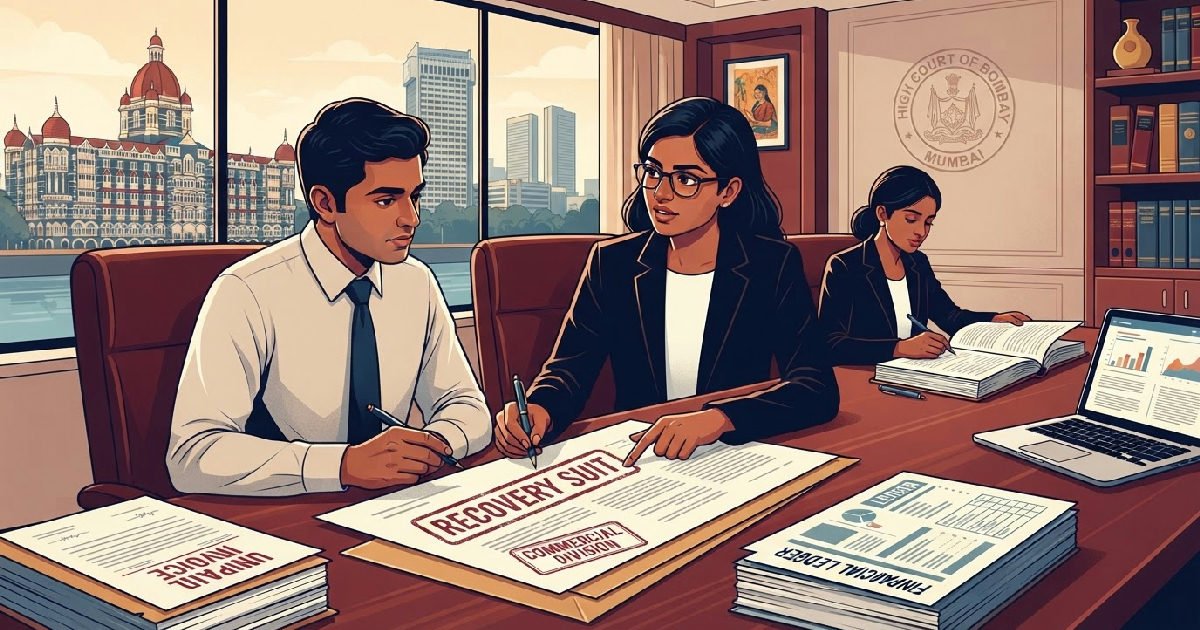
Creditors are increasingly filing formal recovery suits in India against defaulting clients to reclaim an estimated ₹8.1 lakh crore locked in delayed payments. 1 lakh crore locked in delayed payments, severely constricting corporate cash flows. To reclaim these outstanding dues, creditors are increasingly filing formal civil recovery suits in India against defaulting clients.
Navigating this adversarial process demands meticulous documentation and a firm grasp of the commercial legal framework.
Unpaid invoices are no longer just an administrative headache; they represent a systemic liquidity crisis across the broader economy. Micro, Small, and Medium Enterprises (MSMEs) bear the absolute brunt of this financial bottleneck, often waiting months beyond agreed contract terms to receive working capital. Engaging the judicial system through a formal recovery suit transforms an ignored invoice into a legally enforceable mandate.
The Staggering Scale of Unpaid Corporate Dues
The magnitude of delayed payments has reached critical levels for Indian commerce. The Economic Survey 2025-26 confirmed that an astonishing ₹8.1 lakh crore of MSME money remains trapped in delayed settlements. This figure represents more than 4.6% of the country’s Gross Value Added (GVA).
A separate report published by Recordent in June 2026 highlighted the severe local impact on smaller firms. Based on data from 1.1 lakh MSMEs, average overdue receivables beyond 360 days hit roughly ₹3.8 crore per firm, directly threatening operational survival.
The national invoice payment cycle currently averages 73 days. This reality directly contradicts industry norms, as 82.6% of these invoices were issued with strict 0 to 30-day credit periods. Buyers routinely ignore contractual deadlines, forcing suppliers to seek expensive informal credit.
When payments are delayed by 60 to 90 days, businesses often resort to short-term loans carrying interest rates of 3 to 5% a month. This effectively erodes their entire profit margin. Large corporations frequently exploit these MSME suppliers as an unauthorized source of interest-free working capital.
Legal Framework Governing Recovery Suits in India
A recovery suit is defined as a civil legal proceeding initiated by a creditor to legally reclaim money owed by another party. These legal actions are primarily governed by the Code of Civil Procedure, 1908 (CPC), which lays out the procedural mechanism for all civil litigation.
Recovery suits are also heavily influenced by the Indian Contract Act, 1872, particularly for contractual debts, and the Commercial Courts Act, 2015, for business disputes. The procedural timeline for filing such suits is governed by the Indian Limitation Act, 1963. The law provides remedies when debts are undisputed, documented, and fully enforceable under the legal system.
Courts demand strict adherence to these procedural frameworks laid out in the Code of Civil Procedure, 1908. While the CPC provides the structure for legal action, understanding the specific rules applicable to commercial matters is essential for swift resolution.
The creditor must always choose the correct legal venue and ensure all filings adhere to the established procedural mandates. Procedural missteps can weaken the case, causing lengthy delays or even dismissal on a technical basis.
Triggers for Filing a Civil Claim
Unpaid invoices for goods delivered or services rendered serve as the most common foundation for a lawsuit. Once a client fails to clear these invoices despite formal reminders, the supplier holds a valid cause of action to approach the civil court.
Breach of contract scenarios also justify legal intervention. When a business partner violates payment terms explicitly agreed upon in a written contract, purchase order, or service agreement, a recovery suit enforces those original terms.
Dishonoured cheques provide another strong legal trigger. Cheques issued towards payment of dues that later bounce often form the basis of recovery proceedings, alongside parallel criminal remedies under Section 138 of the Negotiable Instruments Act, 1881.
Distinguishing Between Suit Types
Indian law recognizes several types of money recovery suits, depending on the complexity and nature of the debt. The most common is the standard Civil Suit for Recovery of Money, governed entirely by the Code of Civil Procedure, 1908.
A more specialized route is the Summary Suit, filed under Order XXXVII of the CPC. This accelerated process is designed for straightforward, documented debt recovery and significantly limits the defendant’s right to defend the claim, making it faster.
For larger business debts arising from commercial transactions, the appropriate action is a Commercial Recovery Suit. These suits are specifically mandated to be filed before a Commercial Court or the Commercial Division of a High Court, governed by the specialized Commercial Courts Act, 2015.
Specialized Venues for Commercial Debt Recovery
Choosing the correct venue is the first critical step in any litigation strategy. The appropriate court depends entirely on the financial value involved and the territorial rules governing the transaction. Filing in the wrong venue guarantees immediate dismissal or severe procedural delays.
The jurisdiction is typically established where the defendant resides, where they carry on business, or where the actual contract was executed. Courts also accept jurisdiction if the payment was explicitly due within their geographical boundaries or where the primary cause of action arose.
The nature of the dispute dictates whether a case enters standard civil courts or specialized tribunals. High-value business disputes between corporate entities fall exclusively under the jurisdiction of Commercial Courts. These specialized venues were designated to handle business recovery matters efficiently.
The Impact of the 2018 Amendment
The Commercial Courts Act, 2015, fundamentally altered debt recovery in India. A crucial amendment in 2018 reduced the minimum pecuniary jurisdiction for commercial cases from ₹1 crore to just ₹3 lakhs. This reduction greatly expanded access to these specialized courts for thousands of Micro, Small, and Medium Enterprises (MSMEs).
This legislative shift aimed to introduce streamlined and stricter procedures for commercial litigation. Commercial Courts are better equipped to handle the specialized demands of business disputes, enforcing specific timelines and case management techniques. Successful litigation often culminates in a court decree allowing enforcement proceedings, enabling asset or bank account attachment if the debtor fails to comply.
Mandatory Pre-Institution Mediation
Section 12A of the Commercial Courts Act introduced a mandatory hurdle before any litigation can begin. Parties must attempt Pre-Institution Mediation and Settlement unless they are seeking urgent interim relief. This provision forces businesses to explore amicable resolution before clogging the judicial docket.
The Mediation Act, 2023, further strengthened this framework by providing a unified structure for these sessions. Any settlement agreement reached during this pre-litigation phase becomes immediately enforceable as a binding court decree. This offers a much faster exit route than enduring a full trial.
Procedural Requirements for Proving the Debt
A recovery suit lives or dies based on the strength of its paper trail. Creditors cannot rely on verbal agreements or assumptions. Before filing a plaint, legal teams require comprehensive documentation to prove the existence of the debt and the failure to pay.
Essential documents include all original invoices, tax bills, and signed purchase orders. Courts expect to see the foundational service agreements that outline the exact payment terms and credit periods negotiated between the two corporate entities. Proof of delivery is also non-negotiable.
Whether it involves physical logistics receipts signed by warehouse managers or digital sign-offs for completed software services, the plaintiff must prove they upheld their end of the bargain. Legal professionals audit this evidence rigorously before drafting the initial claim.
Digital evidence plays an increasingly central role in proving liability. The necessary documents required for filing include emails, WhatsApp messages, or written communication where the debtor acknowledges the outstanding amount. Bank statements clearly reflecting the absence of expected incoming transfers also complete the evidentiary package.
Navigating the Complexities of Court Delays
Despite the creation of specialized Commercial Courts, systemic delays still plague the recovery process. A November 2025 analysis by ThePrint exposed glaring inefficiencies within the Bombay High Court’s commercial division. The data revealed that the median time to dispose of commercial suits remained around 1,580 days.
This timeline actually worsened slightly from earlier World Bank estimates for enforcing contracts. Strikingly, ordinary civil suits in the same jurisdiction were resolved faster, showing a median disposal time of 1,117 days. Commercial plaintiffs often wait more than a year longer than standard civil litigants.
Procedural bottlenecks heavily contribute to these extended timelines. A prior empirical study highlighted the summons process as a major friction point. In the Delhi High Court, merely completing the initial serving of summons averaged 73 days, significantly delaying the actual start of trial proceedings.
Data Comparison: Avenues for Debt Resolution
Indian law provides several distinct pathways for reclaiming corporate debts. Selecting the right mechanism depends heavily on the financial value, the nature of the contract, and the desired speed of enforcement.
Choosing between a summary suit, commercial litigation, or insolvency proceedings requires a careful assessment of the debtor’s financial health. While summary suits offer a fast-track route for undisputed debts by limiting the defendant’s right to defend, they might not be suitable for complex B2B disputes where extensive evidence is required.
Conversely, high-value corporate defaults exceeding the statutory threshold may find a more aggressive resolution through the insolvency framework. This strategic decision often requires businesses to understand the differences between litigation and alternative dispute mechanisms, such as those related to complex appeal rules.
Ultimately, the goal is to secure a legally binding decree or settlement with minimal delay. The reduction in the pecuniary jurisdiction of commercial courts has made specialized recovery accessible to smaller businesses, yet judicial backlogs remain a major hurdle.
| Resolution Mechanism | Governing Statute | Minimum Claim Value | Typical Application |
|---|---|---|---|
| Civil Suit for Recovery of Money | Code of Civil Procedure, 1908 (CPC) | No minimum threshold | General civil remedy for contractual or other recoverable debts. |
| Summary Suit | CPC 1908 (Order XXXVII) | No minimum threshold | Faster process for straightforward, undisputed debts based on written contracts. |
| Commercial Court Suit | Commercial Courts Act, 2015 | ₹3 Lakhs | High-value B2B disputes requiring specialized case management. |
| Corporate Insolvency Resolution Process (CIRP) | Insolvency and Bankruptcy Code (IBC), 2016 | ₹1 Crore | Resolution mechanism for financially distressed entities. |
| Lok Adalat (People’s Court) | Legal Services Authorities Act, 1987 | Typically up to ₹20 Lakhs | Amicable, binding settlements for smaller debt recovery cases. |
Government Intervention and Unintended Consequences
Government attempts to fix the MSME payment crisis have sometimes produced unintended consequences. In April 2024, the government implemented Section 43B(h) of the Income Tax Act. This rule disallowed tax deductions on purchases from registered MSMEs if the buyer delayed payment beyond 45 days.
The policy intended to force large buyers to settle their bills promptly to avoid massive tax penalties. Instead, market behavior shifted defensively. Multiple industry reports indicate that large corporations simply moved their supply chain orders to unregistered suppliers to bypass the 45-day restriction entirely.
This shift left many registered MSMEs losing vital contracts while still battling historical overdue payments. The MSME Samadhaan portal, designed specifically for delayed payment grievances, reflects this ongoing struggle. As of mid-August 2026, the portal held 2,56,892 applications concerning ₹55,244 crore in delayed payments.
Strategic Alternatives to Full Litigation
Given the 1,580-day median disposal time for commercial suits, businesses frequently explore alternative leverage points. The Insolvency and Bankruptcy Code (IBC) represents a powerful tool, though it is not strictly a debt collection mechanism. It aims for time-bound resolution or liquidation of distressed entities.
The default threshold for initiating a Corporate Insolvency Resolution Process (CIRP) under the IBC sits at ₹1 crore. Threatening an insolvency petition often forces solvent but stubborn debtors to the negotiation table immediately, as losing control of their company to a resolution professional is a severe consequence.
Ultimately, creditors must recognize that multiple civil and criminal ways to recover outstanding funds exist. From specialized tribunals to alternative dispute resolution and formal commercial trials, the legal architecture provides the necessary tools. Prompt action and strict documentation remain the deciding factors in a successful recovery.
Frequently Asked Questions
Navigating the legal landscape of debt recovery in India can be highly complex, prompting numerous questions from businesses looking to secure their outstanding cash flows. Understanding the procedural nuances is essential to avoid having a legitimate claim dismissed on technical grounds. Proactive legal planning often depends on recognizing how the legal framework affects the timeline of a recovery suit.
Indian law provides effective and structured remedies to help businesses recover their rightful payments. Taking timely legal action through a recovery suit not only improves the chances of recovery but also sends a strong message about financial discipline and accountability.
What determines the deadline for filing a recovery suit?
The time limit, or limitation period, for filing any civil recovery suit is dictated by the Indian Limitation Act, 1963. This Act establishes specific deadlines from the date the cause of action first arises. Missing the applicable statutory deadline will likely result in the court dismissing the claim as time-barred.
Are digital communications admissible as proof of debt?
Yes, documentation for a recovery suit commonly includes emails, WhatsApp messages, or other written communication that acknowledges the debt. Strong documentary evidence, including digital exchanges, is critical to successfully proving the existence of the outstanding liability in court proceedings.
Do I have to attend mediation before filing a commercial suit?
If your dispute falls under the Commercial Courts Act and you are not seeking urgent interim relief, Section 12A mandates that you must attempt Pre-Institution Mediation and Settlement. You cannot file your lawsuit until this mandatory process is exhausted or deemed unsuccessful by the relevant authority.