
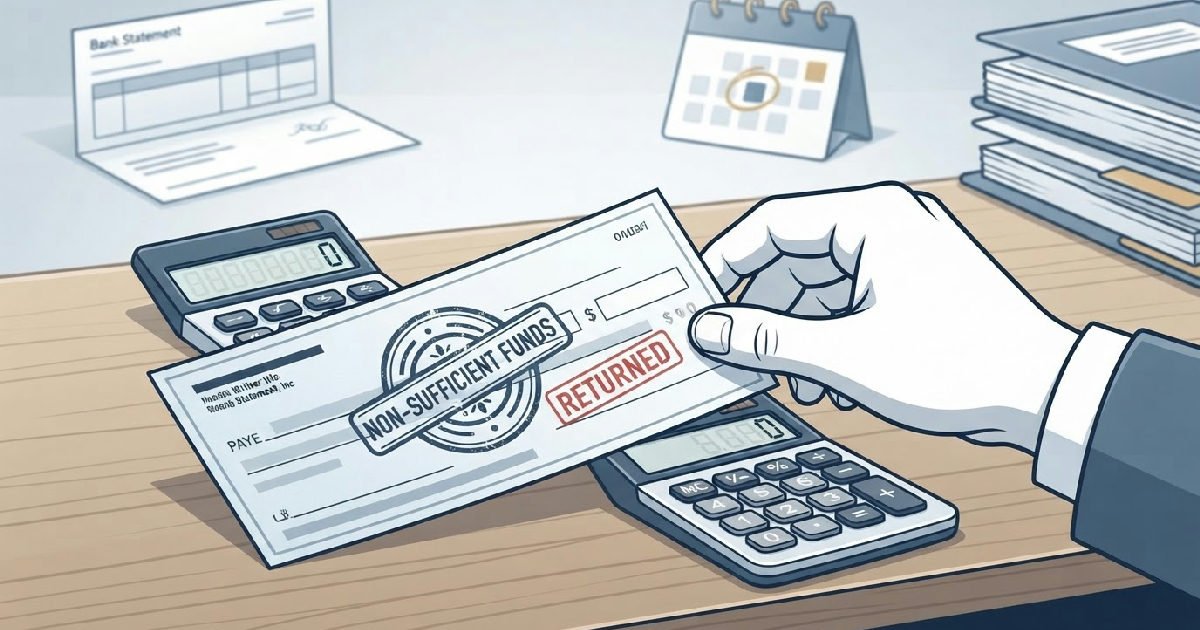
Effectively clearing a bounced cheque case requires a clear understanding of the steps involved for both the check writer, known as the drawer, and the recipient, or payee. When a bank cannot process a check, most often due to insufficient funds in the drawer’s account, it creates a situation that demands prompt and informed action to mitigate financial and legal repercussions.
This common financial hiccup can lead to various fees and potential legal complications if not addressed swiftly. Both parties face distinct responsibilities and avenues for resolution, aiming to restore financial balance and avoid further penalties.
Understanding a bounced check scenario
A bounced check, also termed a “rubber check” or “non-sufficient funds (NSF) check,” occurs when a bank rejects a payment instrument. This rejection happens when the account it was drawn on lacks adequate money to cover the payment amount, causing significant inconvenience for everyone involved.
Beyond simply having insufficient funds, checks can bounce for other critical reasons. These can include a closed or frozen account, errors like a misspelled name or missing signature, or even a stop payment order initiated by the account holder.
Common reasons for a check to bounce
Insufficient funds remain the primary culprit behind bounced checks. Account holders might miscalculate balances, forget about pending transactions, or experience delays with expected deposits, leading to this issue.
Other reasons are equally disruptive. An account closure or freeze will prevent a check from clearing, as will critical errors or mismatches such as an incorrect date or a fraudulent check. Sometimes, a check presented more than six months after its issue date, known as a stale-dated check, can also be refused.
Responsibilities for the check writer (drawer)
When you, as the drawer, discover a check has bounced, immediate action is paramount. Prompt communication and rectifying the financial shortfall are your first lines of defense against escalating problems.
Reaching out to the payee without delay helps maintain trust and can prevent them from pursuing further action. Informing them about the error and proposing alternative payment methods demonstrates good faith.
Immediate actions for the drawer
Deposit enough money into your account immediately to cover the original check amount. It’s also crucial to account for any Non-Sufficient Funds (NSF) fees from your bank and any fees the payee might have incurred, showing full accountability.
Consider making an alternative payment using a more reliable method. This might include cash, a money order, a cashier’s check, or an electronic transfer, ensuring the payee receives their due without further incident.
Engaging with your bank and reviewing practices
Contact your bank to understand how the error occurred and inquire if any bank fees can be waived. This is especially relevant if it’s a first-time occurrence or if unforeseen circumstances led to the issue.
Review your account management practices to identify why the check bounced. Implementing preventative measures, like monitoring balances closely, setting up balance alerts, or enabling overdraft protection, can prevent future occurrences.
Steps for the check recipient (payee)
Receiving a bounced check can be frustrating, but the payee also has a clear path to resolution. Diligence in communication and record-keeping is vital to recovering the funds owed.
Your first step should be to contact the check writer and inform them that the check bounced. Requesting another form of payment is reasonable and often the quickest way to resolve the situation.
Beyond the original amount, you should also request reimbursement for any returned check fees charged by your bank. Additionally, any merchant fees incurred due to the bounced check should also be covered by the drawer.
Documentation and re-depositing considerations
Keep detailed records of all communications and attempts to collect payment. This documentation is crucial if the situation escalates, providing a clear timeline of your efforts.
You might re-deposit the check if the drawer assures you funds are now available. However, exercising caution is wise; requesting a more secure payment method can prevent further fees and delays, ensuring navigating common cheque issues successfully.
Escalating formal action
If the check writer remains unresponsive or unwilling to resolve the payment, you may need to consider formal action. This could involve sending a demand letter via certified mail, establishing a legal record of your request.
Depending on the amount and circumstances, pursuing legal action might become necessary. Many states allow merchants to charge additional fees or even civil damages, sometimes double or triple the original amount, if the check writer fails to make good on the payment within a specified timeframe after demand. Such legal collection timeframes can be complex, so documenting all attempts is essential.
Financial ramifications and fee structures
Bounced checks carry financial penalties for both parties, impacting bank accounts and, in some cases, credit standing. Understanding these fee structures helps in assessing the true cost of a bounced transaction.
The drawer’s bank typically levies a Non-Sufficient Funds (NSF) fee, which can vary significantly by institution. This fee is a direct penalty for writing a check without adequate funds to back it up.
Meanwhile, the payee’s bank will often charge a returned check fee. This fee compensates them for the processing effort involved in the rejected transaction, adding to the payee’s burden.
Impact on your banking record
Repeated bounced checks can have long-term consequences beyond immediate fees. ChexSystems, a consumer reporting agency, tracks checking account activity, and frequent issues can negatively impact a person’s ability to open new bank accounts in the future, making legal and financial repercussions a serious consideration.
Financial institutions take a dim view of recurring bounced checks as it signals poor account management or potential risk. Building a history of responsible banking practices is crucial for maintaining a good financial standing.
| Fee Type | Incurred By | Typical Impact / Consequence |
|---|---|---|
| Non-Sufficient Funds (NSF) Fee | Drawer (Check Writer) | Direct bank charge, negative account record |
| Returned Check Fee | Payee (Recipient) | Bank charge, delayed receipt of funds |
| Merchant/Late Payment Fee | Payee (Initially), passed to Drawer | Additional charges, potential impact on payee’s cash flow |
| Legal/Collection Costs | Drawer (If unresolved) | Significant expenses, potential civil action |
| ChexSystems Report | Drawer (Repeated incidents) | Difficulty opening new bank accounts |
Proactive measures to avoid bounced checks
Preventing bounced checks is far more effective than resolving them. Implementing sound financial habits and utilizing banking tools can significantly reduce your risk.
Monitoring your account balances diligently is a core preventative measure. This helps you track your available funds and anticipate any shortfalls before they occur.
Leveraging banking services
Many banks offer overdraft protection, a service that links your checking account to a savings account or line of credit. This automatically covers transactions if your checking account balance falls short, preventing a bounce.
Setting up low balance alerts through your bank’s online portal or mobile app can provide timely notifications. These alerts can warn you when your account balance drops below a predefined threshold, giving you a chance to deposit funds.
Managing your finances carefully
Always double-check the details on any check you write before issuing it. Ensure the date, payee name, amount, and your signature are all correct and clearly legible, minimizing errors.
Account holders should diligently monitor their funds to avoid miscalculating balances or forgetting about pending transactions. This proactive approach helps prevent unexpected shortfalls.
Clearing a bounced check case and future prevention
Successfully clearing a bounced check case involves a combination of immediate corrective action and diligent future planning. Both drawers and payees must act responsibly to minimize negative outcomes.
For drawers, this means owning the mistake, communicating openly, and ensuring prompt repayment along with any incurred fees. For payees, it involves clear communication, meticulous record-keeping, and pursuing appropriate collection methods.
Ultimately, preventing bounced checks is about financial discipline and leveraging the tools banks provide. By understanding the mechanisms and consequences, individuals and businesses can maintain healthier financial standing and avoid the stress of bounced transactions.
What exactly is a “bounced check”?
A bounced check, also known as a Non-Sufficient Funds (NSF) check, is a check that your bank cannot process and pay because there isn’t enough money in the account it’s drawn from. It means the payment has been rejected due to inadequate funds or other issues.
What are the common fees associated with a bounced check?
Both the check writer (drawer) and the recipient (payee) can incur fees. The drawer typically faces an NSF fee from their bank, while the payee may be charged a returned check fee by their bank. Merchants might also impose additional late payment fees.
How can I avoid future bounced checks?
To avoid bounced checks, regularly monitor your account balance, set up overdraft protection, and use bank alerts for low balances. Always ensure you have sufficient funds before writing a check and diligently manage your finances to prevent miscalculations.