
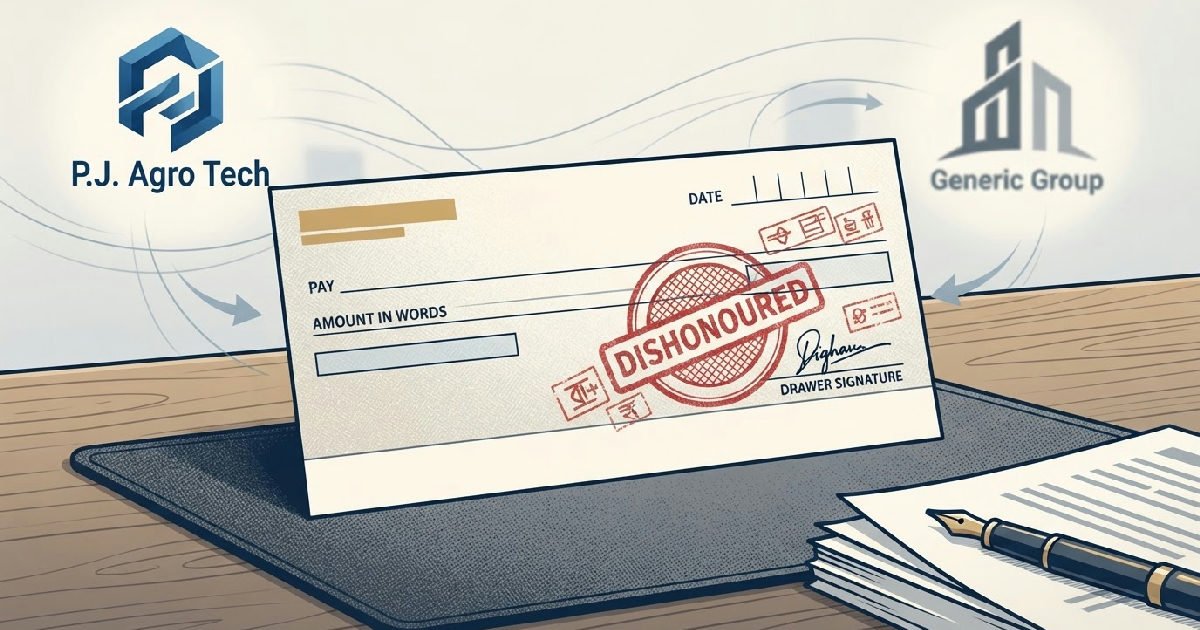
Cheque Issued by One Group Company and Presented Against Another – Does 138 Lie in Delhi?
The intricate world of corporate finance often sees funds moving between associated entities. This common practice, however, can lead to complex legal battles when a bounced cheque issued by one group company for another’s supply is dishonoured. Payees frequently seek to prosecute both the issuing company and the beneficiary company, navigating the nuances of Section 138 of the Negotiable Instruments Act, 1881.
Understanding cheque bounce liability in such scenarios is critical for both businesses and creditors. The core legal principle under Section 138 primarily targets the drawer of the cheque. But the question remains: when can another group entity, or even its directors, be held accountable?
Cheque Issued by One Group Company and Presented Against Another: Understanding Section 138
Section 138 of the Negotiable Instruments Act, 1881 (NI Act), serves as a cornerstone for financial discipline in India. It criminalises the dishonour of cheques, providing a potent legal remedy for payees. This legislation aims to fortify trust in cheque-based transactions, safeguarding the interests of those owed legitimate dues. The provision ensures that financial commitments made via cheques carry serious legal weight.
By making cheque dishonour a criminal offense, rather than merely a civil breach, the NI Act imposes a greater deterrent. This legislative intent is to bolster the reliability of cheques as a primary mode of payment in commercial transactions. It encourages responsible financial conduct and ensures that promises made through cheques are honored, fostering a more stable economic environment.
The legal framework surrounding Section 138 is designed to offer quick and effective recourse to creditors whose cheques are dishonoured. This mechanism avoids the protracted civil litigation that often characterizes debt recovery, providing a streamlined path for justice. Consequently, businesses and individuals can engage in cheque-based dealings with enhanced confidence, knowing that legal protection is readily available.
Core provisions and applicability
For an offense under Section 138 to be established, specific conditions must be meticulously met. First, the cheque must originate from an account maintained by the drawer, issued for a legally enforceable debt or liability. Upon dishonour due to insufficient funds or exceeding arranged limits, the payee must issue a written demand notice.
This notice must be dispatched to the drawer within 30 days of receiving the bank’s intimation of dishonour. Crucially, the drawer then has 15 days from receiving this notice to make the payment. Failure to comply within this stipulated period constitutes the offense, triggering potential legal proceedings.
The cheque must also be presented within three months of its issue date or its validity period, whichever is earlier.
Punishments and legal presumptions
A conviction under Section 138 carries significant penalties. Guilty parties may face imprisonment for up to two years, a fine up to twice the cheque amount, or both. These stringent measures underscore the seriousness with which Indian law views cheque dishonour.
Furthermore, Section 139 of the NI Act introduces a crucial legal presumption. It presumes that the cheque holder received the instrument for the discharge of a legally enforceable debt or liability. This shifts the burden of proof, requiring the drawer to demonstrate otherwise, making prosecution a more straightforward path for creditors.
Navigating Inter-Company Cheque Bounce Liability
The complexity amplifies considerably when transactions involve multiple entities within a corporate group. The core principle of cheque bounce liability hinges on identifying the actual drawer and their legal obligation. This becomes a critical point of contention in inter-company disputes.
Corporate groups often operate with a degree of financial fluidity, where funds or services might be exchanged between subsidiaries or parent companies without strict, arm’s-length contractual agreements. This interconnectedness, while efficient for internal operations, can blur the lines of individual financial responsibility, making it challenging to precisely assign liability when a cheque representing such an internal transaction bounces.
Pinpointing the precise entity legally obligated for the underlying debt, and thereby liable as the drawer, becomes paramount. Creditors must meticulously trace the flow of funds and contractual relationships to establish a clear chain of liability. Ambiguity in these inter-company arrangements can significantly complicate the successful prosecution of a Section 138 case, often requiring deeper legal scrutiny into corporate structures and agreements.
Drawer’s primary role and legal obligations
Section 138 unequivocally pinpoints the drawer of the cheque as primarily liable. This means the company whose bank account the cheque was drawn upon bears the initial responsibility. The legal proceedings under this section are fundamentally tied to the specific entity that issued the dishonoured instrument.
Identifying this drawer correctly is the first step in any prosecution. The payee must target the exact company named on the cheque to establish a prima facie case. Any deviation can undermine the entire legal action, as courts strictly interpret the provisions related to the drawer.
When one company pays another’s liability
A frequent scenario involves Company A issuing a cheque to cover a supply made to Company B. If this cheque bounces, the maintainability of Section 138 proceedings against Company A depends on its own legally enforceable obligation. If Company A had no direct legal duty to settle Company B’s debt, proceedings against it might fail.
The existence of a formal agreement or understanding for Company A to assume such a liability is crucial. Without such an arrangement, simply being a part of the same group does not automatically transfer the legal obligation. This distinction is vital for defending against or pursuing such claims.
Comparative Cheque Bounce Liability Scenarios
| Entity Type | Direct Liability (Section 138) | Vicarious Liability (Section 141) | Key Condition for Liability |
|---|---|---|---|
| Drawer Company | Yes (as cheque issuer) | N/A (primary entity) | Cheque dishonoured, valid notice served, legally enforceable debt |
| Group/Beneficiary Company (non-drawer) | No (typically) | N/A (Section 141 applies to individuals) | Cheque not drawn on its account; liability not based on alleged benefit. |
| Directors/Officers | No (personally as drawer) | Yes (if “in charge” and responsible for conduct) | Proof of active role, knowledge, or consent in the offense |
| Partnership Firm | Yes (as drawer) | Partners can be vicariously liable | Firm is the drawer, partners were responsible for business conduct |
Supreme Court’s stance on drawer liability
The Supreme Court of India has provided clarity on this intricate issue. In P.J. Agro Tech Ltd. v. Water Base Ltd., the Court emphasised that Section 138 applies specifically to the cheque drawn on the drawer’s account. It definitively stated that a company cannot incur criminal liability merely because an alleged liability exists if its account was not used to draw the cheque.
However, if Company A issues a cheque for Company B’s liability and both share common directors, courts might view the transaction as part of a collective business arrangement. This could strengthen the case for maintaining Section 138 proceedings against Company A, provided a clear understanding of liability transfer exists. The court looks for genuine intent and responsibility.
Vicarious Liability: Directors and Company Accountability
When an offense under Section 138 is committed by a company, the legal framework extends liability beyond the corporate entity itself. Section 141 of the NI Act addresses vicarious liability, encompassing individuals responsible for the company’s operations. This provision aims to prevent corporate structures from being used to evade accountability for financial misconduct.
This extension of liability is crucial because a company, as an artificial legal person, acts through its human agents. Without provisions like Section 141, individuals who manage and direct the company’s affairs could potentially escape culpability for offenses committed under their watch. It ensures that those in positions of power and decision-making within the company are held responsible for its financial integrity.
Section 141 specifically targets individuals who, at the time the offense was committed, were “in charge of, and was responsible to, the company for the conduct of the business of the company.” This often includes directors, managers, and other key officers who have direct control over financial decisions and operations.
The onus is on the prosecution to prove their active role or consent in the commission of the offense.
Section 141 provisions and director accountability
To successfully invoke Section 141, the complaint must contain specific averments against the accused, as mere bald allegations are insufficient. Guilt cannot be solely based on an individual’s position as a director. Non-executive or independent directors, particularly those not involved in the day-to-day affairs, are generally exempted from liability under Section 138.
The Delhi High Court has affirmed that criminal proceedings aren’t maintainable against non-executive directors without daily operational involvement. Still, dropping a cheque signatory doesn’t automatically clear the company or other directors. The company remains the principal offender, and other directors can face liability under Section 141 if they were “in charge of and responsible for the company’s business.”
Moreover, the Supreme Court has clarified that a complaint against a director or authorized signatory isn’t maintainable if the company itself isn’t made a party. The company, as a “juristic person,” is the primary offender when the cheque is drawn on its account. These legal nuances are crucial for understanding director responsibility.
Jurisdiction and Procedural Nuances in Delhi
Navigating the legal landscape for cheque bounce cases requires a clear understanding of jurisdictional rules. The 2015 amendment to the NI Act significantly streamlined this process, particularly concerning territorial jurisdiction. This change aimed to reduce confusion and ensure more efficient case management within the Indian legal system.
For those pursuing such cases in the National Capital Territory, specific courts are designated to handle these matters. The procedures in Delhi are tailored to address the high volume of commercial disputes, balancing the need for quick resolution with thorough judicial review. Awareness of these procedural details is essential for both complainants and defendants.
Territorial jurisdiction for cheque bounce cases
For cheque bounce cases under Section 138, territorial jurisdiction rests exclusively with the court where the payee’s bank account is located. This is also the place where the cheque was presented for collection. Section 142(2) of the NI Act, added in 2015, cemented this crucial clarification.
Various District Courts in Delhi, including Saket Courts, Tis Hazari Courts, Patiala House Courts, Karkardooma Courts, Dwarka Courts, and Rohini Courts, handle these matters. This specific rule helps avoid forum shopping and ensures cases are heard in a convenient location for the payee. It simplifies the initial filing process for cheque bounce complaints.
Consolidation and dissolved entities
Under Delhi legal practice, each dishonoured cheque technically constitutes a separate offense. However, if multiple cheques originate from a single transaction or agreement, a complainant may file a consolidated complaint. Alternatively, they can request the court to club trials for efficiency, especially when parties and evidence overlap.
The Delhi High Court has also addressed proceedings against dissolved companies. It ruled that criminal proceedings under Section 138 cannot be maintained against a dissolved or struck-off company. Such entities lose their juristic personality, meaning any cheque issued by them cannot be treated as a legally enforceable instrument, thereby precluding prosecution.
Practical Advice for Payees and Corporate Groups
For payees seeking to recover dues, clarity on who to prosecute is paramount. Focusing legal efforts on the correct entities from the outset can save significant time and resources. Understanding the nuances of inter-company transactions and individual responsibilities is key to a successful claim.
Similarly, corporate groups must be proactive in structuring their internal financial arrangements to mitigate risks. Clear documentation of liabilities and agreements between associated companies can prevent future legal complications. Awareness among directors regarding their potential personal liabilities under the NI Act is also crucial for compliance and risk management.
Strategic considerations for affected parties
If you’re the payee, sue or prosecute the company whose name and account appear on the cheque. You must clearly plead why any other company or individuals are liable, providing specific averments about their role and responsibility. Ensure the legal notice under Section 138 is meticulously drafted, precisely identifying the drawer and all relevant parties.
For a corporate group facing such a complaint, the reply should unequivocally state which company issued the cheque and which received the goods. If one company issues a cheque for another’s liability, ensure a legally enforceable obligation or agreement exists for the drawer company to pay.
Directors, while non-executive roles may offer some protection, should be aware that specific involvement in business operations can lead to liability under Section 141.
Cheque Bounce Legal Representation in Delhi
The complexities of cheque bounce cases, particularly those involving corporate groups, often necessitate expert legal guidance. Lawyers specializing in Section 138 matters in Delhi provide comprehensive support, from initial legal notices to court representation. Their expertise ensures that all procedural requirements are met and that clients’ rights are vigorously protected.
Engaging an experienced advocate can significantly influence the outcome of these disputes. They can help navigate the intricacies of the Negotiable Instruments Act, identify potential pitfalls, and strategise for either prosecution or defense. This specialized knowledge is invaluable in achieving timely and favorable resolutions, often through settlement negotiations.
Role of cheque bounce lawyers
Lawyers in Delhi specializing in Section 138 cases handle various aspects, including drafting legal notices and filing complaints in District Courts. They represent clients in anticipatory matters, defend the accused, negotiate settlements, and work towards recovering outstanding payments. Their role is comprehensive, covering all stages of the legal process.
Crucially, these legal professionals meticulously match the cheque to the corresponding invoice before drafting the complaint, ensuring factual accuracy. While the average duration for cheque bounce cases in Delhi typically ranges from 12 to 24 months, many disputes are resolved earlier through effective settlement negotiations.
Court fees are nominal, usually ₹10 to ₹25 per complaint, though advocate fees can range from ₹10,000 to ₹50,000, with additional appearance charges.
Can a non-issuing company face Section 138 liability?
Generally, Section 138 primarily targets the drawer of the cheque. A company that merely benefits from a transaction but did not issue the cheque from its own account typically cannot be directly held liable under Section 138.
The Supreme Court has clarified that criminal liability under Section 138 is tied to the account on which the cheque was drawn, not merely to alleged liability or benefit.
While common directorships might influence the drawer company’s obligation to pay, Section 141, which deals with vicarious liability, applies to individuals in charge of the company, not other corporate entities.
How does Section 141 affect corporate cheque bounce cases?
Section 141 extends liability to individuals responsible for the company’s business operations when the company commits an offense under Section 138. This means directors, managers, or other officers who were in charge of and responsible for the company’s conduct at the time of the offense can also be prosecuted alongside the company.
Its purpose is to ensure accountability and prevent misuse of corporate structures to evade legal obligations.
What is the typical timeframe for legal action?
After a cheque is dishonoured, the payee must issue a written demand notice to the drawer within 30 days of receiving the bank’s intimation of dishonour. The drawer then has 15 days from receiving this notice to make the payment.
If payment is not made within this 15-day period, the payee can initiate legal proceedings under Section 138, which must be filed within one month from the date on which the cause of action arises (i.e., after the 15-day notice period expires).
Cheque is from one group company but the supply was to another? WhatsApp or call for consultation.
Related: https://arpitmarwah.com/cheque-bounce-lawyers-in-delhi/