
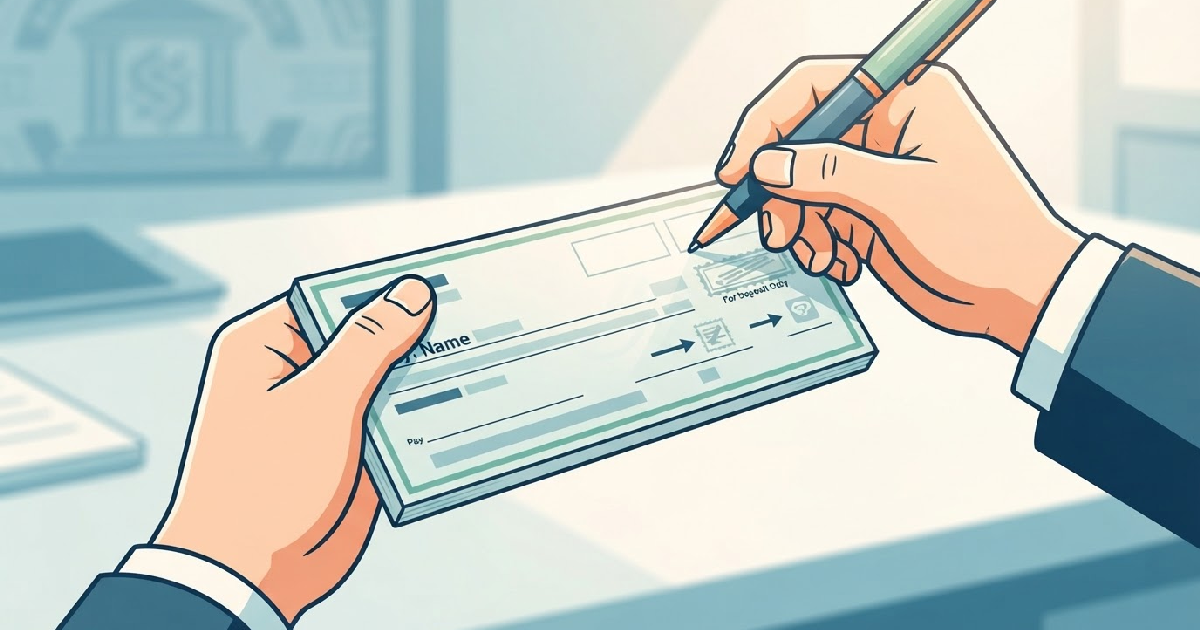
To endorse a cheque for deposit or cashing, the payee must sign the back of the document in the designated area. This signature authorizes the bank to process the cheque and transfer the funds to the intended recipient. The specific method of endorsement depends on how the payee intends for the cheque to be handled, offering varying levels of security and flexibility.
Understanding the proper method ensures your money is handled securely and efficiently. Incorrect endorsement can lead to delays, rejection by the bank, or even potential financial loss due to fraud.
Understanding the basics of cheque endorsement
An endorsement, also known as an indorsement, is your signature on the back of a cheque. It acts as a legal signal, granting permission for the cheque to be processed or cashed. This authentication verifies your identity as the payee and confirms the transaction’s legitimacy.
Proper endorsement helps ensure that funds reach the correct individual or entity. A cheque itself is a negotiable instrument, a promise to pay, making the endorsement a vital part of its legal transferability.
Key definitions in cheque transactions
A cheque serves as a mechanism to transfer money from the remitter, the person who originally wrote the cheque, to the payee. Unlike guaranteed forms of payment like money orders, cheques rely on the remitter having sufficient funds.
The payee is the person or entity to whom the cheque is written and who is entitled to receive the payment. The act of endorsing authenticates the cheque, helping ensure the money goes to the rightful party.
Mechanics of endorsing a cheque
The endorsement process primarily involves signing the back of the cheque, usually within a designated area, using permanent ink. Understanding the different types of endorsements is crucial for both security and compliance. Each method serves a distinct purpose in managing your funds.
Blank endorsement: least secure option
A blank endorsement requires only the payee’s signature on the back of the cheque. It is the simplest but also the least secure method available for processing funds. This makes the cheque payable to the bearer.
Once endorsed in this way, anyone in possession of the endorsed cheque can cash or deposit it. This means if a blank-endorsed cheque is lost or stolen, another person could potentially cash or deposit it without further authorization.
It’s recommended to use a blank endorsement only when you are immediately handing the cheque directly to a teller or depositing it at an ATM. This minimizes the risk of unauthorized use.
Restrictive endorsement: maximum security
A restrictive endorsement involves signing the cheque and adding specific instructions for its use. The most common phrase is “For Deposit Only,” often followed by your account number. This significantly limits how the cheque can be processed.
This method offers the highest level of security, as it limits how the cheque can be used and transferred. It ensures funds go directly into a specified account, preventing it from being cashed over the counter or transferred to another party.
Restrictive endorsements are ideal when mailing cheques or when someone else is depositing a cheque on your behalf. For mobile deposits, many banks require “For Mobile Deposit Only” written or a specific box checked.
Special endorsement: transferring ownership
A special endorsement, also known as a full endorsement, designates a new recipient for the cheque. The original payee writes “Pay to the order of [New Payee’s Name]” and then signs below it. This transfers the right to collect funds.
This type offers more security than a blank endorsement because it restricts the negotiation of the cheque to the named payee. Once specially endorsed, the cheque becomes payable to the identified person and can only be negotiated by their endorsement. You might use this method if writing a cheque for someone else.
However, banks may have policies against accepting third-party cheques or may require both the original payee and the new recipient to be present with identification. It’s often safer to deposit the cheque yourself and then transfer the funds.
Qualified endorsement: limiting liability
A qualified endorsement includes a phrase like “without recourse” alongside the endorser’s signature. This is primarily used to limit the endorser’s liability if the cheque is not honored. It protects the endorser from certain liabilities.
This specific endorsement type means the endorser is not responsible if the cheque is later dishonored. However, it is less common for personal cheques and may not be accepted by all banks, as it disclaims the endorser’s guarantee of payment.
Navigating specific endorsement scenarios
Cheque endorsements can become more complex depending on how the cheque is written or to whom it is issued. Knowing how to handle these specific situations can prevent common banking headaches.
Properly addressing these nuances is essential for smooth financial transactions. It helps avoid misunderstandings and ensures compliance with banking regulations, protecting your funds.
Cheques made out to multiple payees
If a cheque is made out to “John AND Jane Doe” or “John & Jane Doe,” both individuals must endorse the cheque. Some banks may require both payees to be present with government-issued ID to verify signatures.
However, if the cheque reads “John OR Jane Doe,” only one of the named individuals needs to endorse it. This individual can then deposit or cash the cheque independently. If the wording is ambiguous, banks may treat it as “or,” meaning only one signature is needed, but it’s always best to check with the bank.
Endorsing cheques for a business
When a cheque is made out to a business, an authorized representative must endorse it. This involves signing the business name exactly as it appears on the “Pay to” line, followed by the representative’s signature and their title, such as “Owner” or “Accountant.”
Many businesses opt to use endorsement stamps for consistency and clarity in this process. Adding the business account number alongside the endorsement is also a recommended best practice to streamline the deposit.
Handling a misspelled name on a cheque
If your name is misspelled on a cheque, you should endorse it first with the incorrect spelling exactly as it appears on the front. Immediately below that, sign again with your correct, legal signature. This two-step process clarifies your identity to the bank.
Banks generally accept minor misspellings if they don’t raise suspicion of fraud. For significant discrepancies, however, it’s advisable to request a new cheque from the payer. Knowing how to write a cheque correctly can often prevent these minor errors.
“For the benefit of” (FBO) endorsements
An FBO endorsement is used when a cheque is payable to one party for the benefit of another. An example is “Assisted Living Facility FBO Jane Smith.” The first party listed, who acts as the custodian of funds, typically endorses the cheque.
Requirements for FBO cheques can vary significantly among banks. Some financial institutions may require both the custodian and the beneficiary to endorse the cheque. It’s always prudent to check with your bank regarding their specific policies for these complex endorsements.
Essential best practices for secure endorsement
Proper cheque endorsement goes beyond merely signing your name. Adhering to certain best practices can significantly enhance the security of your funds and prevent potential issues.
These guidelines are crucial in protecting against financial loss and helping to deter fraudulent activities. Following them ensures your transactions proceed smoothly and securely.
Wait to endorse for security
Never endorse a cheque until you are physically ready to deposit or cash it. An unendorsed cheque is safer if lost, as it cannot be processed by an unauthorized individual. A blank-endorsed cheque, conversely, is equivalent to cash if it falls into the wrong hands.
This simple habit dramatically reduces the risk of theft or fraudulent cashing. It’s a fundamental security measure in personal finance and helps prevent misuse.
Use permanent ink and designated area
Always use blue or black permanent ink when endorsing a cheque. This ensures the signature is clear, cannot be easily altered, and will not fade over time. Using pencil or erasable ink can lead to rejection or potential tampering.
Sign within the designated endorsement area, typically a 1.5-inch space on the back of the cheque. Avoid writing below the line that often states, “Do not write, stamp or sign below this line,” as this area is reserved for bank processing. Writing a cheque to yourself also follows these guidelines.
Mobile deposit specifics
When using mobile deposit, many banks require “For Mobile Deposit Only” written below your signature. Alternatively, a specific box printed on the cheque may need to be checked. Failing to follow these instructions can cause the deposit to be rejected.
Confirm your bank’s exact mobile deposit requirements before endorsing. This ensures a seamless transaction and helps protect your funds during the digital transfer process.
Unsigned cheques and third-party issues
Banks will invariably reject unsigned cheques because they cannot verify the payee or legally complete the transaction. The signature is the authorization required to release the funds.
While possible to endorse a cheque to a third party with a special endorsement, many banks have strict policies. They might require the original payee and the new recipient to be present with identification. It’s often more straightforward to deposit the cheque yourself and then transfer the funds electronically.
Comparison of cheque endorsement types
Choosing the right endorsement method is crucial for managing your financial transactions securely. Each type offers distinct features regarding flexibility and protection. Reviewing these differences helps ensure you select the appropriate option for your needs.
| Endorsement Type | Mechanism | Security Level | Common Use Case |
|---|---|---|---|
| Blank Endorsement | Signature only | Lowest (payable to bearer) | Immediate deposit with teller/ATM, immediate cashing |
| Restrictive Endorsement | Signature + “For Deposit Only” | Highest (limits use to specific account) | Mailing cheques, mobile deposits, third-party deposits |
| Special Endorsement | “Pay to the order of [New Payee]” + signature | Medium (negotiable to named new payee) | Signing over a cheque (with bank acceptance) |
| Qualified Endorsement | Signature + “without recourse” | Protects endorser from liability | Rare for personal cheques, limits endorser responsibility |
What happens if I lose a blank-endorsed cheque?
If you lose a cheque that you’ve blank-endorsed, it becomes highly vulnerable. Since a blank endorsement makes the cheque payable to anyone holding it, a finder could potentially cash or deposit it as if they were the rightful payee. Always use a restrictive endorsement or wait until you are at the bank before signing.
Can I endorse a cheque for someone else to deposit?
Yes, you can, but it involves a special endorsement. You would write “Pay to the order of [New Payee’s Name]” above your signature on the back of the cheque. However, banks may have specific policies regarding these third-party cheques, sometimes requiring both parties to be present or preferring you deposit it yourself and then transfer the funds.
Why do banks require “For Mobile Deposit Only” on cheques?
Many banks mandate phrases like “For Mobile Deposit Only” for cheques submitted via mobile apps. This requirement, or checking a designated box, helps ensure secure processing of your funds. It acts as a security measure to prevent unauthorized usage or issues with the deposit.