
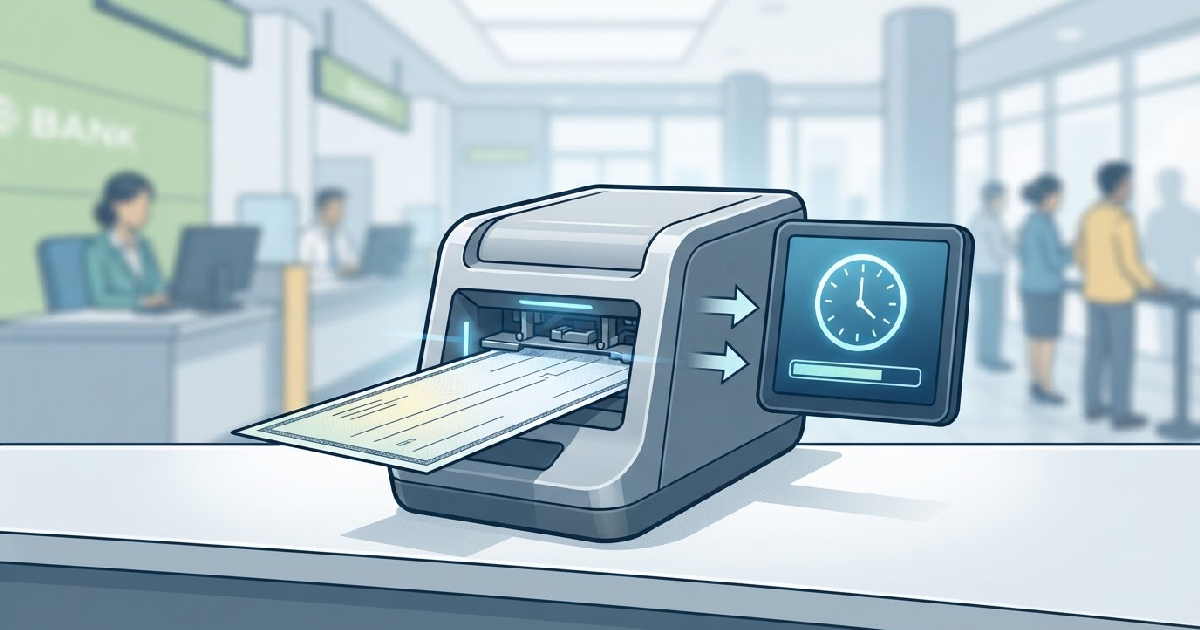
Cheque clearance time, the duration required for funds from a deposited cheque to move from a payer’s bank to a payee’s, is a critical component of financial transactions globally. This process, also known as check clearing, typically takes one to five business days for funds to become officially available for withdrawal.
Understanding these timelines is essential for both individuals and businesses navigating the modern banking system.
The evolving mechanics of cheque clearance
The mechanics of how cheques are cleared have evolved significantly with technology, transitioning from physical paper handling to rapid digital image processing. This shift has profound implications for financial planning and risk management, especially concerning potential legal disputes.
The cheque clearing cycle ensures funds are securely transferred and cheques are legitimate. It begins when a payee deposits a cheque into their presenting bank, which then verifies the document’s details.
Instead of physical movement, the bank captures a digital image of the cheque, alongside data like the MICR line. This electronic information is transmitted to a central clearing house in a process known as cheque truncation or image clearing. This digitization drastically reduces both processing time and operational costs.
The clearing house routes this digital data to the paying bank. Here, the cheque’s validity is re-verified, sufficient funds in the drawer’s account are confirmed, and the signature and issue date are checked. Once all is in order, the paying bank debits the drawer’s account, and the funds are credited to the payee’s account.
If problems arise, such as insufficient funds, the cheque may be returned unpaid, commonly referred to as “bounced.” Even after settlement, banks often implement a hold period before funds are fully available. This practice allows financial institutions to verify the cheque’s legitimacy and ensure funds are truly secured.
Varied timelines across international financial systems
Cheque clearance times aren’t uniform; they differ markedly between countries due to varying regulatory frameworks and technological advancements. These national systems reflect diverse approaches to balancing speed with security.
United States: Federal regulations and hold periods
In the United States, most cheques clear within two business days. Federal law, specifically the Expedited Funds Availability Act, mandates that banks make the first $225 of a cheque deposit accessible by the next business day.
This initial amount will increase to $275 in July 2025. The remaining balance typically becomes available within two business days. However, banks can place holds for up to seven business days for certain cheque types or large amounts, reflecting a risk-based approach.
Government, cashier’s, and certified cheques often clear faster, sometimes within one business day, due to their higher reliability. New accounts, those within their first 30 days, may also be subject to different hold policies as banks assess customer history.
United Kingdom: Rapid image clearing revolutionises access
The United Kingdom saw a significant acceleration in cheque clearance with the introduction of its Image Clearing System (ICS). Fully implemented by 2019, the ICS transformed the process from a paper-based system to a digital one.
Under ICS, cheques deposited on a weekday before the bank’s cut-off time typically ensure funds are available by 23:59 on the next weekday. This change dramatically reduced clearance times from the previous four to six working days for traditional paper processing.
If a cheque is paid into a Post Office, the clearance time may extend by at least one additional day. Some banks might offer earlier access to funds, but standard practice adheres to the ICS framework.
India: Streamlining with cheque truncation system
India has also embraced digitization to enhance its cheque clearing efficiency. The Reserve Bank of India (RBI) introduced the Cheque Truncation System (CTS) to streamline processing and reduce fraud.
Under this system, the National Payments Corporation of India (NPCI) acts as the central clearing house. It routes cheque image information electronically to paying banks for verification and authorization, improving the overall speed and reliability of transactions.
Legal implications and dispute resolution
Understanding the nuances of cheque clearance times extends beyond mere financial convenience; it has direct implications for legal clarity in financial dealings. The duration for which funds are held directly influences when a transaction is officially settled.
Banks apply hold periods even after a cheque has technically “cleared” to prevent premature withdrawal of funds. This safeguard ensures that the paying bank has irrevocably settled the transaction. It protects both the bank and the payee from potential losses if the cheque were later found to be invalid or unsupported by sufficient funds.
When a cheque is unpaid due to insufficient funds, the banking system outlines a clear process. If a cheque is unpaid, both a credit and debit transaction will appear on the account by 23:59 on the weekday after deposit. A formal letter will also be sent explaining the reason for the unpaid status.
This process provides transparency regarding the cheque’s status. Cheque dishonour cases often examine the formal notifications and processes involved.
The shift towards faster clearing systems means the legal status of a payment can be determined more quickly. This expedited process can potentially accelerate any necessary dispute resolution. Understanding bad cheque laws explained can help mitigate financial and legal risks.
| Region | Typical Clearance Time | Key System/Regulation | Notes on Funds Availability |
|---|---|---|---|
| United States | 2 business days (most cheques) | Expedited Funds Availability Act | First $225 (rising to $275 in July 2025) available next day; some holds up to 7 days; government/cashier’s cheques faster. |
| United Kingdom | Next weekday (by 23:59) | Image Clearing System (ICS) | Significantly faster than previous 4-6 working days; Post Office deposits may add a day. |
| India | Improved efficiency | Cheque Truncation System (CTS) | Introduced by RBI; NPCI routes image data for verification and authorization. |
Global efforts driving payment evolution
Financial institutions and regulatory bodies worldwide are continuously innovating to improve payment systems, focusing on efficiency, security, and fraud reduction. These concerted efforts shape the future of transactions.
In the United States, The Clearing House (TCH) stands as a pivotal banking association. Owned by major commercial banks, TCH operates core payment infrastructure, including check image clearing. It processes nearly $2 trillion in U.S. dollar payments daily, underscoring its central role in the American financial landscape.
The Federal Reserve (FedACH) also serves as a primary clearing house in the U.S. Together with TCH, it ensures the smooth and stable flow of countless transactions, supporting the liquidity of the financial sector. Clarity on cheque dishonour liability remains a key aspect of these financial operations.
Across the Atlantic, Pay.UK, the New Payments Systems Operator, oversees the United Kingdom’s payment systems. Since 2018, Pay.UK has managed both paper and image clearing systems, succeeding the Cheque and Credit Clearing Company (C&CCC).
Pay.UK’s mandate includes ensuring the UK’s payment infrastructure remains safe, open, innovative, and resilient. Its work directly influences how quickly and securely consumers and businesses access their funds. This global push towards modernization highlights the importance of robust payment systems.
Why do banks hold funds even after a cheque clears?
Banks often place a hold on funds even after a cheque has technically cleared the paying bank. This is a risk management measure to ensure the funds are truly settled and available, preventing potential losses if the cheque were to bounce after initial credit.
What happens if a cheque is returned unpaid?
If a cheque is returned unpaid, typically due to insufficient funds, the banking process dictates specific steps. Both a credit and debit transaction will appear on the account by 23:59 on the weekday after deposit, and a letter will be sent explaining the reason for the unpaid status.
Are all types of cheques cleared at the same speed?
No, clearance speeds can vary significantly by cheque type. For instance, government cheques, cashier’s cheques, and certified cheques generally clear faster, sometimes within one business day. This is because the issuing bank guarantees their payment, whereas personal cheques may take longer for verification.