
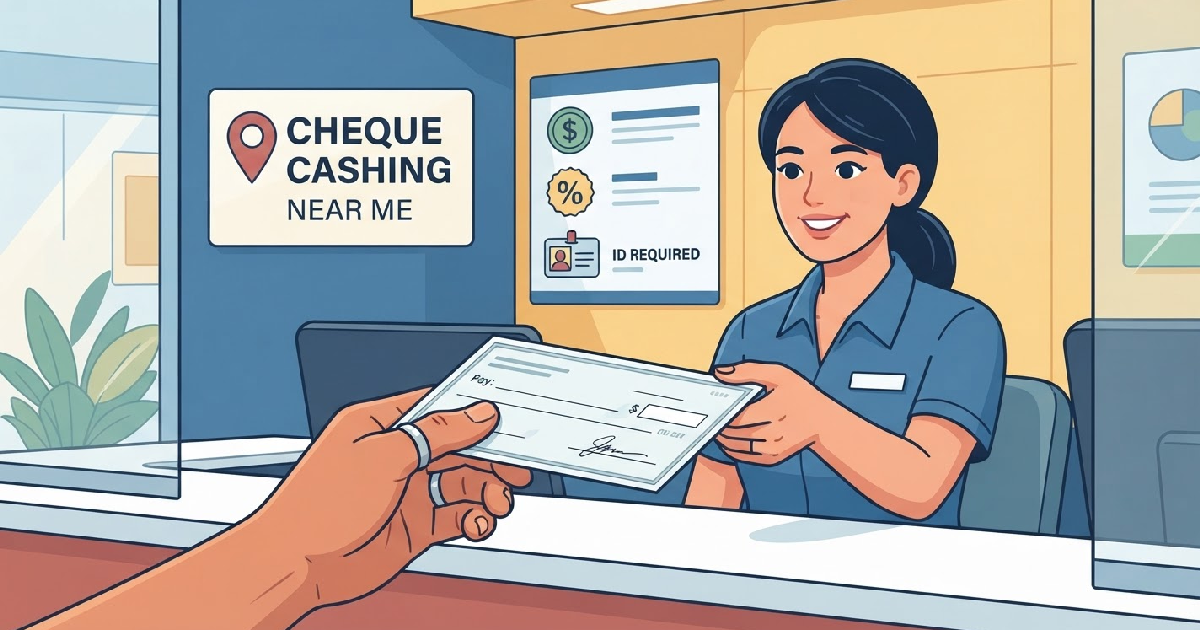
Cheque cashing near you allows individuals to convert a paper cheque into immediate cash, often without needing a traditional bank account. This financial service provides quick access to funds for those who are unbanked or underbanked, and also offers convenience for anyone seeking instant liquidity outside standard bank processing times.
As of 2026, understanding where to find reliable cheque cashing near me, along with the associated fees and necessary documentation, is crucial for efficient financial management. This guide explores the process, regulatory landscape, and practical options available to consumers.
Understanding Cheque Cashing Services and Processes
The core function of cheque cashing is to provide immediate cash in exchange for a paper cheque. It bypasses the waiting periods often associated with bank deposits, which can sometimes involve holds on funds.
The process generally begins when an individual presents a cheque and a valid government-issued photo identification at a service location. Staff then verify the cheque’s authenticity, check the issuer’s signature, and confirm that sufficient funds are available.
The standard cheque cashing process
Once verified, the customer typically endorses the back of the cheque. The service provider then deducts any applicable fees directly from the cheque’s value.
Finally, the remaining cash equivalent is disbursed on the spot, usually within minutes. This rapid transaction is a primary driver for many individuals opting for these services.
Types of cheques accepted and their validity
Cheque cashing services accept a wide range of cheque types, although acceptance can vary by provider. Payroll checks, government checks (like tax refunds or Social Security benefits), and cashier’s checks are commonly accepted.
Personal checks and business checks are also typically accepted, but they might require additional verification and could take longer to process due to fund confirmation. Money orders and insurance settlement checks are also viable for cashing.
Most cheques are valid for six months (180 days) after being signed; however, U.S. Treasury checks remain valid for one year. Money orders, while not expiring, may incur fees if not cashed within one to three years.
Navigating the Regulatory Framework and Compliance
The cheque cashing industry operates under a significant regulatory umbrella, particularly concerning anti-money laundering (AML) efforts and consumer protection. Understanding these regulations is key to appreciating the requirements service providers impose.
Money Services Businesses (MSBs), which include most dedicated cheque cashers, are regulated by the Financial Crimes Enforcement Network (FinCEN) of the U.S. Department of the Treasury. This oversight applies specifically if they cash cheques exceeding $1,000 per day per customer.
Compliance with FinCEN and BSA requirements
MSBs must register with the Department of the Treasury and adhere to Bank Secrecy Act (BSA) requirements. These obligations include implementing robust AML programs, maintaining detailed records, and filing specific reports for certain transactions.
These stringent requirements help prevent illicit financial activities, safeguarding the financial system from fraud and money laundering. State-specific licensing and regulations also apply, adding another layer of oversight.
Identification protocols and transaction limits
A critical component of compliance and fraud prevention is the strict requirement for valid identification. Service providers must verify a customer’s identity against government-issued photo ID, such as a driver’s license or passport.
Beyond identification, transaction limits play a vital role. Federal rules mandate financial institutions to file a Currency Transaction Report (CTR) for any cash transaction exceeding $10,000 in a single business day. Some states, like Arizona, Oklahoma, and Louisiana, and providers like Order Express, impose lower thresholds for identification and record-keeping, sometimes as low as $900 or $3,000.
Where to Find Cheque Cashing Near You
Locating a convenient and reliable cheque cashing service involves understanding the different types of providers available. Each option presents its own balance of accessibility, fees, and operational hours.
The issuing bank, whose name appears on the cheque, is often the cheapest option, sometimes even for non-customers. They typically require a valid government-issued photo ID and may charge a nominal fee, usually between $5 and $8.
Retailers and grocery store options
Many large retailers and grocery chains offer cheque cashing services at their customer service desks or dedicated money centers. These locations often provide a convenient option with extended hours compared to traditional banks.
Retailers like Walmart charge a maximum of $4 for cheques up to $1,000 and $8 for cheques exceeding $1,000, up to $7,500. Kroger also offers these services, with fees typically starting around $3 to $4.50, making them a more affordable alternative for many consumers.
Dedicated cheque cashing stores and mobile solutions
Businesses specializing in cheque cashing, such as ACE Cash Express or Check Into Cash, offer quick access to funds and often have very flexible operating hours. However, these specialized centers generally levy higher fees, ranging from 1% to 10% of the cheque’s value, reflecting the immediate service and convenience they provide.
Modern solutions also include prepaid debit cards and mobile apps like PayPal, Cash App, or Ingo Money. These platforms allow users to deposit cheques by photographing them, with instant access to funds often incurring a fee of 1% to 5% of the amount. Standard processing through these apps might be free but takes several business days, offering a secure mobile cheque deposit option.
| Service Provider Type | Typical Fee Structure | Example Fee/Range | Identification Required |
|---|---|---|---|
| Issuing Bank (Non-Customer) | Flat Fee | $5 – $8 | Government-issued photo ID |
| Large Retailers (e.g., Walmart, Kroger) | Flat Fee | $3 – $8 | Government-issued photo ID |
| Dedicated Cheque Cashing Stores | Percentage of Cheque Value | 1% – 10% | Government-issued photo ID |
| Mobile Apps (Instant Access) | Percentage of Cheque Value | 1% – 5% | Verified account, potentially ID for larger amounts |
Essential Considerations Before Cashing
Before opting for a cheque cashing service, it’s important to consider several key factors that influence the transaction. These considerations can help ensure a smooth process and avoid unexpected issues.
Firstly, identification is paramount; a valid government-issued photo ID is almost universally required. Some locations might also request a secondary form of identification or proof of address to complete the transaction.
Understanding fees and potential limits
Fees represent a significant variable in cheque cashing. While banks might charge a flat fee, dedicated cheque cashing stores often take a percentage of the cheque’s value, which can quickly add up for larger amounts. Always inquire about the total cost before proceeding to ensure transparency.
Additionally, services may impose limits on the maximum amount they will cash. Federal regulations require reporting cash transactions over $10,000, but many states and individual providers have lower internal limits. For cheque endorsement best practices, always ensure you understand the implications before signing.
The absence of FDIC insurance for non-bank services
A crucial distinction for consumers is the lack of Federal Deposit Insurance Corporation (FDIC) insurance for funds cashed at non-bank providers. Unlike money held in traditional bank accounts, cash received from these services is not protected by federal insurance.
This means if a cheque is later found to be fraudulent or uncashable, and the funds have already been disbursed, the consumer could be held liable. When safely depositing and cashing funds, it’s always important to know who is responsible for the funds in case of a dispute.
Debunking Common Cheque Cashing Myths
Several misconceptions surround cheque cashing services, often leading to misunderstandings about their accessibility and costs. Clarifying these can help individuals make more informed decisions.
One common myth is that cheque cashing is exclusively for individuals without bank accounts. While these services indeed cater significantly to the unbanked and underbanked, many banked individuals use them for immediate cash access or convenience outside of regular banking hours, preferring not to wait for bank holds.
Fee structures and universal acceptance
Another misconception suggests that all cheque cashing services charge uniform fees. In reality, fees vary dramatically based on the service provider and the type of cheque. Cashing a cheque at the issuing bank is often the least expensive, followed by major retailers, while dedicated cheque cashing stores typically have the highest percentage-based fees.
Finally, there’s a belief that you can cash any cheque anywhere. This isn’t true, as acceptance depends on the cheque type (personal cheques can be more challenging at some retailers), the amount, and the provider’s specific policies. Proper identification is almost always a non-negotiable requirement across all services.
What identification do I need to cash a cheque?
You will almost always need a valid government-issued photo ID, such as a driver’s license, state ID card, military ID, or passport. Some locations might also ask for a secondary form of identification or proof of address.
Are cheque cashing fees regulated?
Yes, cheque cashing services, especially dedicated stores, are regulated as Money Services Businesses (MSBs) by FinCEN and often by state-specific laws. While federal regulations focus on anti-money laundering, many states have fee caps or transparency requirements.
Can I cash a personal cheque at any location?
Not necessarily. While many places accept personal cheques, they often require more stringent verification due to the higher risk of insufficient funds. Some retailers or dedicated services may decline personal cheques entirely or impose lower cashing limits.