
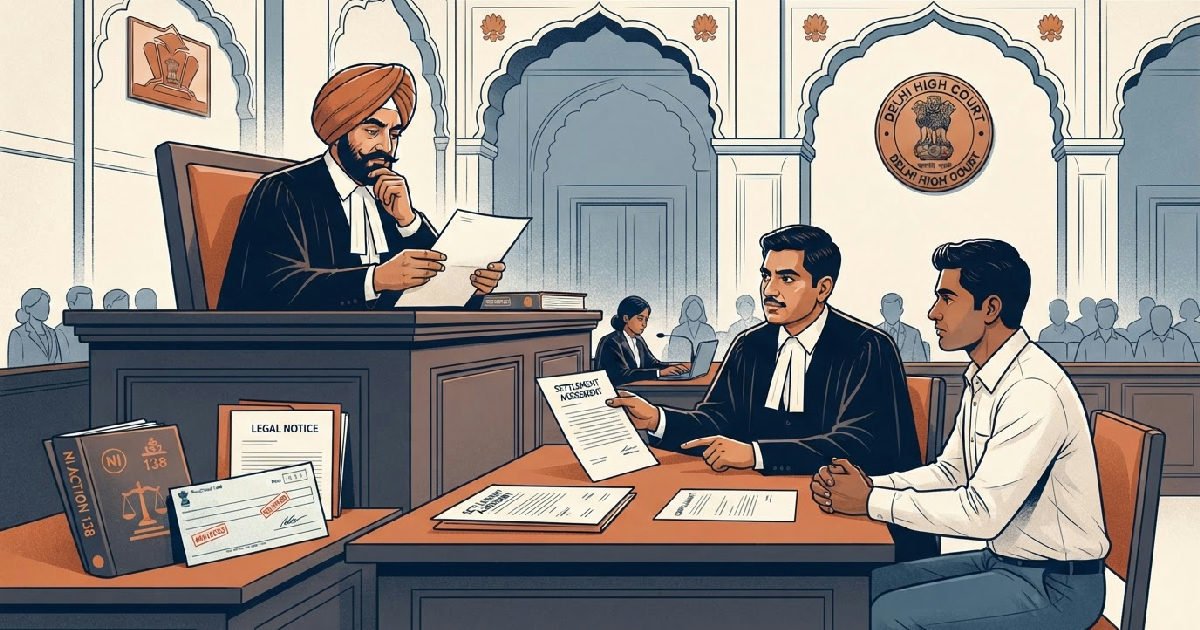
Dealing with a bounced cheque case in Delhi takes a complex turn when an agreed-upon settlement, reached through compounding, falls apart due to a defaulter ceasing payments. Many complainants find themselves in a precarious position, unable to simply revive the original criminal proceedings.
The crucial distinction in such scenarios hinges entirely on whether the settlement terms were formally recorded by the court. Without proper judicial oversight, what seems like a resolution can quickly devolve into further legal complications, often requiring fresh legal action.
The Mechanics of Bounced Cheque Settlements in Delhi
Cheque dishonour, governed by Section 138 of the Negotiable Instruments Act, 1881 (NI Act), stands as a unique criminal offense. This provision allows for an amicable resolution between parties through a process known as compounding, aiming to reduce litigation and resolve financial disputes peacefully.
Compounding a cheque bounce case means the complainant and the accused agree to settle the matter, with the court often overseeing and formalizing this agreement into a binding order. This process requires the court to verify that the compensation covers the cheque amount, interest, and any associated costs.
Ensuring Enforceability: Court-Recorded Agreements
If the compounding order or settlement terms were made part of the court record and included a specific default clause, this order gains significant legal weight. It can then be executed like a civil decree, providing a clear path for recovery if the accused later defaults on payments.
Conversely, if the settlement was merely an oral understanding or an out-of-court agreement not formally recorded by the judiciary, reopening the criminal case generally isn’t possible. This scenario often forces the complainant to pursue a fresh civil or commercial suit to enforce the terms of the settlement.
| Settlement Type | Court Record Status | Enforceability upon Breach | Typical Process for Recovery |
|---|---|---|---|
| Court-Recorded Settlement (with Default Clause) | Formally recorded by Court | High (Civil Decree Status) | Enforcement as civil decree; CrPC Sections 421, 431 apply |
| Oral/Out-of-Court Agreement | Not recorded by Court | Low (Contractual basis only, no criminal remedy) | Fresh civil or commercial suit to enforce settlement terms |
Legal Framework for Cheque Dishonour
The Negotiable Instruments Act, 1881, specifically Section 138, was enacted to foster confidence in commercial transactions involving cheques. It transforms what is essentially a financial disagreement into a criminal offense, providing a robust deterrent against the casual issuance of cheques without sufficient funds.
This legal framework aims to ensure that negotiable instruments remain reliable tools for business and personal payments. The law’s penal nature compels drawers to honour their commitments, while its compensatory aspect seeks to reimburse the payee for the loss incurred due to the dishonour.
Penalties and Pre-conditions for Action
A violation of Section 138 can lead to significant penalties, including imprisonment for up to two years, a fine that can be double the cheque amount, or both. These stringent measures underscore the seriousness with which Indian law treats cheque dishonour.
However, initiating a complaint under Section 138 requires strict adherence to several conditions. The cheque must represent a legally enforceable debt, and its dishonour must be due to reasons like insufficient funds. Crucially, a legal notice must be dispatched within 30 days of receiving the bank return memo.
Recourse When Cheque Bounce Case Compounded But Money Not Paid
For court-recorded settlements that include a default clause, the legal pathway for recovery is significantly streamlined. Upon breach, the court can initiate recovery proceedings under Section 421 read with Section 431 of the Code of Criminal Procedure (CrPC).
This allows the court to treat the defaulted settlement amount as a fine, providing a powerful interim tool for creditors to secure their dues. The Delhi High Court has affirmed the legality of referring compoundable cases under Section 138 of the NI Act to mediation, establishing clear procedures for settlement and recovery in cases of non-compliance.
Leveraging Interim Protections
The ability to execute a court-recorded settlement as a civil decree means the complainant can bypass the need for fresh litigation on the original cheque dishonour. Instead, they can directly enforce the court’s order for the settled amount, much like any other financial judgment.
Courts can also grant interim compensation of up to 20% of the cheque amount during the trial phase under Section 143A. Furthermore, courts can order a minimum deposit of up to 20% of the fine or compensation in appeals by the accused under Section 148, further safeguarding the complainant’s interests.
This framework ensures that even during protracted legal battles, there are mechanisms in place to provide partial relief and prevent the accused from unduly delaying payments. These provisions significantly strengthen the position of the complainant, offering more immediate financial protection.
Expert Perspectives from Delhi Legal Practitioners
Cheque bounce lawyers in Delhi consistently emphasize the paramount importance of formalizing settlement terms within the court record. Legal professionals, including those at Cheque Bounce Lawyer (led by Advocate BK Singh), The Law Firm India, Adlegal, and Advocate Mayank Sharma, stress this point to protect complainants.
Relying on informal communications, such as WhatsApp messages, for settlement agreements after a case has been closed is fraught with risk. Such informal pacts often lack the enforceability required when a defaulter decides to renege on their promises.
Critical Steps for Complainants
Expert advice points to several crucial steps to mitigate risks. Firstly, never delay the issuance of a legal notice after receiving a bank return memo; the 30-day window for this action is absolute and non-negotiable. This timely action preserves your legal standing.
Secondly, maintaining the original cheque and bank memo securely is non-negotiable, as these documents constitute primary evidence in any legal proceeding. Their absence can severely weaken a case. Finally, when considering filing a complaint, ensure all statutory conditions are met rigorously to avoid procedural dismissals.
What is a cheque bounce case under the NI Act?
A cheque bounce case, also known as cheque dishonour, occurs when a cheque presented for payment is returned unpaid by the bank due to insufficient funds in the drawer’s account or other reasons specified in Section 138 of the Negotiable Instruments Act, 1881. It is considered a criminal offense, though it primarily deals with a financial dispute.
Why is it crucial for a cheque bounce settlement to be recorded by the court?
Having a settlement formally recorded by the court provides legal enforceability. If the settlement includes a default clause and is endorsed by the court, it attains the status of a civil decree. This allows the aggrieved party to enforce the terms of the settlement, including recovery of the settled amount, through legal mechanisms without necessarily initiating new civil proceedings.
What recourse do I have if an unrecorded settlement for a bounced cheque is breached?
If a settlement was not formally recorded by the court, and the defaulter breaches its terms, the complainant typically cannot directly revive the original criminal proceedings. The path to recovery usually involves initiating fresh civil litigation to enforce the unrecorded agreement, which can be a more prolonged and arduous process compared to enforcing a court-recorded settlement.
Case was compounded and the agreed money has stopped? Call or Whatsapp for consultation.
Related: https://arpitmarwah.com/cheque-bounce-lawyers-in-delhi/