
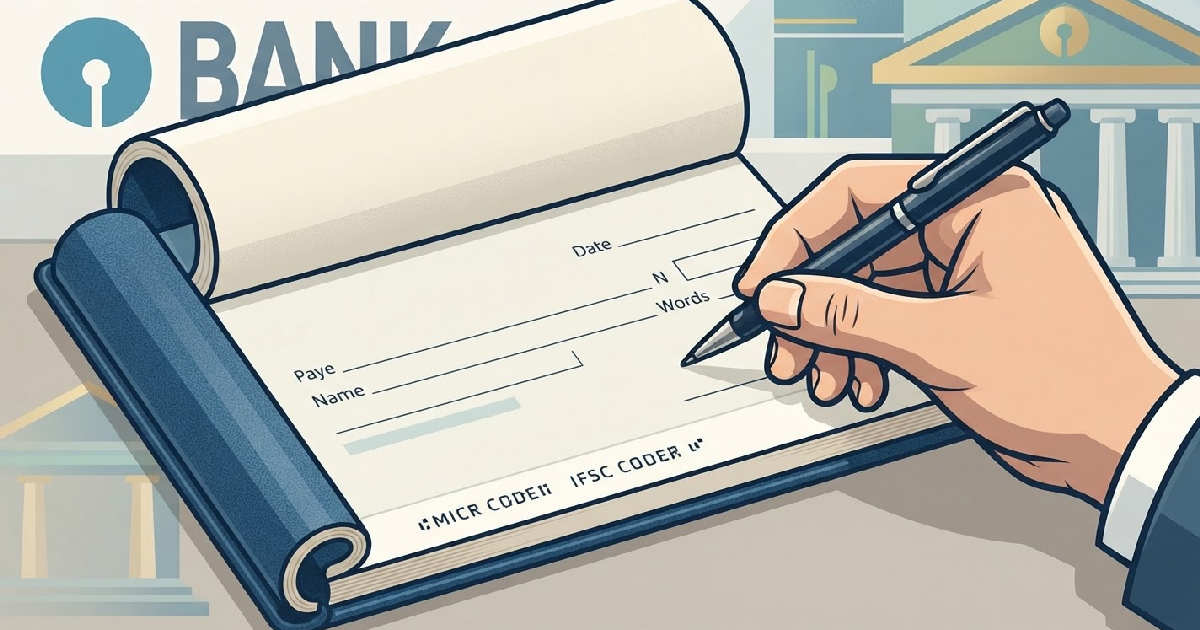
The cheque book remains a foundational financial instrument, providing account holders with a tangible way to instruct their bank for payments. This booklet, containing multiple blank cheques, serves as a formal, written directive for a specified sum from one account to another. It facilitates transactions without physical cash and offers a clear record of every payment.
Issued by banks and financial institutions for savings or current accounts, each individual “cheque leaf” within the book instructs the bank to pay a named recipient. Understanding its components and mechanics is key to using this traditional payment method effectively in 2026.
Understanding the Cheque Book’s Core Function
More than just paper, a cheque book is a collection of crucial financial instructions. Each cheque functions as a written, dated, and signed document. It orders a bank to pay a specific amount of money from a person’s account to the person or entity named on the cheque.
This process allows for payments to be made and recorded without the immediate exchange of physical currency. Cheques are widely recognized as negotiable instruments, carrying specific legal characteristics that govern their use and transfer.
The essential role of a cheque leaf
Every individual cheque within a cheque book is commonly referred to as a “cheque leaf.” This single leaf is the actual instruction from the account holder to their bank. It directs the bank to disburse a specified sum of money.
The recipient of these funds is clearly named on the cheque. This systematic approach ensures both clarity and accountability in financial transfers between parties.
Key Players in a Cheque Transaction
Every cheque transaction involves distinct roles, each with defined responsibilities in the payment process. Grasping these positions is essential for anyone utilizing or receiving a cheque. This structure helps ensure the smooth and secure transfer of funds.
The drawer: authorising payments
The drawer is the person or entity who initiates the payment. They write and sign the cheque, thereby authorizing the bank to proceed with the transaction. Their signature is crucial for the cheque’s validity.
This individual holds the account from which the funds will be withdrawn. The drawer sets the payment in motion, directing the financial institution to fulfill their instruction.
The drawee: honoring the instruction
The drawee is the bank or financial institution on which the cheque is drawn. This entity holds the drawer’s account and is responsible for honoring the cheque. It makes the payment from the drawer’s specified account.
The drawee ensures all conditions are met before releasing the funds. Their role is to execute the payment instruction accurately and promptly.
The payee: receiving the funds
The payee is the person or entity designated to receive the money. Their name must be clearly stated on the cheque itself. They are the ultimate beneficiary of the payment.
Once the cheque is presented, the payee’s bank processes it for deposit or encashment. This completes the transaction cycle, transferring value from the drawer to the payee.
Essential Elements of a Cheque Document
A cheque document contains specific details that enable its processing and clearance. These elements are pre-printed or filled in by the drawer, ensuring the payment can be accurately directed. Each part plays a vital role in the functionality of this financial instrument.
Cheques are classified as negotiable instruments, meaning they can be transferred from one party to another. This characteristic makes them a flexible tool for various financial obligations.
Decoding MICR and IFSC codes
At the bottom of every cheque, a unique 9-digit MICR Code (Magnetic Ink Character Recognition) is printed. This code uses special magnetic ink to enable automated processing and clearance of cheques. It contains essential information about the bank and its specific branch.
For electronic fund transfers in India, an 11-character alphanumeric IFSC Code (Indian Financial System Code) identifies bank branches. Both codes streamline banking operations, ensuring payments reach their intended destinations efficiently. Secure banking relies on these unique identifiers.
| Term | Definition | Key Function |
|---|---|---|
| Cheque | A written, dated, and signed document that orders a bank to pay a specific amount of money from an account to a named recipient. | Instructs bank for payment; considered a negotiable instrument. |
| Cheque Book | A collection of blank cheque leaves, pre-printed with the account holder’s details. | Issued by banks for account holders to make payments without cash. |
| Drawer | The person or entity who writes and signs the cheque. | Authorizes the payment. |
| Drawee | The bank or financial institution on which the cheque is drawn. | Responsible for honoring the cheque and making payment. |
| Payee | The person or entity to whom the cheque is made payable. | Receives the funds. |
| MICR Code | A unique 9-digit code printed with special magnetic ink at the bottom of a cheque. | Enables automated processing and clearance, identifies bank and branch. |
The Mechanical Process of Issuing a Cheque
Issuing a cheque involves a straightforward series of steps by the account holder. This process ensures the bank receives all necessary information to execute the payment accurately. Adhering to these steps is fundamental for the cheque’s validity.
The drawer begins by filling in the current date in the designated space on the cheque leaf. This date marks the official start of the cheque’s validity. Subsequent steps include specifying the payee and the payment amount.
Completing these details correctly enables the bank, as the drawee, to process the payment to the named payee. This simple act remains a core function of banking for many individuals and businesses globally. Proper completion helps ensure secure payments.
What is a cheque book?
A cheque book is a collection of blank cheque leaves. Banks or financial institutions issue these to their account holders, typically for use with savings or current accounts.
What is a cheque?
A cheque is a written, dated, and signed document. It serves as an instruction from an account holder to their bank, ordering the bank to pay a specific sum of money to a named recipient.
Who are the main parties involved in a cheque transaction?
The main parties involved in a cheque transaction are the drawer, who writes the cheque; the drawee, which is the bank that processes the payment; and the payee, who is the person or entity receiving the funds.