
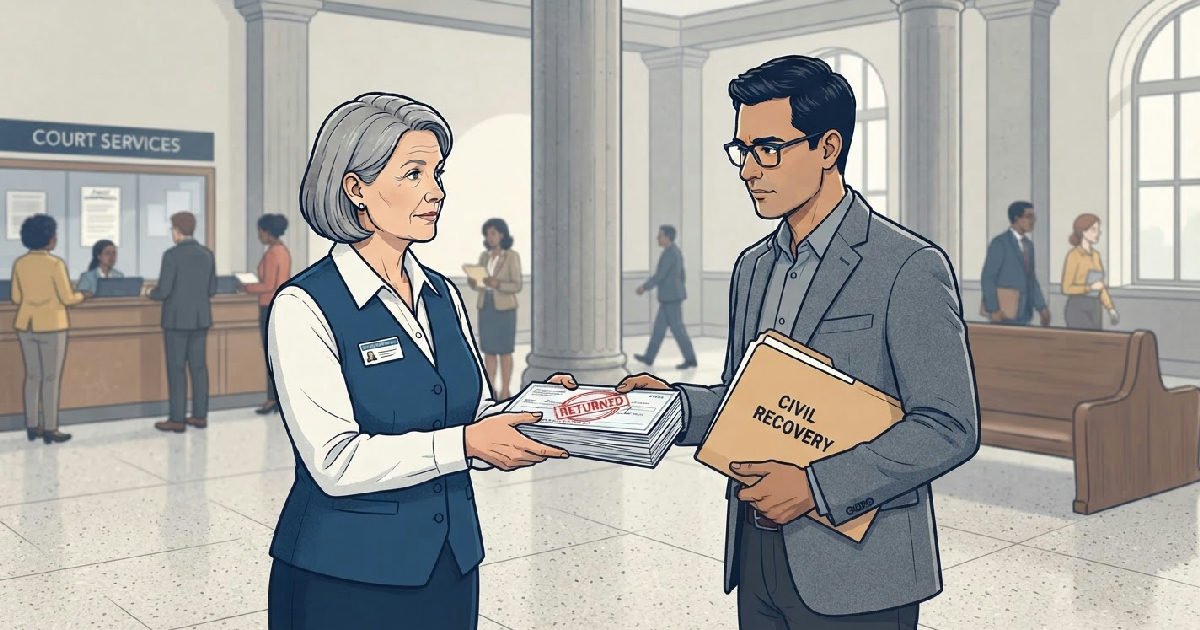
Yes, you can sue for a bounced cheque in a civil case, aiming to recover the original funds owed alongside potential additional damages and fees. This legal avenue provides recourse for individuals or businesses left financially short by a check that a bank cannot process.
Understanding the specific procedures and recoverable amounts is crucial. These are primarily governed by individual state laws, though they are heavily influenced by the Uniform Commercial Code (UCC).
Defining a Bounced Check and Its Implications
A bounced check, also known as a dishonored check, is simply a check that a financial institution refuses to pay. This refusal typically happens because the account it was drawn on lacks sufficient funds, has been closed, or other technical reasons prevent its processing.
When a check bounces, it creates immediate financial strain for the recipient and can trigger fees from their own bank. For the check’s issuer, it can lead to penalties from their bank and, crucially, legal exposure.
The Legal Framework: State Laws and the UCC
The ability to pursue legal action for a dishonored check rests firmly within civil law. While the Uniform Commercial Code provides a foundational framework across the United States, specific nuances and procedures are determined at the state level.
This means that how you proceed, what you can recover, and the exact steps involved can vary significantly depending on your location. It’s not a one-size-fits-all situation.
The Uniform Commercial Code’s Influence
The UCC establishes general principles for commercial transactions, including checks. It outlines the rights and responsibilities of parties involved in check processing, offering a baseline for civil remedies.
For example, it provides for the ability to recover the face value of the check. Many state laws build upon these UCC provisions, adding specific penalties or procedural guidelines.
State-Specific Regulations for Bounced Checks
Every state has its own statutes regarding bounced checks. These laws often dictate the amount of statutory damages you can claim, which may be a multiple of the check’s face value, or a fixed amount.
Some states also specify required demand periods or notification procedures before a lawsuit can be filed. Ignoring these local requirements can jeopardize your case.
What You Can Recover in a Civil Case
When you successfully sue for a bounced check, your primary goal is to recover the funds you were owed. But beyond that, you can often claim additional amounts.
These frequently include banking fees charged by your own institution due to the dishonored check, and in many jurisdictions, statutory damages designed to penalize the issuer.
In some cases, legal fees and court costs may also be recoverable, though this varies by state and the specifics of your case. It’s important to document all related expenses carefully.
| Aspect of Claim | Description | Key Factors |
|---|---|---|
| Claim Type | Civil lawsuit, often within small claims court limits. | State laws, original check amount. |
| Primary Goal | Recover the initial face value of the dishonored check. | Proof of existing debt. |
| Additional Recoveries | Banking fees, statutory damages, legal fees (sometimes). | State statutes, judge’s discretion, case specifics. |
| Governing Law | Primarily state laws, informed by the Uniform Commercial Code (UCC). | Jurisdiction, specific state regulations apply. |
| Required Proof | Original check, bank statements, demand letters, correspondence. | Clear evidence of check dishonor and recovery attempts. |
Steps to Take After Receiving a Dishonored Check
If you receive a bounced check, don’t delay in taking action. Your first step should be to contact the check issuer directly.
Sometimes, it’s an honest mistake, and they may be willing to rectify the situation promptly. Always send a formal demand letter, typically via certified mail, stating the amount owed and any fees incurred. Legal steps and recovery options are clearer with a paper trail.
Navigating the Civil Court Process
If direct communication and demand letters fail, pursuing a civil case is the next option. For smaller amounts, small claims court is often the most accessible and cost-effective route.
You’ll need to file a complaint, serve the defendant, and present your evidence in court. Proving your case requires solid documentation, such as the original bounced check, bank statements, and copies of demand letters. The burden of proof in cheque dishonour cases rests squarely on the plaintiff.
Preparing Your Case for Court
Gather all relevant documents, including the physical bounced check itself or a clear copy. Ensure you have records of all communication with the issuer.
Preparing a concise timeline of events can also be beneficial in presenting your argument clearly to the court. Organization is key to a strong civil claim.
Can You Sue for a Bounced Check When Other Factors Are Present?
The question of whether you can sue for a bounced check becomes more complex with specific circumstances. For instance, if the issuer filed for bankruptcy, your ability to recover funds might be limited or require navigating bankruptcy court procedures.
Similarly, if the check was part of a fraudulent scheme, criminal charges might also apply, running parallel to your civil claim. These situations often require more specialized legal advice.
Seeking Legal Assistance for Bounced Check Claims
While small claims court is designed for self-representation, larger amounts or complex situations often warrant legal counsel. An attorney can help you understand state-specific laws, calculate recoverable damages, and navigate the court system.
They can also advise on the likelihood of successful recovery, considering the defendant’s financial status. Resources like bounced cheque legal aid can provide affordable assistance.
What is the typical time frame for recovering funds?
The time frame varies widely depending on the court’s caseload, the complexity of the case, and whether the defendant disputes the claim. Small claims cases might resolve in a few months, while more complex lawsuits could take over a year.
Can you sue for a bounced check if the issuer promises to pay later?
While an issuer’s promise to pay might delay immediate legal action, it doesn’t negate your right to sue. If the promise isn’t kept, you can still pursue a civil case. It’s wise to document all such promises in writing.
Are there any alternatives to suing for a bounced check?
Before filing a lawsuit, consider sending a formal demand letter, attempting mediation, or negotiating a payment plan with the issuer. These methods can sometimes resolve the issue more quickly and with less expense than litigation.