
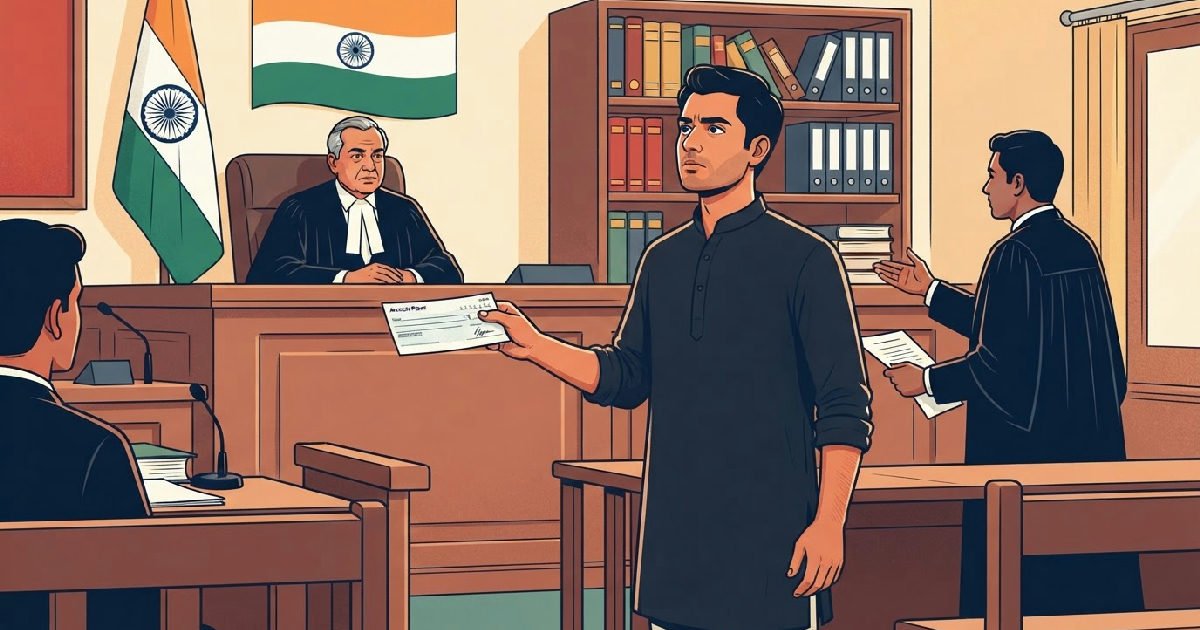
When a complainant died during a cheque bounce case in Delhi, initiated under Section 138 of the Negotiable Instruments Act, 1881 (NI Act), the legal proceedings do not automatically abate. This critical aspect means that the complaint doesn’t just die with the individual who filed it.
Instead, legal heirs of the deceased complainant are empowered to continue the prosecution, but this requires proactive engagement with the court. They must seek explicit permission to step into the complainant’s shoes and ensure the case proceeds.
Continuity After Complainant Died During A Cheque Bounce Case in Delhi
Many might assume that the death of a complainant would automatically terminate criminal proceedings. However, India’s legal framework, particularly concerning financial offenses like cheque dishonour, is designed to ensure justice isn’t derailed by such an event.
The statutory scheme under the NI Act does not include any provision for automatic termination upon the complainant’s demise. Courts across the country, including those in Delhi, have consistently affirmed this principle, safeguarding the rights of the aggrieved party’s estate.
Legal Framework Underpinning Continuation
The foundation for continuation lies primarily in the Criminal Procedure Code (CrPC). Section 256 of the CrPC, which addresses the non-appearance or death of a complainant in summons cases, grants magistrates discretion to proceed with the trial.
Crucially, sub-section (2) of Section 256 CrPC specifically extends this discretion to situations where the non-appearance is due to death. This provision ensures that a legitimate Section 138 case doesn’t get dismissed simply because the original complainant is no longer alive.
Judicial Clarity: Precedents and Rulings
High Courts and the Supreme Court have repeatedly reinforced that the death of a complainant does not end Section 138 proceedings. A landmark 2006 Supreme Court case established that once cognizance is taken, the trial isn’t affected by the payee’s death.
The Delhi High Court has also referenced this principle, noting there is no legal basis to reject a complaint solely due to the complainant’s death. This consistent judicial stance provides clarity and a pathway for legal heirs.
| Aspect of Case | Scenario: Complainant Alive | Scenario: Complainant Deceased |
|---|---|---|
| Case Status | Active prosecution by original complainant. | Case remains active; no automatic abatement. |
| Party Pursuing | The original complainant. | Legal heirs or legal representatives of the deceased. |
| Required Action | Complainant files and attends proceedings. | Heirs must apply to court for permission to continue. |
| Governing Laws | Section 138 NI Act. | NI Act + Sections 256(2), 302 CrPC (now Section 339 BNSS). |
| Liability | Accused faces criminal liability and fine. | Accused’s liability persists; potential fine/compensation enforceable. |
The “Holder in Due Course” Nuance for Legal Heirs
While legal heirs can certainly continue a cheque bounce case in Delhi, they must satisfy certain legal criteria beyond mere heirship. The law differentiates between simply inheriting assets and possessing the legal standing to pursue a financial instrument.
Specifically, heirs need to qualify as a “holder in due course” or a legitimate legal representative of the deceased. This distinction is crucial for maintaining the complaint effectively in court.
Implications of the Bombay High Court Ruling
A significant ruling by the Bombay High Court on July 29, 2026, clarified this requirement. It held that a legal heir cannot automatically maintain a complaint under Section 138 solely by virtue of succession.
They must demonstrate that they are either the payee of the cheque or a “holder in due course” for consideration. This means simply being an heir doesn’t automatically confer the right to prosecute; they must legally possess the instrument in question.
Procedural Steps for Legal Heirs
To continue the prosecution, legal heirs cannot simply assume the case will progress on its own. They must formally apply to the court to be brought on record as the new complainant. This is a critical procedural step to prevent dismissal due to inaction.
Typically, this application is filed under Section 302 of the Criminal Procedure Code (CrPC), which is now Section 339 of the Bharatiya Nagarik Suraksha Sanhita (BNSS). This section allows any person, with the magistrate’s permission, to conduct the prosecution.
Essential Documentation and Timeliness
The application for continuation must be supported by appropriate documentation. This includes the death certificate of the original complainant and proof of heirship, such as succession documents or affidavits. Accurate and verified documents are essential for the court’s review.
Timely action is paramount for legal heirs. Filing the application promptly helps avoid the risk of dismissal on grounds of laches, which refers to unreasonable delay. Courts generally favour allowing substitution, but undue delay can complicate matters significantly.
Distinguishing Accused’s Death from Complainant’s
It’s vital to understand the fundamental difference in outcomes if the accused, rather than the complainant, passes away during a cheque bounce trial. The legal consequences for the case diverge significantly in such scenarios.
If the accused dies, the criminal case automatically abates. This occurs because criminal liability is personal; it cannot be transferred to their legal heirs. The core principle is that only the individual who committed the crime can be held criminally responsible.
Enforcing Compensation Post-Death
However, the death of the accused does not entirely close the door to recovery for the aggrieved party. A civil recovery suit can still be filed against the deceased accused’s estate.
Furthermore, any compensation awarded under Section 138 of the NI Act can be enforced against the deceased’s legal heirs. This is typically done through property auction or sale proceedings, treating the compensation as equivalent to a fine levied by the court.
Navigating the Process: Role of Legal Counsel
Given the procedural complexities and legal nuances, engaging experienced legal counsel is highly advisable for heirs looking to continue a cheque bounce case in Delhi. Expert guidance ensures that all necessary steps are taken correctly and promptly.
Cheque bounce lawyers in Delhi often advise heirs to prepare and file the application to continue, along with the death certificate and heir papers, before any court dates are wasted. Their expertise can be crucial in managing documentation and court appearances efficiently.
Power of Attorney Limitations
It’s also important to note the limitations of a Power of Attorney (POA) in these situations. A POA deed is automatically revoked upon the death of the principal, meaning the original POA holder can no longer act on the deceased’s behalf.
Consequently, legal heirs must personally continue the case or appoint a pleader. A Power of Attorney holder cannot independently apply under Section 302 CrPC (or Section 339 BNSS); the heir must be the one to initiate the process.
What happens if the complainant dies during a cheque bounce case?
The death of a complainant in a cheque bounce case under Section 138 of the NI Act does not lead to automatic termination. Legal heirs can continue the prosecution by seeking permission from the court, typically through an application under Section 302 CrPC (now Section 339 BNSS).
Can legal heirs automatically take over a Section 138 case?
No, legal heirs cannot automatically take over the case. They must file a formal application with the court to be substituted as the new complainant. Furthermore, they need to satisfy the court that they qualify as a “holder in due course” or legal representative, as highlighted by a recent Bombay High Court ruling.
What documents are needed for heirs to continue the case?
Legal heirs seeking to continue a cheque bounce case will typically need to provide the complainant’s death certificate and proof of their heirship. This proof might include succession documents or affidavits, which help establish their legal right to proceed with the complaint.
Complainant or accused has died mid-case? What to do next? Call or Whatsapp for free consultation.
Related Service: https://arpitmarwah.com/cheque-dishonor-lawyer/