
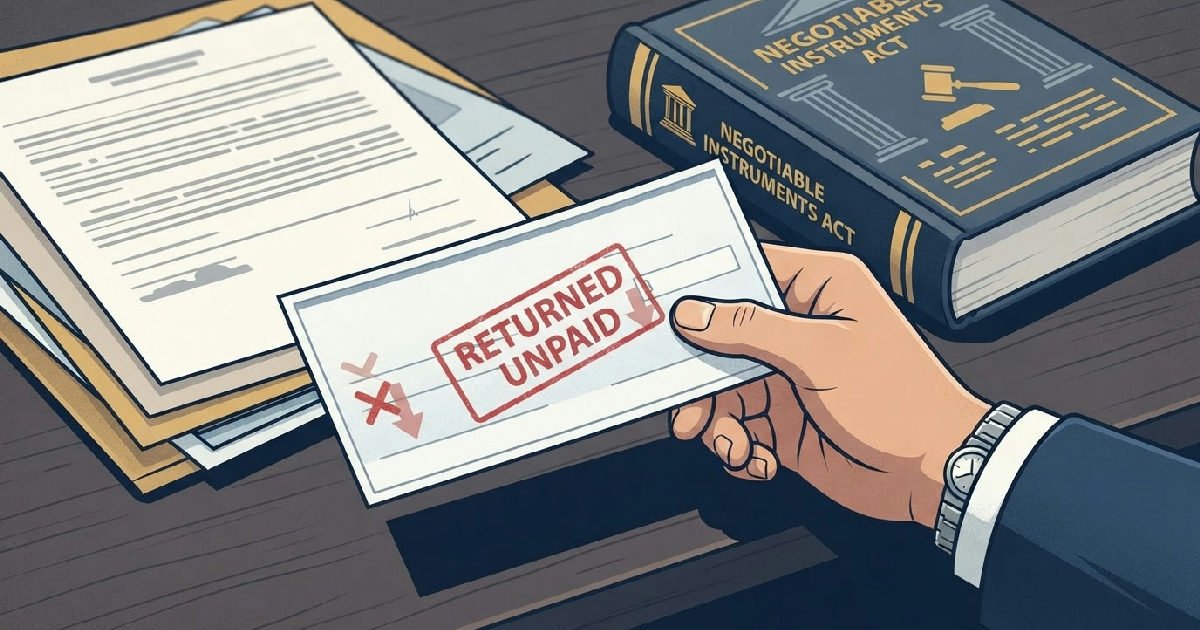
When a cheque bounces, the immediate instinct for many is to pursue a criminal complaint under Section 138 of the Negotiable Instruments Act. While this can be an effective legal route, it’s not always the right first step. Rushing into a cheque bounce case without careful consideration of specific legal conditions can actually weaken your position, potentially benefiting the other side.
Legal experts routinely observe that many such complaints are filed prematurely, lack essential legal ingredients, or fail to meet strict procedural requirements. A poorly constructed case can get dismissed, forcing the complainant back to square one, often after considerable time and expense.
Navigating the Complexities of Cheque Bounce Cases
The legal framework governing cheque dishonour under Section 138 is precise, demanding strict adherence to its provisions. Many complainants mistakenly believe that any bounced cheque automatically warrants a criminal complaint, but the reality is far more nuanced. Success hinges on a meticulous approach to timelines and documentation, not just the fact of a bounced instrument.
It’s not enough for a cheque to simply return unpaid; the subsequent procedural steps are critical. Understanding these intricacies is paramount for anyone contemplating this legal path, ensuring the complaint is robust and maintainable in court.
The Strict 30-Day Notice Window
One of the most frequent missteps in a cheque bounce case involves the statutory notice period. Section 138 mandates that a formal demand notice must be dispatched within 30 days of receiving the “cheque return memo” from the bank. Failing to meet this strict deadline renders any subsequent complaint highly vulnerable.
If this crucial notice isn’t issued on time, the very foundation of the complaint can crumble. Courts regularly dismiss cases where this initial statutory requirement isn’t met, irrespective of the underlying debt. This procedural tripwire is often overlooked, leading to avoidable complications.
Avoiding Premature Filings: The 15-Day Payment Period
Another common pitfall is initiating a complaint before the cause of action has fully matured. After the demand notice is served, the drawer of the cheque is legally granted a mandatory 15-day period to make the payment. Filing a Section 138 case before these 15 days have elapsed constitutes a premature complaint.
Courts have consistently rejected such complaints, citing the absence of a complete cause of action. This strict observance of the waiting period is non-negotiable. Impatience in this phase can actively undermine an otherwise valid claim, delaying the entire recovery process.
Establishing Legally Enforceable Debt
The nature of the underlying debt is fundamental to the success of any cheque dishonour complaint. Section 138 explicitly states that it applies only to cheques issued for a “legally enforceable debt or other liability.” This isn’t a minor detail; it’s a core ingredient determining the entire case’s viability.
When the debt is ambiguous, heavily contested, or lacks proper documentation, the criminal avenue might prove inefficient. Complainants need to present clear, undeniable evidence that the cheque was indeed issued against a legitimate and undisputed financial obligation.
Cheques as Security Instruments
Cheques issued merely as security, rather than against an immediate, outstanding debt, often complicate Section 138 proceedings. If the underlying liability is significantly disputed and well-documented by the defence, the criminal case may not be the most effective recovery tool.
In these scenarios, proving the existence of a legally enforceable debt becomes an arduous task. Courts typically require concrete evidence that the cheque wasn’t just collateral but a clear payment for an existing obligation, a distinction vital for judicial consideration.
When Records and Limitation Periods are Messy
A disorganised trail of invoices, contracts, and cheque details can severely undermine a complaint. If the documentary evidence does not clearly align, or if there are issues with the limitation period for the underlying debt, filing prematurely is ill-advised. Such discrepancies provide easy grounds for the defence to challenge the maintainability of the case.
It’s crucial to meticulously organise all relevant financial records and legal documents before approaching the court. Ensuring all paperwork is in order and clearly demonstrates the outstanding liability strengthens the prosecution’s hand significantly.
Corporate Liability and Proper Notice Service
When a bounced cheque originates from a corporate entity, correctly identifying and accusing the responsible parties is paramount. Failing to include the company itself as an accused, alongside the liable directors or officers, can severely weaken the complaint and potentially lead to dismissal.
Legal precedent dictates that for corporate entities, the company is primarily liable. Directors or other officers are only held accountable if they were demonstrably in charge of, and responsible for, the company’s affairs at the time the offence was committed. Understanding the nuances of director liability is critical for proper filing. Similarly, ensuring you properly file a cheque bounce against a company is vital.
Proving Effective Notice Service
A crucial, yet often overlooked, aspect is the ability to prove proper service of the statutory demand notice. A notice that was never delivered, or for which proof of delivery cannot be presented to the court, fundamentally weakens the complaint. This procedural lapse provides the defence with a strong argument against the case’s validity.
Complainants must ensure they have irrefutable evidence that the demand notice was duly served on the drawer within the stipulated timeframe. This might involve using registered post with acknowledgement due, or other legally recognised methods of service that provide a verifiable paper trail.
Strategic Alternatives to Direct Filing
For scenarios where a Section 138 complaint might be weak, or where the objective extends beyond a single cheque, alternative legal strategies can be far more effective. The goal should always be efficient recovery and a robust legal position, not simply “filing something.”
Understanding these alternatives allows complainants to choose the most appropriate legal tool for their specific circumstances, potentially saving time and resources while increasing the likelihood of successful recovery.
Commercial Legal Notices and Recovery Suits
In instances where the 30-day notice window has expired, or the debt involves a large commercial account where a single cheque represents only a small portion, a simple commercial legal notice might be more appropriate. This serves as a formal demand without immediately invoking criminal proceedings, preserving options.
For larger outstanding sums not fully covered by a single dishonoured cheque, a civil recovery suit is often a better course of action. While slower, it allows for the recovery of the full ledger amount, interest, and costs, offering a comprehensive resolution that a Section 138 complaint alone cannot. The process of bounced cheque restitution often combines these approaches.
Arbitration and Concurrent Legal Actions
If the underlying contract includes an arbitration clause, pursuing arbitration might be the mandatory or most efficient route for resolving the dispute. This can bypass the court system, potentially offering a quicker and more confidential resolution, especially in complex commercial matters.
In some situations, legal advice might suggest pursuing both a Section 138 complaint and a civil recovery suit concurrently. This dual approach can exert pressure for payment while simultaneously ensuring that the broader debt is addressed through appropriate civil channels, maximising recovery potential.
When a Cheque Bounce Case is Truly Warranted
Despite the various pitfalls, a Section 138 complaint remains a powerful tool when the conditions are met. Delaying action in a strong case can be as detrimental as rushing a weak one. Knowing when to proceed confidently is key to successful legal recourse.
The efficacy of Section 138 lies in its ability to impose criminal liability, which often serves as a significant deterrent and incentive for payment. Therefore, recognising the optimal scenario for filing is crucial for prompt resolution.
Clear Debt and Procedural Compliance
A strong Section 138 case rests on unambiguous evidence of a legally enforceable debt. If the cheque was issued against a clear, undisputed financial obligation, the foundation for a criminal complaint is solid. This clarity eliminates a major defence strategy, simplifying the legal process.
Coupled with clear debt, strict adherence to procedural requirements—such as timely dispatch and proper service of the demand notice, and allowing the full 15-day payment window to elapse—makes the case robust against technical challenges. These factors combine to create a formidable legal position.
The Practical Maintainability Test
Before proceeding, legal professionals often recommend a practical test: “If the other side challenges maintainability tomorrow, will the complaint survive on papers?” This self-assessment is critical. If the honest answer is no, it’s a clear signal that further preparation or alternative strategies are needed.
This test forces complainants to critically evaluate the strength of their evidence and procedural compliance. Only when confident that the complaint can withstand immediate scrutiny should one move forward, ensuring that legal efforts are both effective and efficient.
What makes a cheque bounce case weak?
A cheque bounce case can be weak if the statutory notice was not sent within 30 days of the return memo, if the complaint is filed before the 15-day payment period after notice has elapsed, or if there is no clear, legally enforceable debt. Issues with proving proper notice service or a messy paper trail also significantly weaken a complaint.
Can I file a recovery suit instead of a Section 138 case?
Yes, you can file a civil recovery suit, especially if the outstanding amount is larger than the single cheque, or if the underlying debt is complex. A recovery suit aims to recover the full debt along with interest and costs, though it typically takes longer than a Section 138 case, which focuses on the specific dishonoured cheque.
What should I do if the 30-day notice window has already passed?
If the 30-day notice window has passed, you generally cannot file a Section 138 complaint based on that specific cheque dishonour. In such situations, it’s advisable to send a commercial legal notice to the drawer or consider filing a civil recovery suit for the outstanding amount, depending on the specifics of the debt.
Unsure whether to file a cheque bounce case or a recovery case?
WhatsApp or call for a free consultation. We help individuals and companies in Delhi choose the correct route after a cheque is dishonoured.
Related Service: Cheque Dishonour Law