
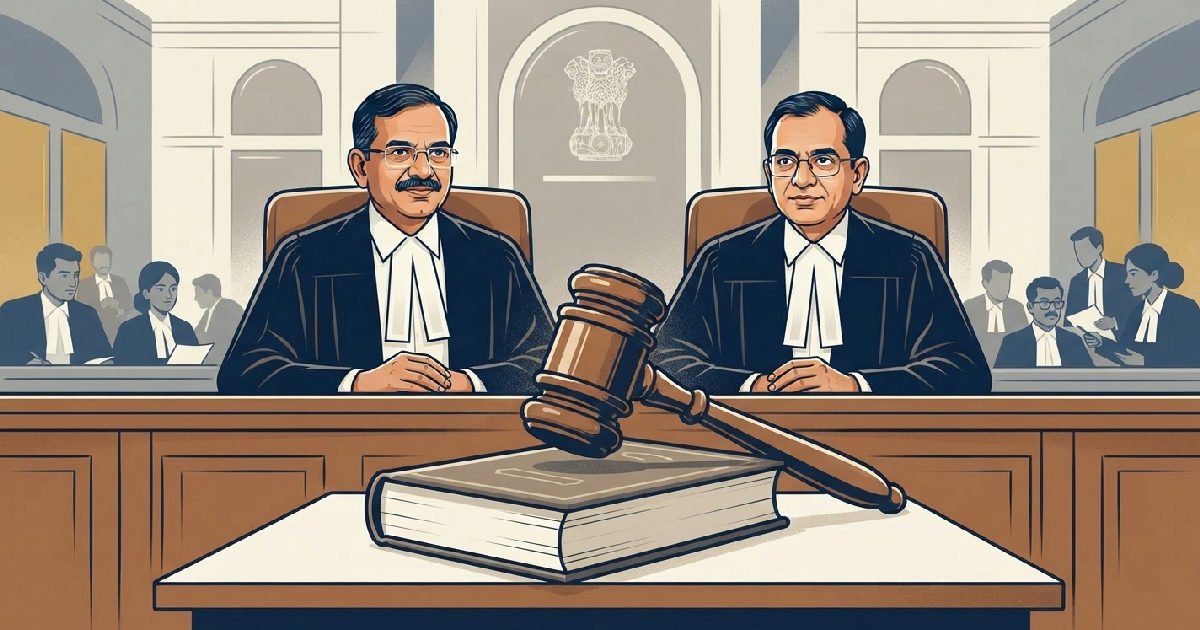
Indian courts must dismiss time-barred suits, even without a defense objection, as per a May 27, 2024 Supreme Court ruling on time-barred suit dismissal. This significant directive, pronounced on May 27, 2024, reinforces the judiciary’s proactive role in maintaining legal certainty and preventing stale claims from burdening the system.
A bench comprising Justices BR Gavai and Sandeep Mehta delivered the judgment, reversing a High Court’s Division Bench finding regarding time-barred suit dismissal. Their ruling stemmed from the case of S. Shivraj Reddy (Died) Through His LRs. and Another v. S. Raghuraj Reddy and Others, where a lawsuit for the rendition of accounts of a partnership firm was filed a staggering 12 years beyond its prescribed time limit, resulting in a time-barred suit dismissal.
Time-barred suit dismissal under India’s Limitation Act
The essence of time-barred suit dismissal is captured in the Limitation Act’s provisions.
This ruling further emphasizes the importance of time-barred suit dismissal in the legal framework.
Consequently, the time-barred suit dismissal reflects judicial efficiency and the need for timely action.
Ultimately, the time-barred suit dismissal ensures that legal proceedings are resolved without unnecessary delay.
Such principles underpin the concept of time-barred suit dismissal in Indian law.
Understanding the implications of time-barred suit dismissal is crucial for legal practitioners.
At the core of this judicial pronouncement lies Section 3 of the Limitation Act, 1963. This pivotal provision explicitly mandates that “every suit instituted, appeal preferred, and application made after the prescribed period shall be dismissed, although limitation has not been set up as a defence.”
This aspect reinforces the significance of time-barred suit dismissal in ensuring timely justice.
Thus, the ruling on time-barred suit dismissal serves as a reminder to litigants about the importance of acting within statutory limits.
The implications of time-barred suit dismissal are further illustrated by this case.
The language leaves no room for ambiguity: the court must act suo motu, on its own motion, to enforce the time bar.
This case exemplifies the application of time-barred suit dismissal in practice.
This statutory duty is fundamental to upholding public policy within the legal framework. The Limitation Act is not merely a technicality; it’s a crucial mechanism designed to avert the indefinite specter of litigation, which can otherwise stifle commerce and individual peace of mind. It ensures that disputes are resolved while evidence remains fresh and reliable, preventing the judicial system from being clogged by interminable claims.
The principle embodies two enduring legal maxims. “Interest reipublicae ut sit finis litium” dictates that it is in the state’s interest for litigation to conclude. Concurrently, “Vigilantibus non dormientibus jura subveniunt” highlights that the law favors those who are diligent in pursuing their rights, not those who procrastinate.
This precedent further illustrates the concept of time-barred suit dismissal.
The evolution of time-barred suit dismissal illustrates the judiciary’s commitment to efficient legal processes.
Understanding time-barred suit dismissal is essential for all legal practitioners.
As such, the time-barred suit dismissal reflects broader principles of justice in the legal system.
Ultimately, the concept of time-barred suit dismissal is fundamental to the legal framework.
The Limitation Act is pivotal in guiding legal actions towards avoiding time-barred suit dismissal.
Thus, time-barred suit dismissal remains a relevant and critical issue in contemporary legal practice.
The implications of time-barred suit dismissal are profound for litigants.
Consequently, the focus on time-barred suit dismissal shapes legal strategies.
Understanding the implications of time-barred suit dismissal is essential for effective litigation.
This insight into time-barred suit dismissal is critical for success in legal proceedings.
The ongoing discourse surrounding time-barred suit dismissal is vital for legal evolution.
In summary, the conversation around time-barred suit dismissal is pivotal for understanding legal timelines.
In conclusion, time-barred suit dismissal remains a critical aspect of litigation.
The importance of time-barred suit dismissal cannot be overstated in legal practice.
Ultimately, the principles surrounding time-barred suit dismissal guide legal outcomes.
The narrative surrounding time-barred suit dismissal is crucial for aspiring legal professionals.
Understanding the nuances of time-barred suit dismissal is critical for effective legal counsel.
The focus on time-barred suit dismissal shapes the landscape of judicial practice.
Preventing Stale Claims and Promoting Efficiency
By imposing strict deadlines, the Limitation Act compels plaintiffs to act promptly to avoid time-barred suit dismissal. This prevents the resurrection of antiquated disputes where witnesses may have passed away, documents might be lost, or memories have faded.
Moreover, the Act contributes significantly to judicial efficiency. Courts are already burdened with extensive dockets, and allowing time-barred cases to proceed would exacerbate delays, undermining the swift dispensation of justice. This legal framework serves as a vital filter, ensuring only timely and actionable claims consume precious court resources.
Case Study: The S. Shivraj Reddy Judgment
The recent Supreme Court ruling originated from a dispute involving a partnership firm, highlighting the practical application of limitation laws. The case, S. Shivraj Reddy (Died) Through His LRs. and Another v. S. Raghuraj Reddy and Others, presented a clear instance of a time-barred claim that warranted judicial intervention.
Specifically, the partnership firm in question automatically dissolved in 1984 following the death of one of its partners, and the subsequent time-barred suit dismissal became a pivotal legal consideration.
The Delayed Filing and its Consequences
Despite this clear legal stipulation regarding time-barred suit dismissal, the plaintiffs filed their suit for the rendition of accounts in 1996.
The Supreme Court’s decision to reverse the High Court’s Division Bench finding underscores the mandatory nature of Section 3 of the Limitation Act, directly relating to time-barred suit dismissal.
The precedent set by V.M. Salgaocar and Bros. v. Board of Trustees of Port of Mormugao and Another (2005) was central to this determination.
This focus underscores the necessity of timely actions to avoid time-barred suit dismissal.
The inevitability of time-barred suit dismissal serves as a cautionary tale for litigants.
Ultimately, practitioners must remain cognizant of the implications of time-barred suit dismissal.
Time-barred suit dismissal should be a primary consideration in all litigation strategies.
In conclusion, understanding time-barred suit dismissal is essential for effective legal practice.
Historical Context and Evolution of Limitation Laws
The concept of limiting the time within which legal action can be taken is deeply embedded in India’s legal history. Before 1859, the subcontinent lacked a unified limitation law, with various provincial regulations governing such periods. This fragmented approach often led to inconsistencies and legal uncertainties across different regions.
The first significant step towards uniformity came with the Indian Limitation Act, 1859. This legislation aimed to consolidate and amend the disparate laws then in existence. Subsequent revisions followed, including Acts in 1871, 1877, and 1908, each refining and updating the legal framework in response to evolving needs.
The Modern Limitation Act of 1963
The current iteration, the Limitation Act, 1963, represents a comprehensive overhaul, replacing its 1908 predecessor. It was enacted following recommendations from the Third Law Commission of India, which conducted an exhaustive review of the existing laws. This Act consolidates and amends the law for the limitation of suits, appeals, and other applications, providing a robust and detailed framework for timely legal recourse.
The Act applies universally across India, including Jammu and Kashmir, a change effected by the Jammu and Kashmir Reorganisation Act 2019. Its structure is elaborate, comprising 32 sections and 137 articles that meticulously prescribe specific limitation periods for a vast array of legal actions, from civil suits to appeals and various applications. This detailed articulation provides clear guidelines for all parties involved in civil proceedings.
Fundamentally, the Limitation Act is a procedural law. This means it primarily bars the remedy—the right to sue—rather than extinguishing the underlying substantive right itself. An important exception to this rule is Section 27, which deals with adverse possession, where the efflux of the limitation period can indeed extinguish the original owner’s title, making a property sale or other claim non-viable.
Precedents Reinforce Mandatory Dismissal
The Supreme Court’s recent judgment in the S. Shivraj Reddy case is not an isolated incident. It aligns with a long-standing judicial philosophy consistently reiterated across numerous rulings, all emphasizing the mandatory nature of Section 3 of the Limitation Act. This consistent stance reinforces the judiciary’s commitment to preventing the abuse of the legal process through belated claims.
One of the foundational cases often cited is V.M. Salgaocar and Bros. v. Board of Trustees of Port of Mormugao (2005).
In this landmark decision, the Supreme Court unequivocally held that a court bears a mandatory obligation to dismiss any suit found to be barred by the law of limitation, irrespective of whether the defendant explicitly raises this defence. This ruling solidified the court’s *suo motu* power in scrutinizing timelines.
A Pattern of Firm Judicial Stance
Further reinforcing this principle, the Supreme Court in Rama Murthy v. Ravula Somasundaram (2005) underscored the court’s obligation to address the issue of limitation, even if unpleaded. More recently, in R. Nagaraj (Dead) Through LRs v. Rajmani and Ors. (2025), a bench of Justices J.B. Pardiwala and R.
Mahadevan dismissed a suit as time-barred, even though a specific issue regarding limitation wasn’t framed. The Court critically noted that the plaintiffs had “slept over for 17 years,” against the provisions of Article 59 of the Limitation Act.
In July 2026, the Supreme Court, in Shobha Vasant Bhoir and others, again reiterated that time-barred suits could be summarily rejected at the threshold under Order VII Rule 11 of the Civil Procedure Code (CPC).
This ruling saw the dismissal of a specific performance claim filed 38 years after the alleged agreement, underscoring that prolonged silence by a litigant equates to an abandonment of rights.
Another significant ruling came in January 2025, where the Supreme Court, in Indian Evangelical Lutheran Church Trust, clarified that a subsequent suit filed on the same cause of action would be barred if it exceeded the three-year limitation period after an earlier plaint’s rejection. This judgment made it clear that Order VII Rule 13 of the CPC does not supersede the Limitation Act’s provisions.
These cases collectively establish an unwavering judicial stance: while the Limitation Act allows for certain exceptions, the fundamental expectation is for litigants to be vigilant. Delay without valid explanation is consistently viewed as a strong ground for rejection, as noted in cases like K.S. Vidyanadam & Ors. v. Vairavan (1997) and C. Natarajan v. Ashim Bai (2007), which dealt with property-related claims.
| Case Name | Year of Ruling | Key Legal Principle Reinforced | Specific Context |
|---|---|---|---|
| S. Shivraj Reddy v. S. Raghuraj Reddy | 2024 | Mandatory dismissal of time-barred suits (Section 3 Limitation Act) | Partnership account rendition suit filed 12 years late |
| V.M. Salgaocar and Bros. v. Board of Trustees | 2005 | Court’s *suo motu* duty to dismiss time-barred claims | General application of Limitation Act |
| R. Nagaraj v. Rajmani | 2025 | Dismissal even if limitation not formally pleaded | Suit delayed 17 years against Article 59 |
| Shobha Vasant Bhoir and others | 2026 | Threshold rejection under Order VII Rule 11 CPC for extreme delay | Specific performance claim filed 38 years late |
| Indian Evangelical Lutheran Church Trust | 2025 | Subsequent suit barred if limitation period exceeded | Rejection of earlier plaint and subsequent refiling |
Nuances and Exceptions to Limitation Periods
While the Limitation Act, 1963, imposes strict deadlines, it is not without provisions for exceptional circumstances. The law recognizes that unforeseen events or particular statuses can impede a litigant’s ability to file a claim within the prescribed period. These nuances are crucial for a balanced application of justice, ensuring that genuine hardships do not automatically lead to the loss of a legal remedy.
One of the most significant exceptions is found in Section 5, which allows for the condonation of delay. This provision grants courts the discretion to extend the prescribed period if the appellant or applicant can demonstrate “sufficient cause” for their inability to file the appeal or application on time.
The interpretation of “sufficient cause” is generally liberal, aimed at advancing substantial justice rather than adhering rigidly to technicalities, provided the delay is not attributable to negligence or bad faith.
Acknowledging Practical Realities
Section 4 of the Act addresses practical situations, such as when the prescribed period expires on a day the court is closed. In such instances, the suit, appeal, or application may be legitimately instituted on the day the court reopens. This common-sense provision prevents litigants from being unfairly penalized by administrative closures.
For cases involving fraud or mistake, Section 17 offers relief. Here, the limitation period typically begins not from the date of the fraud or mistake itself, but from when it is discovered, or could have been discovered with reasonable diligence.
This aims to protect victims who may initially be unaware that they have a cause of action due to deceptive practices or errors. However, the plaintiff bears the burden of proving that fraud actively prevented them from discovering their right to sue.
The Act also accounts for legal disabilities. If a person entitled to sue is a minor or of unsound mind, the limitation period does not commence until that disability ceases. This protective measure ensures that vulnerable individuals are not deprived of their legal rights due to circumstances beyond their control.
Similarly, extensions were provided during the extraordinary circumstances of the COVID-19 pandemic, with the Supreme Court, under Article 142 of the Constitution, extending limitation periods from March 15, 2020, to October 2, 2021.
Implications for Litigants and Legal Practice
The Supreme Court’s consistent and firm stance on the mandatory dismissal of time-barred suits carries significant implications for both prospective litigants and legal practitioners across India. This judicial rigor necessitates a heightened level of awareness and diligence in managing legal timelines, especially in the realm of civil trials.
For individuals and entities contemplating legal action, the message is clear: delay can be fatal to a claim, regardless of its merits. It mandates a prompt assessment of rights and remedies, followed by swift action to initiate proceedings within statutory deadlines. Reliance on the opposing party’s failure to raise a limitation defence is no longer a viable strategy, as courts will scrutinize the matter independently.
The Role of Legal Counsel
For legal professionals, this emphasis on *suo motu* dismissal reinforces the critical importance of meticulous case management. Lawyers must thoroughly evaluate the limitation period applicable to each client’s claim at the outset, ensuring all filings adhere strictly to the prescribed timelines.
Understanding and leveraging the specific exceptions, such as condonation of delay under Section 5, becomes paramount when navigating complex scenarios where initial delays are unavoidable.
This judicial clarity also contributes to a more efficient legal system. By proactively weeding out stale claims, courts can dedicate more resources to timely disputes, leading to quicker resolutions and a reduction in the overall backlog. Ultimately, the rulings promote a culture of vigilance, benefiting all stakeholders by fostering predictability and finality in legal proceedings.
What is Section 3 of the Limitation Act?
Section 3 of the Limitation Act, 1963, is a mandatory provision that compels courts to dismiss any suit, appeal, or application filed after its prescribed period, even if the defence does not raise the issue of limitation.
What was the specific ruling in the S. Shivraj Reddy case?
In S. Shivraj Reddy (Died) Through His LRs. and Another v. S. Raghuraj Reddy and Others, the Supreme Court ruled on May 27, 2024, that a suit for rendition of partnership accounts filed 12 years after the 3-year limitation period was time-barred and had to be dismissed, reversing a High Court decision.
Does the Limitation Act extinguish rights or just remedies?
Generally, the Limitation Act is a procedural law that bars the remedy (the right to sue) but does not extinguish the underlying substantive right. However, Section 27, dealing with adverse possession, is an exception where the right itself can be extinguished.
Call or Whatsapp for free consultation.
Related Services: https://arpitmarwah.com/civil-law/