
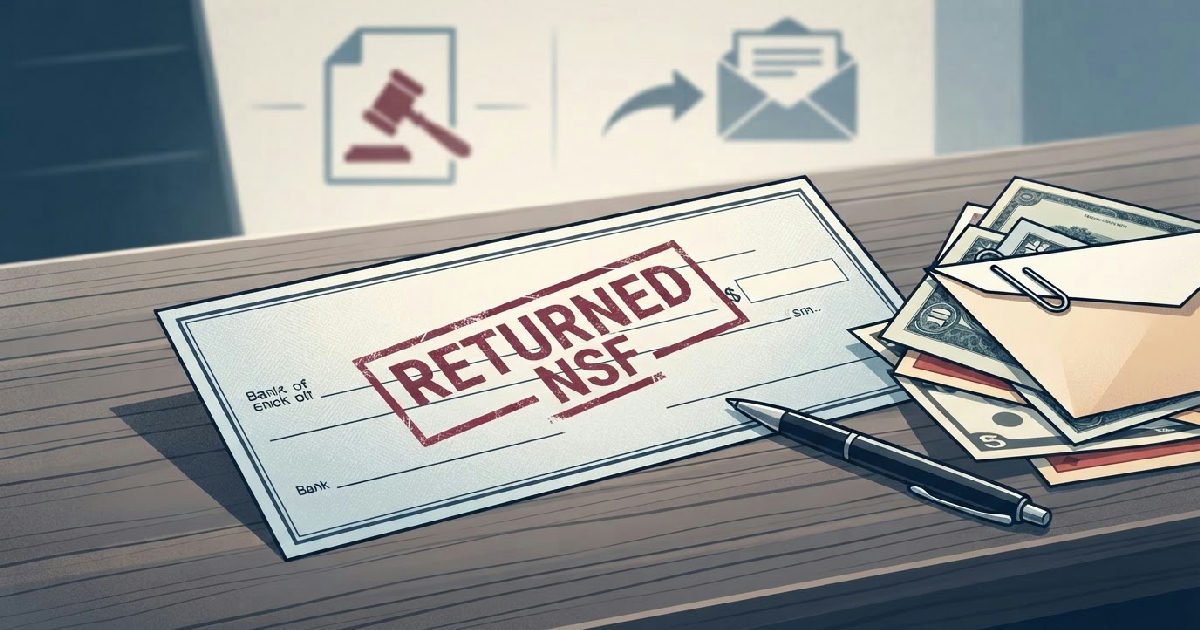
Bounced cheque victim rights are crucial for recourse, especially when facing check bounce case punishment for the offender. A bounced check, also known as a non-sufficient funds (NSF) check, occurs when a bank cannot process a payment because the payer’s account lacks adequate funds. Understanding your bounced check victim rights is essential for protecting your money and seeking appropriate recourse.
This situation means the intended recipient doesn’t receive their payment, and the check gets returned unpaid. Fortunately, there are clear steps you can take to recover your funds and any associated fees.
How bounced checks impact victim rights
A bounced check originates when a check writer, or payer, issues a check to a recipient, known as the payee. The payee then attempts to deposit or cash this check at their bank.
During bank processing, the payee’s bank requests the funds from the payer’s bank. If the payer’s account has insufficient funds, is closed, or has a stop payment order, the payer’s bank returns the check unpaid to the payee’s bank.
Common reasons for a check to bounce
The most frequent cause is non-sufficient funds (NSF), meaning the account balance is too low. However, a check can also bounce due to a closed account or if a stop payment order was placed by the account holder.
Errors in writing the check or the check being too old, also known as stale-dated, are other less common reasons. Each scenario ultimately leads to the same outcome: the payee doesn’t receive their expected payment.
Your immediate rights as a payee
As the recipient of a bounced check, you have clear rights to recover your money. You are entitled to get back the original face value of the check.
Additionally, you can typically recover any returned check fees your own bank charged you. Often, a statutory service charge from the check writer can also be claimed.
The critical role of a demand letter
One of the first and most crucial steps is to formally demand payment from the check writer. This process often involves sending a demand letter, preferably via certified mail, to create a legal record.
This letter should clearly detail the original check amount, any incurred fees, and set a deadline for repayment. In many jurisdictions, sending such a demand letter is a mandatory precursor to taking further legal action.
Pursuing legal action for recovery
If the check writer fails to make payment after receiving your demand letter, you can explore legal avenues. Filing a case in small claims court is a common and often efficient next step for many individuals and businesses.
Small claims courts are designed to handle minor civil disputes. They offer a more affordable path to justice, frequently allowing individuals to represent themselves without requiring attorneys. This process can be quicker than traditional lawsuits.
Small claims court limits by state
The maximum amount you can sue for in small claims court varies significantly from state to state. These limits are important to consider when determining if this is the right option for your situation.
For example, while Texas allows claims up to $20,000, California sets its limit at $12,500 for individuals. Other states have their own varying thresholds, so it’s vital to check local regulations.
| State | Small Claims Limit |
|---|---|
| Texas | Up to $20,000 |
| California (Individuals) | Up to $12,500 |
| Other States | Varies significantly |
Navigating the legal process and potential outcomes
Should you proceed with legal action, the small claims court will hear your case and make a ruling. If the court rules in your favor, it will issue a judgment ordering the check writer to pay you.
This judgment provides a legal basis for collecting the debt. Knowing your civil recovery options is key.
Consequences for the check writer
Knowingly writing a bad check carries significant repercussions for the perpetrator. Beyond civil penalties, there can be reputational damage and even criminal charges, depending on the amount and intent involved.
These charges can range from a misdemeanor to a felony in some jurisdictions. This legal framework reinforces the seriousness of issuing checks without sufficient funds, offering another layer of protection for payees who face a bad check recovery situation.
Protecting yourself from future bounced checks
While the legal system offers recourse, preventing bounced checks is always the best strategy. Always verify the reliability of the check writer whenever possible, especially for large transactions.
Consider requesting alternative forms of payment, such as bank transfers or certified checks, for significant sums. These methods reduce the risk of non-sufficient funds issues, offering greater peace of mind.
Maintaining clear records of all transactions and communications can also prove invaluable if a check bounces. This documentation streamlines the process of pursuing payment and supports your case. Effectively clearing a bounced check case often hinges on thorough preparation.
What is a bounced check?
A bounced check, also known as a non-sufficient funds (NSF) check, is a check that a bank cannot process due to reasons such as a lack of money in the payer’s account, a closed account, or a stop payment order. The bank returns the check unpaid to the person who tried to deposit it.
Can I recover fees in addition to the original check amount?
Yes, as the payee, you are typically entitled to recover both the original face value of the bounced check and any fees your bank charged you for the returned item. Many states also allow you to claim an additional statutory service charge from the check writer.
What’s the very first step I should take if I receive a bounced check?
The immediate first step is to formally demand payment from the check writer. This usually involves sending a demand letter, preferably by certified mail, outlining the amount owed (original check plus fees) and a clear deadline for them to pay. This letter is often a necessary precursor to legal action.