
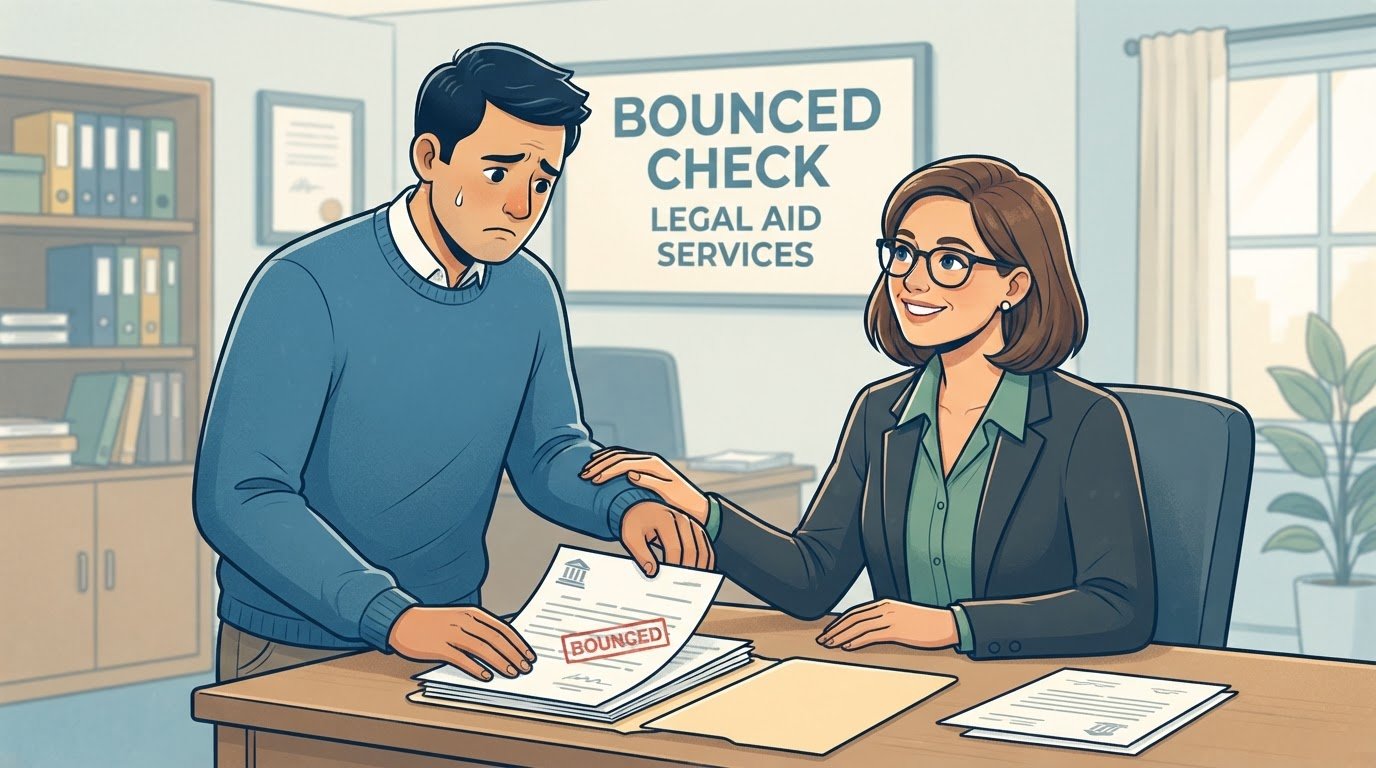
Individuals grappling with the complexities of a bounced cheque can often find themselves in need of legal assistance, especially when financial constraints are a factor. Accessing affordable legal help is crucial for navigating potential civil penalties or even criminal charges associated with a dishonored check.
Fortunately, a range of resources exists, including legal aid organizations, pro bono programs, and community services, all designed to provide support for those who cannot afford standard legal fees.
Understanding dishonored checks and their legal impact
A bounced check, also known as a dishonored check, occurs when a bank refuses to process a payment. This typically happens because the account lacks sufficient funds to cover the amount.
Other reasons might include a signature mismatch, an incorrect date, or the account being closed entirely. When a check bounces, the bank returns it to the payee, usually with a memo explaining the reason.
The cascading consequences of a bounced check
The repercussions of issuing a bounced check can be significant for the issuer. Banks commonly levy non-sufficient funds (NSF) or overdraft fees on both the check writer and the recipient.
These fees generally range from $30 to $50, varying by institution. Beyond bank charges, the payee might pursue civil action to reclaim the owed funds, potentially adding extra fees or damages.
While a single bounced check doesn’t directly harm credit scores, it can indirectly lead to missed or late payments on other accounts. This ultimately impacts the check writer’s credit standing.
More seriously, knowingly writing a bad check with fraudulent intent can trigger criminal charges. The severity of these charges depends on state laws and the amount of the check in question.
Unintentional errors, like misbalancing a checkbook, are typically resolved through fees and repayment rather than criminal prosecution. However, proving intent is often central to any criminal case.
Criminal charge thresholds by state example
| State Example | Check Amount Threshold | Potential Charge | Consequence Overview |
|---|---|---|---|
| Florida | Less than $150 | Misdemeanor | Fines and/or jail time |
| Massachusetts | Less than $250 | Misdemeanor | Fines and/or jail time |
| Massachusetts | Over $250 | Felony | Significant fines and prison sentences |
| Some States | $500 or more | Felony | More severe penalties |
Navigating affordable legal assistance options
For individuals facing legal challenges from bounced checks, especially those with limited financial resources, several avenues for affordable legal assistance are available. These services are crucial for ensuring equitable access to justice.
Legal aid organizations: a vital resource
Non-profit legal aid organizations are a primary source of free legal services in civil matters for eligible low-income individuals. These groups often receive funding from entities like the Legal Services Corporation (LSC).
Eligibility for LSC-funded legal aid typically requires a household income at or below 125% of the Federal Poverty Guidelines. Some organizations might extend services up to 200% of the guidelines under specific conditions or for particular case types.
To locate these services, individuals can visit the LSC website or utilize LawHelp.org, which provides a comprehensive directory of free legal aid programs in various regions. Understanding how to approach and clear a bounced cheque case is often a key first step.
Pro bono programs and law school clinics
Pro bono programs bridge the gap between low-income clients and volunteer lawyers who offer their services without charge. The American Bar Association (ABA) operates “Free Legal Answers,” an online platform where eligible individuals can receive legal answers from volunteer attorneys.
Many law schools also run clinics where students, supervised by experienced professors, provide free legal assistance to the public. These clinics offer valuable help while providing practical experience for future lawyers.
Bar association referrals and self-help tools
State and local bar associations frequently provide lawyer referral services. While some may charge a nominal fee for an initial consultation, such as $50 for 30 minutes, they can effectively connect individuals with attorneys specializing in relevant legal areas.
Notably, the San Antonio Bar Association offers both free lawyer referrals and initial consultations, making legal guidance more accessible. When considering options, it’s important to understand the role of a bounced cheque lawyer and what they can offer.
For those seeking to understand their rights and complete legal forms independently, self-help resources like LawHelp.org and Law Help Interactive offer extensive information and tools. These platforms are particularly useful for civil matters.
Key organizations supporting legal access
Several prominent organizations are dedicated to ensuring that all Americans, regardless of income, have access to legal representation and justice. Their work forms the backbone of affordable legal assistance.
The Legal Services Corporation (LSC), established by Congress in 1974, stands as the largest funder of civil legal aid for low-income Americans. It channels grants to local legal aid organizations across the U.S. and its territories, focusing exclusively on civil legal matters.
The National Legal Aid & Defender Association (NLADA), founded in 1911, is another crucial player. It’s the oldest and largest national non-profit advocating for equal justice, providing advocacy, training, and technical assistance to legal aid and public defender professionals.
The American Bar Association (ABA) also actively promotes access to justice through its Legal Services Division. This division supports and expands legal assistance initiatives, offering resources like FindLegalHelp.org and overseeing programs such as the ABA Free Legal Answers.
Debunking common misconceptions about bounced checks
A prevalent misunderstanding is that all bounced checks automatically lead to criminal charges. While serious consequences, including criminal prosecution, are possible, this typically only occurs when there is clear intent to defraud.
Many instances of bounced checks stem from unintentional accounting errors, such as miscalculating a balance. These situations are usually resolved by paying the associated fees and covering the original amount of the check, rather than facing criminal proceedings.
It’s the intent to deceive that transforms a financial oversight into a criminal matter, highlighting why robust legal counsel, such as that provided by a criminal defense attorney, can be critical.
Can I go to jail for a bounced check?
You can face jail time for a bounced check if prosecutors can prove you wrote it with the intent to defraud. This means you knew there weren’t sufficient funds or the account was closed when you issued the check. Unintentional errors usually result in fees rather than criminal charges.
What is the Federal Poverty Guideline, and how does it relate to legal aid?
The Federal Poverty Guidelines (FPG) are income thresholds used by the federal government to determine eligibility for various programs. For legal aid, eligibility for LSC-funded services typically requires a household income at or below 125% of the FPG, though some programs may extend to 200% under certain conditions.
Are pro bono lawyers as effective as paid attorneys?
Pro bono services involve legal assistance provided voluntarily and without payment by individual attorneys. These programs often connect low-income clients with volunteer lawyers who agree to take their cases for free. The research does not provide information comparing their effectiveness or quality to that of paid attorneys.