
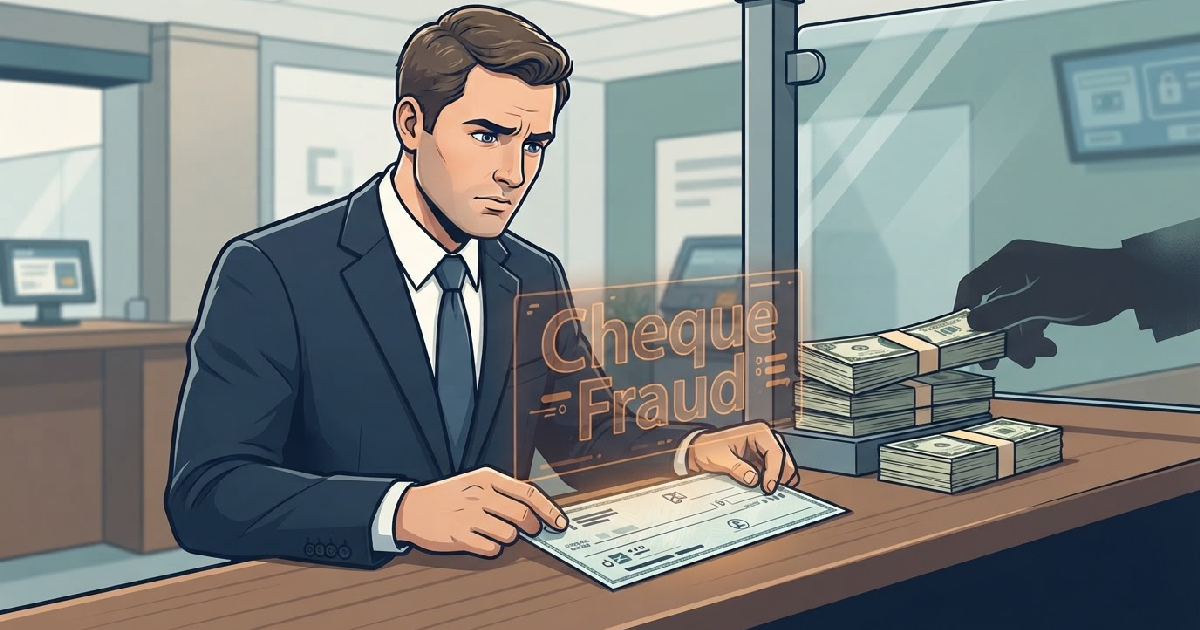
Cheque fraud, the unlawful use of cheques to illegally obtain funds, continues to pose a significant and evolving threat, especially for businesses, even with the rise of digital payment methods.
This persistent financial crime actively exploits the inherent vulnerabilities within the cheque processing system, often leveraging the crucial “float” period—the time delay between a cheque’s deposit and its final clearance at the issuing financial institution.
Understanding Cheque Fraud’s Evolving Threat
The scale of this problem is substantial, particularly within the United States, where annual losses attributed to cheque fraud amount to billions of dollars. The U.S. Department of the Treasury reported a staggering 385% increase in cheque fraud incidents between 2020 and year-end 2023, highlighting the urgent need to understand its complex workings.
Cheque fraud thrives on deception, primarily by manipulating paper or digital cheques to steal money. This criminal activity commonly exploits the “float,” which is the critical time delay that occurs while a cheque is processed and cleared by the issuing bank.
This delay provides fraudsters with a window of opportunity to access funds that have not yet officially settled. It occurs before the issuing financial institution can confirm the cheque’s legitimacy, allowing illicit gains to be made. Businesses, in particular, face substantial risks from these schemes.
How Deception Exploits the System
The methods employed by perpetrators of cheque fraud are varied and constantly adapting, ranging from simple alterations to complex digital fabrications. Understanding these different techniques is crucial for comprehending the breadth of this financial crime.
Fraudsters utilize both low-tech and high-tech approaches to bypass security measures. They exploit procedural gaps in the financial system, demonstrating an adaptability that challenges institutions and individuals alike.
The Mechanics of Cheque Fraud
Cheque fraud encompasses several distinct types, each with its own specific modus operandi. These methods all involve the illegal use of cheques to gain money or access funds that don’t belong to the perpetrator.
Fraudsters aim to bypass security checks by making payments appear authorized or by creating entirely new, false financial instruments. The objective is always to gain unauthorized access to money.
Counterfeit and Synthetic Cheques
Counterfeit cheques are fake cheques meticulously created to appear genuine. These can be produced using readily available printing equipment and often rely on stolen account information to seem authentic.
Similarly, synthetic cheques are crafted using known legitimate bank routing and account numbers. However, they feature fabricated payor information that does not correspond to a rightful account owner, creating a deceptive payment instrument.
Forged and Altered Documents
Forged cheques are genuine cheques that have been stolen from the rightful owner. The fraudster then fakes the account holder’s signature or other necessary credentials to make the payment appear authorized and legitimate.
Altered cheques, also commonly referred to as cheque washing, involve legitimate cheques that have had details changed by a fraudster. This often means using chemicals to erase the original ink and rewrite information, typically modifying the payee’s name or the amount.
Exploiting the ‘Float’: Kiting and Paperhanging
Cheque kiting is a scheme that specifically exploits the “float” period within the banking system. It involves using two or more bank accounts, where a fraudster deposits a cheque from one account into another.
The fraudster then withdraws funds from the second account before the initial cheque fully clears, relying entirely on the delay in processing to access non-existent funds. This creates an illusion of available money where none truly exists.
Paperhanging refers to writing bad cheques from accounts that are already known to be unfunded or closed. This is done with the explicit intent of pure fraud, often leading the perpetrator to abandon the account after successfully obtaining cash or goods.
Identity Theft and Bad Cheque Writing
Identity cheque theft involves a fraudster impersonating an individual to write cheques at the victim’s expense. This can manifest as an account takeover or by using stolen identity credentials to open a completely new account in the victim’s name.
Bad cheque writing occurs when a cheque is issued to a recipient with the knowledge that there are insufficient funds in the account to cover the payment. The issuer hopes the recipient will not suspect the cheque will fail to clear, leading to potential financial loss for the recipient.
Cheque Conversion
Cheque conversion describes a situation where a cheque is endorsed by someone who is not the intended payee. This unauthorized endorsement is then used to fraudulently cash or deposit the cheque, diverting funds to the wrong individual or entity.
The Financial Impact on Businesses
The financial ramifications of cheque fraud are extensive, with billions of dollars diverted annually from businesses and individuals. These losses can severely disrupt normal operations, erode trust in financial systems, and create significant burdens for investigation and recovery.
The sheer volume of these attacks demands that financial institutions and businesses maintain heightened awareness. Understanding the threats is the first step in mitigating potential exposure.
Rising Losses in the United States
The alarming surge in cheque fraud figures reported by the U.S. Department of the Treasury underscores a critical challenge for the nation’s financial infrastructure. A 385% increase in reported incidents between 2020 and 2023 demonstrates the persistent and growing nature of this problem.
This upward trend means more businesses face the risk of substantial financial setbacks. It also highlights how fraudsters continue to find ways to exploit traditional payment methods.
Cheque Vulnerabilities in Processing
Despite the increasing adoption of digital payment systems, cheques continue to be a significant target for criminals. Their physical nature, combined with inherent processing delays, offers unique opportunities that real-time digital transactions largely eliminate.
The slower cheque clearance time allows fraudsters a critical window of opportunity. This delay enables fraudulent cheques to be deposited and sometimes even partially accessed before their true nature is uncovered by the banking system.
| Fraud Type | Defining Characteristic / Mechanism |
|---|---|
| Cheque Fraud | Unlawful use of cheques to illegally obtain money or access funds. |
| Counterfeit Cheques | Fake cheques created to appear genuine, using printing equipment and stolen information. |
| Forged Cheques | Genuine stolen cheques with faked signatures or credentials. |
| Altered Cheques | Legitimate cheques with changed details (payee, amount) by a fraudster. |
| Cheque Kiting | Exploiting the “float” between multiple accounts to access non-existent funds. |
| Paperhanging | Writing bad cheques from unfunded or closed accounts with intent of fraud. |
| Identity Cheque Theft | Impersonating an individual to write cheques or open accounts in their name. |
| Bad Cheque Writing | Writing a cheque knowing insufficient funds exist to cover it. |
| Cheque Conversion | Fraudulently cashing or depositing a cheque endorsed by someone not the payee. |
| Synthetic Cheques | Fake cheques with legitimate bank routing/account numbers but fabricated payor info. |
What is cheque fraud?
Cheque fraud involves the illegal use of cheques to obtain money or access funds that do not rightfully belong to the perpetrator. This can happen through various methods such as forging signatures, altering cheque details, or creating counterfeit cheques.
How significant is the problem of cheque fraud?
Cheque fraud is a major financial problem, particularly for businesses in the United States, causing billions of dollars in annual losses. The U.S. Department of the Treasury reported a concerning 385% increase in such fraud between 2020 and 2023, highlighting its growing impact.
What are the most common types of cheque fraud?
Some of the most common types of cheque fraud include counterfeit cheques, which are fake cheques; forged cheques, where signatures are faked on genuine stolen cheques; and altered cheques, where details like payee or amount are changed. Cheque kiting and paperhanging are also prevalent schemes.