
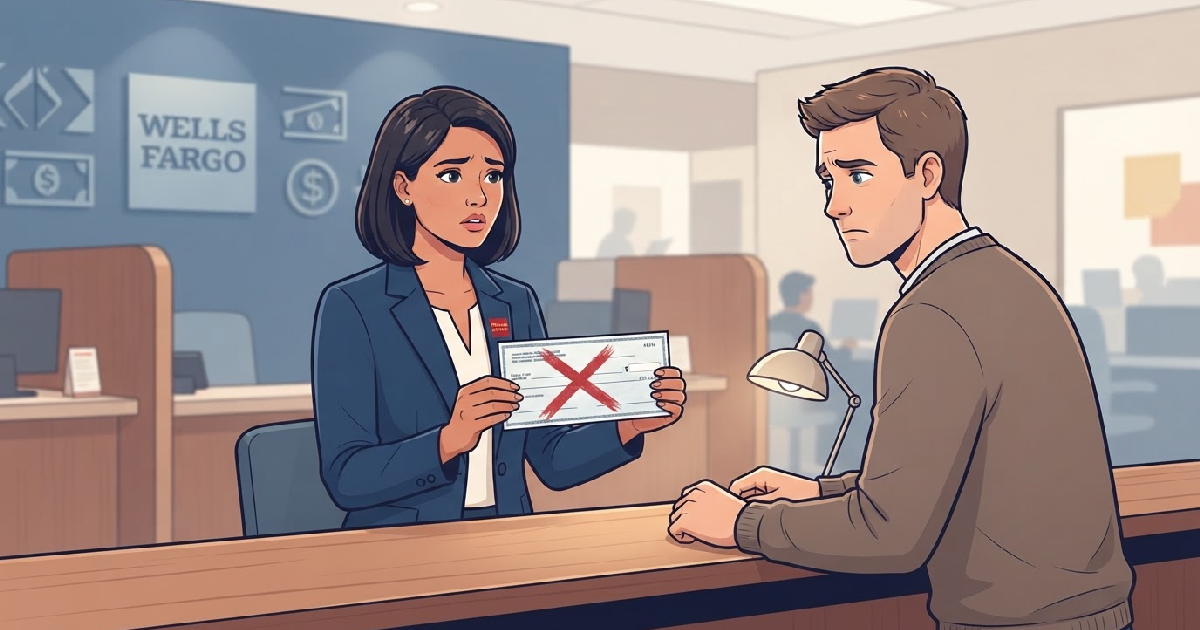
Bad check laws are legal regulations designed to deter the fraudulent issuance of checks when the drawer knows there aren’t enough funds in their account. These laws also cover instances where the account simply doesn’t exist. Their primary goal is to prevent deceitful financial activity and provide a clear path for recourse for payees.
Violations of these regulations carry significant civil and criminal penalties. These consequences vary considerably depending on the specific state where the offense takes place, impacting both individuals and businesses.
Understanding what constitutes a bad check
A “bad check” goes by many names, including worthless check, hot check, rubber check, or dry check. It refers to any check that a bank refuses to honor. This typically happens because the account has insufficient funds, the account does not exist, or payment has been stopped without a valid reason.
Understanding the parties involved is crucial. The drawer is the person or entity who writes and signs the check. The drawee is the bank or financial institution on which the check is drawn, and the payee is the recipient to whom the check is made payable.
Defining intent to defraud and insufficient funds (NSF)
Insufficient Funds (NSF) describes a situation where a check is written on an account that lacks the money to cover its value. However, an NSF designation alone doesn’t always mean a bad check offense has occurred. A key element, particularly in criminal cases, is “intent to defraud.”
This means the drawer acted with a deliberate purpose to deceive the recipient. Their goal would be to gain a benefit, such as money, goods, or services, through this deception. Without proof of such malicious intent, a bounced check might only lead to bank fees and civil repercussions, rather than criminal charges.
The Uniform Commercial Code (UCC) framework
The Uniform Commercial Code (UCC) provides the foundational legal structure for commercial transactions across all 50 U.S. states. It establishes uniform rules governing checks and other financial instruments. Articles 3 and 4 of the UCC are particularly relevant to bad check laws, setting the stage for state-specific legislation.
UCC Article 3, known as Negotiable Instruments, defines the characteristics of checks. It also outlines the rights and obligations of all parties involved in these financial tools. This article ensures checks can be transferred and legally enforced, providing a standardized basis for their use in commerce.
UCC Article 4, which covers Bank Deposits and Collections, regulates how banks process these transactions. It specifies responsibilities for both banks and their customers regarding check processing. This includes rules for presentment, dishonor, and the return of items, ensuring consistent banking practices nationwide.
Key elements of a criminal bad check offense
To secure a criminal conviction for writing a bad check, prosecutors generally must prove several critical elements. These requirements ensure that the offense involves deliberate wrongdoing, not just an accidental overdraft. State laws vary slightly in their specifics but follow a common framework.
It’s not enough for a check to simply bounce; there must be clear evidence of fraudulent intent. This emphasis on intent helps protect individuals who might unintentionally overdraw their accounts. Otherwise, many everyday banking errors could escalate to criminal matters.
Establishing willful issuance and knowledge of insufficient funds
For a bad check to be a criminal matter, proof of “willful issuance” is fundamental. The defendant must have intentionally written, drawn, or delivered the check. This element establishes that the action was a deliberate act, not an oversight.
Crucially, prosecutors must also demonstrate that the defendant knew about the insufficient funds when they issued the check. This knowledge could also involve knowing the account didn’t exist at all. Without this proven awareness, a criminal charge for a bad check becomes difficult to sustain.
Furthermore, the defendant must have acted with a specific intent to deceive the recipient. They must have aimed to obtain money, goods, or services through fraud. The payee must also have attempted to deposit or cash the check, known as “presentation for payment,” confirming their effort to collect the funds. This completes the chain of events necessary for prosecution.
Many state laws include presumptions to help establish knowledge or intent. For example, if a check is refused for lack of funds within 30 days of issue, and the issuer fails to “make good” within a specified notice period (e.g., 10 days) after notification, they may be presumed to have known. This legal mechanism aids in resolving these cases efficiently.
Penalties for writing worthless checks
Penalties for writing bad checks vary significantly based on state law, the amount of the check, and the defendant’s criminal history. Consequences can range from civil demands to serious felony charges. These distinctions highlight the varied approaches states take to deterring financial fraud.
Understanding these potential ramifications is crucial for anyone involved in financial transactions. Both drawers and payees need to grasp the legal landscape to protect their interests effectively. It’s a complex area where small details can have significant impacts.
Criminal consequences: misdemeanors and felonies
Bad check offenses are often classified as either misdemeanors or felonies, depending primarily on the check’s value. Lower amounts typically result in misdemeanor charges. For example, checks under $150 in Illinois or under $200 in New Jersey are often misdemeanors.
Penalties for misdemeanors can include fines, typically up to $1,000-$2,500, and jail time, generally ranging from six months to one year. Felony charges, reserved for higher check amounts, carry more severe penalties. These include, for instance, checks for $500 or more in Missouri or $5,000 or more in Arizona.
Felony penalties can involve larger fines, generally up to $5,000-$25,000, and prison sentences ranging from 1 to 15 years, depending on the state and amount. Offenders are almost always required to pay restitution, which means paying back the amount of the bad check to the victim. A conviction can also lead to long-term collateral consequences.
These collateral consequences might include lifetime probation, job restrictions, or housing limitations. They can even lead to the revocation of professional licenses. This shows that facing jail for bouncing a check is a serious possibility with far-reaching effects.
| State | Felony Threshold (Check Value) | General Felony Fine Range | General Felony Prison Sentence |
|---|---|---|---|
| Illinois | $150 or more | Up to $5,000-$25,000 | 1-15 years |
| New Jersey | $200 or more | Up to $5,000-$25,000 | 1-15 years |
| Missouri | $500 or more | Up to $5,000-$25,000 | 1-15 years |
| Arizona | $5,000 or more | Up to $5,000-$25,000 | 1-15 years |
Civil recourse for payees: recovering damages
In addition to potential criminal charges, a payee can pursue civil action to recover their losses. This process usually begins with a formal demand letter sent to the check writer. This letter, often sent via certified mail, requests payment within a specified timeframe, such as 30 days in California or 7-30 days in other states.
If the check writer fails to pay after receiving proper notice, the payee may sue for damages. The research states these damages primarily include the face value of the check. It’s a direct way for victims to recover the money they were owed.
Understanding NSF cheque consequences and the demand letter process is vital for payees. It provides a structured legal pathway to reclaim funds lost due to a bad check. This dual system of civil and criminal penalties aims to fully address the impact of check fraud.
Safeguarding against bad check fraud
Both individuals and businesses must understand bad check laws to protect themselves. For payees, knowing your rights and the steps for recourse can mean the difference between recovering losses and absorbing them. For drawers, awareness helps avoid unintentional legal trouble and severe penalties.
These laws aren’t just about punishment; they’re also about facilitating fair and secure financial transactions. They establish a clear path for restitution and deter fraudulent behavior in the broader economy. Ultimately, they reinforce trust in the banking system.
Advice for payees
As a payee, act quickly if you receive a bad check. Send a formal demand letter promptly, as this is often a prerequisite for legal action. Document all communications and attempts to collect, as this evidence will be crucial if civil or criminal charges become necessary.
Consider using secure payment methods when possible, especially for large transactions or with unfamiliar parties. While checks remain common, digital payments can often provide faster clearance and reduce the risk of bounced checks. Furthermore, understanding the nuances of mobile cheque deposit fraud can help mitigate some risks by ensuring proper validation.
Advice for check writers
If you’re writing a check, always ensure your account has sufficient funds to cover the payment. Regularly monitor your bank balance and reconcile your accounts to prevent accidental overdrafts. This proactive approach can help you avoid unintended legal complications and the stress of a bounced check.
If you realize you’ve written a check on insufficient funds, contact the payee immediately to arrange alternative payment. Promptly “making good” on the check can often prevent criminal charges, especially if there was no intent to defraud. Transparency and quick action are your best defenses in such situations.
The broader implications of check fraud
Bad check laws serve as a critical deterrent against financial fraud, bolstering confidence in the use of checks as a negotiable instrument. Their existence underscores the importance of honesty and accountability in commercial dealings. These legal safeguards are vital for maintaining economic stability and ensuring fair play.
The varying state-level penalties highlight the complex legal tapestry surrounding financial transactions in the United States. Businesses and consumers alike rely on these laws to ensure fair practices and prevent losses. This intricate system ultimately contributes to a more secure financial environment for everyone involved.
What is considered a bad check?
A bad check, also known as a worthless or rubber check, is one that a bank will not honor. This typically happens because the account has insufficient funds, the account doesn’t exist, or payment was stopped without a valid reason. Crucially, in criminal cases, it’s often linked to an intent to defraud the recipient.
Can you face jail time for writing a bad check?
Yes, you can face jail time or even prison for writing a bad check, especially if there is proven intent to defraud. Depending on the check’s value and state laws, it can be charged as a misdemeanor or a felony, leading to fines, jail time, or prison sentences. Restitution to the victim is almost always required as part of the penalty.
How do states determine bad check penalties?
States determine penalties based primarily on the value of the bad check. Lower amounts typically result in misdemeanor charges, while higher amounts can lead to felony charges. Factors like the defendant’s criminal history and whether there was clear intent to defraud also heavily influence the severity of the penalties and sentences imposed.